
Nylon
Lightweight glands for unarmoured cable in enclosures and machines.
Match the resin and seal to the temperature, sunlight and chemicals at the installation.Cable-gland product families
Choose nylon, brass or stainless steel cable glands to secure and seal cable entries. The range also includes EMC, armoured, hazardous-area and marine designs, plus hose and conduit fittings.
Eight cable-gland families
Start with the body material, or choose a design for screened cable, armour, hazardous areas or marine equipment.
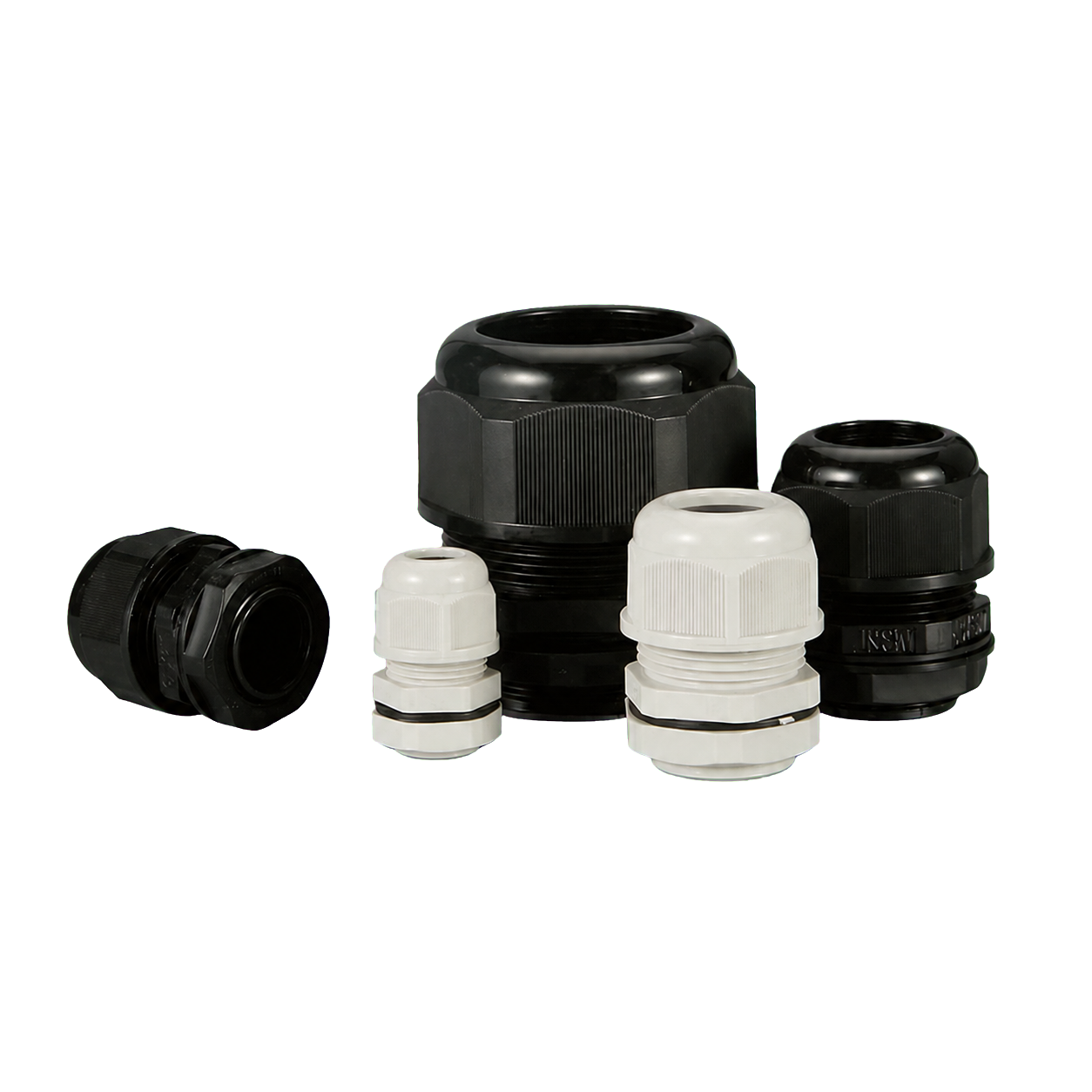 Nylon Cable GlandsLightweight cable glands in straight, angled, flexible, long-thread and multi-hole forms.
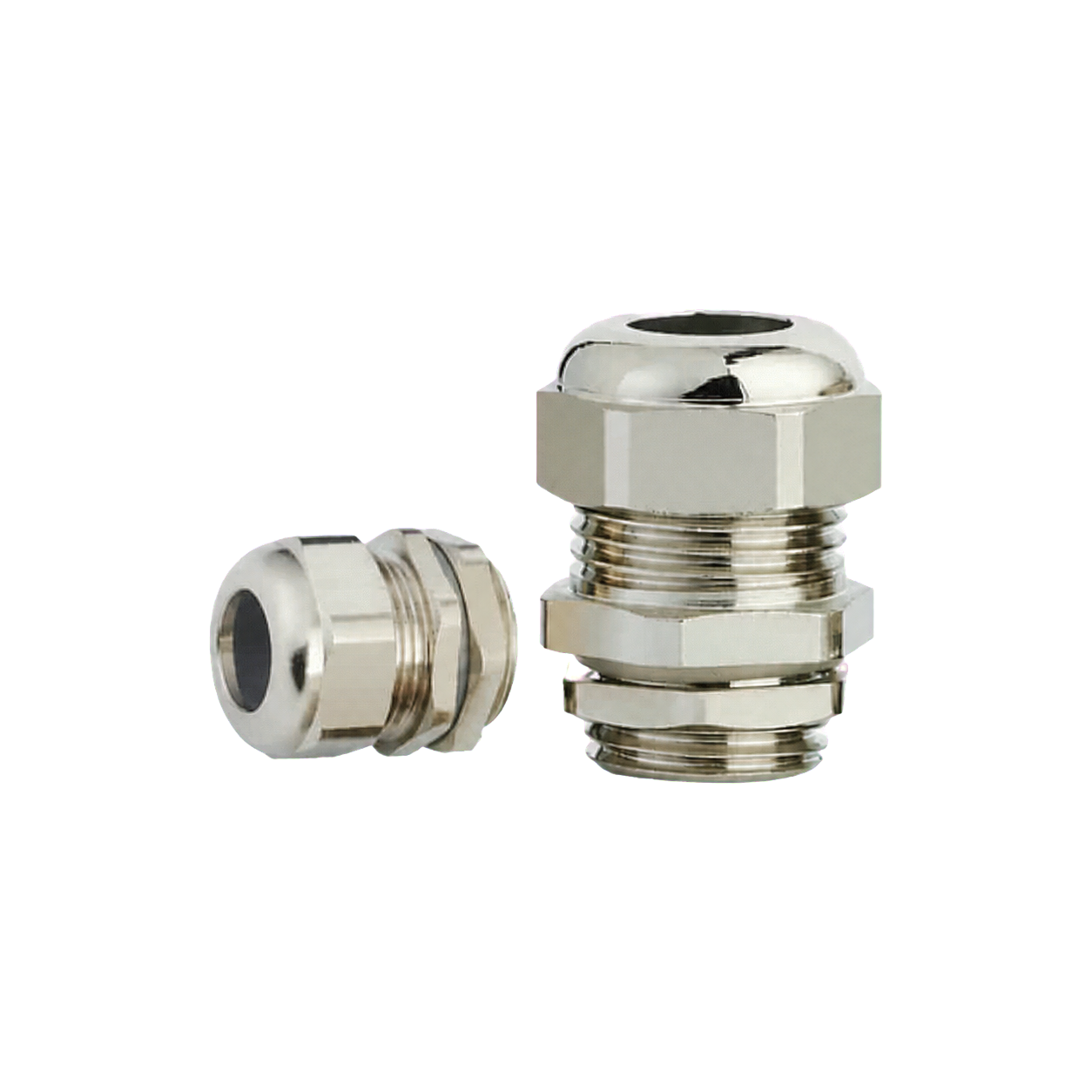 Brass Cable GlandsMetal cable glands with standard, angled, long-thread, multi-hole and bend-protection forms.
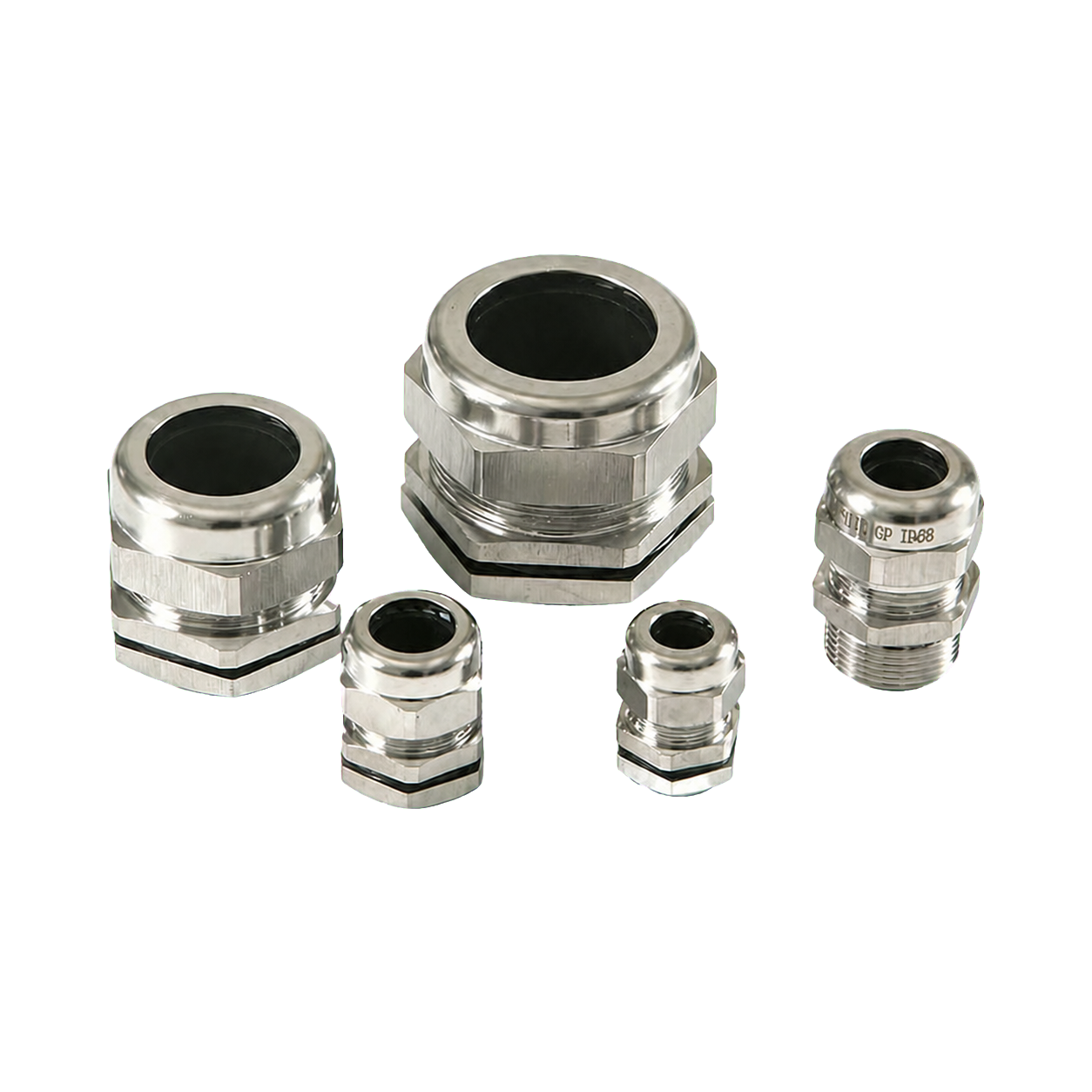 Stainless Steel Cable GlandsStainless-steel glands for sealed cable entries on outdoor and process equipment.
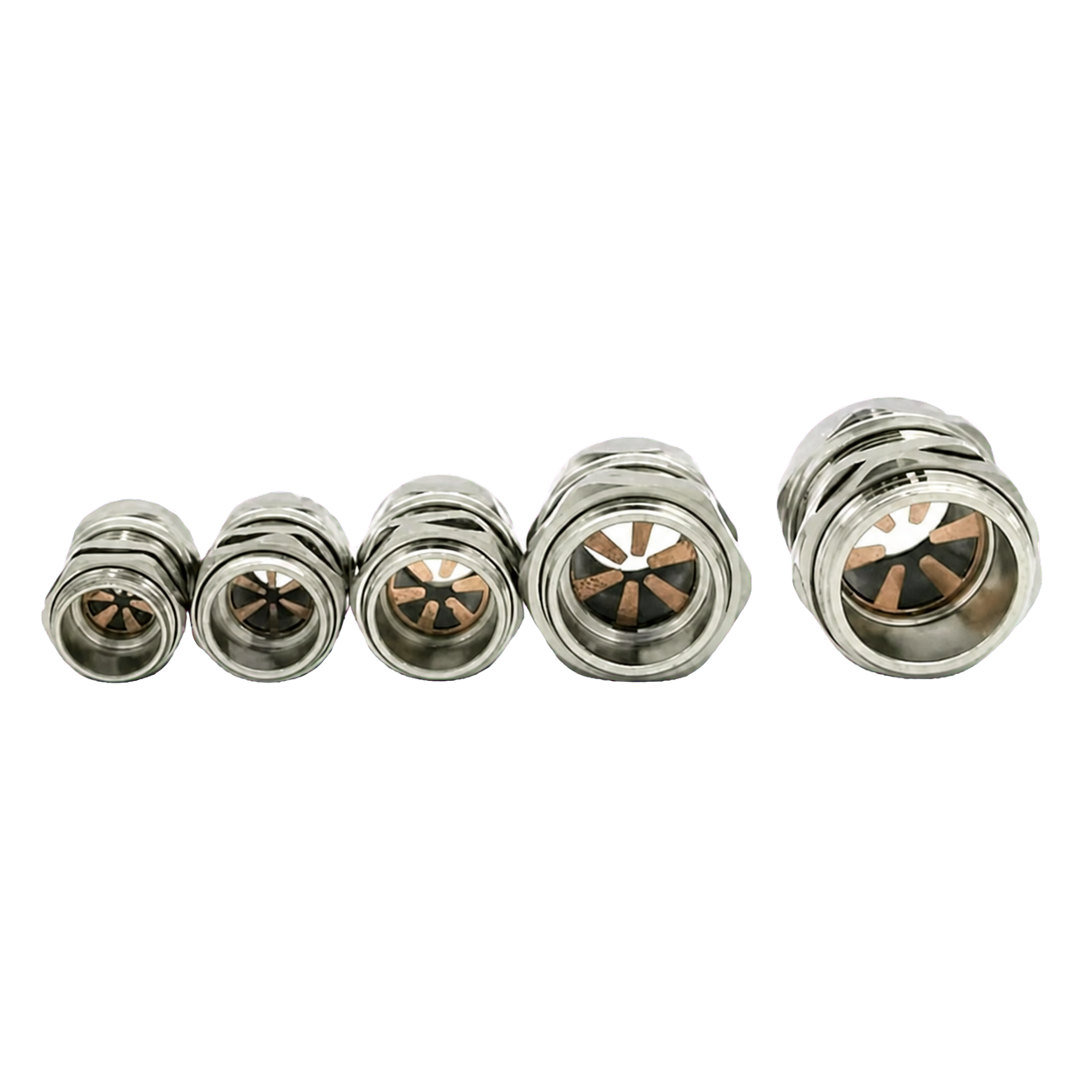 EMC Cable GlandsEMC glands connect the cable screen to the enclosure while holding and sealing the cable.
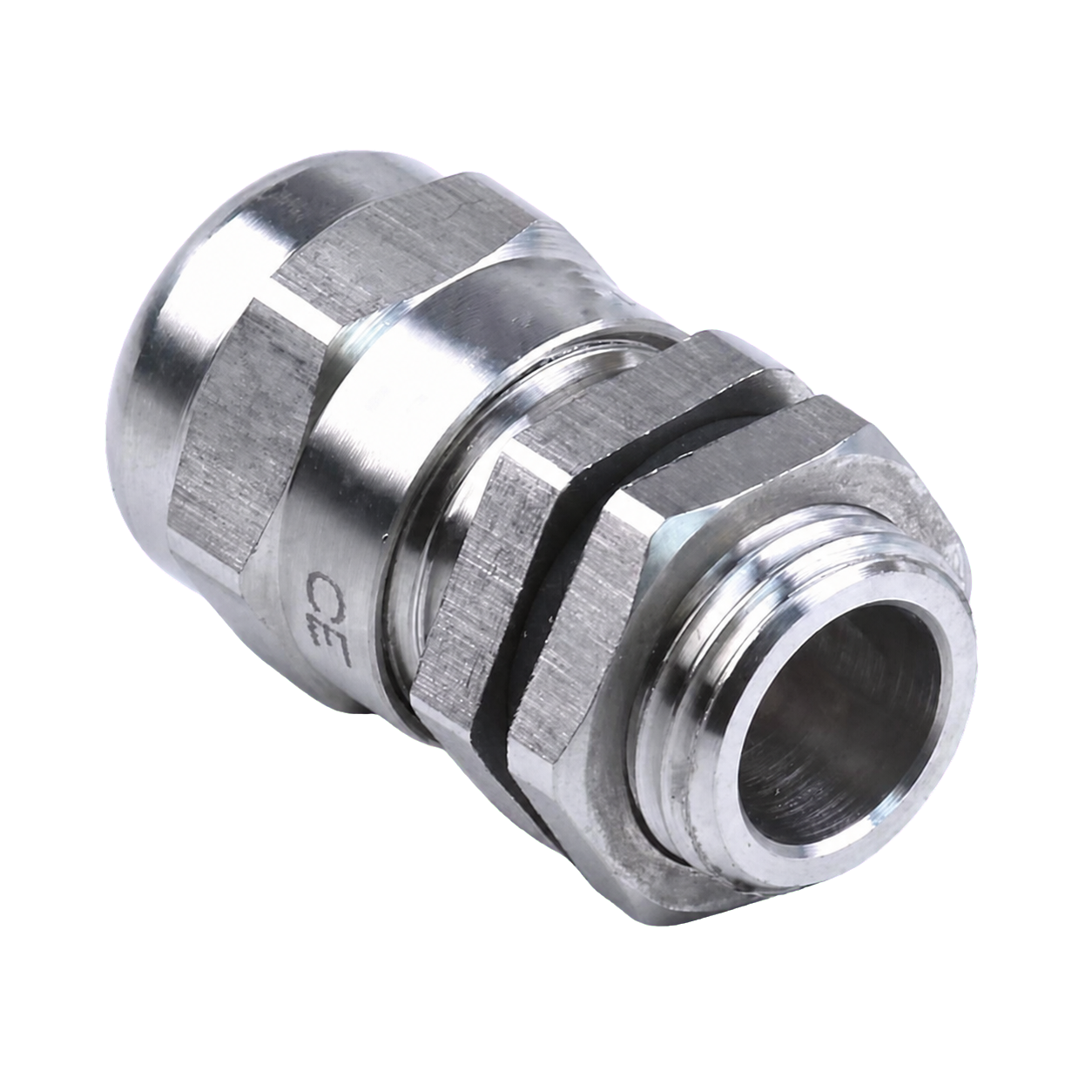 Explosion-Protected Cable GlandsCable-entry designs for armoured and unarmoured cables on hazardous-area equipment.
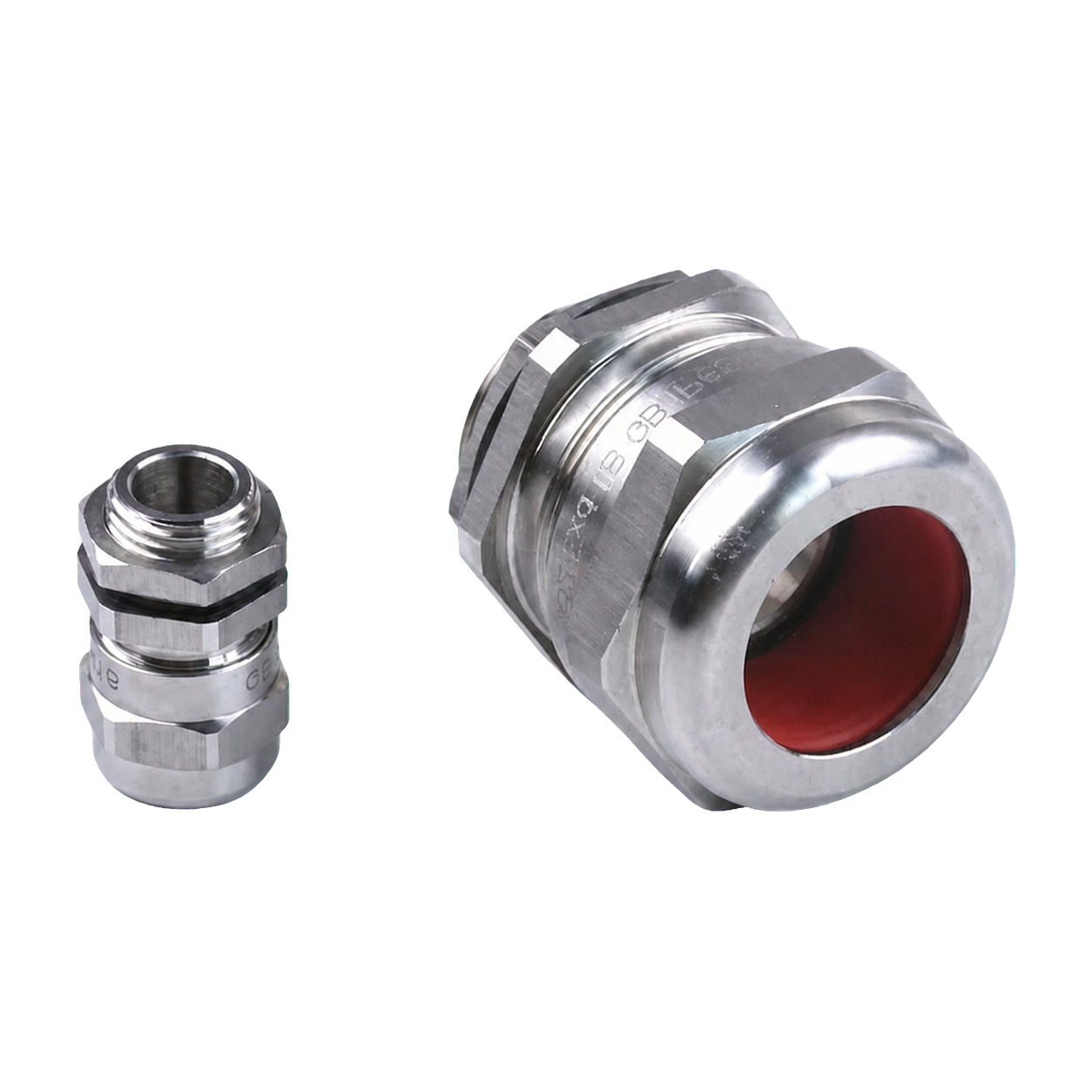 Armoured Cable GlandsGlands that grip cable armour and seal the cable at the equipment entry.
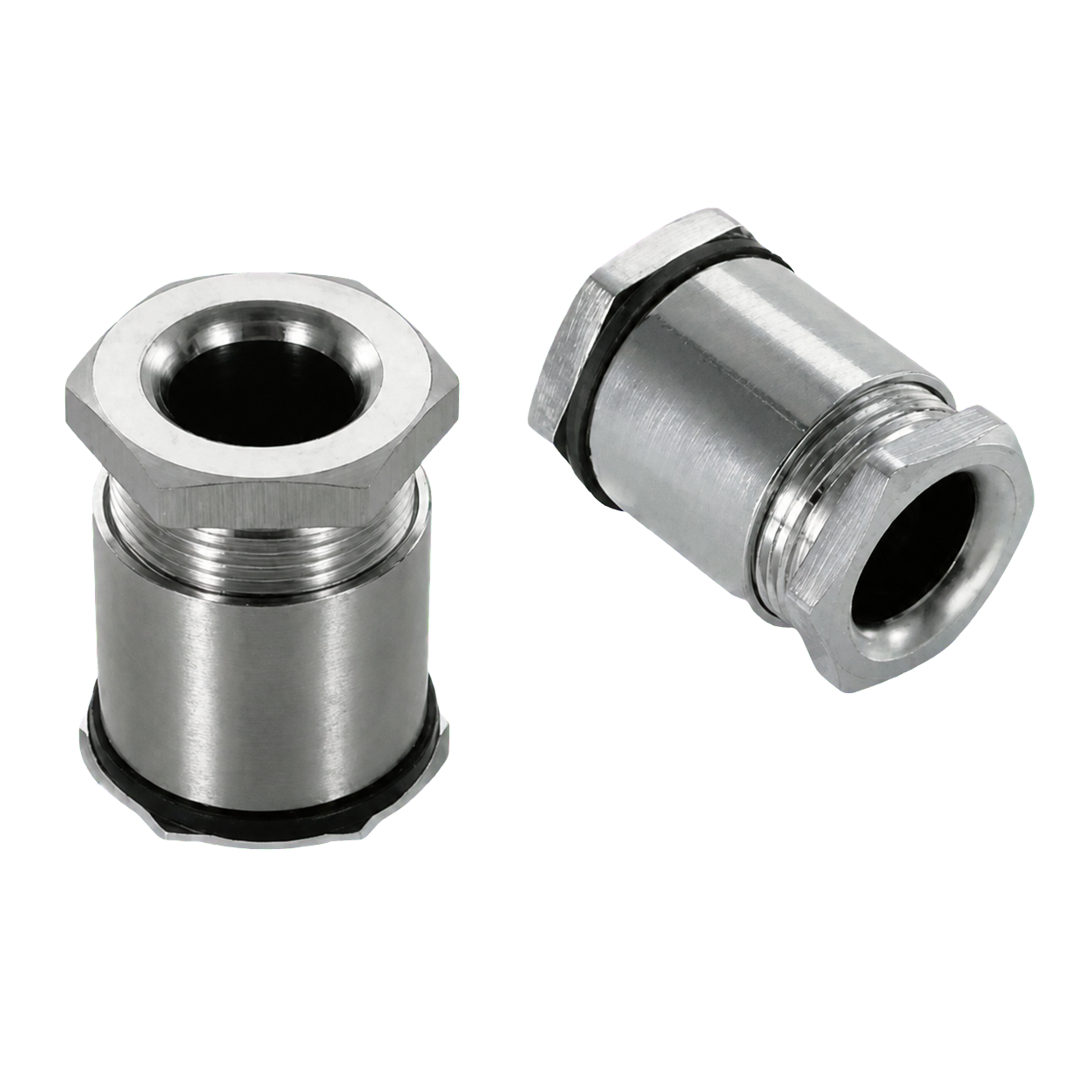 Marine Cable GlandsMetal cable glands for shipboard wiring, including TJ and TH dimensional series.
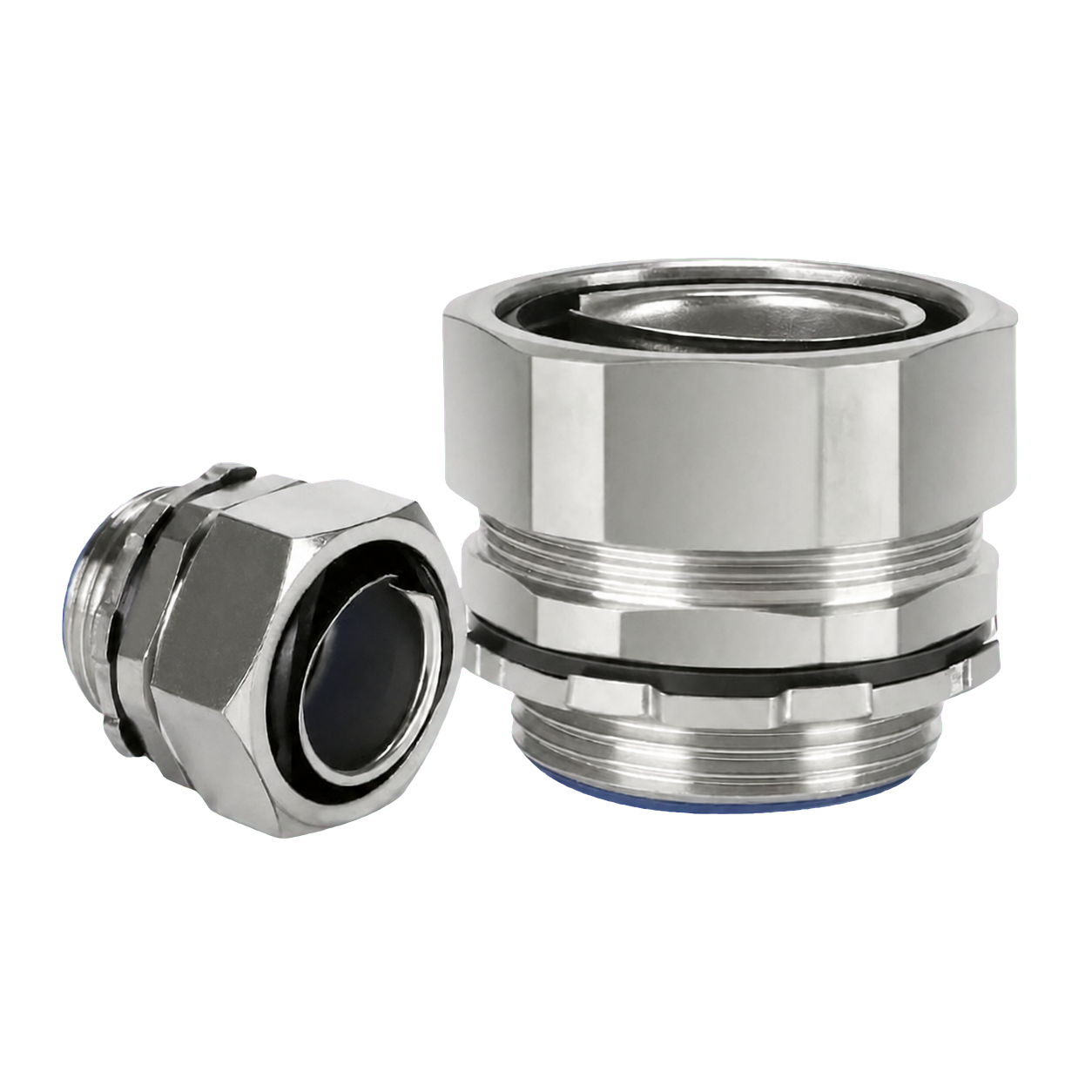 Hose and Conduit FittingsStraight and angled fittings for connecting conduit to boxes, enclosures and other conduit sections.
Cable-entry interfaces
Start with cable diameter and entry thread, then choose the seal and body material for the installation.
Measure the outside diameter. For armoured or screened cable, also identify the armour or screen and the diameter where the gland makes contact.
Read the thread size and pitch, or measure the clearance hole. Check wall thickness and room for the locknut and spanner.
Use materials suited to the temperature, chemicals and weather around the equipment. Add any EMC, armour-clamping or hazardous-area requirement.
Compare the cable range, usable thread length and body dimensions. For a replacement, a model marking or photo is a useful starting point.
Materials & entry threads
Choose the body material for the environment and the thread for the enclosure opening.
Lightweight glands for unarmoured cable in enclosures and machines.
Match the resin and seal to the temperature, sunlight and chemicals at the installation.Metal cable entries for cabinets and industrial equipment.
Check the plating, seal material and any earthing or screen-contact requirement.Metal glands for outdoor and process-equipment cable entries.
Specify the steel grade and seal materials for the chemicals and cleaning process involved.Parallel threads identified by M size and pitch, such as M20 × 1.5.
A separate thread system often found on older equipment. PG and metric sizes are not interchangeable.
Tapered pipe threads. Use the matching NPT entry and the specified thread-sealing method.
Parallel pipe threads, also labelled BSPP or PF. Check the face seal and mounting arrangement.
Applications
Browse gland constructions used with control cabinets, machinery, outdoor equipment, screened instrumentation, armoured cable and shipboard entries.
Secure power and signal cables through cabinet walls or gland plates.
Use straight or angled entries to route cables around the machine and leave room for servicing.
Seal cable entries into housings exposed to rain and dust. Select the body and seals for the local environment.
Connect the cable screen to the enclosure with a gland designed for screen contact.
Clamp the armour and seal the bedding or outer sheath at the equipment entry.
Choose the cable-entry construction required by the vessel or hazardous-area equipment specification.
Product support
Send a model name, a photo or a short question. We can help with sizes, samples and a quotation.
Request cable-gland supportCable Glands FAQ
Find answers about cable size, thread selection and installation.
Measure the cable outside diameter and choose a sealing range that includes it. Then match the enclosure thread or hole and check the usable thread length.
No. Glands with the same thread can have different cable ranges, seals, materials and clamping designs. Both the cable and the enclosure entry must fit.
No. Their diameters, pitches and thread forms differ. NPT is tapered; Metric, PG and G are parallel. Use the mating thread designation rather than choosing by a similar nominal size.
Use an EMC gland when the cable screen needs to connect to the enclosure at the entry. Match its screen contact to the cable construction and screen diameter.
Check the armour type and diameter, bedding diameter and outer-sheath diameter, as well as the entry thread. These dimensions describe the surfaces the gland clamps and seals.
No. The cable must be within the sealing range, and the seals and enclosure connection must be assembled as instructed. The rating applies under the stated test conditions.
The specific gland, cable and equipment entry must meet the installation requirements. Check the certificate and instructions for the protection concept, cable construction and conditions of use.
Send a model marking or photo. Cable diameter, entry thread and the installation environment help us narrow the choice; a drawing is useful if you have one.