

Temperature cycling affects enclosure seals through gas pressure, joint movement, material response, and moisture. I identify the cause before adding a vent. A suitable vent may reduce heating- or cooling-driven pressure differences. It cannot correct dimensional mismatch between wall, gasket, fasteners, entries, and cables. Seal force loss, permanent deformation, and chemical aging need their own remedies.
A porous vent also exchanges water vapor, which needs separate assessment. I record temperature, pressure, movement or contact-force indicators, and leakage on the same clock. Add venting when pressure contributes materially to the problem and the vented enclosure still meets its other requirements.
Key takeaways
- Split gas-pressure loading from joint movement, time-dependent seal behavior, and moisture before choosing a remedy.
- Record component temperatures, not only chamber-air minimum and maximum values.
- A vent can reduce residual pressure only when its installed bidirectional flow matches the change rate.
- Compression set and stress relaxation require their own material and assembly evidence.
- Compare sealed and vented configurations under the same sequence; keep IP and condensation results separate.
How temperature cycling affects enclosure seals through four load paths
A temperature cycle defines temperatures, rates, dwell times, repetitions, media, operating states, and recovery. A dwell is time held at a temperature. Differential pressure is inside pressure minus outside pressure. Stress relaxation is force loss over time at approximately constant deformation. Compression set is deformation remaining after specified compression and recovery.
I keep those quantities separate. During a hot dwell, gas pressure, dimensions, gasket force, and dew-point margin can change together. A leak after the cycle cannot identify which mechanism dominated.
| Load path. | What the temperature cycle changes. | Can a pressure-equalization vent reduce it? | Evidence that identifies the path. |
|---|---|---|---|
| Trapped-gas pressure. | Internal gas state relative to ambient pressure. | Yes, if installed flow keeps residual pressure within a justified limit. | Synchronized internal and external absolute pressure plus temperature. |
| Thermomechanical joint movement. | Relative dimensions, gap, squeeze, alignment, fastener load, and cable-entry position. | No. | Component temperatures, controlled geometry, movement or contact-force proxy. |
| Time-dependent seal response. | Force decay, recovery, residual deformation, and damage at the stated time and temperature. | No. | Compound and specimen method, then evidence from the moulded seal and assembly. |
| Moisture condition. | Vapor state, cold-surface temperature, direct ingress, and liquid location. | Not by itself. | Dew-point comparison, first-wet location, ingress test, and pressure trace. |
Build one synchronized thermal-cycle profile
I define the sequence from product duty or governing requirements. IEC 60068-2-14:2023 provides specified ambient-temperature changes for analyzing specimen response. It cannot assign a universal enclosure cycle. Record start, hot and cold setpoints, rates, dwells, repetitions, transfer, air or liquid, power state, and recovery. Also state the initial sealed pressure and moisture conditions.
I measure component temperatures rather than relying on the chamber program. Seal, wall, cable, fasteners, and trapped gas may follow different traces. Use several sensors where thermal mass or heat input differs. Measure the seal region, wall, entry, nearby internal air, and powered sources of temperature differences. Log internal and external absolute pressure on the same clock.
For example, a rapid chamber step may change the wall before the gas or a heavy mounting plate. A slow hot dwell may reduce temporary temperature differences while allowing more force decay. I compare the complete profiles: identical endpoints can still produce different peaks, movement, and retained force.
Trace the gas-pressure path before crediting venting
NIST Circular 279 relates gas temperature, pressure, and density. Heating trapped gas in a nearly rigid sealed enclosure tends to raise pressure; cooling tends to lower it. I use absolute pressure, referenced to vacuum, and kelvin temperature in gas-law ratios. Gauge pressure is referenced to ambient and needs conversion for that model.
Real housings deflect, leak, and exchange heat unevenly. Equipment also reduces free air volume. Use the gas law for screening within those limits. It cannot establish actual seal load or vent capacity. Measure the pressure difference across the whole boundary during the cycle.
Residual differential pressure is the difference left because gas exchange is not instantaneous. I compare both flow directions with air volume, temperature rate, ambient-pressure history, and restrictions. The altitude and venting guide covers ambient-pressure ramps.
I compare sealed and vented pressure traces under the same cycle. Keep housing, cap, membrane, mounting seal, orientation, contamination, and inside clearance representative. Pore size or media name alone cannot establish installed flow.
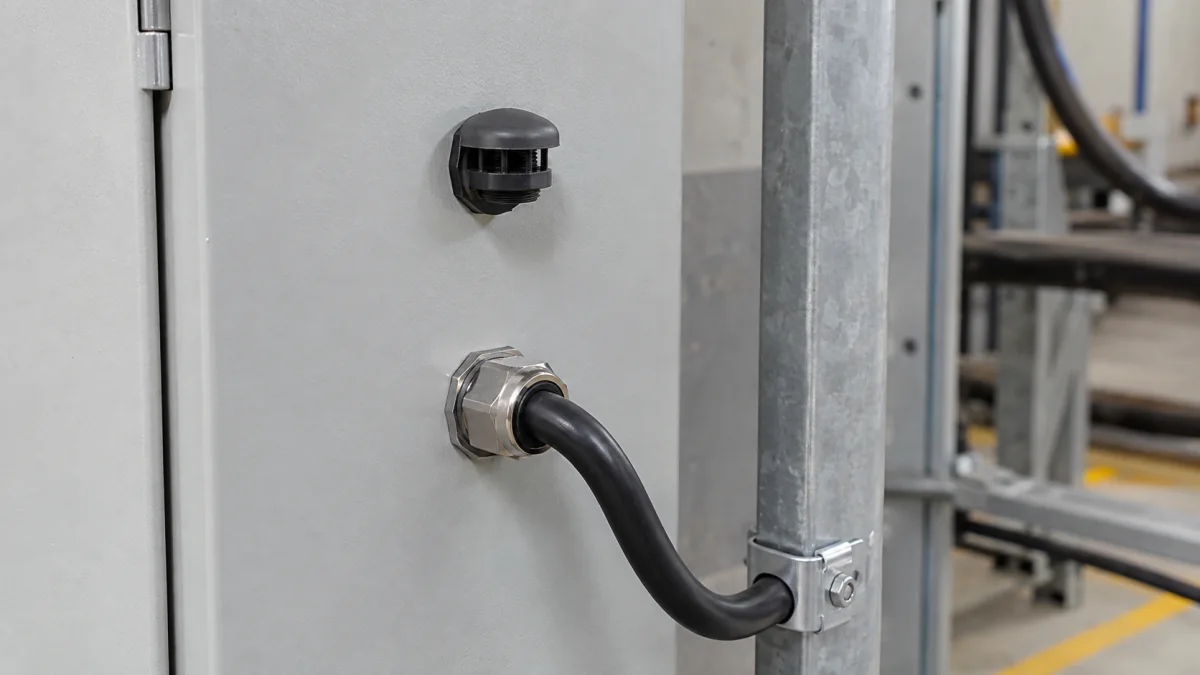
I first compare pressure peaks with justified positive and negative limits for wall, gasket, entries, windows, and joints. Then check whether movement, leakage, or contact force follows pressure. If leakage remains after pressure falls, another mechanism may dominate. Reduced pressure alone cannot establish longer life. A sealed flexible compensator changes volume rather than using porous gas flow. The pressure-compensator comparison explains that difference.
Trace thermomechanical joint movement separately
I trace part movement separately. Wall, gasket carrier, fasteners, gland, jacket, window, and adhesive joints may differ in temperature and expansion response. Restraints convert free expansion into changed gap or squeeze, shear, bending, or fastener load. A vent cannot change these properties or dimensional allowances. It may reduce a superimposed gas load while the joint keeps moving.
I map dimensions from the fixed reference to seal contact. Separate radial, or outward/inward, movement from axial movement along the entry. Mark allowed sliding and bending. The thermal-expansion coefficient guide covers coefficient screening and entry interfaces.
For example, a bowed panel or changed latch spacing may reduce door-gasket contact. Movement of body, insert, jacket, panel, and supports may alter entry squeeze. Neither effect establishes internal pressure as the cause.
| Joint evidence. | Useful measurement. | What it cannot prove alone. |
|---|---|---|
| Component temperature trace. | Actual timing and gradient at wall, seal, fastener, cable, and internal hardware. | Gap, contact force, leakage, or material damage. |
| Dimensional or displacement trace. | Direction and magnitude of relative movement at a selected feature. | Sealing force at an unmeasured interface. |
| Fastener or latch-load proxy. | Change in clamping behavior for the instrumented joint. | Local gasket pressure everywhere around the perimeter. |
| Leak or ingress observation. | Failure state for the represented assembly and test condition. | Whether pressure, movement, aging, damage, or assembly error caused it. |
Separate immediate loading from time-dependent seal loss
ASTM D395-18(2025) covers rubber compression set under constant force or deflection. I select the method for service and retain time, temperature, and recovery requirements. ASTM E328-26 covers stress relaxation under approximately constant constraint, including decreasing gasket tightness.
These are different measurements. Compression set is not leakage rate, and force decay is not ingress protection (IP). Life prediction needs matched material, specimen, load, temperature, time, history, and acceptance criteria.
I separate first and later cycles, and hot response from room-temperature recovery. An elastomer may follow movement initially yet lose force after a hot dwell. It may stiffen cold and recover warm. Cuts, twist, defects, lubricant, fluids, ultraviolet (UV) exposure, or chemicals add other mechanisms. The environmental-aging guide covers cumulative exposure. Record onset and persistence after recovery to distinguish reversible response, force loss, permanent deformation, and damage.
Separate condensation from direct ingress
I investigate more than one moisture path after cooling. NOAA’s water-vapor explanation describes condensation when a cold surface cools nearby air. Dew point is the temperature where vapor starts to form liquid. Direct ingress may instead occur through the vent mount, door gasket, cable entry, damage, or another opening.
A porous vent may pass water vapor either way, depending on conditions. Lower pressure difference may reduce flow through unintended gaps. I still assess cold surfaces and pooled liquid. Venting neither heats them nor drains the liquid.
I locate the first liquid and log nearby air temperature, relative humidity, cold-surface temperature, and pressure. The IP-rated vent and condensation guide separates dew-point, ingress, and pressure evidence. Confirmed condensation needs that assessment; it cannot be treated as proof of gasket leakage.
IEC 60529 classifies enclosure protection against access, solid objects, and water. I review the changed boundary after adding a vent. Match vent, seal, wall, doors, entries, blanking parts, orientation, assembly state, and test conditions to the final IP evidence. The old code cannot carry over automatically.
Use a controlled comparison to isolate the role of venting
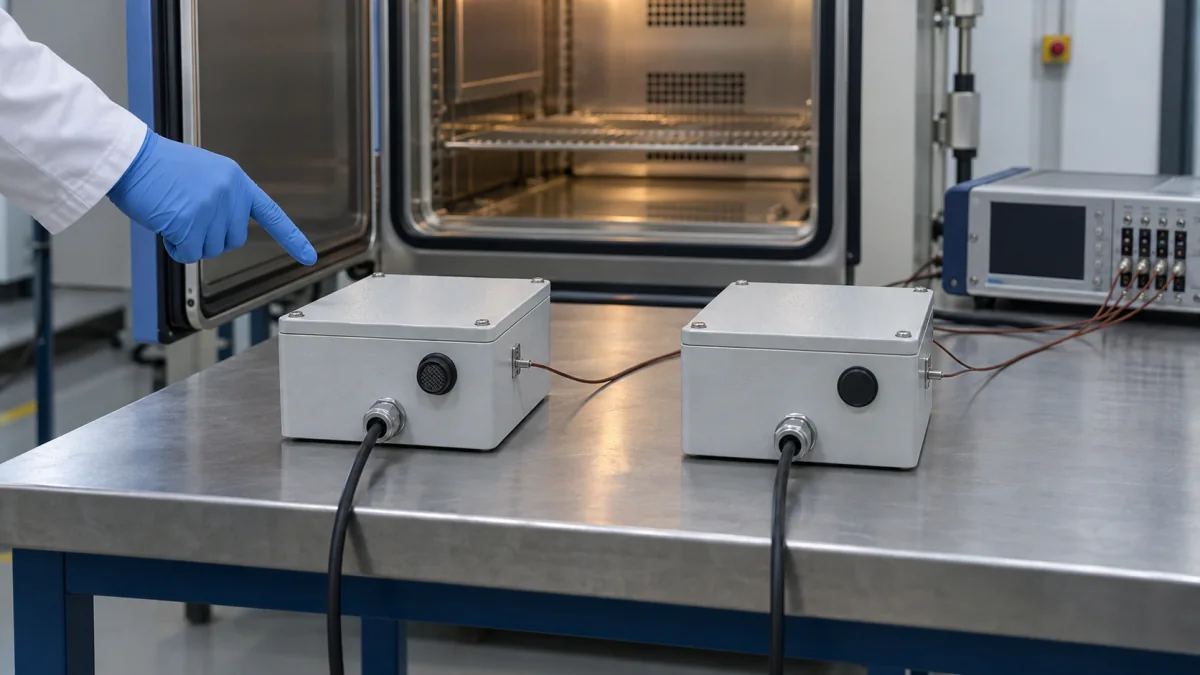
I start with a representative enclosure and defined cycle. Measure both pressures, critical temperatures, and useful movement or force indicators. Add leak or functional checks without disturbing the seal. Test the intended sealed baseline.
Then install the specified vent as drawn, retaining other parts and settings, and repeat the sequence. If two specimens are needed, record their material, tolerance, and assembly differences. Similar appearance cannot establish identity.
| Observed comparison. | Supported interpretation. | Next action. |
|---|---|---|
| Pressure peak falls and seal movement or leakage also falls. | Pressure loading was a contributor in the represented cycle. | Verify vent capacity, retained flow, installation, ingress, and other required states. |
| Pressure peak falls but joint movement is unchanged. | Thermomechanical geometry is likely independent of pressure. | Review gradients, constraints, tolerance stack, fasteners, and supports. |
| Pressure peak falls but recovered seal force continues to decline. | Time-dependent material response or damage may dominate. | Match compound test evidence and inspect the moulded seal and surfaces. |
| Moisture appears without a matching interface leak. | Condensation or trapped moisture remains possible. | Compare cold-surface temperature with local dew point and trace liquid location. |
| Vented pressure remains high or lags the cycle. | Installed flow may be insufficient or restricted. | Review both flow directions, cap, contamination, orientation, quantity, and clearances. |
I interpret the state actually measured. A recovered room-temperature leak test cannot establish cold-transition contact. Low hot pressure cannot show enough inward flow during cooling. A dry initial test cannot cover later water, dust, oil, ice, cleaning, or aging. Define limits first, assess both directions, and repeat affected measurements after representative conditioning or changes.
Conclusion
Temperature cycling affects pressure, geometry, seal response, and moisture. I credit venting only for the gas-load reduction covered by installed bidirectional flow. Assess vapor exchange separately. Venting cannot correct mismatch, restore force, stop aging, heat surfaces, drain liquid, or certify ingress.
I compare sealed and vented states in one synchronized record. Pressure, movement, and leakage changing together may support a limited venting benefit. If symptoms remain after pressure falls, follow joint, material, or moisture evidence. That identifies the seal problem the vent must actually address.
FAQs about temperature cycling, enclosure seals, and venting
Does temperature cycling always damage an enclosure seal?
No. The result depends on temperature at each part, change rate, dwell, cycles, geometry, restraint, seal compound, compression, prior history, pressure difference, and assembly quality. A defined cycle can reveal a weakness, but minimum and maximum temperatures alone do not establish damage or service life.
Can venting prevent thermal-expansion mismatch at a gasket?
No. Venting can reduce gas-pressure difference across the enclosure boundary. It does not change part dimensions, coefficients of expansion, temperature gradients, fastener restraint, panel bow, cable movement, gasket squeeze, or time-dependent material behavior. Test those paths separately.
Does lower differential pressure prove the seal will last longer?
No. It proves only that the measured pressure load was lower in that configuration and cycle. A life claim also needs relevant material, geometry, stress, temperature, time, environmental exposure, damage, and functional evidence. Do not convert one pressure trace into a maintenance interval.
Should ingress be tested during or after temperature cycling?
Use the sequence required by the product specification and the failure state that matters. Testing during a hot or cold state can answer a different question from testing after recovery. Record the exact enclosure configuration, state, conditioning order, ingress method, observations, and acceptance criteria.
How can a test show whether venting actually helped the seal?
Measure internal and external pressure, critical part temperatures, a relevant movement or contact-force proxy, and leakage on one time base. Compare a baseline and the specified vented configuration under the same cycle. Venting is implicated only when the pressure change and seal response change together.
Sources and technical references
- NIST Circular 279, Relations Between the Temperatures, Pressures, and Densities of Gases, accessed 2026-09-08.
- IEC 60068-2-14:2023, Environmental testing - Test N: Change of temperature, accessed 2026-09-08.
- ASTM D395-18(2025), Standard Test Methods for Rubber Property - Compression Set, accessed 2026-09-08.
- ASTM E328-26, Standard Test Methods for Stress Relaxation for Materials and Structures, accessed 2026-09-08.
- NOAA Global Monitoring Laboratory, GML Water Vapor - Instrument Description, accessed 2026-09-08.
- IEC 60529:1989+A1:1999+A2:2013, Degrees of protection provided by enclosures, accessed 2026-09-08.