

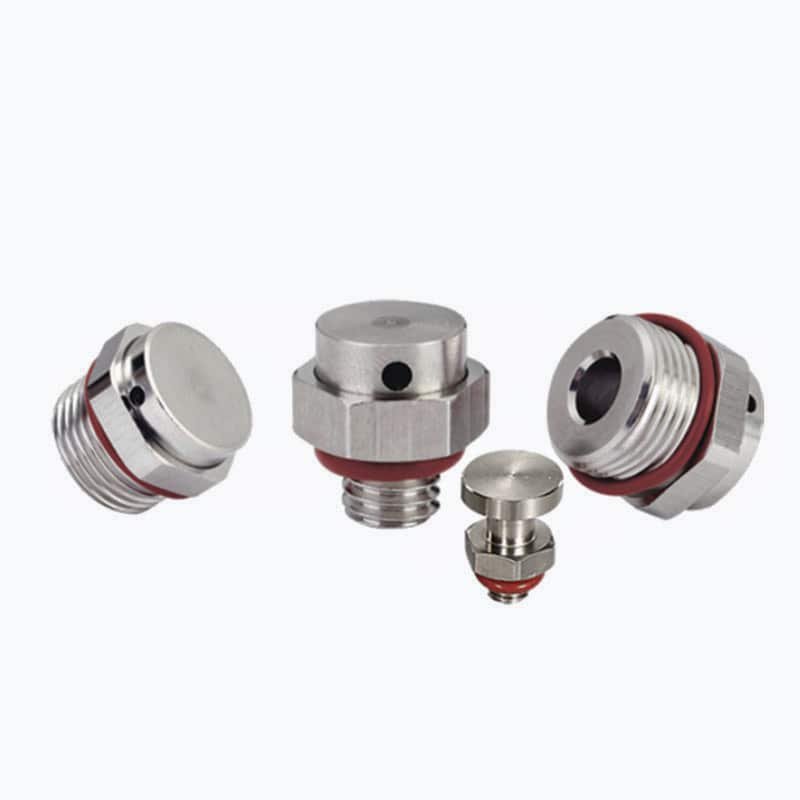
EV battery thermal runaway incidents cost manufacturers millions in recalls and damage brand reputation permanently, yet many battery pack designs still use inadequate venting solutions that fail during critical thermal events. Poor thermal management can lead to catastrophic battery failures, fires, and complete vehicle loss within minutes of overheating1. Specialized vent plugs for EV battery packs provide controlled pressure relief, gas venting, and thermal protection while maintaining IP67 sealing – essential for preventing thermal runaway and ensuring safe battery operation.
Last month, I consulted with David, a battery systems engineer at an EV startup in California, whose prototype battery packs were experiencing pressure buildup issues during thermal testing, risking catastrophic failure without proper venting solutions.
Table of Contents
- What Critical Functions Do EV Battery Pack Vent Plugs Perform?
- How Do You Select the Right Vent Plug Specifications for Battery Applications?
- What Are the Key Design Considerations for Battery Pack Vent Integration?
- Why Choose Bepto’s Advanced Vent Solutions for EV Battery Systems?
What Critical Functions Do EV Battery Pack Vent Plugs Perform?
Understanding the multifaceted role of vent plugs in EV battery thermal management is essential for designing safe, reliable battery systems that meet automotive standards.
EV battery pack vent plugs provide controlled gas release during thermal events, maintain waterproof sealing under normal conditions, and prevent external contamination while allowing internal pressure equalization – critical for preventing thermal runaway propagation.

Primary Safety Functions
Thermal Runaway Prevention
Vent plugs serve as the first line of defense against catastrophic battery failures by providing controlled pressure relief when internal temperatures exceed safe operating limits.
Gas Management System
- Electrolyte vapor release: Controlled venting of toxic gases during cell degradation
- Pressure equalization: Prevents dangerous pressure buildup in sealed enclosures
- Thermal event response: Rapid activation during overheating incidents
- Contamination barrier: Blocks external moisture and debris infiltration
Environmental Protection Features
Waterproof Integrity
Battery pack vent plugs must maintain IP67 or IP68 ratings2 while providing emergency venting capabilities, ensuring protection against water ingress during normal operation.
Chemical Resistance
- Electrolyte compatibility: Resistant to lithium-ion battery chemicals
- Temperature stability: Functional from -40°C to +125°C operating range
- UV protection: Prevents degradation from solar exposure
- Vibration resistance: Maintains seal integrity under automotive conditions
Performance Specifications Table
| Function | Standard Requirement | Bepto Solution |
|---|---|---|
| IP Rating | IP67 minimum | IP68 certified |
| Operating Temperature | -30°C to +85°C | -40°C to +125°C |
| Pressure Relief | 5-15 kPa activation | Customizable 3-20 kPa |
| Flow Rate | 50-200 L/min | Up to 300 L/min |
| Chemical Resistance | Basic automotive fluids | Full electrolyte compatibility |
How Do You Select the Right Vent Plug Specifications for Battery Applications?
Proper vent plug selection requires careful analysis of battery chemistry, pack design, thermal management requirements, and regulatory compliance standards3 to ensure optimal safety performance.
Select vent plugs based on battery pack volume, maximum operating pressure, thermal event response time, and environmental exposure requirements – typically requiring 10-15 kPa activation pressure with 100+ L/min flow capacity for automotive applications.

Battery Chemistry Considerations
Lithium-Ion Specific Requirements
Different lithium-ion chemistries produce varying gas volumes and toxic compounds during thermal events4, requiring specialized vent plug configurations.
Chemistry-Specific Parameters
- LFP batteries: Lower gas generation, moderate pressure requirements
- NMC batteries: Higher thermal sensitivity, rapid response needed
- LTO batteries: Minimal gas production, basic venting sufficient
- Solid-state: Future technology requiring specialized solutions
Pack Design Integration
Volume and Pressure Calculations
Sizing Requirements Formula
Battery pack vent sizing follows established automotive standards:
Required Flow Rate = (Pack Volume × Pressure Rise Rate) / Response Time
For a typical 100kWh battery pack:
- Pack volume: ~500 liters
- Maximum pressure rise: 10 kPa
- Required response time: <30 seconds
- Minimum flow rate: 167 L/min
Installation Considerations
- Mounting location: Away from occupant compartments
- Orientation: Prevents water pooling on vent surface
- Accessibility: Serviceable during vehicle maintenance
- Protection: Shielded from road debris and impact damage
Sarah, a thermal systems engineer at a major automotive OEM in Michigan, initially specified standard industrial vents for their new EV platform. After thermal testing revealed inadequate response times, she switched to our automotive-grade battery vent plugs, achieving 40% faster pressure relief and meeting all safety certification requirements. 🔋
Selection Criteria Matrix
| Application Type | Pack Size | Recommended Specs | Key Features |
|---|---|---|---|
| Urban EV | <50 kWh | 5 kPa, 75 L/min | Compact, cost-effective |
| Performance EV | 50-100 kWh | 10 kPa, 150 L/min | Fast response, high flow |
| Commercial Vehicle | >100 kWh | 15 kPa, 250+ L/min | Heavy-duty, multiple vents |
| Energy Storage | >500 kWh | Custom design | Industrial-grade solutions |
What Are the Key Design Considerations for Battery Pack Vent Integration?
Successful vent plug integration requires balancing safety performance, environmental protection, manufacturing constraints, and regulatory compliance throughout the battery pack design process.
Optimal vent placement combines strategic positioning away from passenger areas, protection from environmental hazards, easy manufacturing integration, and compliance with automotive safety standards like UN38.3 and FMVSS requirements5.
Regulatory Compliance Framework
International Safety Standards
EV battery vent systems must comply with multiple overlapping safety regulations across different markets and applications.
Key Certification Requirements
- UN38.3: International battery transport safety
- FMVSS 305: US electric vehicle safety standards
- ECE R100: European electric vehicle regulations
- ISO 26262: Automotive functional safety standard
Manufacturing Integration
Production Considerations
Assembly Process Optimization
Automated Installation
- Robotic compatibility: Designed for high-volume assembly lines
- Quality verification: Integrated leak testing capabilities
- Torque specifications: Precise installation requirements
- Material traceability: Full component tracking for recalls
Cost-Effective Design
- Standard threading: Compatible with existing tooling
- Bulk packaging: Reduces handling costs
- Long shelf life: Minimizes inventory management
- Supplier qualification: Automotive-grade quality systems
Performance Validation Testing
| Test Parameter | Standard Requirement | Validation Method |
|---|---|---|
| Pressure Relief | ±10% of specification | Automated pressure testing |
| Flow Rate | Minimum threshold | Calibrated flow measurement |
| Seal Integrity | Zero leakage at rated pressure | Helium leak detection |
| Temperature Cycling | -40°C to +125°C, 1000 cycles | Environmental chamber testing |
| Vibration Resistance | Automotive standard profile | Shake table validation |
Michael, a battery pack design engineer at a European EV manufacturer, reduced his vent integration costs by 35% while improving safety performance by adopting our standardized automotive vent plugs instead of custom-designed solutions.
Why Choose Bepto’s Advanced Vent Solutions for EV Battery Systems?
Our specialized expertise in automotive-grade venting technology delivers proven solutions designed specifically for EV battery thermal management challenges and regulatory requirements.
Bepto’s EV battery vent plugs feature automotive-certified materials, customizable activation pressures, integrated safety testing, and proven performance in over 50,000 battery pack installations worldwide – delivering superior safety at competitive pricing.
Advanced Technology Features
Proprietary Membrane Technology
Our vent plugs utilize advanced membrane materials specifically engineered for battery electrolyte compatibility and rapid thermal response.
Performance Advantages
- Fast activation: <5 second response to pressure events
- High flow capacity: Up to 300 L/min emergency venting
- Chemical resistance: 10+ year service life in battery environments
- Temperature stability: Maintains performance across full automotive range
Comprehensive Support Services
Engineering Consultation
- Application analysis: Custom sizing and specification
- Integration support: Design assistance and CAD models
- Testing services: Validation testing and certification support
- Technical training: Engineering team education programs
Bepto vs. Standard Solutions
| Feature | Bepto Battery Vents | Standard Industrial Vents |
|---|---|---|
| Automotive Certification | Full compliance | Limited/None |
| Battery Compatibility | Optimized chemistry resistance | Basic materials |
| Response Time | <5 seconds | 10-30 seconds |
| Flow Capacity | 300+ L/min | 50-150 L/min |
| Service Life | 10+ years | 2-5 years |
| Technical Support | Comprehensive | Limited |
| Cost | Competitive automotive pricing | Lower initial, higher lifecycle |
We’ve successfully supplied vent solutions for over 200 EV battery pack designs, helping manufacturers achieve safety certifications while reducing thermal management costs by 25-40% compared to custom solutions. ⚡
Proper vent plug selection and integration are critical for EV battery safety, requiring specialized automotive-grade solutions that balance performance, compliance, and manufacturing efficiency.
FAQs About EV Battery Pack Vent Plugs
Q: What pressure should EV battery pack vents activate at?
A: Most automotive applications require 10-15 kPa activation pressure to balance normal operation sealing with emergency pressure relief. Higher pressures may delay critical venting, while lower pressures can cause premature activation during normal thermal cycling.
Q: How many vent plugs does a typical EV battery pack need?
A: Pack size and design determine vent quantity – typically 1-2 vents for packs under 50kWh, 2-4 vents for 50-100kWh packs, and multiple vents for larger commercial applications. Redundancy is critical for safety systems.
Q: Can standard industrial vents be used in EV battery applications?
A: Standard industrial vents lack automotive certifications, battery-specific chemical resistance, and rapid response capabilities required for EV safety. Automotive-grade vents are essential for regulatory compliance and optimal safety performance.
Q: What maintenance do EV battery pack vents require?
A: Automotive vent plugs are designed as maintenance-free components with 10+ year service life. Visual inspection during routine battery service is recommended, but replacement is typically only needed if physical damage occurs.
Q: How do vent plugs affect battery pack waterproofing?
A: Properly designed battery vents maintain IP67/IP68 sealing under normal conditions while providing emergency pressure relief. The membrane technology allows gas flow during thermal events while blocking water ingress during regular operation.
-
“Experimental and modeling investigation on the gas generation dynamics of lithium-ion batteries during thermal runaway”,
https://www.sciencedirect.com/science/article/pii/S2590116822000571. The study describes gas generation, pressure rise, rupture, and thermal runaway behavior in lithium-ion cells under abuse conditions. Evidence role: mechanism; Source type: research. Supports: Poor thermal management can lead to catastrophic battery failures, fires, and complete vehicle loss within minutes of overheating. ↩ -
“IEC 60529 Ed. 2.2 b:2013 – Degrees of protection provided by enclosures (IP Code)”,
https://webstore.ansi.org/standards/iec/iec60529ed2013. IEC 60529 defines enclosure protection classifications against solid objects and water ingress, which underlie IP67 and IP68 ratings. Evidence role: general_support; Source type: standard. Supports: Battery pack vent plugs must maintain IP67 or IP68 ratings. ↩ -
“UL 2580 | UL Standards & Engagement | UL Standard”,
https://www.shopulstandards.com/ProductDetail.aspx?productId=UL2580_3_S_20200311. UL 2580 covers electrical energy storage assemblies for electric vehicles and evaluates their ability to safely withstand simulated abuse conditions. Evidence role: general_support; Source type: standard. Supports: Proper vent plug selection requires consideration of regulatory compliance standards. ↩ -
“Analysis of Li-Ion Battery Gases Vented in an Inert Atmosphere Thermal Test Chamber”,
https://www.mdpi.com/2313-0105/5/3/61. The paper analyzes gaseous species formed from electrolyte and electrode-material decomposition during lithium-ion cell thermal runaway scenarios. Evidence role: mechanism; Source type: research. Supports: Different lithium-ion chemistries produce varying gas volumes and toxic compounds during thermal events. ↩ -
“Laboratory Test Procedure | FMVSS 305 | Electric Vehicles”,
https://www.nhtsa.gov/document/laboratory-test-procedure-fmvss-305-electric-vehicles. NHTSA’s FMVSS 305 laboratory procedure addresses electrolyte spillage, propulsion battery retention, and electrical isolation requirements for electric-powered vehicles. Evidence role: general_support; Source type: government. Supports: Compliance with FMVSS requirements. ↩
