

When Robert, a senior electrical engineer from a petrochemical facility in Texas, called me three months ago, he was puzzled. “Samuel, our specification calls for ‘Metal Mech’ cable glands, but I’m seeing different interpretations from various suppliers. Can you clarify exactly what this means?” This confusion is more common than you might think in our industry.
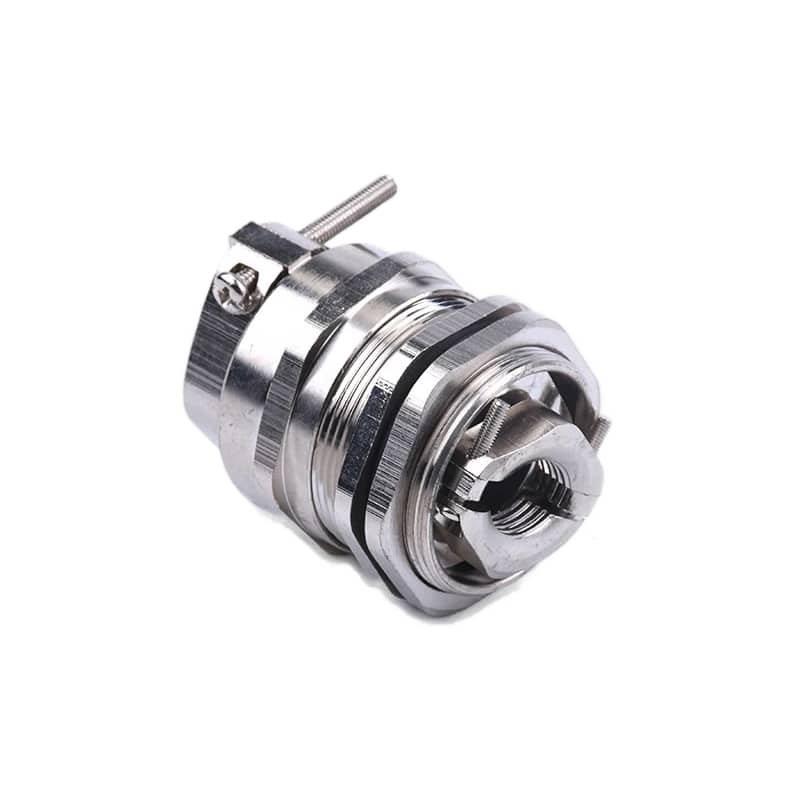
“Metal Mech” cable glands refer to mechanically-sealed metal cable glands that use compression-based sealing systems rather than adhesive or potting compounds, providing superior reliability and serviceability in demanding industrial applications.
The term “Metal Mech” isn’t standardized across the industry, which creates confusion for engineers and procurement professionals. However, understanding what this designation typically represents – and how it differs from other cable gland types – is crucial for making informed specification decisions. Let me break down everything you need to know. 😉
Table of Contents
- What Does “Metal Mech” Actually Mean in Cable Gland Terms?
- How Do Metal Mechanical Cable Glands Work?
- What Are the Key Advantages of Metal Mech Cable Glands?
- When Should You Specify Metal Mech Cable Glands?
- How Do Metal Mech Glands Compare to Other Types?
- FAQ
What Does “Metal Mech” Actually Mean in Cable Gland Terms?
Let me clarify this industry terminology that causes so much confusion.
“Metal Mech” is industry shorthand for metal cable glands with mechanical sealing systems, distinguishing them from compression glands that rely solely on elastomer deformation or barrier glands that use potting compounds1 for sealing.

Breaking Down the Terminology
“Metal” refers to the construction material – typically brass, stainless steel, or aluminum alloy. This immediately tells you the gland can handle higher temperatures, mechanical stress, and corrosive environments compared to plastic alternatives.
“Mech” (Mechanical) indicates the sealing methodology. Instead of relying purely on compression of rubber seals or chemical barriers, these glands use mechanical components to create and maintain the seal.
Industry Context and Usage
When Robert’s specification called for “Metal Mech” glands, the engineering team was specifically requesting cable glands that could be:
- Disassembled for maintenance
- Resealed after cable changes
- Inspected without destruction
- Relied upon in critical applications
This terminology evolved in industries where cable gland failure isn’t just inconvenient – it’s potentially catastrophic. Petrochemical, offshore oil, and nuclear facilities drove the development of these more sophisticated sealing systems.
Common Misconceptions
Many people assume “Metal Mech” simply means “metal cable gland,” but this misses the crucial mechanical sealing aspect. Standard compression glands, even when made of metal, rely primarily on elastomer deformation. True mechanical glands incorporate additional sealing mechanisms.
How Do Metal Mechanical Cable Glands Work?
Understanding the operating principle helps explain why these glands command premium pricing and specification preference.
Metal mechanical cable glands use multi-stage compression systems with mechanical wedging, progressive sealing rings, and strain relief mechanisms that create redundant sealing barriers while maintaining serviceability.
The Mechanical Sealing Process
Let me walk you through what happens during installation of a typical metal mech gland:
Stage 1: Cable Insertion
The cable passes through the gland body, with the mechanical sealing insert positioned around the cable jacket.
Stage 2: Primary Compression
As the compression nut tightens, mechanical wedges or cones begin compressing the sealing elements radially inward against the cable.
Stage 3: Progressive Sealing
Multiple sealing rings compress in sequence, creating redundant barriers. Unlike simple compression glands, each ring can be individually optimized for different sealing functions.
Stage 4: Strain Relief Engagement
Mechanical gripping elements engage with the cable jacket, providing superior strain relief2 compared to friction-only systems.
Internal Component Breakdown
| Component | Material | Function | Advantage |
|---|---|---|---|
| Body | Brass/SS316 | Structural housing | Corrosion resistance, strength |
| Compression Cone | Brass/SS316 | Force distribution | Even sealing pressure |
| Sealing Rings | NBR/EPDM/Viton | Environmental barrier | Chemical compatibility |
| Strain Relief | Metal/Composite | Cable grip | Mechanical retention |
| Lock Nut | Brass/SS316 | Compression control | Precise torque application |
Why “Mechanical” Makes a Difference
Hassan, who manages a chemical processing facility in Kuwait, learned this lesson the hard way. His original compression glands failed after two years due to elastomer degradation3. The mechanical glands we supplied as replacements have been performing flawlessly for over five years because:
- Controlled compression: Mechanical systems prevent over-compression that damages seals
- Progressive engagement: Multiple sealing stages provide redundancy
- Serviceability: Components can be inspected and replaced individually
- Consistent performance: Less dependent on installation technique
What Are the Key Advantages of Metal Mech Cable Glands?
After installing thousands of these glands across various industries, I can outline their distinct benefits.
Metal mechanical cable glands provide superior long-term reliability, serviceability, and performance consistency compared to standard compression glands, making them essential for critical applications despite higher initial costs.

Reliability Advantages
Extended Service Life: Our metal mech glands typically last 15-25 years in industrial environments, compared to 5-10 years for standard compression types. The mechanical sealing system maintains integrity even as elastomers age.
Temperature Stability: While standard glands may lose sealing effectiveness at temperature extremes, mechanical systems maintain consistent compression across the full operating range (-40°C to +150°C for our brass units).
Pressure Resistance: The mechanical design distributes stress more effectively, allowing these glands to handle higher internal pressures without seal failure.
Serviceability Benefits
Field Maintenance: Unlike potted or permanently compressed glands, metal mech units can be disassembled for inspection, seal replacement, or cable changes without destroying the gland.
Predictive Maintenance: Visual inspection of mechanical components allows maintenance teams to predict and prevent failures rather than react to them.
Cost of Ownership: While initial costs are 40-60% higher than standard glands, the ability to service and reuse these units often results in lower total cost of ownership over the equipment lifecycle.
Performance Consistency
Robert’s Texas facility has been using our metal mech glands for three years now. His maintenance team reports:
- Zero unplanned failures in critical applications
- Consistent IP684 performance even after multiple service cycles
- Reduced maintenance downtime due to predictable service intervals
Application-Specific Advantages
Hazardous Areas: The robust construction and reliable sealing make metal mech glands preferred for ATEX5 and IECEx certified installations.
Marine Environments: Superior corrosion resistance and salt spray performance compared to standard metal glands.
High-Vibration Applications: Mechanical retention systems handle vibration better than friction-only strain relief.
When Should You Specify Metal Mech Cable Glands?
Understanding optimal applications ensures you get maximum value from these premium components.
Specify metal mechanical cable glands for critical applications requiring long-term reliability, harsh environmental resistance, serviceability, or where cable gland failure could result in safety hazards or significant operational disruption.
Primary Application Criteria
Critical Infrastructure:
- Power generation facilities
- Water treatment plants
- Transportation control systems
- Emergency response equipment
Harsh Environments:
- Offshore oil platforms
- Chemical processing plants
- Marine installations
- Desert or arctic conditions
High-Reliability Requirements:
- Nuclear facilities
- Aerospace ground support
- Medical equipment installations
- Data center infrastructure
Cost-Benefit Analysis Framework
When evaluating whether to specify metal mech glands, consider:
| Factor | Standard Gland | Metal Mech Gland | Decision Impact |
|---|---|---|---|
| Initial Cost | $15-25 | $35-65 | 2-3x higher upfront |
| Service Life | 5-10 years | 15-25 years | Lower lifecycle cost |
| Maintenance | Replace entire unit | Service components | Reduced downtime |
| Failure Risk | Moderate | Very low | Critical for safety applications |
| Environmental | Limited | Excellent | Essential for harsh conditions |
When NOT to Use Metal Mech Glands
I always provide honest guidance about when these premium glands are unnecessary:
Standard Indoor Applications: Office buildings, residential installations, and controlled environments rarely justify the additional cost.
Budget-Constrained Projects: If the application doesn’t involve safety risks or harsh conditions, standard compression glands provide adequate performance.
Short-Term Installations: Temporary or short-duration projects won’t realize the lifecycle benefits.
Low-Consequence Failures: Applications where gland failure results in minor inconvenience rather than safety hazards or major operational disruption.
How Do Metal Mech Glands Compare to Other Types?
Understanding the competitive landscape helps optimize your cable gland selection strategy.
Metal mechanical glands occupy the premium segment, offering superior performance compared to compression glands and barrier glands, but at significantly higher cost, making selection dependent on application criticality and environmental demands.
Comprehensive Comparison Matrix
| Feature | PVC Compression | Nylon Compression | Metal Compression | Metal Mech | Barrier/Potted |
|---|---|---|---|---|---|
| Initial Cost | $ | $$ | $$$ | $$$$ | $$$$$ |
| Temperature Range | -10°C to +60°C | -40°C to +100°C | -40°C to +120°C | -40°C to +150°C | -40°C to +200°C |
| Chemical Resistance | Limited | Good | Excellent | Excellent | Superior |
| Serviceability | Replace only | Replace only | Replace only | Serviceable | Not serviceable |
| Reliability | Basic | Good | Very good | Excellent | Excellent |
| Installation Complexity | Simple | Simple | Moderate | Moderate | Complex |
Performance Over Time
Standard Compression Glands: Performance degrades gradually as elastomers age and lose resilience. Typical replacement interval: 5-8 years.
Metal Mechanical Glands: Performance remains consistent due to mechanical sealing system. Service interval: 15-20 years with component replacement as needed.
Barrier Glands: Excellent initial performance but not serviceable. Must be completely replaced if compromised.
Selection Decision Tree
Hassan’s experience in Kuwait illustrates the decision process:
- Application Assessment: Chemical processing (harsh environment) ✓
- Criticality Evaluation: Process safety critical ✓
- Lifecycle Analysis: 20-year plant design life ✓
- Budget Consideration: Premium justified by safety requirements ✓
- Decision: Metal mechanical glands specified
Conversely, for his office building project, standard nylon compression glands provided adequate performance at much lower cost.
Regional and Industry Preferences
North American Markets: Tend to favor barrier glands for hazardous area applications
European Markets: Strong preference for mechanical glands due to serviceability requirements
Asian Markets: Cost-sensitive, often specify metal compression as compromise
Oil & Gas Industry: Predominantly metal mech for critical applications
Marine Industry: Mixed preference based on specific vessel requirements
Conclusion
“Metal Mech” cable glands represent the premium segment of cable entry solutions, providing unmatched reliability and serviceability for critical applications. While the terminology isn’t standardized, the concept is clear: these are mechanically-sealed metal glands designed for long-term performance in demanding environments.
The key to successful specification is matching the gland type to application requirements. For Robert’s petrochemical facility, metal mech glands were essential for safety and reliability. For routine building installations, they would be overkill.
At Bepto, we manufacture metal mechanical glands to the highest standards, with full traceability and certification for critical applications. Our technical team can help you determine when these premium components are justified and when more economical alternatives will meet your needs effectively.
FAQ
Q: What’s the typical price difference between metal mech and standard compression glands?
A: Metal mechanical glands typically cost 2-3 times more than standard metal compression glands initially. However, their 15-25 year service life and serviceability often result in lower total cost of ownership for long-term installations.
Q: Can metal mech cable glands be reused after cable replacement?
A: Yes, this is one of their key advantages. The mechanical sealing system can be disassembled, inspected, and reassembled with new sealing elements if needed, making them ideal for applications with changing cable requirements.
Q: Are metal mech glands available with explosion-proof certifications?
A: Absolutely. Many metal mechanical glands carry ATEX, IECEx, and UL certifications for hazardous area installations. The robust mechanical design actually enhances their suitability for explosion-proof applications.
Q: How do I know if my application requires metal mech glands?
A: Consider metal mechanical glands if your application involves safety-critical systems, harsh environmental conditions, long design life (>15 years), or high cost of failure. For standard indoor applications, compression glands are usually sufficient.
Q: What maintenance is required for metal mech cable glands?
A: Inspect sealing elements every 5-7 years and replace as needed. Check compression nut torque annually in high-vibration applications. The mechanical components typically last the full service life with minimal maintenance required.
-
Learn how encapsulation compounds provide chemical and environmental protection in barrier glands. ↩
-
Understand the engineering principles behind securing cables to prevent stress on electrical connections. ↩
-
Explore the science behind rubber seal failure modes including thermal aging and chemical attack. ↩
-
Review the specific testing standards for dust-tight and immersion-resistant equipment enclosures. ↩
-
Read the European regulatory framework for equipment intended for use in explosive atmospheres. ↩
