

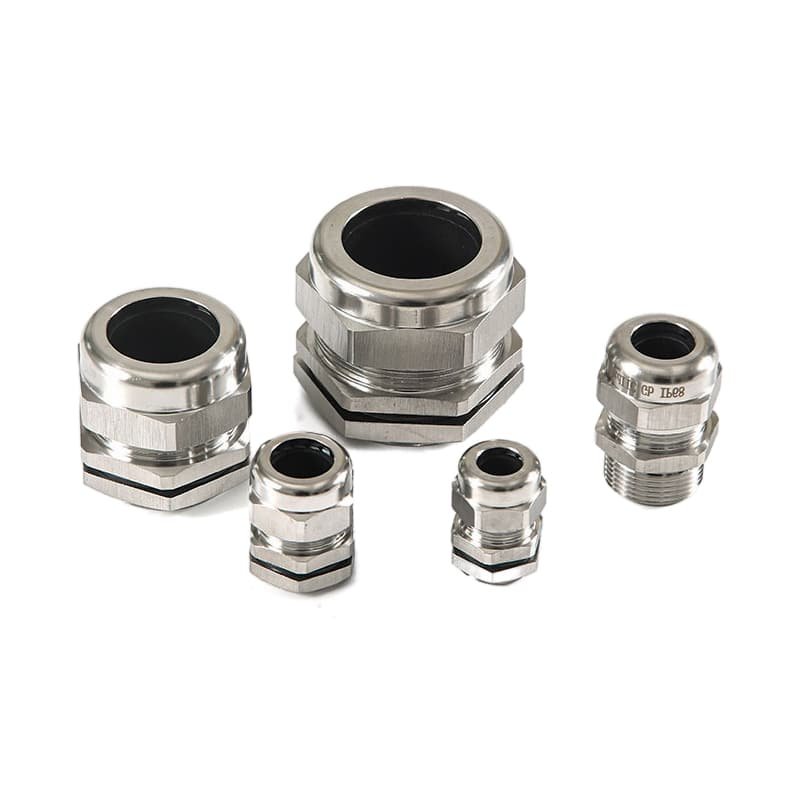
Choosing the wrong cable gland material can lead to catastrophic failures in harsh environments, especially where corrosion resistance is critical. Many engineers struggle with selecting appropriate glands for marine, chemical, and food processing applications where standard materials simply won’t survive. 16mm stainless steel cable glands provide superior corrosion resistance and durability for cables with 6-12mm outer diameter, featuring 316L grade stainless steel1 construction that withstands extreme temperatures from -50°C to +200°C while maintaining IP682 sealing performance.
Just last month, I received an urgent call from Robert, a project manager at a seafood processing plant in Aberdeen, Scotland. His facility had experienced multiple cable gland failures due to saltwater exposure and frequent washdowns with aggressive cleaning chemicals. The brass glands they’d been using for years were corroding rapidly, causing expensive downtime and potential food safety issues.
Table of Contents
- What Are 16mm Stainless Steel Cable Glands?
- Why Choose Stainless Steel Over Other Materials?
- Which Applications Require 16mm Stainless Steel Glands?
- How to Select the Right 16mm Stainless Steel Variant?
- What Are the Installation Best Practices?
- FAQs About 16mm Stainless Steel Cable Glands
What Are 16mm Stainless Steel Cable Glands?
16mm stainless steel cable glands represent the premium solution for demanding environmental conditions where standard materials fail. 16mm stainless steel cable glands feature M16x1.5 metric threading3 with 316L grade stainless steel construction, accommodating cables from 6-12mm outer diameter while providing exceptional corrosion resistance and mechanical strength for harsh industrial environments.

Key Technical Specifications
The M16 designation follows international standards, where the “16” refers to the nominal thread diameter in millimeters. Our 16mm stainless steel glands at Bepto feature:
- Thread Specification: M16x1.5 (fine pitch for enhanced sealing)
- Material Grade: 316L stainless steel (low carbon for superior corrosion resistance)
- Cable Range: 6-12mm outer diameter
- Temperature Range: -50°C to +200°C continuous operation
- IP Rating: IP68 (submersible to 10 meters for 72 hours)
- Pressure Rating: Up to 10 bar differential pressure
Construction Features
Body Material: 316L stainless steel provides excellent resistance to chlorides, acids, and alkaline solutions commonly found in marine and chemical processing environments.
Sealing System: High-grade EPDM or Viton elastomer seals maintain flexibility across the full temperature range while resisting chemical attack.
Thread Accuracy: CNC machined threads ensure perfect fit with standard M16 panel holes and provide maximum holding power under vibration.
Comparison with Standard Sizes
| Gland Size | Thread | Cable Range | Typical Applications |
|---|---|---|---|
| M12 | M12x1.5 | 3-6.5mm | Sensor cables, small control wiring |
| M16 | M16x1.5 | 6-12mm | Medium power, control systems |
| M20 | M20x1.5 | 10-14mm | Power distribution, larger control cables |
| M25 | M25x1.5 | 13-18mm | Heavy-duty power applications |
The 16mm size represents the sweet spot for many industrial applications, handling medium-power cables while maintaining compact panel footprint. At Bepto, we’ve seen consistent demand growth for this size as automation systems become more sophisticated and require reliable connections in challenging environments.
Why Choose Stainless Steel Over Other Materials?
Material selection critically impacts long-term reliability and total cost of ownership in demanding applications. Stainless steel cable glands offer superior corrosion resistance, extended temperature range, and maintenance-free operation compared to brass or nylon alternatives, making them essential for marine, chemical, food processing, and high-temperature applications despite higher initial cost.

Material Performance Comparison
Corrosion Resistance:
- 316L Stainless Steel: Excellent resistance to chlorides, acids, and most chemicals
- Brass (CW617N): Good general corrosion resistance, poor in marine environments
- Nylon 66: Chemical resistance varies, degrades in UV and high temperatures
Temperature Performance:
- 316L Stainless Steel: -50°C to +200°C continuous, +300°C intermittent
- Brass: -40°C to +120°C typical operating range
- Nylon 66: -40°C to +100°C, becomes brittle at low temperatures
Mechanical Strength:
- 316L Stainless Steel: 580 MPa tensile strength, excellent fatigue resistance
- Brass: 380 MPa tensile strength, good machinability
- Nylon 66: 80 MPa tensile strength, prone to stress cracking
Cost-Benefit Analysis
While stainless steel glands cost 40-60% more initially than brass alternatives, the total cost of ownership often favors stainless steel:
Initial Cost Premium: $8-15 per gland vs. brass
Maintenance Savings: Zero replacement for 15+ years vs. 3-5 year brass replacement cycles
Downtime Prevention: Eliminates corrosion-related failures and associated production losses
Labor Savings: No periodic inspection or replacement required
I remember working with Hassan, the maintenance director at a chemical plant in Jubail, Saudi Arabia. His team was replacing corroded brass glands every 18 months due to hydrogen sulfide exposure. After switching to our 316L stainless steel glands, they’ve had zero failures over four years, saving over $50,000 in replacement costs and eliminating monthly maintenance shutdowns.
Environmental Advantages
Marine Environments: 316L stainless steel contains molybdenum, providing exceptional resistance to chloride-induced pitting and crevice corrosion4 common in seawater applications.
Chemical Processing: The low carbon content (<0.03%) in 316L prevents carbide precipitation, maintaining corrosion resistance even after welding or high-temperature exposure.
Food & Pharmaceutical: FDA-approved 316L construction meets strict hygiene requirements and withstands aggressive cleaning chemicals and steam sterilization.
Outdoor Applications: Unlike nylon, stainless steel doesn’t degrade under UV exposure and maintains properties through extreme weather cycles.
Which Applications Require 16mm Stainless Steel Glands?
16mm stainless steel cable glands serve critical roles across industries where environmental conditions exceed the capabilities of standard materials. Marine equipment, chemical processing plants, food production facilities, pharmaceutical manufacturing, and high-temperature industrial applications typically require 16mm stainless steel glands for medium-sized cables needing superior corrosion resistance and temperature stability.

Marine and Offshore Applications
Ship Electrical Systems:
- Navigation equipment connections
- Engine room instrumentation
- Deck lighting and communication systems
- Bilge pump and ventilation controls
- Typical cable sizes: 6-10mm for control circuits
Offshore Platforms:
- Process control instrumentation
- Safety system connections
- Emergency lighting circuits
- Fire and gas detection systems
- Harsh saltwater spray environment demands 316L construction
Chemical and Petrochemical Industries
Process Control Systems:
- Temperature and pressure sensor wiring
- Flow meter connections
- Valve actuator controls
- Analyzer sample lines
- Exposure to acids, bases, and organic solvents
Safety Systems:
- Emergency shutdown controls
- Fire suppression system wiring
- Gas detection networks
- Critical alarm circuits
- Zero tolerance for corrosion-related failures
Food and Beverage Processing
Production Equipment:
- Conveyor system controls
- Packaging machine connections
- Temperature monitoring systems
- CIP (Clean-in-Place) system controls
- Frequent washdowns with caustic cleaning agents
Quality Control Systems:
- Metal detector connections
- Weight check systems
- Vision inspection equipment
- Laboratory instrument wiring
- FDA compliance requirements for food contact areas
Pharmaceutical Manufacturing
Clean Room Applications:
- HVAC control systems
- Particle monitoring equipment
- Environmental monitoring sensors
- Process equipment controls
- Steam sterilization resistance required
Validation Requirements:
- Material traceability documentation
- Biocompatibility certifications
- Cleaning validation support
- Change control documentation
- 21 CFR Part 115 compliance considerations
High-Temperature Industrial Applications
Heat Treatment Furnaces:
- Thermocouple connections
- Burner control systems
- Safety interlock circuits
- Atmosphere control equipment
- Operating temperatures up to 200°C continuous
Power Generation:
- Steam turbine instrumentation
- Boiler control systems
- Cooling system monitoring
- Emissions monitoring equipment
- Thermal cycling resistance critical
At Bepto, we’ve developed specialized application guides for each industry, helping engineers select the optimal 16mm stainless steel gland variant for their specific requirements. Our technical team regularly visits customer facilities to understand real-world operating conditions and recommend appropriate solutions.
How to Select the Right 16mm Stainless Steel Variant?
Selecting the optimal 16mm stainless steel cable gland requires careful consideration of specific application requirements and environmental conditions. Choose 16mm stainless steel gland variants based on cable outer diameter, environmental exposure, temperature requirements, and special features like EMC shielding or explosion protection, with 316L grade recommended for most corrosive environments and 304 grade suitable for mild conditions.
Material Grade Selection
316L Stainless Steel (Recommended):
- Best for: Marine, chemical, food processing applications
- Corrosion resistance: Superior chloride and acid resistance
- Temperature range: -50°C to +200°C
- Cost premium: 15-20% over 304 grade
- Applications: Seawater exposure, chemical processing, pharmaceutical
304 Stainless Steel (Economy Option):
- Best for: General industrial applications
- Corrosion resistance: Good in non-chloride environments
- Temperature range: -40°C to +180°C
- Cost advantage: Lower initial cost
- Limitations: Not suitable for marine or high-chloride environments
Cable Compatibility Assessment
Measure Cable Outer Diameter:
- Use calipers for accurate measurement
- Account for cable jacket irregularities
- Consider temperature expansion effects
- Verify cable flexibility requirements
Cable Type Considerations:
| Cable Type | Typical Diameter | Gland Selection | Special Requirements |
|---|---|---|---|
| Control Cable (7×1.5mm²) | 8-9mm | Standard M16 | EMC version for sensitive circuits |
| Power Cable (3x4mm²) | 9-11mm | Standard M16 | Consider armored version if SWA |
| Instrumentation | 6-8mm | Standard M16 | EMC shielding often required |
| Thermocouple | 6-7mm | High-temp M16 | Temperature rating critical |
Environmental Condition Analysis
Corrosive Environment Assessment:
- Identify specific chemicals present
- Determine concentration levels
- Consider temperature effects on corrosion
- Evaluate cleaning chemical compatibility
Temperature Requirements:
- Maximum operating temperature
- Minimum operating temperature
- Thermal cycling frequency
- Insulation material compatibility
Mechanical Stress Factors:
- Vibration levels and frequencies
- Cable pulling forces during installation
- Panel thickness and mounting requirements
- Access limitations for maintenance
Special Feature Requirements
EMC Shielding:
For applications with electromagnetic interference concerns:
- 360-degree cable screen termination
- Conductive elastomer seals
- Shielding effectiveness >60dB (10MHz-1GHz)
- Applications: Data centers, medical equipment, precision instrumentation
Explosion Protection (ATEX/IECEx):
For hazardous area installations:
- Ex d IIC T6 Gb certification available
- Flameproof construction
- Special installation requirements
- Certified technician installation required
Extended Temperature Range:
For extreme temperature applications:
- High-temperature seals (Viton or PTFE)
- Extended temperature testing
- Thermal expansion considerations
- Material compatibility verification
Quality Verification Checklist
Before finalizing selection:
✅ Cable diameter within 6-12mm range
✅ Material grade appropriate for environment
✅ Temperature rating exceeds application requirements
✅ Required certifications available
✅ Installation access adequate
✅ Maintenance requirements understood
✅ Total cost of ownership calculated
At Bepto, we provide comprehensive selection support including free samples for testing, detailed material certificates, and application-specific recommendations based on our 10+ years of industry experience.
What Are the Installation Best Practices?
Proper installation of 16mm stainless steel cable glands is crucial for achieving optimal performance and longevity. Install 16mm stainless steel cable glands using calibrated torque tools (8-12 Nm), ensure proper thread engagement, verify seal compression, and follow manufacturer specifications for panel thickness and hole preparation to maintain IP68 rating and prevent premature failure.
Pre-Installation Preparation
Panel Hole Preparation:
- Drill 16.5mm diameter hole (±0.1mm tolerance)
- Deburr hole edges to prevent seal damage
- Clean hole of metal shavings and contaminants
- Verify panel thickness within 1-6mm range for standard glands
Cable Preparation:
- Strip cable jacket to appropriate length (typically 10-15mm)
- Ensure cable end is clean and undamaged
- Check cable diameter at insertion point
- Verify cable flexibility for installation
Tool Requirements:
- Calibrated torque wrench (0-20 Nm range)
- 22mm hex socket or spanner
- Cable stripping tools
- Cleaning materials (isopropyl alcohol)
- Thread sealant (if specified)
Installation Procedure
Step 1: Component Assembly
- Disassemble gland components in order
- Inspect all parts for damage or contamination
- Apply light coating of compatible lubricant to seals
- Thread body into panel hole hand-tight
Step 2: Cable Insertion
- Insert cable through gland components
- Ensure cable jacket extends into gland body
- Verify proper seal positioning around cable
- Check for cable jacket damage during insertion
Step 3: Final Assembly
- Thread compression nut onto gland body
- Tighten to finger-tight plus 1/4 turn
- Apply final torque: 8-12 Nm for M16 glands
- Verify cable cannot be pulled out under moderate force
Critical Installation Parameters
Torque Specifications:
- Initial tightening: Hand-tight plus 1/4 turn
- Final torque: 8-12 Nm (avoid over-tightening)
- Verification: Cable should not move under 50N pull force
- Re-torque: Check after 24 hours and after first thermal cycle
Seal Compression Verification:
- Visual inspection of seal deformation
- No gaps visible between seal and cable
- Seal should not extrude from gland body
- Cable jacket should show slight compression marks
Thread Engagement:
- Minimum 6 full threads engaged
- Maximum compression nut travel: 8mm from start
- Thread damage indicates over-tightening
- Use thread sealant only if specified by manufacturer
Common Installation Mistakes
❌ Over-tightening: Damages seals and can crack gland body
❌ Under-tightening: Compromises IP rating and allows moisture ingress
❌ Incorrect cable preparation: Damaged jacket or incorrect strip length
❌ Contaminated components: Oil, dirt, or metal shavings prevent proper sealing
❌ Wrong panel hole size: Too large or too small affects sealing performance
Post-Installation Verification
Immediate Checks:
- Visual inspection of assembly
- Torque verification with calibrated tool
- Cable retention test (50N pull force)
- No visible seal extrusion or damage
Performance Testing:
- IP rating verification (air pressure test at 2 bar)
- Insulation resistance measurement
- Continuity verification for shielded cables
- Documentation of installation parameters
Long-term Monitoring:
- Periodic visual inspection (quarterly recommended)
- Torque check after extreme temperature cycles
- Seal condition assessment during maintenance
- Performance trending and failure analysis
I recently helped Maria, a maintenance supervisor at a pharmaceutical plant in Barcelona, Spain, resolve recurring seal failures on their 16mm stainless steel glands. The issue was over-tightening during installation, causing seal extrusion and eventual failure. After implementing proper torque procedures and training their technicians, they’ve had zero failures over 18 months of operation.
Conclusion
16mm stainless steel cable glands provide the optimal solution for medium-sized cables in demanding environments where corrosion resistance and temperature stability are critical. The superior performance of 316L stainless steel construction, combined with proper selection and installation practices, ensures reliable operation in marine, chemical, food processing, and high-temperature applications. While the initial investment is higher than alternative materials, the long-term benefits of maintenance-free operation, extended service life, and elimination of corrosion-related failures make stainless steel the most cost-effective choice for critical applications. At Bepto, we’re committed to providing the highest quality 16mm stainless steel cable glands backed by comprehensive technical support and industry expertise. 😉
FAQs About 16mm Stainless Steel Cable Glands
Q: What cable sizes fit 16mm stainless steel cable glands?
A: 16mm stainless steel cable glands accommodate cables with outer diameters from 6mm to 12mm. Always measure your cable diameter with calipers and ensure it falls within this range for proper sealing and strain relief performance.
Q: How much do 16mm stainless steel glands cost compared to brass?
A: 16mm stainless steel glands typically cost 40-60% more than brass equivalents initially, but offer superior long-term value through extended service life (15+ years vs 3-5 years for brass) and elimination of replacement costs in corrosive environments.
Q: Can I use 16mm stainless steel glands in food processing applications?
A: Yes, 16mm stainless steel glands made from 316L grade are FDA-approved for food contact applications. They resist corrosion from cleaning chemicals and maintain hygiene standards required in food and beverage processing facilities.
Q: What torque should I use when installing 16mm stainless steel cable glands?
A: Install 16mm stainless steel cable glands using 8-12 Nm torque specification. Over-tightening can damage seals and compromise IP rating, while under-tightening may allow moisture ingress and reduce cable retention strength.
Q: Do 16mm stainless steel glands need special maintenance?
A: 16mm stainless steel glands require minimal maintenance due to their corrosion-resistant construction. Perform quarterly visual inspections and verify torque after extreme temperature cycles, but expect maintenance-free operation for 15+ years in most applications.
-
Explore the chemical composition and properties of low-carbon marine-grade stainless steel. ↩
-
Understand the specific Ingress Protection (IP) ratings for dust and water resistance. ↩
-
View standard metric thread specifications to ensure panel hole compatibility. ↩
-
Learn about the localized corrosion mechanism that occurs in confined spaces or gaps. ↩
-
Review FDA regulations regarding electronic records and signatures in pharmaceutical manufacturing. ↩
