

Introduction
“Samuel, we tested our control panels after installation, and half of them failed the IP65 certification test!” That was the panicked email I received from Marcus, a control panel manufacturer in Rotterdam, Netherlands. His team had carefully selected IP68-rated cable glands and IP65-rated enclosures, yet water was leaking through the cable entry points during pressure testing. After reviewing their installation photos, the problem became immediately clear: they’d completely overlooked the entry thread seals between the cable glands and enclosure walls.
Entry thread seals—the gaskets or O-rings positioned between cable gland threads and enclosure entry holes—are critical components that prevent moisture, dust, and contaminants from bypassing cable gland seals through the threaded connection itself, directly maintaining the enclosure’s IP rating by creating a secondary seal at the panel interface. Without proper entry thread seals, even the highest-rated cable glands cannot protect your enclosure’s integrity.
Over my decade in the cable gland industry, I’ve seen countless installations fail IP certification tests solely because of missing, damaged, or incorrectly installed entry thread seals. These small, inexpensive components—often costing less than $0.50 each—are responsible for protecting equipment worth thousands of dollars. In this guide, I’ll explain exactly why entry thread seals are essential, how they work, and how to select and install them correctly. 😊
Table of Contents
- What Are Entry Thread Seals and How Do They Work?
- Why Are Entry Thread Seals Critical for IP Ratings?
- What Types of Entry Thread Seals Are Available?
- How Do You Select the Right Entry Thread Seal?
- What Are the Installation Best Practices?
- FAQs About Entry Thread Seals
What Are Entry Thread Seals and How Do They Work?
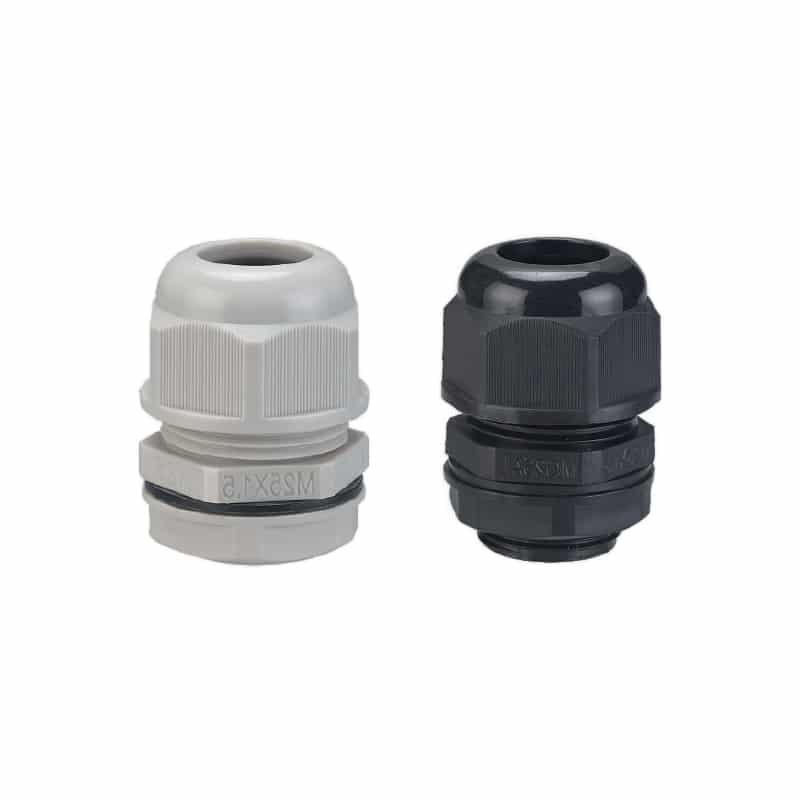
Entry thread seals are specialized gaskets or O-rings designed to create a watertight and dustproof seal between a cable gland’s threaded body and the enclosure wall. They represent a critical but often overlooked component in the complete sealing system that maintains enclosure IP ratings.
Entry thread seals function as secondary sealing barriers positioned at the thread interface between cable glands and enclosure entry holes, compressing when the cable gland locknut is tightened to fill microscopic gaps in the threaded connection and prevent ingress pathways that would otherwise bypass the cable gland’s primary cable seal. This dual-seal approach—one seal on the cable itself, one seal at the enclosure interface—is essential for achieving and maintaining certified IP ratings.

The Complete Sealing System
Understanding where entry thread seals fit in the overall sealing architecture helps clarify their importance:
Primary Sealing Points:
- Cable-to-Gland Seal: Internal seal compresses around the cable jacket
- Entry Thread Seal: Positioned between cable gland body and enclosure wall
- Locknut Compression: Tightens against the entry thread seal, creating compression force
All three elements must function correctly to maintain the enclosure’s IP rating. A failure at any single point compromises the entire system.
How Entry Thread Seals Create Protection
Compression Mechanism:
- When the locknut tightens, it compresses the entry thread seal between the locknut face and the enclosure wall
- Proper compression (typically 20-30% of original thickness) causes the seal material to flow slightly, filling microscopic surface irregularities
- This creates a continuous barrier with no gaps for moisture or dust penetration
Thread Gap Filling:
- Threaded connections inherently contain helical gaps between male and female threads
- Without an entry thread seal, these gaps create a direct pathway for water and dust
- The compressed seal blocks these thread pathways completely
At Bepto, we supply entry thread seals matched to all our cable gland product lines, ensuring compatibility and optimal sealing performance.
Why Are Entry Thread Seals Critical for IP Ratings?
Entry thread seals are not optional accessories—they’re essential components required to achieve the IP ratings marked on both cable glands and enclosures. Understanding why they’re critical helps prevent costly mistakes.
Entry thread seals are critical for IP ratings because threaded connections create inherent leak paths through the helical thread profile, panel surface irregularities prevent metal-to-metal sealing, thermal expansion and vibration create dynamic gaps, and IP certification testing specifically evaluates the complete installed assembly including the panel seal interface. Without proper entry thread seals, your installation will fail IP certification regardless of your cable gland’s rated performance.
The Thread Gap Problem
Helical Leak Path:
- Standard metric and NPT threads have a helical gap running continuously from outside to inside
- This gap typically measures 0.1-0.3mm in width—more than sufficient for water penetration
- Even with tight thread engagement, this helical pathway remains open without a seal1
I learned this lesson dramatically early in my career. Ahmed, who managed a petrochemical facility in Jubail, Saudi Arabia, installed 200 brass cable glands in outdoor junction boxes. Every cable gland was IP68-rated, but his team didn’t use entry thread seals because they assumed tight thread engagement would be sufficient. Within three months during the rainy season, 40% of the junction boxes showed internal moisture, causing equipment failures and a costly emergency retrofit project.
Surface Imperfection Issues
Real-world enclosure surfaces are never perfectly flat or smooth:
Panel Surface Variations:
- Powder coating or paint adds 50-150μm of thickness with surface texture
- Steel panels may have mill scale, rust prevention coatings, or minor warping
- Aluminum and stainless steel panels can have surface oxidation
- Fiberglass and polycarbonate enclosures have molded surface textures
These microscopic irregularities create countless tiny gaps that allow water and dust penetration. Entry thread seals compress and conform to fill these gaps completely.
IP Certification Testing Reality
IP rating certification involves rigorous testing that specifically targets potential failure points:
IP6X (Dust Protection) Testing:
- Test chamber filled with talcum powder or similar fine dust2
- Negative pressure applied to enclosure interior
- Test duration: 8 hours continuous
- Failure mode: Dust infiltrates through unsealed thread gaps
IPX7 (Temporary Immersion) Testing:
- Enclosure submerged 1 meter deep for 30 minutes3
- Water pressure forces water into any available gap
- Failure mode: Water enters through thread pathways without entry thread seals
Marcus in Rotterdam discovered this the hard way. His control panels passed internal spray testing but failed the official IP65 certification test because the certification body used the more rigorous dust chamber test.
What Types of Entry Thread Seals Are Available?
Selecting the appropriate entry thread seal type requires understanding the different designs available and their specific performance characteristics.
Entry thread seals are available in four primary types: flat elastomer washers for general-purpose applications, O-rings for high-pressure sealing, formed gaskets with specialized profiles for demanding environments, and metal-bonded seals for extreme vibration or temperature conditions. Each type offers distinct advantages for specific installation requirements.

Flat Elastomer Washers
The most common entry thread seal type, flat washers provide reliable sealing for the majority of applications.
Performance Specifications:
- IP rating capability: IP54 to IP67
- Compression range: 20-30% of original thickness
- Temperature range: -40°C to +100°C (material-dependent)
- Pressure resistance: Up to 5 bar for IP67 applications
Advantages:
- Cost-effective (typically $0.20-$0.50 per seal)
- Easy installation with no special tools required
- Wide material availability
- Suitable for most indoor and moderate outdoor applications
Best Applications:
- Indoor control panels and junction boxes
- Outdoor enclosures with IP65 requirements
- Standard industrial environments
O-Ring Seals
O-rings provide superior sealing performance, particularly for higher IP ratings and pressure applications.
Performance Specifications:
- IP rating capability: IP67 to IP68
- Compression range: 15-25% of cross-section diameter4
- Temperature range: -50°C to +150°C (material-dependent)
- Pressure resistance: Up to 10 bar for IP68 applications
Advantages:
- Excellent sealing performance with lower compression force required
- Self-centering reduces installation errors
- Superior resilience maintains sealing under vibration
- Better performance in submersion applications (IP68)
Best Applications:
- Outdoor enclosures requiring IP67 or IP68
- Submersible applications
- High-vibration environments
- Marine and offshore installations
Material Selection
The elastomer material significantly impacts seal performance:
| Material | Temperature Range | Chemical Resistance | Best For |
|---|---|---|---|
| NBR (Nitrile) | -40°C to +100°C | Good for oils | General industrial |
| EPDM | -50°C to +150°C | Excellent for water | Outdoor applications |
| Silicone | -60°C to +200°C | Good general resistance | Extreme temperatures |
| Viton (FKM) | -20°C to +200°C | Excellent for chemicals | Chemical processing |
How Do You Select the Right Entry Thread Seal?
Proper entry thread seal selection requires matching the seal type and material to your specific application requirements.
Entry thread seal selection requires evaluating five critical factors: thread size and type compatibility with your cable gland, target IP rating and environmental exposure conditions, enclosure material and surface finish characteristics, operating temperature range and chemical exposure, and installation method including available torque control. Matching all five factors ensures optimal sealing performance.
Step-by-Step Selection Process
Step 1: Identify Thread Size and Type
Metric Threads (ISO):
- Common sizes: M12, M16, M20, M25, M32, M40, M50, M63
- Example: M20 cable gland requires seal with ~20mm ID and 26-28mm OD
NPT Threads (American):
- Common sizes: 1/2″, 3/4″, 1″, 1-1/4″, 1-1/2″, 2″
- NPT threads are tapered, so seal dimensions are more critical
Step 2: Determine Required IP Rating
IP54: Standard flat elastomer washer sufficient
IP65: Flat elastomer washer with quality material (EPDM for outdoor)
IP67: O-ring seal or high-quality flat washer recommended
IP68: O-ring seal or formed gasket required
Step 3: Evaluate Environmental Conditions
Temperature Considerations:
- Standard range (-20°C to +60°C): NBR or EPDM suitable
- Cold environments (below -20°C): EPDM or silicone required
- Hot environments (above +80°C): Silicone or Viton required
Chemical Exposure:
- Water and mild chemicals: EPDM excellent choice
- Oil and petroleum products: NBR or Viton required
- Acids and alkalis: EPDM or Viton depending on concentration
Selection Example
Let me share how we helped Yuki, a project engineer in Osaka, Japan, select the right entry thread seals:
Application Requirements:
- Outdoor motor control panels
- Coastal location (salt air exposure)
- Temperature range: -10°C to +45°C
- Required IP rating: IP67
- Cable glands: M20 and M25 brass
Selection Decision:
We recommended EPDM O-ring seals because:
- EPDM provides excellent UV, ozone, and salt air resistance5
- O-rings provide superior IP67 performance and resilience
- Cost-effective solution: approximately $0.60 per seal
Results:
- All panels passed IP67 certification testing on first attempt
- 3+ years of service with zero seal failures
What Are the Installation Best Practices?
Proper installation of entry thread seals is just as important as selecting the correct seal type. Even the highest-quality seal will fail if installed incorrectly.
Entry thread seal installation best practices include thorough surface preparation to remove contaminants, correct seal positioning with proper orientation, controlled compression through specified torque values, verification of seal contact and compression, and documentation of installation parameters. These practices prevent common installation errors that compromise IP ratings.
Pre-Installation Preparation
Surface Cleaning:
- Clean enclosure surface around entry hole with isopropyl alcohol
- Remove all contaminants: paint overspray, metal chips, dust, oil, or grease
- Inspect for damage: burrs, sharp edges, or surface defects
- Deburr entry holes carefully
- Final wipe with clean, lint-free cloth
Seal Inspection:
- Visual inspection: Check for damage, cuts, or deformation
- Verify dimensions: Confirm seal matches cable gland thread size
- Check material: Ensure correct material for application
Installation Procedure
Step 1: Initial Cable Gland Installation
- Insert cable gland body through enclosure hole from exterior
- Hand-thread locknut onto cable gland from interior
- Position cable gland at correct angle/orientation
- Hand-tighten locknut until it contacts enclosure wall
Step 2: Seal Positioning
- Slide seal over cable gland body from interior side
- Verify seal is centered and not twisted or folded
- For O-rings: Seat O-ring in cable gland groove if present
Step 3: Locknut Tightening (Critical Step)
Torque Specifications by Thread Size:
| Thread Size | Recommended Torque |
|---|---|
| M12 | 5-8 Nm |
| M16 | 8-12 Nm |
| M20 | 12-15 Nm |
| M25 | 18-22 Nm |
| M32 | 25-30 Nm |
Tightening Procedure:
- Use calibrated torque wrench for critical installations (IP67 and higher)
- Tighten gradually in multiple passes
- First pass: 50% of target torque
- Second pass: 75% of target torque
- Final pass: 100% of target torque
Step 4: Installation Verification
Visual Inspection:
- Seal should show even compression around entire circumference
- Slight seal extrusion (1-2mm) beyond locknut is normal
- No gaps visible between seal and enclosure surface
Common Installation Mistakes to Avoid
| Mistake | Consequence | Prevention |
|---|---|---|
| Skipping surface cleaning | Contaminants prevent proper seal contact | Always clean with isopropyl alcohol |
| Over-tightening locknut | Seal damage, extrusion, or cutting | Use torque wrench with specified values |
| Under-tightening locknut | Inadequate compression, seal leakage | Follow torque specifications |
| Installing damaged seals | Immediate or premature seal failure | Inspect every seal before installation |
| Wrong seal material | Chemical attack, temperature failure | Verify material matches application |
At Bepto, we provide detailed installation instructions with every cable gland order, including torque specifications, seal material recommendations, and troubleshooting guidance. 😊
Conclusion
Entry thread seals are small components with enormous impact on enclosure IP rating performance and equipment protection. These inexpensive gaskets and O-rings—positioned between cable gland threads and enclosure walls—create the critical secondary seal that prevents moisture, dust, and contaminants from bypassing cable gland seals through threaded connections. Without proper entry thread seals, even the highest-rated cable glands cannot maintain enclosure IP ratings, leading to equipment damage, certification failures, and costly retrofits. By understanding how entry thread seals function, selecting the appropriate seal type and material for your environmental conditions, and following systematic installation procedures with proper torque control, you can achieve reliable IP protection that lasts for years. At Bepto, we manufacture and supply complete cable entry solutions including cable glands, entry thread seals, and all necessary accessories, backed by comprehensive technical support and quality certifications including ISO9001, IATF16949, and IP68 testing verification.
FAQs About Entry Thread Seals
Q: Can I reuse entry thread seals when removing and reinstalling cable glands?
A: No, entry thread seals should not be reused after removal because compression permanently deforms the seal material, reducing its ability to create proper sealing force upon reinstallation. Always replace entry thread seals during maintenance or reinstallation to maintain IP rating integrity—seals typically cost less than $1 each, making replacement far more cost-effective than risking equipment damage from seal failure.
Q: What’s the difference between entry thread seals and cable gland seals?
A: Entry thread seals create a seal between the cable gland body and the enclosure wall at the threaded connection, while cable gland seals compress around the cable jacket itself. Both seals are required for complete IP rating protection—the cable gland seal is the primary barrier, and the entry thread seal is the secondary barrier that prevents bypass through the threaded connection.
Q: How do I know if my entry thread seal is properly compressed?
A: A properly compressed entry thread seal shows slight extrusion (1-2mm) beyond the locknut edge, appears evenly compressed around the entire circumference with no gaps, and cannot be easily moved or removed by hand after installation. Use the specified torque values for your thread size to ensure proper compression without over-tightening.
Q: Do I need entry thread seals if my cable gland is already IP68 rated?
A: Yes, absolutely. The IP68 rating on a cable gland refers to its sealing capability around the cable itself, not at the enclosure interface. Entry thread seals are required to seal the threaded connection between the cable gland and enclosure wall—without them, water and dust can enter through the thread gaps regardless of the cable gland’s rating.
Q: What seal material should I use for outdoor installations?
A: EPDM (ethylene propylene diene monomer) is the best choice for most outdoor installations because it offers excellent UV resistance, ozone resistance, weather resistance, and temperature range (-50°C to +150°C). Avoid NBR (nitrile) seals for outdoor use as they degrade rapidly under UV exposure, leading to premature seal failure.
-
“Screw thread”,
https://en.wikipedia.org/wiki/Screw_thread. Wikipedia technical page explaining thread profiles and leak paths. Evidence role: mechanism; Source type: research. Supports: helical gap continuous pathway. ↩ -
“IP Code”,
https://en.wikipedia.org/wiki/IP_Code. Standard parameters for IP6X ingress protection testing. Evidence role: standard; Source type: research. Supports: dust chamber testing procedure. ↩ -
“IP Ratings”,
https://www.iec.ch/ip-ratings. Official IEC documentation for ingress protection. Evidence role: standard; Source type: standard. Supports: IPX7 temporary immersion testing depth and duration. ↩ -
“O-Ring Reference Guide”,
https://www.parker.com/literature/O-Ring%20Division%20Literature/ORD%205700.pdf. Technical manual on elastomer seal design. Evidence role: mechanism; Source type: industry. Supports: O-ring compression requirements. ↩ -
“EPDM rubber”,
https://en.wikipedia.org/wiki/EPDM_rubber. Material science outline of EPDM elastomer properties. Evidence role: material performance; Source type: research. Supports: environmental resistance of EPDM. ↩
