


When David, a procurement manager from a major automotive manufacturer in Detroit, called me last month, he was frustrated. “Samuel, I need 5,000 cable glands for our new production line, but my current supplier’s metal glands are causing budget overruns. What alternatives do you have?” This conversation happens more often than you’d think in our industry.
Polyamide (nylon) cable glands offer an exceptional balance of durability, chemical resistance1, and cost-effectiveness, making them ideal for applications where metal alternatives are either unnecessary or prohibitively expensive. These versatile components provide reliable cable protection across temperatures from -40°C to +100°C while maintaining excellent mechanical properties.
The reality is that many engineers and procurement professionals overlook nylon cable glands, assuming metal is always superior. However, after helping hundreds of clients optimize their cable management systems, I’ve seen how the right polyamide solution can deliver better performance at a fraction of the cost. 😉
Table of Contents
- What Are Polyamide Cable Glands and Why Choose Them?
- What Materials Make Polyamide Cable Glands Superior?
- What Are the Key Benefits of Nylon Cable Glands?
- How Do You Select the Right Polyamide Cable Gland?
- What Applications Benefit Most from Nylon Cable Glands?
- FAQ
What Are Polyamide Cable Glands and Why Choose Them?
Let me start with the basics that every engineer should know about these components.
Polyamide cable glands are threaded cable entry devices manufactured from high-grade nylon polymers, designed to provide secure cable attachment, environmental sealing, and strain relief in electrical installations. Unlike their metal counterparts, they offer unique advantages in weight-sensitive applications and corrosive environments.

The Engineering Behind Polyamide Performance
At Bepto, we manufacture our nylon cable glands using PA66 (Polyamide 66) material, which provides superior mechanical strength compared to standard PA6. The molecular structure of PA66 creates stronger intermolecular forces, resulting in:
- Enhanced tensile strength: Up to 80 MPa compared to 60 MPa for PA6
- Better dimensional stability: Reduced creep under continuous load
- Superior chemical resistance: Excellent performance against oils, fuels, and most industrial chemicals
The secret lies in our injection molding process. We maintain precise temperature control (280-300°C) and use specialized molds that ensure consistent wall thickness and optimal fiber orientation. This attention to detail is why our polyamide glands consistently outperform cheaper alternatives in long-term applications.
What Materials Make Polyamide Cable Glands Superior?
Understanding the material composition is crucial for making informed purchasing decisions.
High-grade PA66 polyamide provides exceptional mechanical properties, chemical resistance, and thermal stability, making it superior to standard plastics and competitive with metal alternatives in many applications.
Material Composition Breakdown
| Component | Material | Function | Performance Benefit |
|---|---|---|---|
| Body & Nut | PA66 + Glass Fiber | Structural integrity | High tensile strength, dimensional stability |
| Sealing Ring | NBR/EPDM | Environmental protection | IP68 rating2, chemical resistance |
| Clamping Insert | PA66 | Cable grip | Excellent strain relief |
| Thread | Metric/NPT | Connection interface | Precise fit, easy installation |
Why PA66 Outperforms Other Plastics
I remember when Hassan, who runs a chemical processing facility in Saudi Arabia, initially questioned our material choice. “Samuel, we’ve had failures with plastic components before. How do I know your nylon won’t degrade in our harsh environment?”
The answer lies in PA66’s unique properties:
Chemical Resistance: PA66 withstands exposure to most acids, bases, oils, and solvents. In Hassan’s facility, our glands have been performing flawlessly for over three years in direct contact with various chemical vapors.
Temperature Performance: While standard plastics fail at moderate temperatures, PA66 maintains its properties from -40°C to +100°C, with short-term exposure capability up to 120°C.
UV Stability: Our PA66 formulation includes UV stabilizers that prevent degradation under continuous sunlight exposure, making them suitable for outdoor applications.
What Are the Key Benefits of Nylon Cable Glands?
After installing millions of polyamide cable glands across various industries, I can confidently outline their core advantages.
Nylon cable glands deliver cost savings of 40-60% compared to brass alternatives while providing equivalent sealing performance, superior chemical resistance, and significantly reduced installation weight.

Economic Advantages
Cost Effectiveness: The most immediate benefit is cost reduction. For David’s automotive project, switching from brass to our PA66 glands saved his company $47,000 on the initial order alone. Over the product lifecycle, maintenance savings add another 20-30% value.
Reduced Installation Costs: Nylon glands weigh 70% less than brass equivalents. In large installations, this translates to:
- Reduced shipping costs
- Easier handling during installation
- Lower structural support requirements
- Faster installation times
Technical Performance Benefits
Superior Sealing: Our polyamide glands achieve IP68 rating consistently. The flexibility of nylon allows better conforming to cable irregularities, often providing superior sealing compared to rigid metal alternatives.
Chemical Immunity: Unlike brass or steel, nylon doesn’t corrode. In marine environments or chemical plants, this immunity extends service life significantly.
Electrical Properties: PA66 provides excellent electrical insulation (>10^14 ohm-cm), eliminating concerns about electrical conductivity that can occur with metal glands in certain applications.
How Do You Select the Right Polyamide Cable Gland?
Proper selection ensures optimal performance and longevity in your specific application.
Select polyamide cable glands based on cable diameter, thread specification3, environmental conditions, and certification requirements, ensuring the chosen model matches your application’s temperature, chemical exposure, and sealing demands.
Selection Criteria Matrix
Cable Diameter Matching:
- Measure cable outer diameter including any sheathing
- Add 10-15% tolerance for manufacturing variations
- Ensure the gland’s clamping range encompasses your cable size
Thread Specification:
- Metric threads: M12, M16, M20, M25, M32, M40, M50, M63
- NPT threads: 1/2″, 3/4″, 1″, 1-1/4″, 1-1/2″, 2″
- PG threads: PG7, PG9, PG11, PG13.5, PG16, PG21, PG29, PG36
Environmental Considerations:
- Standard duty: -20°C to +80°C, general industrial use
- Extended range: -40°C to +100°C, automotive and outdoor applications
- Chemical exposure: Specify chemical compatibility requirements
- UV exposure: Outdoor applications require UV-stabilized formulations
Certification Requirements
For regulated industries, ensure your selected glands meet relevant standards:
- IP ratings: IP68 for submersible applications
- UL listings4: UL514B for North American electrical installations
- CE marking: European conformity for EU markets
- ATEX certification: For explosive atmosphere applications (available in our metal range)
What Applications Benefit Most from Nylon Cable Glands?
Understanding optimal applications helps maximize the value of polyamide cable glands.
Polyamide cable glands excel in automotive, renewable energy, food processing, and general industrial applications where cost efficiency, chemical resistance, and weight reduction are priorities over extreme temperature or explosion-proof requirements.
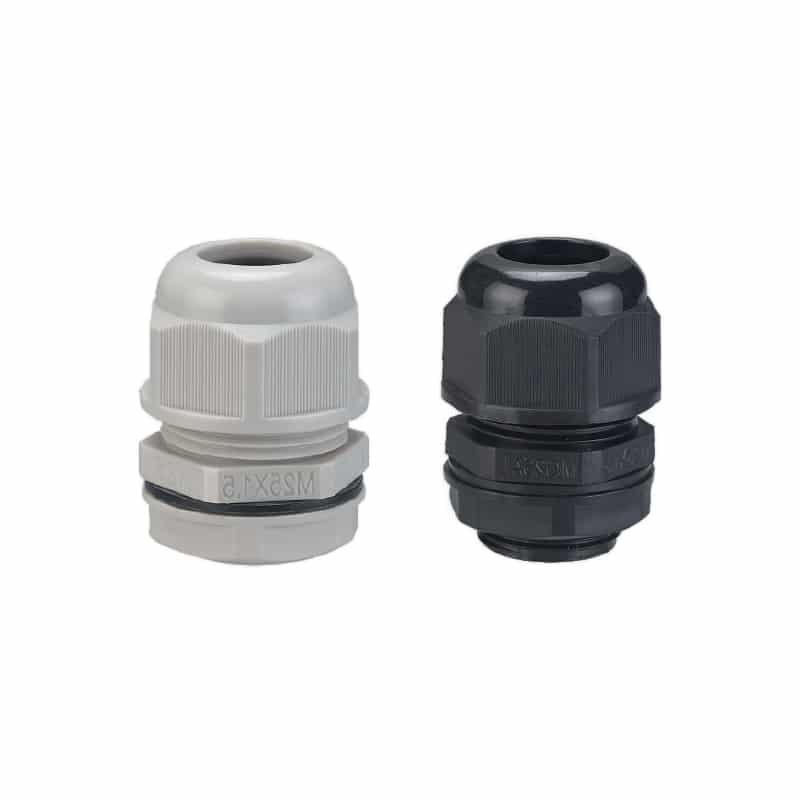
Primary Application Sectors
Automotive Industry:
David’s experience is typical in automotive manufacturing. Nylon glands are perfect for:
- Engine bay applications (non-extreme temperature zones)
- Interior electrical systems
- Charging infrastructure for electric vehicles
- Assembly line equipment
Renewable Energy:
Solar installations particularly benefit from nylon’s UV resistance and cost advantages:
- Photovoltaic junction boxes
- Inverter connections
- Monitoring system enclosures
- Wind turbine control systems (non-nacelle applications)
Food & Beverage Processing:
The FDA-compliant grades of PA66 make these glands ideal for:
- Processing equipment control panels
- Packaging machinery
- Conveyor system controls
- Cleaning system installations
General Industrial:
- HVAC control systems
- Lighting installations
- Pump and motor control boxes
- Building automation systems
When to Choose Metal Alternatives
Honesty is crucial in our business. While nylon glands are excellent, some applications require our brass or stainless steel alternatives:
- Temperatures exceeding 100°C continuously
- Explosion-proof requirements (ATEX zones)
- High-vibration applications requiring maximum mechanical strength
- Applications requiring EMC shielding5
Conclusion
Polyamide cable glands represent a smart engineering choice for the majority of cable management applications. They deliver the performance you need at a fraction of the cost of metal alternatives, while offering unique advantages in chemical resistance and installation convenience. The key is understanding when and where to use them effectively.
At Bepto, we’ve helped thousands of customers optimize their cable management systems with the right polyamide solutions. Whether you’re managing a large-scale industrial project like David’s automotive line or seeking reliable performance in challenging environments like Hassan’s chemical facility, our PA66 cable glands deliver proven results.
FAQ
Q: How long do polyamide cable glands last compared to metal ones?
A: High-quality PA66 cable glands typically last 15-20 years in standard industrial environments, matching or exceeding brass alternatives in many applications. The key difference is that nylon doesn’t corrode, while metal glands can fail due to galvanic corrosion or chemical attack.
Q: Can nylon cable glands handle outdoor weather conditions?
A: Yes, our UV-stabilized PA66 formulation withstands continuous outdoor exposure including UV radiation, temperature cycling, and moisture. We’ve had installations performing flawlessly for over 10 years in desert and coastal environments.
Q: What’s the temperature limit for polyamide cable glands?
A: Standard PA66 cable glands operate reliably from -40°C to +100°C continuously, with short-term exposure capability to 120°C. For higher temperatures, we recommend our brass or stainless steel alternatives.
Q: Are polyamide cable glands suitable for chemical plants?
A: PA66 offers excellent resistance to most industrial chemicals including oils, fuels, weak acids, and bases. However, specific chemical compatibility should be verified for your application. We provide detailed chemical resistance charts for all our products.
Q: How do I ensure proper installation of nylon cable glands?
A: Install hand-tight plus 1/4 turn maximum. Over-tightening can damage the threads or compromise sealing. Ensure the cable sits properly in the sealing range and the strain relief is engaged. Our technical team provides detailed installation guides for all applications.
-
See a detailed breakdown of Polyamide 66’s resistance to acids, solvents, and bases. ↩
-
Understand the rigorous testing required for a component to achieve the International Protection (IP) rating of 68. ↩
-
Consult the official ISO standards for Metric screw threads (M Series) used in electrical components. ↩
-
Review the definitive safety standard set by Underwriters Laboratories (UL) for cable fittings in North America. ↩
-
Learn about Electromagnetic Compatibility (EMC) shielding and its importance in protecting sensitive electronics. ↩
