

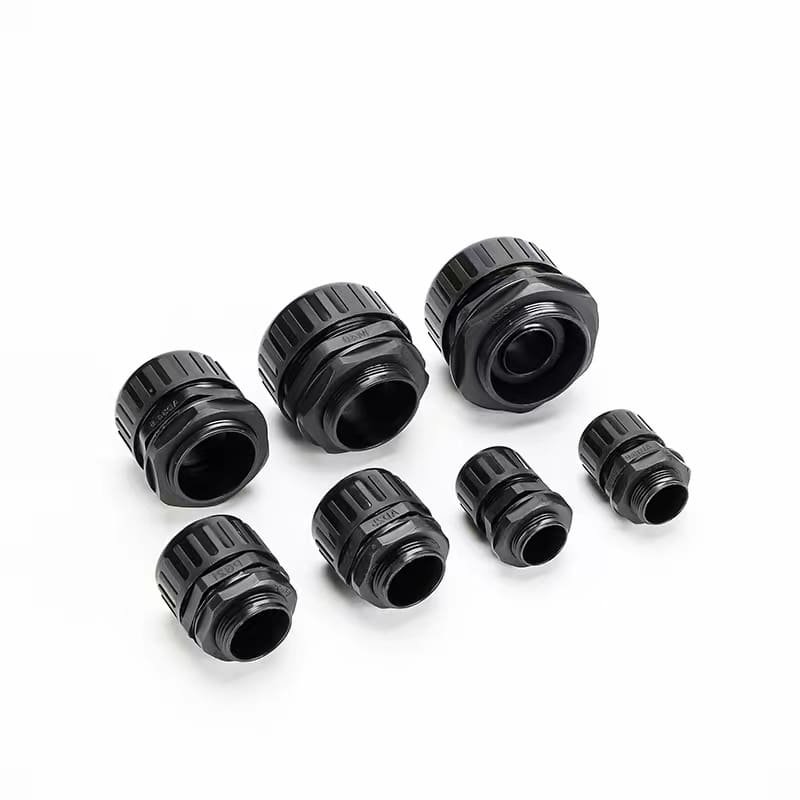
When David, a procurement manager from a German automotive supplier, called me last month, he was frustrated. “Samuel, we’ve been struggling with M8 cable gland sizing for our proximity sensors. Half our orders come back wrong, and production delays are costing us thousands daily!”
M8 cable glands are specifically designed for miniature sensors with 8mm thread diameter, requiring precise cable diameter matching (typically 3-6mm) and proper IP rating selection to ensure reliable performance in compact automation applications.
This sizing challenge isn’t unique to David. After 10+ years in the cable gland industry at Bepto Connector, I’ve seen countless engineers struggle with M8 specifications. The miniature nature of these components demands precision – one wrong measurement can compromise your entire sensor network. Let me share the exact sizing methodology that’s helped hundreds of our clients achieve perfect fits every time. 😉
Table of Contents
- What Are M8 Cable Glands and Why Size Matters?
- How to Measure Cable Diameter for M8 Glands?
- What Thread Specifications Should You Consider?
- Which IP Rating Do You Need for Your Application?
- FAQs About M8 Cable Glands
What Are M8 Cable Glands and Why Size Matters?
M8 cable glands represent the miniature end of our product spectrum at Bepto Connector, but don’t let their small size fool you – precision here is absolutely critical.
M8 cable glands are compact cable entry solutions with 8mm metric threads1, specifically engineered for miniature sensors, proximity switches, and photoelectric devices where space constraints demand precise dimensional accuracy.

The Critical Sizing Challenge
Unlike larger cable glands where slight variations might be forgiven, M8 applications leave zero room for error. I learned this the hard way when Hassan, a project manager from a UAE oil refinery, received 500 units that were just 0.5mm off in cable grip range. The result? Complete sensor network failure during commissioning.
The key sizing parameters for M8 cable glands include:
| Parameter | Typical Range | Critical Notes |
|---|---|---|
| Thread Size | M8 x 1.0 | Standard metric fine thread |
| Cable Diameter | 3.0 – 6.0mm | Must match exactly |
| Panel Thickness | 1.0 – 3.0mm | Affects engagement length |
| IP Rating | IP65 – IP68 | Environment dependent |
Material Considerations for Miniature Applications
At Bepto, we manufacture M8 cable glands in three primary materials:
Nylon M8 Glands: Perfect for indoor automation, cost-effective, temperature range -40°C to +100°C. David’s automotive application uses these exclusively for proximity sensors in climate-controlled environments.
Brass M8 Glands: Superior EMC performance, ideal for high-frequency environments, natural antimicrobial properties. Our TUV-certified versions meet the strictest European standards.
Stainless Steel M8 Glands: Chemical resistance, marine applications, extreme temperature tolerance. Hassan’s refinery project required 316L stainless steel for H2S environments.
How to Measure Cable Diameter for M8 Glands?
This is where most sizing errors occur. The miniature scale of M8 applications amplifies measurement mistakes dramatically.
Accurate cable diameter measurement for M8 glands requires measuring the cable’s outer diameter including jacket and shielding, then selecting a gland with cable grip range that provides 0.2-0.5mm compression for optimal sealing.
Step-by-Step Measurement Process
Step 1: Use Proper Tools
Digital calipers are essential – don’t rely on rulers or tape measures. We recommend 0.01mm resolution minimum for M8 applications.2
Step 2: Measure Multiple Points
Take measurements at three different points along the cable, 50mm apart. Cables aren’t perfectly round, especially shielded sensor cables.
Step 3: Account for Cable Construction
- Standard PVC: Measure outer jacket directly
- Shielded Cables: Include braided shield in measurement
- Armored Sensor Cables: Measure over armor, not inner jacket
Common M8 Cable Diameter Ranges
Based on our manufacturing data at Bepto:
- 3.0-4.0mm: Ultra-compact proximity sensors, photoelectric sensors
- 4.0-5.0mm: Standard industrial sensors, most common range
- 5.0-6.0mm: Heavy-duty sensors, shielded applications
- 6.0-6.5mm: Maximum M8 capacity, specialized applications
Real-World Sizing Example
When David’s team measured their proximity sensor cables, they initially got 4.2mm readings. However, these were shielded cables with braided outer conductors. The actual outer diameter including shield was 4.8mm – requiring our 4.5-6.0mm grip range M8 glands instead of the 3.5-4.5mm range they originally specified.
What Thread Specifications Should You Consider?
M8 threading might seem straightforward, but several critical specifications can make or break your installation.
M8 cable glands use M8 x 1.0 metric fine thread specification3, requiring 6-8mm thread engagement for proper sealing and mechanical retention, with thread length varying based on panel thickness and application requirements.
Thread Engagement Calculations
Proper thread engagement is crucial for both sealing integrity and mechanical strength:
Minimum Engagement: 1.5 x thread pitch = 1.5mm (emergency minimum)
Recommended Engagement: 6-8mm for reliable sealing
Maximum Engagement: Limited by gland body length, typically 12mm
Panel Thickness Considerations
M8 applications often involve thin panels or enclosure walls:
| Panel Thickness | Thread Length Required | Engagement Available |
|---|---|---|
| 1.0mm | 8mm minimum | 7mm effective |
| 2.0mm | 9mm minimum | 7mm effective |
| 3.0mm | 10mm minimum | 7mm effective |
Thread Quality Standards
At Bepto, our M8 threads are manufactured to ISO 262 specifications with 6H tolerance class. This ensures:
- Smooth installation without cross-threading
- Consistent torque requirements (2-3 Nm typical)
- Reliable sealing performance across temperature ranges
Which IP Rating Do You Need for Your Application?
IP rating selection for M8 cable glands requires careful consideration of both current and potential future environmental conditions.
M8 cable glands typically offer IP65 to IP68 protection ratings4, with IP67 being the most common choice for industrial sensor applications requiring dust-tight sealing and temporary water immersion protection.
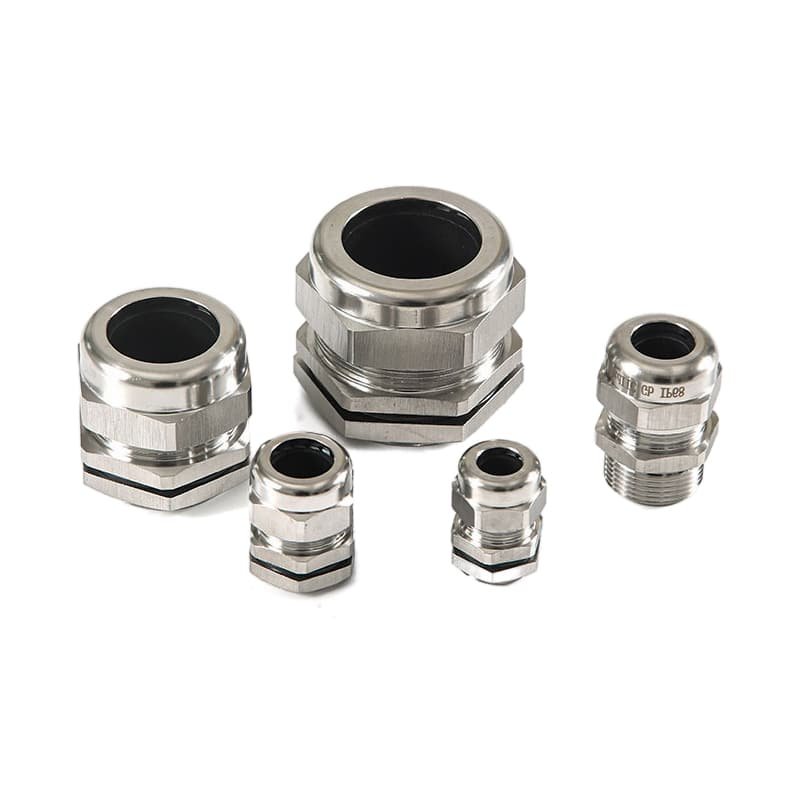
IP Rating Breakdown for M8 Applications
IP65 – Dust Protected, Water Jet Resistant
- Indoor automation environments
- Standard proximity sensor installations
- Cost-effective for controlled environments
- David’s automotive line uses IP65 for all indoor sensors
IP67 – Dust Tight, Temporary Immersion
- Outdoor installations
- Washdown environments
- Food processing applications
- Most versatile choice for uncertain conditions
IP68 – Dust Tight, Continuous Submersion
- Marine applications
- Underground installations
- Chemical processing environments
- Hassan’s refinery specified IP68 for all outdoor sensors
Environmental Factor Analysis
Temperature Cycling: Affects seal material selection and long-term reliability
Chemical Exposure: May require upgraded seal materials or metallic bodies
Vibration Levels: Influences thread locking compound requirements
Maintenance Access: Determines removable vs. permanent installation needs
Seal Material Selection
Our M8 cable glands at Bepto use different seal materials based on IP requirements:
- NBR Seals:5 Standard for IP65/IP67, -40°C to +100°C
- EPDM Seals: Enhanced chemical resistance, wider temperature range
- Viton Seals: Premium chemical resistance, high-temperature applications
Conclusion
M8 cable gland sizing success depends on three critical factors: precise cable diameter measurement, proper thread engagement calculation, and appropriate IP rating selection for your specific environment. The miniature nature of these components demands accuracy – small mistakes create big problems in sensor networks.
Remember David’s lesson: always measure cables with all layers included, and Hassan’s experience: never compromise on environmental protection ratings. At Bepto Connector, we’ve helped thousands of engineers achieve perfect M8 installations by following these exact specifications.
FAQs About M8 Cable Glands
Q: What’s the difference between M8 x 1.0 and M8 x 1.25 threads?
A: M8 x 1.0 is the standard fine thread for cable glands, providing better sealing and more thread engagement. M8 x 1.25 coarse threads are rarely used in cable gland applications and may not provide adequate sealing performance.
Q: Can I use M8 cable glands for cables larger than 6mm?
A: No, M8 cable glands have a maximum cable diameter capacity of approximately 6.5mm due to the limited internal space. For larger cables, you’ll need M12 or larger cable glands to ensure proper sealing and strain relief.
Q: How do I prevent cross-threading when installing M8 cable glands?
A: Start threading by hand and turn counter-clockwise until you feel the threads drop into alignment, then turn clockwise. Use proper torque (2-3 Nm) and ensure the panel hole is properly sized at 8mm diameter with clean, deburred edges.
Q: What’s the minimum panel thickness for M8 cable glands?
A: Most M8 cable glands require minimum 1mm panel thickness for proper thread engagement. However, 2-3mm thickness is recommended for optimal mechanical strength and sealing performance in industrial applications.
Q: Do M8 cable glands need thread sealant?
A: High-quality M8 cable glands with proper O-ring seals typically don’t require thread sealant for standard applications. However, thread locking compound may be beneficial in high-vibration environments to prevent loosening over time.
-
“ISO 261:1998 – ISO general purpose metric screw threads — General plan”,
https://www.iso.org/standard/4165.html. The ISO page identifies ISO general purpose metric screw threads and their basic profile framework. Evidence role: general_support; Source type: standard. Supports: with 8mm metric threads. ↩ -
“ABSOLUTE Digimatic Point Caliper – Mitutoyo”,
https://dev.pim.mitutoyo.com/products/small-tool-instruments-and-data-management/calipers/digimatic-calipers/absolute-digimatic-point-caliper/. The product specifications document digital calipers with 0.01mm resolution suitable for fine dimensional checks. Evidence role: general_support; Source type: industry. Supports: Digital calipers are essential – don’t rely on rulers or tape measures. We recommend 0.01mm resolution minimum for M8 applications. ↩ -
“ISO 262:2023 – ISO general purpose metric screw threads — Selected sizes for bolts, screws, studs and nuts”,
https://www.iso.org/standard/85105.html. The ISO page defines selected diameter and pitch combinations for ISO general purpose metric screw threads. Evidence role: general_support; Source type: standard. Supports: M8 cable glands use M8 x 1.0 metric fine thread specification. ↩ -
“IEC 60529:1989+AMD1:1999+AMD2:2013 CSV”,
https://webstore.iec.ch/en/publication/2452. The IEC page describes the standard for classifying degrees of protection provided by enclosures under the IP Code. Evidence role: general_support; Source type: standard. Supports: IP65 to IP68 protection ratings. ↩ -
“Parker O-Ring Handbook”,
https://www.parker.com/content/dam/Parker-com/Literature/O-Ring-Division-Literature/ORD-5700.pdf. The handbook provides engineering reference data for common elastomer sealing materials including nitrile/NBR service temperature guidance. Evidence role: general_support; Source type: industry. Supports: NBR Seals. Scope note: The handbook supports NBR material selection and temperature-range context; exact gland IP performance depends on the finished gland design and test method. ↩
