


“Our production line keeps shutting down randomly,” frustrated plant manager Roberto from Milan called to tell me. “The PLCs are receiving interference, and our automation supplier says we need ‘EMC glands’ – but what exactly are those?” This scenario plays out daily in modern industrial facilities where electromagnetic interference wreaks havoc on sensitive control systems.
An EMC cable gland provides electromagnetic compatibility by creating a continuous 360-degree shield connection between cable armor/screen and equipment enclosure, preventing electromagnetic interference from disrupting sensitive electronic systems. It’s essentially a specialized cable gland that maintains electrical continuity for shielding.
After helping thousands of customers solve EMI problems across industries from automotive manufacturing to data centers, I’ve learned that EMC gland confusion stems from mixing up basic environmental sealing with electromagnetic shielding. Let me provide the clear definition that cuts through the technical jargon.
Table of Contents
- What Does EMC Actually Stand For?
- How Do EMC Glands Differ from Standard Glands?
- What Components Make a Gland “EMC”?
- When Do You Actually Need EMC Glands?
- How Do EMC Glands Work in Practice?
- FAQs About EMC Cable Glands
What Does EMC Actually Stand For?
EMC is one of those acronyms that gets thrown around without proper explanation, leading to widespread confusion about what these glands actually do.
EMC stands for Electromagnetic Compatibility – the ability of electrical equipment to function properly in its electromagnetic environment without causing or suffering from electromagnetic interference. EMC glands are specifically designed to maintain this compatibility by preserving cable shielding integrity1.

Breaking Down Electromagnetic Compatibility
Electromagnetic Emission: Equipment should not emit electromagnetic energy that interferes with other devices
Electromagnetic Immunity: Equipment should not be susceptible to electromagnetic interference from external sources
Electromagnetic Environment: The sum total of electromagnetic phenomena in a given location
The EMC Challenge in Modern Industry
Today’s industrial environments are electromagnetic minefields:
High-Power Sources: Variable frequency drives, welding equipment, induction heaters, switching power supplies
Sensitive Receivers: PLCs, sensors, communication systems, precision measurement equipment
Dense Installation: Equipment packed closely together, creating interference opportunities
Roberto’s production line problem was classic EMC failure – VFDs were generating high-frequency noise that traveled through inadequately shielded cables, disrupting PLC inputs and causing random shutdowns.
EMC Regulations and Standards
International Standards:
- IEC 61000 series2: Global EMC standards
- EN 55011: Industrial, scientific, medical equipment
- FCC Part 15: US commercial equipment regulations
- CISPR standards: International radio interference standards
Industry Requirements:
- CE Marking: Mandatory EMC compliance in Europe
- FCC Certification: Required for US market access
- Industrial Standards: Sector-specific EMC requirements
At Bepto, our EMC glands are tested to these international standards, ensuring compliance across global markets. Our certification documentation at chinacableglands.com provides detailed test results and compliance certificates.
How Do EMC Glands Differ from Standard Glands?
The fundamental difference lies in electrical continuity – EMC glands create a conductive path that standard glands cannot provide.
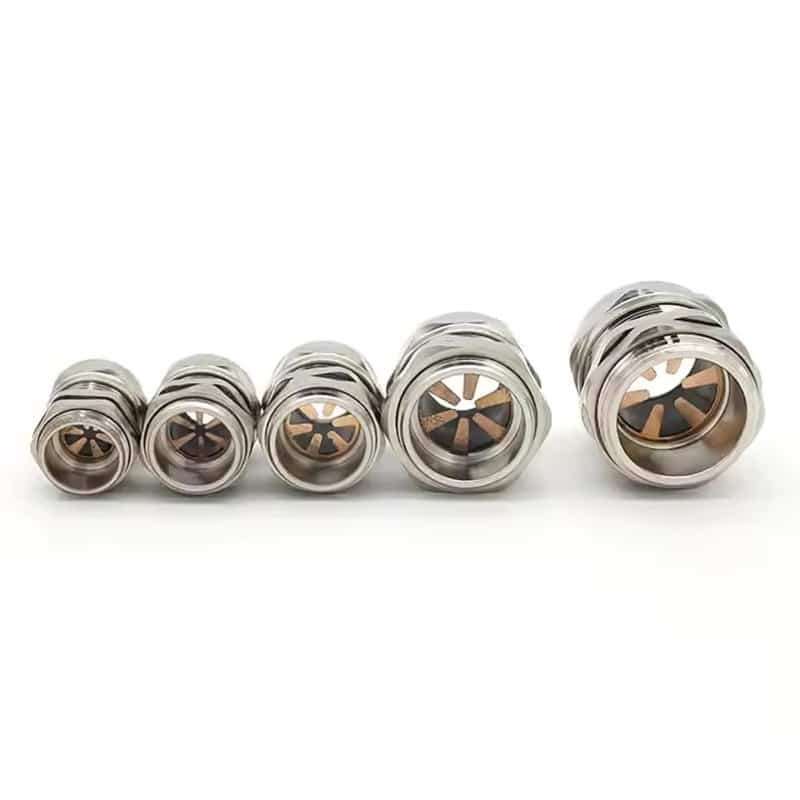
EMC glands feature conductive materials, 360-degree shield clamping, and electrical continuity to equipment ground, while standard glands focus only on environmental sealing without electromagnetic shielding capability. This electrical function is the key differentiator.
Standard Gland Limitations
Environmental Focus Only: Standard glands seal against water, dust, and chemicals but provide no electromagnetic shielding
Insulating Materials: Often use nylon or other non-conductive materials that break shield continuity
No Ground Connection: Cannot establish electrical connection between cable shield and enclosure
EMC Gland Advantages
Conductive Construction: Made from brass, stainless steel, or other conductive materials
Shield Clamping: Mechanically and electrically connects to cable armor or screen
Ground Continuity: Establishes low-impedance path to equipment ground
360-Degree Contact: Provides complete circumferential shield connection
Performance Differences
| Feature | Standard Gland | EMC Gland |
|---|---|---|
| Environmental sealing | ✓ Excellent | ✓ Excellent |
| EMI shielding | ✗ None | ✓ >60dB typical |
| Shield continuity | ✗ Broken | ✓ Maintained |
| Ground connection | ✗ No | ✓ Low impedance |
| Material | Nylon/Plastic | Brass/Steel |
| Cost | Lower | Higher |
When Standard Glands Fail EMC Requirements
I learned this lesson working with Chen, an engineer at a semiconductor fab in Taiwan. They were using standard nylon glands on shielded cables, wondering why their precision measurement systems were still picking up interference. “The cables are shielded,” Chen said, “so why isn’t it working?”
The problem was simple: the nylon glands broke the shield continuity, rendering the cable shielding useless. Switching to EMC glands immediately solved their interference problems.
What Components Make a Gland “EMC”?
Understanding EMC gland construction helps you select the right type and install it properly for maximum shielding effectiveness.
EMC glands incorporate conductive bodies, shield clamping mechanisms, spring contacts for 360-degree continuity, and specialized sealing systems that maintain both environmental protection and electromagnetic shielding. Each component serves the dual purpose of sealing and shielding.
Essential EMC Components
Conductive Body: Made from brass, stainless steel, or nickel-plated materials to provide electrical continuity between cable shield and enclosure ground.
Shield Clamping Ring: Mechanically grips cable armor or screen, creating gas-tight electrical connection essential for high-frequency shielding effectiveness.
Spring Contact System: Maintains constant electrical pressure against cable shield, compensating for thermal expansion and mechanical vibration.
Grounding Connection: Low-impedance path to equipment ground, typically through threaded engagement with conductive enclosure wall.
Specialized Design Features
360-Degree Contact: Unlike partial shield connections, EMC glands provide complete circumferential contact for maximum shielding effectiveness across all frequencies.
Multiple Contact Points: Redundant electrical connections ensure shielding integrity even if individual contact points fail due to corrosion or mechanical stress.
Frequency Response: Designed to maintain low impedance across wide frequency ranges, typically from DC to 1GHz or higher for modern applications.
Material Selection Impact
Brass Construction:
- Excellent conductivity and corrosion resistance
- Good mechanical properties for reliable clamping
- Cost-effective for most applications
- Temperature range: -40°C to +200°C
Stainless Steel:
- Superior corrosion resistance in harsh environments
- Excellent mechanical strength and durability
- Higher cost but longer service life
- Suitable for food, chemical, marine applications
Nickel-Plated Options:
- Enhanced corrosion protection
- Improved electrical contact reliability
- Reduced galvanic corrosion risk
- Premium performance applications
Quality Indicators
When evaluating EMC glands, look for:
Shielding Effectiveness: >60dB across relevant frequency range3
Contact Resistance: <10 milliohms for reliable grounding
Environmental Rating: IP67/IP68 with full EMC function
Certification: Testing to IEC 621534 or equivalent standards
When Do You Actually Need EMC Glands?
Not every application requires EMC glands – understanding when they’re essential versus optional saves money and prevents over-specification.
EMC glands are essential when using shielded cables in electromagnetic interference environments, connecting sensitive electronic equipment, meeting EMC compliance requirements, or preventing interference between high-power and low-power systems. The key is identifying actual EMC risks.
Critical Applications Requiring EMC Glands
Industrial Automation:
- PLC and DCS installations
- Variable frequency drive connections
- Servo motor and encoder cables
- Safety system wiring (SIL applications)
Telecommunications:
- Data center installations
- Cellular base stations
- Broadcast equipment
- Network infrastructure
Medical Equipment:
- MRI and imaging systems
- Patient monitoring equipment
- Laboratory instrumentation
- Life support systems
Environmental Risk Assessment
High EMI Environments:
- Manufacturing facilities with welding
- Power generation and distribution
- Radio/TV broadcast facilities
- Military and aerospace installations
Sensitive Equipment Locations:
- Hospital critical care areas
- Laboratory measurement facilities
- Data processing centers
- Financial trading floors
Cost-Benefit Analysis
EMC glands typically cost 2-3x more than standard glands, so proper application is important:
Justified When:
- Shielded cables are being used
- EMC compliance is required
- Interference problems exist
- Critical system reliability needed
Not Required When:
- Unshielded cables in use
- Low EMI environment
- Non-critical applications
- Cost optimization critical
Real-World Decision Examples
Manufacturing Plant: Roberto’s facility needed EMC glands on all PLC I/O connections near VFDs, but not on basic lighting circuits or pneumatic valve connections.
Data Center: Required EMC glands on all network and server connections, but standard glands acceptable for HVAC control wiring.
Hospital: EMC glands essential in ICU and OR areas, standard glands sufficient in administrative areas.
How Do EMC Glands Work in Practice?
Understanding the practical operation of EMC glands helps ensure proper installation and maximum shielding effectiveness.
EMC glands work by creating a continuous conductive path from cable shield through the gland body to equipment ground, maintaining shield integrity across the cable entry point and preventing electromagnetic energy from entering or leaving the enclosure. Proper installation is critical for effectiveness.
The EMC Shielding Chain
Cable Shield: Provides electromagnetic barrier around conductors
Gland Connection: Maintains shield continuity at enclosure entry
Enclosure Ground: Completes the shielding system
Equipment Ground: Final connection to facility ground system
Each link must be properly implemented for effective EMC performance.
Installation Best Practices
Shield Preparation: Strip cable jacket to expose shield without damaging individual shield elements. Fold shield back over cable jacket for maximum contact area with gland clamping mechanism.
Gland Assembly: Install clamping ring over prepared shield, ensuring complete circumferential contact. Tighten to specified torque to maintain electrical contact without damaging shield.
Enclosure Connection: Ensure conductive path between gland threads and enclosure ground. Clean paint or coatings from threads if necessary for electrical continuity.
Performance Verification
Continuity Testing: Verify low-resistance path (<10 milliohms) from cable shield to equipment ground5 using precision ohmmeter.
Shielding Effectiveness: Professional EMC testing can verify >60dB shielding effectiveness, but this requires specialized equipment and expertise.
Visual Inspection: Check for proper shield contact, secure mechanical connections, and absence of shield damage during installation.
Common Installation Mistakes
Insufficient Shield Contact: Not folding shield properly or inadequate clamping pressure reduces shielding effectiveness significantly.
Paint on Threads: Leaving paint or coatings on gland threads breaks electrical continuity to enclosure ground.
Mixed Materials: Using dissimilar metals can create galvanic corrosion that degrades electrical contact over time.
Inadequate Torque: Under-tightening reduces electrical contact; over-tightening can damage shield or gland components.
Maintenance Considerations
EMC glands require periodic inspection to maintain performance:
Annual Inspection: Check for corrosion, loose connections, or mechanical damage
Continuity Verification: Test electrical continuity if EMC problems develop
Environmental Assessment: Verify IP rating integrity hasn’t been compromised
Documentation: Maintain records of EMC gland locations and test results
Conclusion
An EMC cable gland is fundamentally different from a standard gland – it’s an electromagnetic compatibility device that maintains shield continuity between cables and equipment enclosures. While standard glands focus solely on environmental sealing, EMC glands provide the critical electrical function of preserving electromagnetic shielding integrity.
From Roberto’s production line interference to Chen’s measurement system problems, I’ve seen how proper EMC gland selection and installation transforms unreliable systems into robust, interference-free operations. The key is understanding that EMC glands serve a dual purpose: environmental protection AND electromagnetic shielding.
At Bepto, we manufacture EMC glands that meet the demanding requirements of modern industrial environments. Our designs provide >60dB shielding effectiveness while maintaining full IP67/IP68 environmental protection, ensuring your systems remain both sealed and shielded.
Ready to solve your EMC challenges? Visit chinacableglands.com for detailed EMC gland specifications, application guides, and technical support to ensure proper selection and installation for your specific requirements.
FAQs About EMC Cable Glands
Q: Can I use a standard gland with shielded cable and still get EMC protection?
A: No, standard glands break shield continuity, rendering cable shielding ineffective. The shield must be electrically connected through the gland to equipment ground for EMC protection. Only EMC glands provide this essential electrical continuity.
Q: What’s the difference between EMC and EMI when talking about cable glands?
A: EMC (Electromagnetic Compatibility) is the broader concept of equipment coexisting without interference. EMI (Electromagnetic Interference) is the actual interference that EMC seeks to prevent. EMC glands help achieve EMC by preventing EMI through proper shielding.
Q: Do EMC glands cost more than standard glands, and why?
A: Yes, EMC glands typically cost 2-3x more due to conductive materials (brass/stainless vs. nylon), specialized shield clamping mechanisms, precision manufacturing for electrical continuity, and EMC testing/certification requirements. The cost is justified when EMC performance is critical.
Q: How do I know if my EMC gland is working properly?
A: Test electrical continuity from cable shield to equipment ground (should be <10 milliohms). Visual inspection should show proper shield contact and secure connections. Professional EMC testing can verify shielding effectiveness, but basic continuity testing catches most installation problems.
Q: Can I retrofit standard glands with EMC glands, or do I need to rewire everything?
A: You can retrofit if you’re using shielded cables – just replace the standard glands with EMC versions and ensure proper shield preparation and grounding. If you’re using unshielded cables, you’d need to replace them with shielded versions to benefit from EMC glands.
-
“Electromagnetic Shielding”,
https://en.wikipedia.org/wiki/Electromagnetic_shielding. Explains the principles of shielding cables to prevent electromagnetic interference. Evidence role: mechanism; Source type: research. Supports: preserving cable shielding integrity. ↩ -
“Electromagnetic Compatibility (EMC)”,
https://www.iec.ch/basecamp/electromagnetic-compatibility-emc. Official IEC documentation detailing international standards for electromagnetic compatibility. Evidence role: general_support; Source type: standard. Supports: IEC 61000 series. ↩ -
“ASTM D4935 – 18 Standard Test Method for Measuring the Electromagnetic Shielding Effectiveness of Planar Materials”,
https://www.astm.org/d4935-18.html. Standard methodology for evaluating shielding effectiveness levels. Evidence role: standard; Source type: standard. Supports: >60dB shielding effectiveness across frequency ranges. ↩ -
“IEC 62153 Metallic communication cable test methods”,
https://webstore.iec.ch/publication/60980. International standard specifying test procedures for determining the screening effectiveness of cable shields and glands. Evidence role: standard; Source type: standard. Supports: testing to IEC 62153 standards. ↩ -
“IEEE 142-2007 – IEEE Recommended Practice for Grounding of Industrial and Commercial Power Systems”,
https://standards.ieee.org/ieee/142/3716/. Provides recommended practices for establishing low-resistance grounding paths in industrial facilities. Evidence role: standard; Source type: standard. Supports: verifying low-resistance path under 10 milliohms. ↩
