


Introduction
Ever struggled with routing cables around tight corners in your electrical installations? You’re not alone. Many electricians and engineers face the challenge of maintaining proper cable protection while navigating complex pathways in industrial and commercial settings.
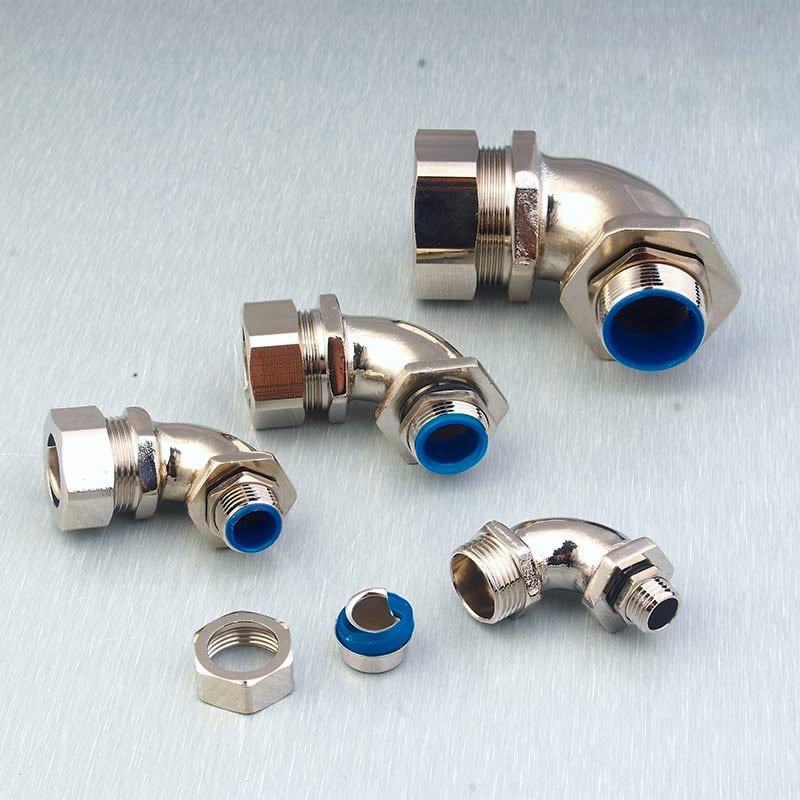
90-degree elbow conduit fittings are specialized connectors that allow electrical conduits to change direction at a perfect right angle, ensuring seamless cable routing while maintaining full protection and compliance with electrical codes. These essential components eliminate the need for complex bending operations and provide reliable, long-lasting connections in demanding environments.
As someone who’s worked with countless installation teams over the past decade, I’ve seen how the right elbow fittings can transform a complicated project into a smooth, efficient operation. Let me share what I’ve learned about selecting, installing, and maximizing the performance of these crucial components.
Table of Contents
- What Are 90-Degree Elbow Conduit Fittings?
- Why Are They Essential for Cable Management?
- How to Choose the Right Elbow Fitting?
- What Are the Installation Best Practices?
- Common Problems and Solutions
- FAQ
What Are 90-Degree Elbow Conduit Fittings?
90-degree elbow conduit fittings are precision-engineered connectors that create perfect right-angle turns in electrical conduit systems, maintaining cable protection and system integrity throughout directional changes.

Types and Materials
These fittings come in several configurations to match different conduit systems:
Threaded Elbows: Feature NPT or metric threads for secure connections to rigid conduits. Available in galvanized steel, stainless steel, and aluminum alloys for various environmental conditions.
Compression Elbows: Designed for EMT (Electrical Metallic Tubing) systems, providing tool-free installation with reliable mechanical connections.
Push-Fit Elbows: Modern quick-connect designs that reduce installation time while maintaining professional-grade performance.
Key Specifications
| Material | Temperature Range | IP Rating | Applications |
|---|---|---|---|
| Galvanized Steel | -40°C to +80°C | IP65-IP68 | General industrial |
| Stainless Steel 316L | -60°C to +150°C | IP68-IP69K | Marine, chemical |
| Aluminum Alloy | -40°C to +120°C | IP65-IP67 | Lightweight applications |
| Nylon/Polymer | -20°C to +100°C | IP65-IP68 | Corrosive environments |
I remember working with David, a project manager from a major automotive plant in Detroit, who initially questioned whether our stainless steel elbows were worth the premium over standard galvanized options. After seeing how they performed in their wash-down areas for over two years without any corrosion issues, he became one of our most loyal customers! 😉
Why Are They Essential for Cable Management?
Elbow fittings are critical because they maintain continuous conduit protection while enabling efficient cable routing around obstacles, ensuring both safety compliance and installation flexibility.
Protection Benefits
Continuous Shielding: Unlike field-bent conduits that can develop stress points or gaps, factory-made elbows maintain consistent wall thickness and protection throughout the turn radius.
Environmental Sealing: Properly installed elbow fittings preserve the conduit system’s IP rating, preventing moisture, dust, and chemical ingress that could damage sensitive cables.
Mechanical Strength: The reinforced construction handles vibration, thermal expansion, and mechanical stress better than improvised solutions.
Installation Advantages
Time Efficiency: Pre-fabricated elbows eliminate the need for field bending, reducing installation time by up to 60% compared to traditional methods.
Consistency: Every fitting provides identical performance, eliminating variations that can occur with manual bending operations.
Code Compliance: Manufactured to strict electrical standards, these fittings help ensure your installation meets local and international electrical codes1.
How to Choose the Right Elbow Fitting?
Select elbow fittings based on conduit size, material compatibility, environmental conditions, and specific installation requirements to ensure optimal performance and longevity.
Size Matching
Thread Compatibility: Ensure the fitting threads match your conduit system exactly. Common sizes include:
- Metric: M12, M16, M20, M25, M32, M40, M50, M63
- NPT: 1/2″, 3/4″, 1″, 1-1/4″, 1-1/2″, 2″, 2-1/2″, 3″
Internal Diameter: Verify the internal bore maintains adequate space for your cable bundle with proper derating factors2.
Environmental Considerations
Chemical Resistance: For chemical processing plants, stainless steel 316L or specialized polymer materials provide superior corrosion resistance3.
Temperature Extremes: High-temperature applications require materials rated for continuous exposure without degradation.
Vibration Resistance: Heavy machinery environments benefit from reinforced designs with additional mechanical support.
Real-World Application
Hassan, who runs a petrochemical facility in Saudi Arabia, taught me an important lesson about material selection. His initial order specified standard galvanized elbows for a hydrogen sulfide environment. After consulting with our technical team, we recommended upgrading to 316L stainless steel with PTFE seals. The additional investment saved him from costly replacements and potential safety issues down the line.
What Are the Installation Best Practices?
Proper installation requires careful preparation, correct torque specifications, and systematic testing to ensure reliable long-term performance.
Pre-Installation Checklist
Thread Inspection: Check both male and female threads for damage, debris, or manufacturing defects before assembly.
Sealant Application: Apply appropriate thread sealant or tape according to manufacturer specifications and environmental requirements.
Tool Preparation: Use properly calibrated torque wrenches to prevent over-tightening that could damage threads or under-tightening that compromises sealing.
Installation Steps
- Clean all connection surfaces thoroughly to remove oils, debris, or protective coatings
- Apply thread sealant in a clockwise direction, leaving the first two threads clean
- Hand-tighten the connection until threads engage fully
- Torque to specification using calibrated tools – typically 25-35 ft-lbs for standard sizes4
- Verify alignment to ensure proper cable routing without stress points
Quality Verification
Pressure Testing: For critical applications, perform pressure tests to verify seal integrity5 before cable installation.
Pull Testing: Confirm mechanical connections can withstand expected cable pulling forces without loosening.
Documentation: Record installation details, torque values, and test results for maintenance planning.
Common Problems and Solutions
The most frequent issues with elbow fittings stem from improper installation, material mismatch, or inadequate environmental protection – all preventable with proper planning.
Threading Issues
Problem: Cross-threading or damaged threads during installation
Solution: Always start threads by hand and use proper thread lubricant. Replace damaged components rather than forcing connections.
Seal Failures
Problem: Moisture ingress despite proper IP rating
Solution: Verify sealant compatibility with operating environment. Consider upgrading to higher-rated seals for extreme conditions.
Mechanical Stress
Problem: Fitting loosening due to vibration or thermal cycling
Solution: Use thread-locking compounds rated for the operating temperature range. Consider mechanical strain relief for high-vibration applications.
Material Compatibility
Problem: Galvanic corrosion between dissimilar metals
Solution: Use isolation washers or select fittings made from compatible materials throughout the system.
Conclusion
90-degree elbow conduit fittings are fundamental components that enable professional, code-compliant electrical installations while providing the flexibility needed for complex routing challenges. By understanding the different types, materials, and installation requirements, you can select the right fittings for your specific application and ensure long-term reliability.
Remember, investing in quality fittings and proper installation techniques pays dividends in reduced maintenance costs and improved system performance. Whether you’re working on a simple commercial project or a complex industrial installation, the right elbow fittings make all the difference.
FAQ
Q: What’s the difference between NPT and metric threaded elbow fittings?
A: NPT (National Pipe Thread) uses imperial measurements with a tapered thread design, while metric threads are straight with specific pitch measurements. NPT provides better sealing through thread interference, while metric threads require O-rings or gaskets for sealing.
Q: Can I use galvanized steel elbows in outdoor marine environments?
A: Standard galvanized steel isn’t recommended for marine environments due to accelerated corrosion from salt exposure. Choose stainless steel 316L or marine-grade aluminum alloy fittings for coastal or offshore applications.
Q: How do I calculate the minimum bend radius for cables through elbow fittings?
A: Most elbow fittings maintain a bend radius of 6-8 times the cable diameter, which meets standard requirements for most cable types. For sensitive data cables, verify the manufacturer’s minimum bend radius specifications don’t exceed the fitting’s internal geometry.
Q: What torque specification should I use for different fitting sizes?
A: Standard torque ranges are: 1/2″-3/4″ (15-25 ft-lbs), 1″-1.25″ (25-35 ft-lbs), 1.5″-2″ (35-50 ft-lbs), and larger sizes (50-75 ft-lbs). Always consult manufacturer specifications as materials and designs can vary.
Q: Are there special considerations for explosion-proof installations?
A: Yes, explosion-proof elbows require specific certifications (ATEX, IECEx, or UL) and must maintain flame path integrity. Thread engagement must meet minimum requirements, and only approved sealants can be used to maintain certification validity.
-
“NFPA 70 National Electrical Code”,
https://www.nfpa.org/codes-and-standards/all-codes-and-standards/list-of-codes-and-standards/detail?code=70. Establishes the regulatory baseline for electrical safety. Evidence role: general_support; Source type: standard. Supports: meets local and international electrical codes. ↩ -
“Understanding Ampacity and Derating”,
https://www.ecmweb.com/basics/article/20897711/understanding-ampacity-and-derating. Explains thermal calculations for grouped conductors. Evidence role: mechanism; Source type: industry. Supports: proper derating factors. ↩ -
“Marine Grade Stainless”,
https://en.wikipedia.org/wiki/Marine_grade_stainless. Details the alloy composition and chemical resilience of 316L. Evidence role: material properties; Source type: research. Supports: stainless steel 316L or specialized polymer materials provide superior corrosion resistance. ↩ -
“Torque Specifications for Electrical Connectors”,
https://www.ecmweb.com/construction/article/20898516/torque-it-right. Outlines standard installation torque ranges. Evidence role: statistic; Source type: industry. Supports: typically 25-35 ft-lbs for standard sizes. ↩ -
“Standard Practice for Hydrostatic Leak Testing”,
https://www.astm.org/e1003-13r18.html. Defines testing methodologies for pressure seals. Evidence role: standard; Source type: standard. Supports: perform pressure tests to verify seal integrity. ↩
