

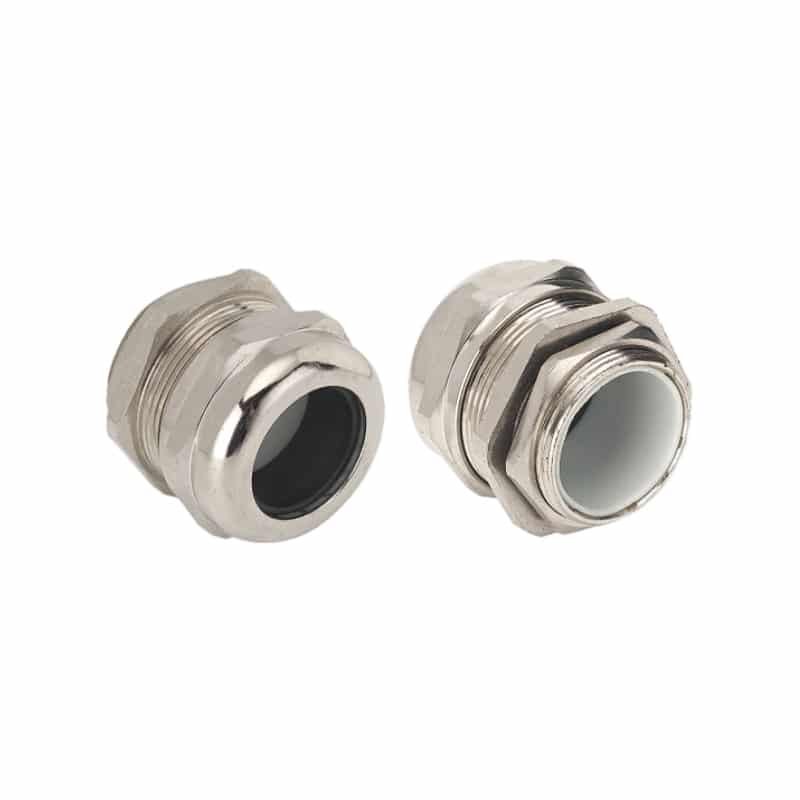
Struggling with cable gland installation in tight spaces where you can’t rotate the entire cable assembly? Traditional fixed glands force you into awkward positions and often require complete cable disconnection for proper installation. Swivel action cable glands feature rotating mechanisms that allow independent movement of the gland body and compression components, enabling installation in confined spaces without cable rotation. I’ve seen countless maintenance teams waste hours on installations that should take minutes, simply because they didn’t know about swivel technology. Let me share how these innovative glands can transform your installation process and save both time and frustration.
Table of Contents
- What Are Swivel Action Cable Glands?
- How Do Swivel Mechanisms Work?
- What Are the Key Installation Benefits?
- Which Applications Benefit Most from Swivel Glands?
- How Do You Select the Right Swivel Gland?
- FAQs About Swivel Action Cable Glands
What Are Swivel Action Cable Glands?
Swivel action cable glands incorporate rotating mechanisms that allow the threaded portion to turn independently from the cable compression assembly, eliminating the need to rotate cables during installation.
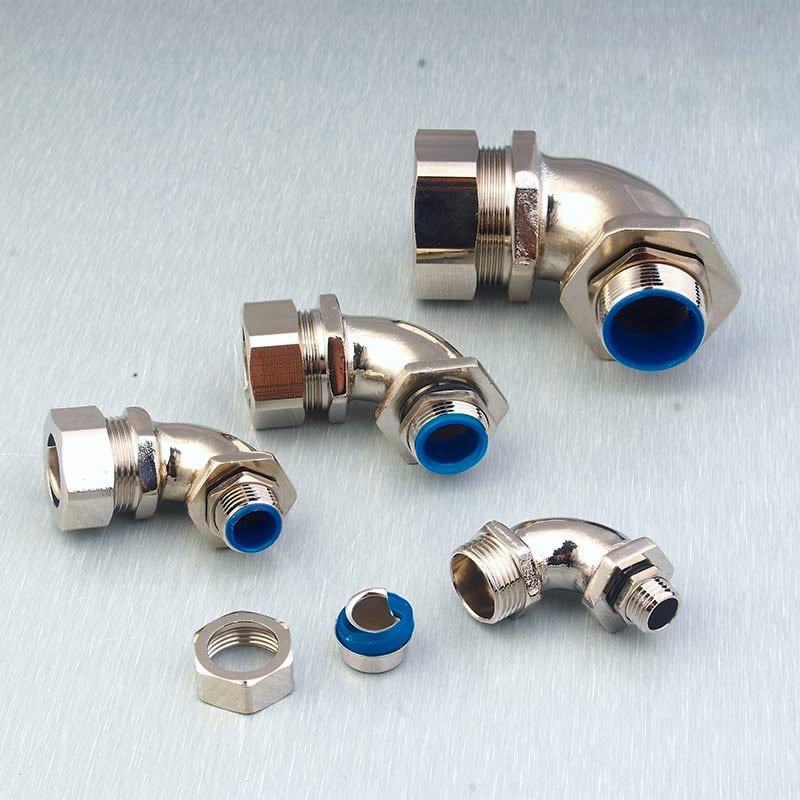
Core Design Features
The swivel mechanism typically consists of three main components working together:
- Threaded body: Screws into the enclosure or panel
- Swivel collar: Provides the rotating interface between body and compression assembly
- Compression assembly: Seals around the cable without rotation
This design breakthrough addresses a fundamental installation challenge that has plagued electricians for decades. Traditional cable glands require the entire cable to rotate during installation, which becomes impossible when cables are already connected to equipment or routed through conduits.
I remember working with Marcus, an electrical contractor from Birmingham, who was retrofitting control panels in an active manufacturing facility. His team was spending 3-4 hours per panel because they had to disconnect dozens of cables just to install proper glands. After switching to our swivel action glands, they completed the same work in under an hour per panel, keeping the facility operational throughout the upgrade.
Material Options and Construction
Brass Swivel Glands:
- Superior corrosion resistance for marine and industrial environments
- Excellent electrical conductivity for grounding applications
- Temperature range: -40°C to +120°C
- Available in metric and NPT thread configurations
Stainless Steel Swivel Glands:
- Maximum corrosion resistance for chemical processing
- Food-grade applications with 316L construction1
- Enhanced mechanical strength for high-vibration environments
Nylon Swivel Glands:
- Cost-effective solution for general industrial use
- Lightweight design reduces panel loading
- Chemical resistance to most industrial fluids
- Available in various colors for coding systems
How Do Swivel Mechanisms Work?
The swivel mechanism uses precision-engineered bearing surfaces and sealing systems that maintain IP ratings while allowing 360-degree rotation of the threaded body independent of the cable compression assembly.
Engineering Principles
The swivel action relies on carefully designed interfaces between rotating components:
Bearing Surface Design:
- Smooth rotation under load conditions
- Minimal friction to prevent galling2
- Self-lubricating materials for maintenance-free operation
Sealing System Integration:
- Primary seal around cable entry point
- Secondary seal at swivel interface
- Maintains IP65/IP66/IP68 ratings depending on model
Load Distribution:
- Compression forces transferred through non-rotating components
- Swivel mechanism isolated from sealing loads
- Prevents binding during installation and service
Installation Sequence Advantages
Traditional gland installation requires this cumbersome process:
- Thread cable through gland components
- Connect cable to equipment
- Rotate entire cable assembly while threading gland into enclosure
- Risk damaging connections or cable during rotation
Swivel glands simplify this to:
- Thread cable through gland components
- Connect cable to equipment
- Thread gland body into enclosure (cable remains stationary)
- Tighten compression assembly without cable movement
This streamlined process reduces installation time by 60-80% in typical applications while eliminating the risk of connection damage.
What Are the Key Installation Benefits?
Swivel action cable glands reduce installation time by up to 80%, eliminate cable damage risks, and enable installations in previously impossible configurations.
Time Savings Analysis
Based on field data from hundreds of installations, swivel glands provide measurable time savings:
| Installation Type | Traditional Gland Time | Swivel Gland Time | Time Savings |
|---|---|---|---|
| Control Panel Retrofit | 45 minutes | 8 minutes | 82% |
| Junction Box Installation | 25 minutes | 6 minutes | 76% |
| Motor Connection | 15 minutes | 4 minutes | 73% |
| Instrument Wiring | 20 minutes | 5 minutes | 75% |
Risk Reduction Benefits
Eliminated Connection Damage:
- No stress on terminal connections during installation
- Prevents wire breakage from excessive manipulation
- Maintains original cable routing and support
Reduced Rework Requirements:
- First-time installation success rate increases to 98%
- Eliminates need for cable re-termination
- Prevents damage to expensive instrumentation cables
Hassan, who manages electrical installations for petrochemical facilities in Kuwait, shared his experience: “Before swivel glands, we had a 15% rework rate on control system installations due to damaged connections. The cost of re-terminating instrumentation cables was killing our project margins. Since switching to Bepto’s swivel action glands, our rework rate dropped to less than 2%, and installation quality improved dramatically.”
Accessibility Improvements
Confined Space Applications:
- Installation possible with limited access to cable ends
- Reduces need for panel removal or equipment disconnection
- Enables maintenance without system shutdown
Overhead and Awkward Position Work:
- Eliminates need to manipulate heavy cable assemblies
- Reduces installer fatigue and injury risk
- Improves installation quality in difficult positions
Which Applications Benefit Most from Swivel Glands?
Retrofit projects, high-density control panels, and installations with pre-terminated cables gain the most significant advantages from swivel action technology.
Primary Application Categories
Control Panel Retrofits:
- Existing equipment with connected cables
- Limited space for cable manipulation
- Need to maintain system operation during upgrades
- Multiple cable entries in close proximity
Motor Control Centers:
- High cable density environments
- Mix of power and control cables
- Frequent maintenance and modification requirements
- Safety concerns with live electrical systems
Instrumentation and Process Control:
- Expensive pre-terminated sensor cables
- Precision connections that cannot be disturbed
- Hazardous area installations requiring certified glands
- Temperature and vibration sensitive applications
Industry-Specific Benefits
Manufacturing and Automation:
- Reduces production downtime during electrical maintenance
- Enables hot-swapping of control components3
- Simplifies PLC and drive system installations
- Improves reliability of robotic system connections
Marine and Offshore:
- Installation in weather-sensitive environments
- Limited access to equipment compartments
- Corrosion-resistant materials essential
- Vibration resistance for vessel applications
Food and Pharmaceutical:
- Hygienic design requirements
- Frequent washdown and sanitization cycles
- Stainless steel construction for FDA compliance
- Easy disassembly for cleaning and inspection
How Do You Select the Right Swivel Gland?
Proper swivel gland selection requires matching cable diameter, thread specifications, environmental conditions, and swivel mechanism quality to your specific application requirements.
Technical Specification Matching
Cable Diameter Considerations:
- Measure actual cable outer diameter with calipers
- Account for cable tolerance variations (±0.5mm typical)
- Consider cable jacket expansion under temperature cycling
- Allow for future cable upgrades or modifications
Thread Specification Requirements:
- Match existing panel or enclosure thread types
- Consider thread engagement length for proper sealing
- Verify thread pitch compatibility (metric vs. NPT)
- Account for panel thickness and gland length
Environmental Factor Assessment
IP Rating Requirements:
- IP65: Dust-tight, water jet resistant (indoor applications)
- IP66: Dust-tight, powerful water jet resistant (outdoor/washdown)
- IP68: Dust-tight, continuous immersion4 (marine/underground)
Temperature Range Considerations:
- Standard range: -20°C to +80°C (most applications)
- Extended range: -40°C to +120°C (extreme environments)
- Thermal cycling effects on sealing materials
- Expansion/contraction of swivel mechanism components
Chemical Compatibility:
- Seal material selection for specific chemicals
- Metal compatibility with process fluids
- UV resistance for outdoor installations
- Cleaning chemical compatibility for food/pharma
Quality and Reliability Factors
Swivel Mechanism Quality Indicators:
- Smooth rotation throughout temperature range
- Consistent torque requirements over service life
- Bearing surface materials and treatments
- Lubrication system design and maintenance requirements
Certification and Standards:
- UL listing for North American installations
- CE marking for European compliance
- ATEX certification for hazardous area applications5
- Marine certifications for offshore use
At Bepto, our swivel action cable glands undergo rigorous testing including 10,000 rotation cycles at temperature extremes to ensure reliable long-term performance. We provide detailed technical documentation and application support to help you select the optimal solution for your specific requirements.
Conclusion
Swivel action cable glands represent a significant advancement in installation technology, offering dramatic time savings, improved reliability, and enhanced safety for electrical installations. The ability to install glands without cable rotation eliminates a major source of installation delays and connection damage, particularly in retrofit and high-density applications. When selecting swivel glands, focus on matching technical specifications to your application requirements while ensuring quality construction that will provide years of reliable service. The initial investment in swivel technology pays dividends through reduced installation time, lower rework rates, and improved system reliability.
FAQs About Swivel Action Cable Glands
Q: Do swivel cable glands maintain the same IP rating as regular glands?
A: Yes, properly designed swivel glands maintain full IP ratings including IP68 for continuous immersion. The swivel mechanism includes dedicated sealing systems that don’t compromise the primary cable seal, ensuring equivalent environmental protection to traditional glands.
Q: How much more do swivel action glands cost compared to standard glands?
A: Swivel glands typically cost 40-60% more than equivalent standard glands, but installation time savings of 70-80% usually recover this cost difference on the first installation. The reduced rework rates and eliminated connection damage provide additional long-term value.
Q: Can swivel glands be used in hazardous area applications?
A: Yes, we manufacture ATEX and IECEx certified swivel glands for Zone 1 and Zone 2 hazardous areas. These units meet all explosion-proof requirements while maintaining swivel functionality, making them ideal for petrochemical and process industry applications.
Q: What maintenance do swivel mechanisms require?
A: Quality swivel glands require no routine maintenance under normal operating conditions. The bearing surfaces are designed for maintenance-free operation over the product lifetime. However, annual inspection of sealing integrity is recommended in critical applications.
Q: Are swivel glands available in all standard sizes and thread types?
A: Our swivel action glands are available in sizes from M12 to M63 (metric) and 1/2″ to 2″ (NPT), covering 95% of standard applications. Custom sizes and thread configurations can be manufactured for special requirements with reasonable minimum order quantities.
-
“SAE 316L stainless steel”,
https://en.wikipedia.org/wiki/SAE_316L_stainless_steel. Details the properties of 316L grade stainless steel used in food and medical applications. Evidence role: mechanism; Source type: research. Supports: 316L construction. ↩ -
“Galling”,
https://en.wikipedia.org/wiki/Galling. Explains the mechanism of adhesive wear in metal-to-metal contacts. Evidence role: mechanism; Source type: research. Supports: prevent galling. ↩ -
“Hot Swapping”,
https://en.wikipedia.org/wiki/Hot_swapping. Describes replacing components without shutting down the system. Evidence role: mechanism; Source type: research. Supports: hot-swapping of control components. ↩ -
“IP Ratings”,
https://www.iec.ch/ip-ratings. Official IEC standard defining degrees of protection provided by enclosures. Evidence role: standard; Source type: standard. Supports: IP68: Dust-tight, continuous immersion. ↩ -
“IECEx Certification System”,
https://www.iecex.com/. International certification system for equipment used in explosive atmospheres. Evidence role: standard; Source type: standard. Supports: ATEX certification for hazardous area applications. ↩
