

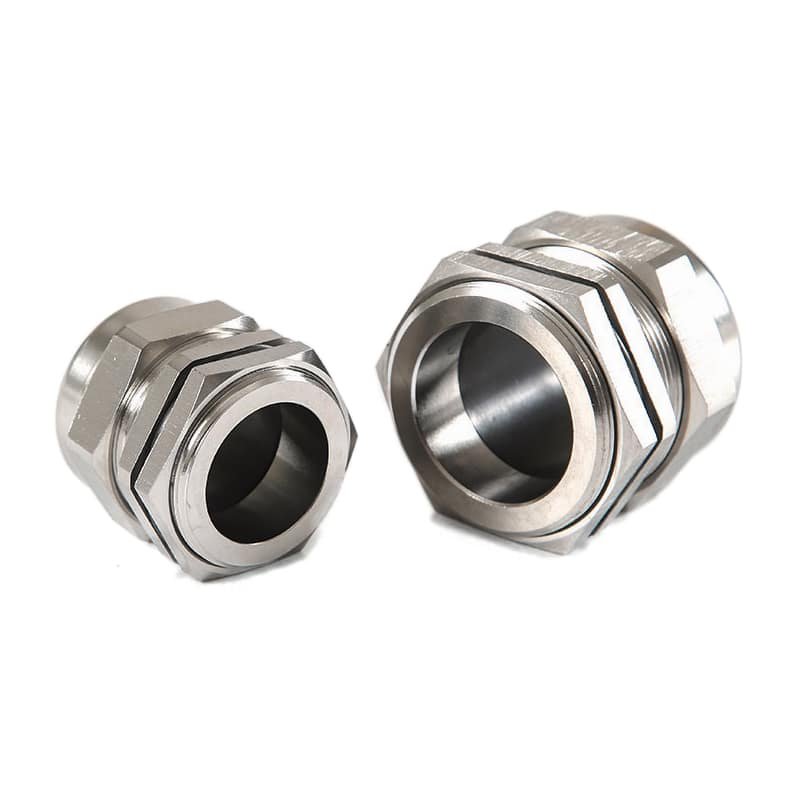
Last week, I received an urgent call from Michael, a project manager at a chemical processing plant in Houston. “Samuel, we need 1/2″ NPT stainless steel cable glands for our new reactor instrumentation, and our current supplier just told us they’re backordered for 8 weeks. Can you help?” His frustration was palpable – downtime in chemical processing costs thousands per hour.
1/2″ NPT stainless steel cable glands feature 1/2-14 NPT threading, accommodate cable diameters from 6-13mm, and provide superior corrosion resistance for harsh industrial environments requiring IP68 protection. These robust cable entry solutions combine American threading standards with premium stainless steel construction for maximum durability.
Having worked with countless engineers facing similar challenges, I understand that choosing the right cable gland isn’t just about specifications – it’s about ensuring your critical systems operate reliably for years. That’s why I’m sharing this comprehensive guide to help you make informed decisions. 😉
Table of Contents
- What Are 1/2″ NPT Stainless Steel Cable Glands?
- Why Choose Stainless Steel Over Other Materials?
- How Do You Size 1/2″ NPT Cable Glands Correctly?
- What Are the Key Installation Requirements?
- Which Industries Benefit Most from NPT Stainless Glands?
- FAQs About 1/2″ NPT Stainless Steel Cable Glands
What Are 1/2″ NPT Stainless Steel Cable Glands?
1/2″ NPT stainless steel cable glands are premium cable entry devices featuring American National Pipe Thread (NPT) standards, designed for demanding industrial applications where corrosion resistance and reliability are paramount.

The “1/2″ NPT” designation refers to the nominal pipe size with 14 threads per inch (1/2-14 NPT), creating a tapered thread that provides excellent sealing characteristics. Unlike metric threading, NPT threads create a mechanical seal through thread interference, eliminating the need for additional sealing washers in many applications.
Technical Specifications Overview
| Specification | Value |
|---|---|
| Thread Type | 1/2-14 NPT (Tapered) |
| Cable Range | 6-13mm (0.24″-0.51″) |
| Thread Engagement | Minimum 4-5 threads |
| IP Rating | IP68 (with proper installation) |
| Temperature Range | -40°C to +200°C (depending on seal material) |
| Material Grade | 316L Stainless Steel (standard) |
| Surface Finish | Passivated per ASTM A967 |
At Bepto, we manufacture our 1/2″ NPT cable glands using 316L stainless steel, which contains 2-3% molybdenum for enhanced corrosion resistance. This grade performs exceptionally well in chloride environments, making it ideal for marine, chemical, and food processing applications.
Key Design Features
Our 1/2″ NPT stainless steel cable glands incorporate several critical design elements:
- Tapered NPT threading for superior sealing without additional gaskets
- 316L stainless steel construction with low carbon content preventing carbide precipitation
- EPDM sealing rings standard (Viton available for high-temperature applications)
- Strain relief design protecting cables from mechanical stress
- IP68 rating capability when properly installed and maintained
The beauty of NPT threading lies in its self-sealing properties. As you tighten the gland, the tapered threads create increasing interference, forming a metal-to-metal seal that’s incredibly reliable in high-pressure and high-temperature applications.
Why Choose Stainless Steel Over Other Materials?
Stainless steel 316L offers superior corrosion resistance, temperature stability, and mechanical strength compared to brass or aluminum alternatives, making it essential for harsh industrial environments.
Corrosion Resistance Advantages
I remember working with Ahmed, a maintenance supervisor at a desalination plant in Saudi Arabia, who initially questioned the cost difference between brass and stainless steel cable glands. After just six months, his brass glands showed significant corrosion damage1 from salt spray, while our 316L stainless steel units remained pristine.
The chromium content (16-18%) in 316L stainless steel forms a passive oxide layer that self-heals when scratched, providing continuous protection. The molybdenum addition specifically targets chloride corrosion, making these glands ideal for:
- Marine environments
- Chemical processing facilities
- Food and beverage production
- Pharmaceutical manufacturing
- Offshore oil and gas platforms
Temperature Performance
Standard brass cable glands typically limit operating temperatures to 100°C, while our 316L stainless steel construction handles temperatures up to 200°C with appropriate sealing materials. This expanded range opens applications in:
- Steam systems
- High-temperature process monitoring
- Automotive testing environments
- Industrial furnace instrumentation
Mechanical Strength Comparison
| Property | 316L Stainless Steel | Brass (CW617N) | Aluminum |
|---|---|---|---|
| Tensile Strength | 515-620 MPa | 360-440 MPa | 270-310 MPa |
| Yield Strength | 205-310 MPa | 150-200 MPa | 110-150 MPa |
| Hardness (HB) | 150-200 | 100-150 | 75-95 |
| Corrosion Rate | <0.1 mm/year | 0.5-2 mm/year | 1-5 mm/year |
Long-Term Cost Analysis
While stainless steel cable glands cost 3-4 times more initially than brass alternatives, the total cost of ownership often favors stainless steel:
- Reduced replacement frequency: 10-15 year service life vs. 3-5 years for brass
- Lower maintenance costs: Minimal corrosion-related issues
- Decreased downtime: Higher reliability in critical applications
- Regulatory compliance: Meets stringent food-grade and pharmaceutical standards
How Do You Size 1/2″ NPT Cable Glands Correctly?
Proper sizing for 1/2″ NPT cable glands requires measuring cable outer diameter (6-13mm range), verifying NPT thread compatibility, and considering environmental factors that affect seal performance.
Step-by-Step Sizing Process
Step 1: Cable Diameter Measurement
Use precision calipers to measure the cable’s outer diameter at its widest point, including any outer sheathing, armor, or protective covering. For oval cables, always use the larger dimension. Add 0.3-0.5mm tolerance for manufacturing variations.
Step 2: NPT Thread Verification
Confirm your equipment accepts 1/2-14 NPT threading. Common mistakes include confusing NPT with:
- 1/2″ BSP (British Standard Pipe) – different thread pitch
- M12 metric threading – completely different system
- 1/2″ straight threads – no sealing taper
Step 3: Environmental Assessment
Consider these factors that affect gland selection:
- Chemical compatibility: Verify cable jacket material works with your process chemicals
- Temperature cycling: Thermal expansion affects seal integrity
- Pressure requirements: Higher pressures may require additional thread engagement
- Vibration levels: May require additional strain relief or thread locking
Cable Compatibility Guide
| Cable Type | Typical OD Range | Gland Suitability | Special Considerations |
|---|---|---|---|
| Instrumentation | 6-10mm | Excellent | Standard EPDM seals adequate |
| Control Cable | 8-12mm | Excellent | Consider EMC shielding if required |
| Power Cable | 10-13mm | Good | May require larger strain relief |
| Armored Cable | 12-15mm | Limited | Consider next size up (3/4″ NPT) |
| Fiber Optic | 3-8mm | With reducer | Use appropriate sealing insert |
Common Sizing Errors
- Ignoring armor diameter: Steel wire armor significantly increases overall cable diameter
- Overlooking jacket swelling: Some cable jackets swell in chemical environments
- Mixing thread standards: NPT is not interchangeable2 with metric or BSP threads
- Underestimating temperature effects: Cable diameter changes with temperature
What Are the Key Installation Requirements?
Proper installation of 1/2″ NPT stainless steel cable glands requires correct thread engagement (4-5 threads minimum), appropriate torque application (25-30 Nm), and verification of IP68 sealing performance.
Installation Procedure
Pre-Installation Preparation
- Verify thread compatibility using NPT thread gauge
- Clean all threaded surfaces of debris and old sealant
- Inspect cable jacket for damage or irregularities
- Prepare cable end with appropriate strip length (20-25mm)
Installation Steps
- Thread application: Apply thin layer of thread sealant (PTFE tape or liquid sealant) to male threads only
- Initial threading: Hand-tighten until threads engage smoothly
- Torque application: Use calibrated wrench to apply 25-30 Nm torque
- Cable insertion: Push cable through until jacket seats in sealing area
- Compression: Tighten compression nut to manufacturer specifications
Critical Installation Points
Thread Engagement Rules
NPT threads must engage a minimum of 4-5 threads for proper sealing. The tapered design means that over-tightening can actually reduce sealing effectiveness by distorting the thread form. I always recommend using a thread engagement gauge to verify proper installation.
Torque Specifications
- Initial thread engagement: Hand-tight plus 2-3 turns
- Final torque: 25-30 Nm for 1/2″ NPT
- Compression nut: 15-20 Nm (varies by manufacturer)
Sealant Selection
For stainless steel NPT threads, use:
- PTFE tape: 3-4 wraps, applied clockwise
- Liquid thread sealant: Anaerobic compounds for metal-to-metal sealing
- Avoid: Pipe dope containing graphite (can cause galvanic corrosion)
Post-Installation Testing
- Visual inspection: Verify even thread engagement and proper cable seating
- Pressure testing: Apply rated pressure and check for leaks
- Pull testing: Apply 100N axial force to verify strain relief
- IP rating verification: Use appropriate test equipment for IP68 confirmation
Which Industries Benefit Most from NPT Stainless Glands?
Industries with harsh environments, regulatory requirements, or critical safety applications benefit most from 1/2″ NPT stainless steel cable glands, including chemical processing, marine, food production, and pharmaceutical manufacturing.
Chemical and Petrochemical Industry
Chemical processing facilities represent our largest market for 1/2″ NPT stainless steel cable glands. The combination of corrosive chemicals, high temperatures, and safety-critical instrumentation demands the highest quality cable entry solutions.
Typical applications include:
- Process temperature and pressure monitoring
- Level measurement in storage tanks
- pH and conductivity sensors
- Emergency shutdown system wiring
- Analyzer sample line heating cables
The 316L stainless steel construction resists attack from most industrial chemicals, while the NPT threading provides reliable sealing even under thermal cycling conditions common in process plants.
Marine and Offshore Applications
Saltwater environments are particularly challenging for cable entry systems. I’ve supplied thousands of 1/2″ NPT stainless steel glands to offshore platforms in the North Sea, where the combination of salt spray, temperature extremes, and mechanical vibration quickly destroys inferior materials.
Key marine applications:
- Navigation equipment installations
- Engine room instrumentation
- Deck lighting systems
- Communication antenna feeds
- Emergency systems wiring
Food and Beverage Industry
FDA compliance and washdown requirements make stainless steel cable glands essential in food processing. The smooth, non-porous surface of 316L stainless steel prevents bacterial growth and withstands aggressive cleaning chemicals.
Common food industry uses:
- Temperature monitoring in pasteurization
- Weight scale load cell connections
- Conveyor system controls
- CIP (Clean-in-Place) system instrumentation
- Packaging equipment sensors
Pharmaceutical Manufacturing
Pharmaceutical facilities require the ultimate in cleanliness and material traceability. Our 1/2″ NPT stainless steel cable glands come with full material certifications and surface finish documentation3 meeting USP Class VI requirements.
Conclusion
Selecting 1/2″ NPT stainless steel cable glands represents an investment in long-term reliability and performance. While the initial cost exceeds brass or aluminum alternatives, the superior corrosion resistance, temperature capability, and mechanical strength deliver exceptional value in demanding applications.
At Bepto, we’ve built our reputation on providing precisely engineered cable gland solutions backed by comprehensive technical support and quality certifications. Our 316L stainless steel construction, combined with rigorous quality control processes, ensures every gland meets the demanding requirements of modern industrial applications.
Whether you’re specifying for a new chemical plant, upgrading marine instrumentation, or ensuring food safety compliance, our 1/2″ NPT stainless steel cable glands provide the reliability and performance your critical systems demand.
FAQs About 1/2″ NPT Stainless Steel Cable Glands
Q: What cable sizes work with 1/2″ NPT cable glands?
A: 1/2″ NPT cable glands accommodate cables with outer diameters from 6mm to 13mm (0.24″ to 0.51″). Always measure your specific cable with calipers, as jacket thickness can vary significantly between manufacturers.
Q: Can I use thread sealant with stainless steel NPT glands?
A: Yes, use PTFE tape (3-4 wraps) or anaerobic liquid sealant on male threads only. Avoid graphite-containing compounds that can cause galvanic corrosion with stainless steel.
Q: What’s the difference between 316 and 316L stainless steel?
A: 316L has lower carbon content (0.03% max vs 0.08% max), preventing carbide precipitation and improving corrosion resistance in welded applications. 316L is preferred for cable glands due to superior corrosion performance.
Q: How much torque should I apply to 1/2″ NPT cable glands?
A: Apply 25-30 Nm torque for the threaded body and 15-20 Nm for the compression nut. Over-tightening can damage threads or compromise sealing performance.
Q: Are NPT threads compatible with metric equipment?
A: No, NPT threads are not compatible with metric threads. 1/2″ NPT has 14 threads per inch with a 1:16 taper, while metric threads have different pitch and are typically parallel. Always verify thread compatibility before ordering.
-
Review the scientific comparison data on the corrosion rates of brass and 316L stainless steel in harsh environments. ↩
-
Understand the critical dimensional differences and incompatibility between NPT (US) and BSP (UK) threading standards. ↩
-
Learn about the chemical process (passivation) that enhances stainless steel’s corrosion resistance for long-term protection. ↩
