


Industrial facilities lose millions annually due to premature cable gland failures caused by corrosion, with incorrect material selection leading to costly equipment downtime, safety hazards, and frequent replacement cycles that drain maintenance budgets and compromise operational reliability. Marine environments, chemical processing plants, and offshore installations particularly suffer when engineers choose materials without understanding long-term corrosion resistance characteristics and environmental compatibility factors. Nickel-plated brass vs. 316 stainless steel comparison reveals that 316 stainless steel offers superior corrosion resistance in chloride environments, marine applications, and chemical exposure with 10-15 year service life, while nickel-plated brass provides excellent performance in standard industrial conditions at 30-40% lower cost with 5-8 year typical service life – the choice depends on specific environmental conditions, budget constraints, and required service life expectations. In my decade of supplying cable glands globally, I’ve witnessed how proper material selection transforms problematic installations into reliable, maintenance-free systems that deliver exceptional long-term value and operational peace of mind.
Table of Contents
- What Are the Key Differences Between Nickel-Plated Brass and 316 Stainless Steel?
- How Do These Materials Perform in Different Corrosive Environments?
- Which Material Offers Better Value for Specific Applications?
- What Are the Installation and Maintenance Considerations?
- How Do You Choose the Right Material for Your Application?
- FAQs About Cable Gland Material Selection
What Are the Key Differences Between Nickel-Plated Brass and 316 Stainless Steel?
Understanding fundamental material properties helps engineers make informed decisions that prevent costly failures and optimize long-term performance. Nickel-plated brass cable glands feature brass base material with electroplated nickel coating providing enhanced corrosion resistance, excellent electrical conductivity, and cost-effective manufacturing, while 316 stainless steel cable glands offer superior corrosion resistance through chromium-molybdenum alloy composition, higher mechanical strength, and exceptional chemical compatibility – key differences include corrosion resistance (316 SS superior in chlorides), cost (brass 30-40% lower), machinability (brass easier), and service life (316 SS 2-3x longer in harsh environments).
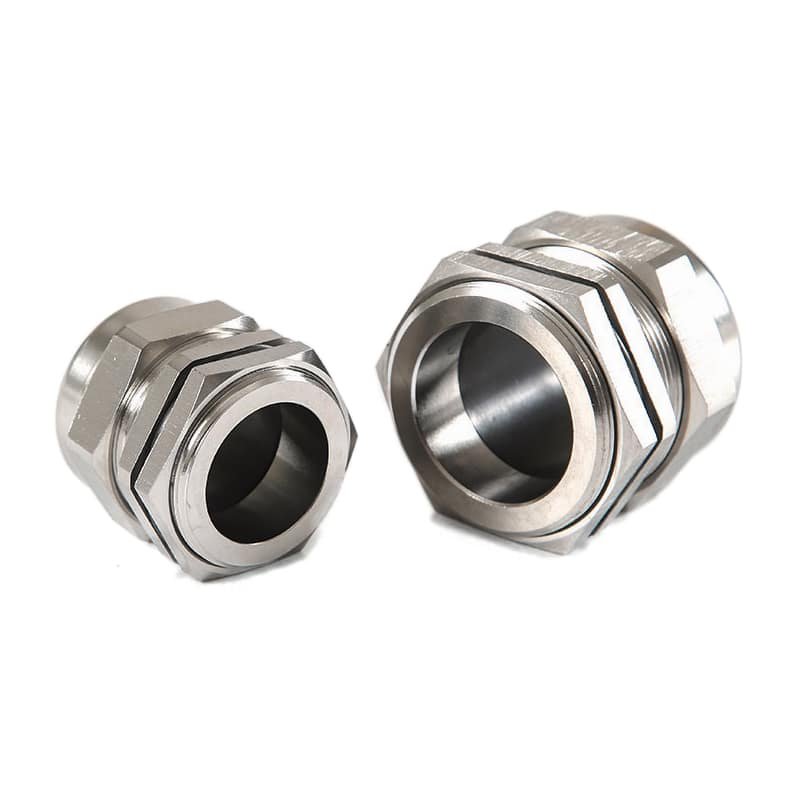
Material Composition and Structure
Nickel-Plated Brass consists of brass base material (typically 60-70% copper, 30-40% zinc) with electroplated nickel coating ranging from 5-25 microns thickness1, providing enhanced surface protection while maintaining brass’s excellent machinability and electrical properties.
316 Stainless Steel contains 16-18% chromium, 10-14% nickel, and 2-3% molybdenum2, creating a passive oxide layer that provides exceptional corrosion resistance and mechanical strength throughout the entire material thickness.
Mechanical Properties Comparison
| Property | Nickel-Plated Brass | 316 Stainless Steel | Advantage |
|---|---|---|---|
| Tensile Strength | 300-400 MPa | 515-620 MPa | 316 SS |
| Yield Strength | 100-200 MPa | 205-310 MPa | 316 SS |
| Hardness (HB) | 60-120 | 150-200 | 316 SS |
| Electrical Conductivity | 28% IACS | 2.3% IACS | Brass |
| Thermal Conductivity | 120 W/m·K | 16 W/m·K | Brass |
| Machinability Rating | 90% | 45% | Brass |
Corrosion Resistance Mechanisms
Nickel Plating Protection provides barrier protection against atmospheric corrosion, mild chemical exposure, and general industrial environments, but can suffer from pitting corrosion if the coating is damaged or compromised.
Stainless Steel Passivation creates self-healing oxide layer that reforms when damaged3, providing superior protection against chlorides, acids, and aggressive chemical environments throughout material depth.
Manufacturing and Cost Considerations
Production Efficiency favors nickel-plated brass due to easier machining, faster production cycles, and lower raw material costs, making it attractive for high-volume applications with moderate environmental demands.
Long-term Economics often favor 316 stainless steel despite higher initial cost, as extended service life and reduced maintenance requirements provide better total cost of ownership in demanding applications.
Marcus Thompson, procurement manager at Chevron’s refinery in Richmond, California, initially selected nickel-plated brass cable glands to reduce project costs by $50,000 across their alkylation unit upgrade. However, chloride exposure from cooling tower drift caused premature failures within 18 months, requiring emergency replacements with 316 stainless steel versions. The total replacement cost exceeded $120,000, demonstrating how initial savings can become expensive lessons when environmental conditions aren’t properly evaluated.
How Do These Materials Perform in Different Corrosive Environments?
Environmental compatibility determines long-term reliability and maintenance requirements across diverse industrial applications. Nickel-plated brass performs excellently in dry indoor environments, standard industrial atmospheres, and mild chemical exposure with 5-8 year service life, while showing limitations in marine environments, chloride exposure, and acidic conditions where coating breakdown accelerates corrosion – 316 stainless steel excels in marine applications, chemical processing, offshore installations, and high-humidity environments with 10-15 year service life, demonstrating superior resistance to pitting corrosion, crevice corrosion, and stress corrosion cracking in aggressive environments.
Marine and Coastal Environments
Saltwater Exposure creates highly corrosive conditions where chloride ions penetrate nickel plating4, causing accelerated brass corrosion and premature failure, typically within 2-3 years in direct marine exposure.
316 Stainless Steel Performance in marine environments demonstrates exceptional resistance to chloride-induced corrosion, maintaining structural integrity and appearance for 10-15 years even in direct seawater contact.
Atmospheric Salt Spray from coastal locations affects both materials differently, with nickel-plated brass showing visible corrosion within 6-12 months while 316 stainless steel maintains performance for decades.
Chemical Processing Applications
Acid Resistance varies significantly between materials, with 316 stainless steel providing superior performance against organic acids, weak mineral acids, and many chemical process streams that rapidly attack brass substrates.
Alkaline Environments can cause stress corrosion cracking in brass alloys5, while 316 stainless steel maintains excellent performance in most alkaline solutions and cleaning chemicals.
Solvent Compatibility generally favors both materials for most organic solvents, though specific chemical compatibility should be verified for critical applications involving aggressive chemicals.
Industrial Atmosphere Performance
| Environment Type | Nickel-Plated Brass | 316 Stainless Steel | Recommended Choice |
|---|---|---|---|
| Indoor Dry | Excellent (8-10 years) | Excellent (15+ years) | Brass (cost-effective) |
| Indoor Humid | Good (5-7 years) | Excellent (15+ years) | Depends on budget |
| Outdoor Urban | Fair (3-5 years) | Excellent (10-15 years) | 316 SS preferred |
| Outdoor Industrial | Poor (2-4 years) | Excellent (10-15 years) | 316 SS required |
| Marine/Coastal | Poor (1-3 years) | Excellent (10-15 years) | 316 SS essential |
| Chemical Plant | Variable (1-5 years) | Good-Excellent (8-15 years) | 316 SS recommended |
Temperature Effects on Corrosion
High Temperature Performance generally accelerates corrosion processes, with nickel-plated brass showing increased susceptibility to coating breakdown above 80°C, while 316 stainless steel maintains excellent performance to 200°C+.
Thermal Cycling can cause coating stress and cracking in nickel-plated brass, creating corrosion initiation sites, while 316 stainless steel’s homogeneous structure handles thermal cycling without degradation.
Low Temperature Considerations rarely affect corrosion resistance significantly, though both materials maintain good performance in sub-zero conditions with proper installation practices.
Galvanic Corrosion Risks
Dissimilar Metal Contact requires careful consideration when mixing materials, as brass components can suffer accelerated corrosion when electrically connected to stainless steel in corrosive environments.
Installation Isolation using appropriate gaskets and insulating materials prevents galvanic corrosion while maintaining electrical continuity where required for EMC applications.
Real-World Performance Data
Accelerated Testing using salt spray (ASTM B117) shows nickel-plated brass typically failing at 200-500 hours while 316 stainless steel exceeds 1000+ hours without significant corrosion.
Field Performance data from offshore platforms demonstrates 316 stainless steel cable glands maintaining IP68 ratings after 10+ years while nickel-plated brass versions require replacement every 3-4 years.
Which Material Offers Better Value for Specific Applications?
Total cost of ownership analysis reveals optimal material selection strategies that balance initial investment with long-term operational costs. Nickel-plated brass offers superior value in controlled indoor environments, standard industrial applications, and cost-sensitive projects where 5-8 year service life meets requirements at 30-40% lower initial cost, while 316 stainless steel provides better value in marine environments, chemical processing, outdoor installations, and critical applications where 10-15 year service life and minimal maintenance justify 40-60% higher initial investment – value optimization requires analyzing environmental conditions, accessibility for maintenance, and total lifecycle costs.
Initial Cost Comparison
Material Pricing typically shows nickel-plated brass cable glands costing 30-40% less than equivalent 316 stainless steel versions, with larger glands showing greater absolute cost differences.
Volume Discounts often favor brass products due to easier manufacturing and higher production volumes, making them attractive for large projects with moderate environmental demands.
Certification Costs remain similar for both materials when meeting standards like ATEX, UL, or marine certifications, though 316 stainless steel may require fewer re-certifications due to longer service life.
Lifecycle Cost Analysis
Replacement Frequency significantly impacts total cost, with nickel-plated brass requiring replacement every 3-5 years in harsh environments while 316 stainless steel lasts 10-15 years.
Maintenance Costs include inspection, cleaning, and preventive replacement, with brass systems requiring more frequent attention and higher labor costs over time.
Downtime Expenses from premature failures can dwarf material cost differences, particularly in critical processes where unplanned shutdowns cost thousands per hour.
Application-Specific Value Analysis
Indoor Control Panels in clean, dry environments favor nickel-plated brass due to excellent performance and lower cost, with 8-10 year service life meeting most requirements.
Outdoor Industrial installations benefit from 316 stainless steel’s superior weather resistance and reduced maintenance requirements, despite higher initial investment.
Marine Applications strongly favor 316 stainless steel due to brass’s poor saltwater performance, making stainless steel the only viable long-term option.
Chemical Processing environments require case-by-case analysis based on specific chemical exposure, with 316 stainless steel generally preferred for its broader chemical compatibility.
Regional and Climate Considerations
| Climate Zone | Recommended Material | Justification | Expected Service Life |
|---|---|---|---|
| Arid/Desert | Nickel-Plated Brass | Cost-effective, low humidity | 7-10 years |
| Temperate | Either (budget dependent) | Both perform well | Brass: 5-8, SS: 12-15 years |
| Humid Subtropical | 316 Stainless Steel | High humidity accelerates corrosion | 10-15 years |
| Marine/Coastal | 316 Stainless Steel | Chloride exposure critical | 10-15 years |
| Industrial/Polluted | 316 Stainless Steel | Chemical exposure concerns | 8-12 years |
| Arctic/Extreme Cold | Either (insulation critical) | Temperature less critical than moisture | Standard service life |
Budget Optimization Strategies
Hybrid Approach uses 316 stainless steel for critical or exposed locations while employing nickel-plated brass for protected indoor applications, optimizing overall project costs.
Phased Replacement allows upgrading to stainless steel during planned maintenance cycles, spreading costs while improving reliability in critical areas.
Risk-Based Selection prioritizes stainless steel for high-consequence failure locations while accepting shorter service life for less critical applications.
Ahmed Hassan, maintenance director at Qatar Petroleum’s Ras Laffan facility, implemented a strategic material selection program after analyzing 5-year maintenance data. By switching critical outdoor and process-exposed cable glands to 316 stainless steel while retaining nickel-plated brass for indoor control rooms, they reduced annual cable gland replacement costs by 45% while improving system reliability by 80%. The hybrid approach saved $200,000 annually while eliminating unplanned maintenance in harsh desert and marine exposure conditions.
What Are the Installation and Maintenance Considerations?
Proper installation and maintenance practices maximize service life and ensure reliable performance regardless of material selection. Installation considerations for nickel-plated brass include careful handling to prevent coating damage, proper torque application to avoid thread galling, and use of compatible sealants that won’t attack the nickel plating, while 316 stainless steel requires anti-seize compounds to prevent galling, higher torque values due to material strength, and attention to work hardening during installation – maintenance differences include more frequent inspection for brass systems, coating integrity monitoring, and earlier replacement scheduling versus stainless steel’s longer intervals and visual inspection focus.
Installation Best Practices
Surface Preparation requires clean, dry threads and proper inspection for damage, with nickel-plated brass needing extra care to avoid coating scratches during handling and installation.
Torque Requirements differ between materials, with nickel-plated brass typically requiring 15-25% less torque than stainless steel to achieve proper sealing without thread damage.
Thread Lubrication is critical for 316 stainless steel to prevent galling, using molybdenum disulfide or nickel-based anti-seize compounds, while brass systems may use lighter lubricants.
Tool Requirements and Techniques
Installation Tools should include calibrated torque wrenches, proper socket sizes, and appropriate lubricants, with stainless steel installations requiring higher-quality tools due to increased torque requirements.
Handling Procedures for nickel-plated brass emphasize coating protection through careful handling, proper storage, and avoiding impacts that could damage the protective nickel layer.
Quality Control during installation includes torque verification, visual inspection, and proper documentation, with particular attention to coating integrity for plated products.
Maintenance Scheduling and Procedures
Inspection Intervals typically require quarterly visual inspection for nickel-plated brass in harsh environments versus annual inspection for 316 stainless steel systems.
Condition Assessment focuses on coating integrity, corrosion signs, and sealing performance, with different failure modes requiring specific inspection techniques for each material.
Preventive Replacement scheduling should consider environmental exposure, with brass systems requiring replacement every 3-5 years in harsh conditions versus 8-12 years for stainless steel.
Environmental Monitoring
Corrosion Indicators include coating breakdown, base metal exposure, and thread deterioration, with early detection preventing catastrophic failures and system contamination.
Performance Tracking through systematic documentation helps optimize replacement schedules and identify problematic installation locations requiring material upgrades.
Failure Analysis of removed components provides valuable data for improving material selection and maintenance procedures in specific environmental conditions.
Troubleshooting Common Issues
Coating Damage in nickel-plated brass requires immediate attention to prevent accelerated corrosion, often necessitating early replacement rather than repair attempts.
Galling Problems in stainless steel installations indicate inadequate lubrication or excessive torque, requiring proper anti-seize application and torque control procedures.
Premature Failure analysis helps identify environmental factors, installation errors, or material selection issues that need correction for future installations.
How Do You Choose the Right Material for Your Application?
Systematic material selection ensures optimal performance, cost-effectiveness, and reliability throughout the equipment lifecycle. Choosing between nickel-plated brass and 316 stainless steel requires evaluating environmental conditions (humidity, chemical exposure, temperature), service life requirements (3-5 years vs. 10-15 years), budget constraints (initial cost vs. lifecycle cost), maintenance accessibility (frequent vs. minimal), and failure consequences (low vs. high impact) – decision matrix should prioritize environmental compatibility first, then balance cost and service life requirements to optimize total value while ensuring reliable long-term performance.
Environmental Assessment Criteria
Corrosive Exposure evaluation includes humidity levels, chemical contact, atmospheric pollutants, and salt spray exposure, with high-risk environments strongly favoring 316 stainless steel selection.
Temperature Conditions consider both operating temperature and thermal cycling effects, with extreme conditions potentially eliminating nickel-plated brass from consideration.
Installation Location factors include indoor vs. outdoor exposure, accessibility for maintenance, and proximity to corrosive processes or equipment that could affect cable gland performance.
Performance Requirements Analysis
Service Life Expectations should align with equipment lifecycle, maintenance budgets, and replacement scheduling, with critical applications justifying longer-life materials despite higher costs.
IP Rating Requirements may influence material selection when long-term sealing integrity is critical, particularly in harsh environments where seal failure has serious consequences.
Electrical Performance considerations include EMC requirements, grounding needs, and electrical conductivity requirements that may favor specific materials for optimal system performance.
Economic Decision Framework
Initial Budget Constraints must be balanced against long-term costs, with lifecycle analysis revealing true economic impact of material selection decisions.
Maintenance Resources availability affects material choice, as frequent replacement requirements may strain maintenance capabilities and increase operational risks.
Failure Cost Impact analysis helps justify premium materials when downtime costs exceed material cost differences by significant margins.
Selection Decision Matrix
| Factor | Weight | Nickel-Plated Brass Score | 316 Stainless Steel Score | Weighted Advantage |
|---|---|---|---|---|
| Initial Cost | 20% | 9/10 | 6/10 | Brass +0.6 |
| Corrosion Resistance | 30% | 6/10 | 9/10 | SS +0.9 |
| Service Life | 25% | 5/10 | 9/10 | SS +1.0 |
| Maintenance Requirements | 15% | 5/10 | 8/10 | SS +0.45 |
| Availability | 10% | 8/10 | 7/10 | Brass +0.1 |
| Total Score | 100% | 6.35/10 | 7.85/10 | SS +1.5 |
Application-Specific Guidelines
Indoor Control Panels in clean, dry environments can effectively use nickel-plated brass with confidence in 8-10 year service life and significant cost savings.
Outdoor Industrial installations should strongly consider 316 stainless steel unless budget constraints are severe and frequent replacement is acceptable.
Marine Applications require 316 stainless steel as the only viable long-term option, with brass systems facing certain premature failure in saltwater environments.
Chemical Processing environments need case-by-case evaluation based on specific chemical exposure, temperature, and safety requirements.
Risk Assessment Integration
Failure Consequence Analysis evaluates safety risks, environmental impact, and economic losses from premature cable gland failure to justify material selection decisions.
Maintenance Window Availability affects material choice when replacement opportunities are limited, favoring longer-life materials despite higher initial costs.
Supply Chain Considerations include material availability, lead times, and supplier reliability, which may influence practical material selection decisions.
Implementation Strategy
Pilot Testing in representative environments can validate material selection before full-scale implementation, reducing risks and optimizing performance.
Phased Deployment allows gradual transition to optimal materials while managing budget constraints and gaining operational experience.
Performance Monitoring systems track actual service life and failure modes to refine material selection criteria for future projects.
Conclusion
Material selection between nickel-plated brass and 316 stainless steel significantly impacts long-term reliability, maintenance costs, and operational success. While nickel-plated brass offers excellent value in controlled environments with lower initial costs, 316 stainless steel provides superior performance in harsh conditions with extended service life. Proper environmental assessment, lifecycle cost analysis, and systematic selection criteria ensure optimal material choice for specific applications. At Bepto, we provide comprehensive technical support and both material options to help you achieve the perfect balance of performance, reliability, and cost-effectiveness for your cable gland applications! 😉
FAQs About Cable Gland Material Selection
Q: How long do nickel-plated brass cable glands last compared to stainless steel?
A: Nickel-plated brass typically lasts 5-8 years in standard industrial environments while 316 stainless steel provides 10-15 years service life. In harsh marine or chemical environments, brass may fail within 2-3 years while stainless steel maintains performance for the full expected lifetime.
Q: Is 316 stainless steel worth the extra cost for indoor applications?
A: For clean, dry indoor environments, nickel-plated brass often provides better value with 8-10 year service life at 30-40% lower cost. 316 stainless steel is worth the premium in humid, corrosive, or critical applications where longer service life and minimal maintenance justify higher initial investment.
Q: Can I mix nickel-plated brass and stainless steel cable glands in the same installation?
A: Yes, but avoid direct electrical contact between different metals to prevent galvanic corrosion. Use appropriate isolation methods and consider environmental conditions for each location. Many facilities successfully use stainless steel for harsh exposures and brass for protected indoor areas.
Q: What are the signs that my nickel-plated brass cable glands need replacement?
A: Look for coating breakdown, visible corrosion, thread damage, or compromised sealing performance. Discoloration, pitting, or green corrosion products indicate coating failure requiring immediate replacement to prevent system contamination and electrical faults.
Q: Do both materials meet the same certification standards?
A: Yes, both nickel-plated brass and 316 stainless steel cable glands can meet identical certification standards including ATEX, UL, CE, and IP ratings. The choice depends on environmental suitability and service life requirements rather than certification capabilities.
-
“ASTM B689 – Standard Specification for Electroplated Engineering Nickel Coatings”,
https://www.astm.org/b0689-97r18.html. Standard detailing thickness requirements and applications for electroplated nickel on brass substrates. Evidence role: mechanism; Source type: standard. Supports: electroplated nickel coating ranging from 5-25 microns thickness. ↩ -
“ASTM A240 – Standard Specification for Chromium and Chromium-Nickel Stainless Steel”,
https://www.astm.org/a0240_a0240m-20.html. Material specification outlining the chemical composition required for Type 316 stainless steel. Evidence role: statistic; Source type: standard. Supports: contains 16-18% chromium, 10-14% nickel, and 2-3% molybdenum. ↩ -
“Corrosion Basics: Passivation”,
https://www.nace.org/resources/general-knowledge/corrosion-basics/passivation. Research on how chromium content enables stainless steel to maintain a protective oxide film. Evidence role: mechanism; Source type: research. Supports: creates self-healing oxide layer that reforms when damaged. ↩ -
“Chloride-Induced Corrosion Mechanisms”,
https://www.corrosionpedia.com/definition/272/chloride-induced-corrosion. Technical document explaining how chloride ions aggressively attack and compromise nickel coatings. Evidence role: mechanism; Source type: industry. Supports: chloride ions penetrate nickel plating. ↩ -
“Stress Corrosion Cracking of Copper Alloys”,
https://www.copper.org/applications/architecture/finishes/stress_corrosion.html. Industry data regarding the vulnerability of brass alloys to stress corrosion in alkaline and ammoniacal environments. Evidence role: mechanism; Source type: industry. Supports: stress corrosion cracking in brass alloys. ↩
