


Choosing the right cable gland material can make or break your project’s success and budget. Many engineers struggle with this critical decision, often facing pressure from procurement teams to cut costs while maintaining reliability standards. The wrong choice could lead to premature failures, costly replacements, and potential safety hazards in demanding environments.
Nickel-plated brass glands offer excellent corrosion resistance and cost-effectiveness for most industrial applications, while stainless steel glands provide superior durability and chemical resistance for harsh environments, typically costing 40-60% more but delivering longer service life.
As Samuel, Sales Director at Bepto Connector, I’ve witnessed countless projects where material selection made the difference between success and failure. Just last month, David from a major automotive manufacturer in Detroit called me in panic – their nickel-plated brass glands were failing in their new wash bay application. We quickly switched to 316L stainless steel, and the problem disappeared. Let me share the insights that will help you make the right choice for your specific needs.
Table of Contents
- What Are the Key Material Differences?
- How Do Costs Compare Between These Materials?
- Which Material Performs Better in Different Environments?
- When Should You Choose Each Material Type?
- FAQs About Nickel-Plated Brass vs Stainless Steel Glands
What Are the Key Material Differences?
Understanding the fundamental differences between these materials is crucial for making informed decisions. Nickel-plated brass combines the machinability of brass with enhanced corrosion resistance through electroplated nickel coating, while stainless steel offers inherent corrosion resistance throughout the entire material structure.
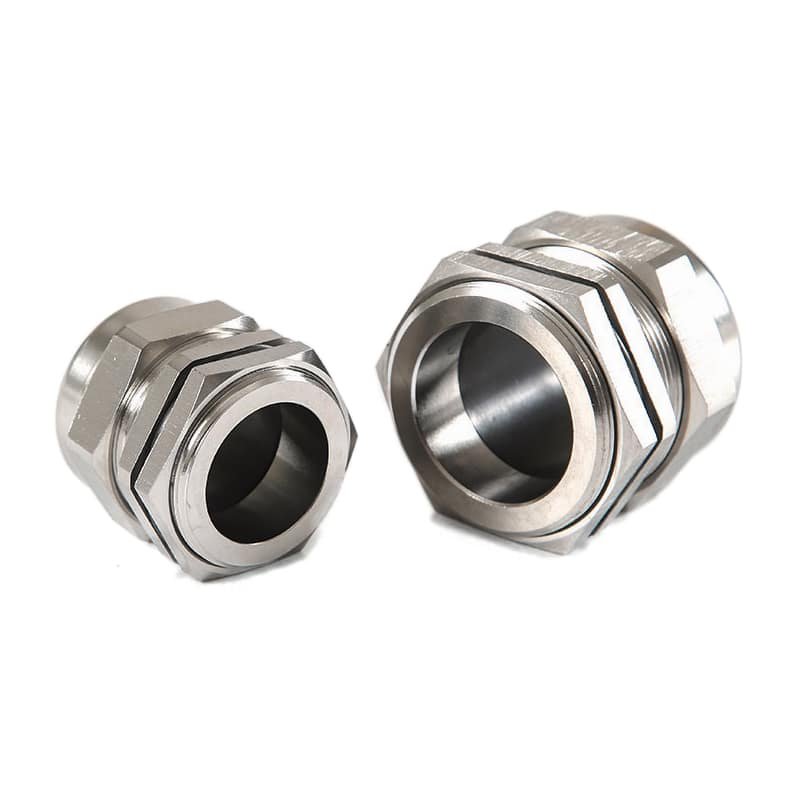
Material Composition Analysis
Nickel-plated brass glands feature a brass core (typically 60% copper, 40% zinc) with a thin electroplated nickel layer ranging from 5-25 microns. This combination provides excellent electrical conductivity, easy machining, and good corrosion resistance for standard industrial environments.
Stainless steel glands, commonly manufactured from 304 or 316L grades, offer uniform corrosion resistance throughout the material. The chromium content (18-20%) forms a passive oxide layer1 that self-heals when damaged, providing long-term protection against corrosion.
| Property | Nickel-Plated Brass | Stainless Steel 316L |
|---|---|---|
| Tensile Strength | 380-420 MPa | 515-620 MPa |
| Corrosion Resistance | Good (coating dependent) | Excellent (inherent) |
| Temperature Range | -40°C to +120°C | -196°C to +400°C |
| Electrical Conductivity | Excellent | Good |
| Machinability | Excellent | Good |
Manufacturing Considerations
From our production experience at Bepto, nickel-plated brass glands require precise plating processes to ensure uniform coating thickness. We use automated plating lines with strict quality controls to achieve consistent 15-micron nickel layers. Any coating defects can compromise the entire gland’s performance.
Stainless steel manufacturing involves more challenging machining processes due to work hardening characteristics. However, the material’s inherent properties eliminate coating-related quality concerns, resulting in more predictable performance outcomes.
How Do Costs Compare Between These Materials?
Cost analysis extends far beyond initial purchase price. Nickel-plated brass glands typically cost 40-60% less initially than stainless steel equivalents, but total cost of ownership depends heavily on application environment and maintenance requirements.

Initial Cost Breakdown
Based on our current pricing at Bepto, here’s a realistic cost comparison for M20 cable glands:
| Gland Type | Unit Cost (USD) | Volume Discount (1000+ pcs) |
|---|---|---|
| Nickel-Plated Brass M20 | $3.20-4.50 | 15-20% |
| Stainless Steel 316L M20 | $5.80-7.20 | 10-15% |
| Premium SS with ATEX2 | $8.50-12.00 | 8-12% |
Total Cost of Ownership Analysis
I remember working with Hassan, who manages a chemical processing facility in Abu Dhabi. Initially resistant to stainless steel pricing, he changed his perspective after calculating replacement costs. His nickel-plated brass glands lasted 18 months in their chlorine environment, while 316L stainless steel units are still performing after 4 years.
Replacement Cost Factors:
- Labor costs for gland replacement
- System downtime during maintenance
- Potential contamination or safety incidents
- Inventory management complexity
For harsh chemical environments, stainless steel’s higher initial cost often pays for itself within 2-3 years through reduced maintenance and replacement needs.
Regional Cost Variations
Material costs vary significantly by region due to raw material availability and local manufacturing capabilities. European markets typically see smaller price gaps (30-40%) due to stringent quality requirements, while Asian markets may show larger differentials (50-70%) based on specification flexibility.
Which Material Performs Better in Different Environments?
Environmental conditions are the primary determinant of material performance. Nickel-plated brass excels in standard industrial environments with moderate humidity and temperature, while stainless steel dominates in chemical processing, marine, and extreme temperature applications.
Corrosion Resistance Comparison
Standard Industrial Environments:
Nickel-plated brass performs excellently in typical manufacturing facilities, warehouses, and office buildings. The nickel coating provides adequate protection against atmospheric corrosion, humidity, and light chemical exposure.
Chemical Processing:
Stainless steel 316L demonstrates superior resistance to acids, alkalis, and chloride-containing solutions. The molybdenum content (2-3%) significantly enhances pitting and crevice corrosion3 resistance compared to 304 grade.
Marine Applications:
Salt spray testing4 reveals dramatic performance differences. Nickel-plated brass shows coating breakdown after 200-500 hours of salt spray exposure, while 316L stainless steel maintains integrity beyond 2000 hours.
Temperature Performance
Temperature cycling creates different challenges for each material:
Nickel-Plated Brass Limitations:
- Thermal expansion differences between brass and nickel coating
- Potential coating cracking at temperature extremes
- Brass dezincification5 in hot, humid conditions
Stainless Steel Advantages:
- Uniform thermal expansion throughout material
- Maintained mechanical properties across temperature range
- No coating-related thermal stress issues
Real-World Performance Data
Our field testing in partnership with major industrial clients shows:
- Food Processing (316L SS): 99.2% reliability over 5 years
- Automotive Manufacturing (Ni-plated brass): 96.8% reliability over 3 years
- Offshore Oil Platforms (316L SS): 98.7% reliability over 7 years
- General Manufacturing (Ni-plated brass): 97.5% reliability over 4 years
When Should You Choose Each Material Type?
Making the right material choice requires careful consideration of multiple factors. Choose nickel-plated brass for cost-sensitive applications in controlled environments, and select stainless steel for harsh conditions where long-term reliability is paramount.
Nickel-Plated Brass Selection Criteria
Ideal Applications:
- Indoor industrial facilities with controlled environment
- Telecommunications and data center installations
- Automotive manufacturing (non-corrosive areas)
- General machinery and equipment
- Budget-conscious projects with regular maintenance schedules
Environmental Limits:
- Humidity levels below 85% RH
- Temperature range: -20°C to +80°C for optimal performance
- pH levels between 6-8
- Minimal exposure to chlorides or sulfur compounds
Stainless Steel Selection Criteria
Essential Applications:
- Chemical and petrochemical processing
- Marine and offshore installations
- Food and pharmaceutical manufacturing
- Wastewater treatment facilities
- High-temperature applications above 100°C
Performance Advantages:
- Maintenance-free operation in harsh environments
- Extended service life (5-10 years typical)
- Superior fire resistance and safety ratings
- Compliance with strict hygiene standards
Decision Framework
I always recommend this systematic approach to clients:
- Environmental Assessment: Identify all potential corrosive agents
- Cost Analysis: Calculate 5-year total ownership costs
- Regulatory Requirements: Check industry-specific standards
- Maintenance Capabilities: Evaluate available maintenance resources
- Risk Tolerance: Consider consequences of premature failure
A recent project with a pharmaceutical company in Switzerland perfectly illustrates this process. Despite budget constraints favoring brass, regulatory requirements and contamination risks made 316L stainless steel the only viable option. The investment paid off through zero contamination incidents and FDA compliance.
Conclusion
The choice between nickel-plated brass and stainless steel cable glands ultimately depends on balancing initial costs against long-term performance requirements. While nickel-plated brass offers excellent value for standard industrial applications, stainless steel’s superior durability and chemical resistance make it indispensable for demanding environments. At Bepto, we help clients navigate these decisions by providing detailed application analysis and cost modeling. Remember, the cheapest initial option isn’t always the most economical choice over the product’s lifecycle. Consider your specific environmental conditions, maintenance capabilities, and risk tolerance to make the optimal material selection for your project’s success.
FAQs About Nickel-Plated Brass vs Stainless Steel Glands
Q: How long do nickel-plated brass cable glands typically last compared to stainless steel?
A: Nickel-plated brass glands typically last 3-5 years in standard industrial environments, while stainless steel glands can perform reliably for 7-15 years depending on conditions. In harsh chemical or marine environments, brass may fail within 1-2 years while stainless steel maintains performance throughout its design life.
Q: Can I use nickel-plated brass glands in outdoor applications?
A: Yes, but with limitations. Nickel-plated brass works well in mild outdoor conditions with proper IP rating protection. However, avoid using them in coastal areas, industrial zones with chemical exposure, or regions with high humidity and temperature fluctuations where stainless steel would be more reliable.
Q: What’s the price difference between nickel-plated brass and stainless steel cable glands?
A: Stainless steel cable glands typically cost 40-60% more than nickel-plated brass equivalents initially. However, when factoring in replacement costs, maintenance, and downtime, stainless steel often provides better value in demanding applications over a 5-year period.
Q: Do both materials meet the same safety certifications?
A: Both materials can achieve similar certifications like IP68, ATEX, and IECEx when properly manufactured. However, stainless steel more easily maintains certification requirements over time due to its inherent corrosion resistance, while nickel-plated brass performance depends on coating integrity.
Q: Which material is better for food processing applications?
A: Stainless steel 316L is strongly preferred for food processing due to FDA compliance, easy cleaning, and resistance to sanitizing chemicals. While nickel-plated brass can be food-safe, the coating may wear over time, potentially causing contamination issues that make stainless steel the safer long-term choice.
-
Learn how chromium reacts with oxygen to form a thin, invisible barrier that protects stainless steel from rusting. ↩
-
Review the European Union directives describing equipment allowed in environments with an explosive atmosphere. ↩
-
Explore these localized forms of corrosion that can attack metals in chloride-rich environments and how specific alloys resist them. ↩
-
Understand the standardized corrosion test method used to evaluate the corrosion resistance of metal coatings. ↩
-
Read about the selective leaching corrosion mechanism where zinc is removed from brass alloys, leaving a porous structure. ↩
