


Choosing the wrong compression type causes 60% of cable gland sealing failures, leading to moisture ingress, equipment damage, and costly downtime in critical applications. Engineers frequently struggle with compression selection, especially when balancing sealing performance, installation complexity, and long-term reliability across diverse environmental conditions and cable types. Single compression cable glands provide basic sealing through one compression point suitable for standard applications, while double compression cable glands offer superior sealing with two independent compression zones – inner seal on cable jacket and outer seal on cable armor or sheath – delivering enhanced protection for harsh environments, armored cables, and critical applications requiring maximum ingress protection and strain relief performance. After a decade of helping engineers at Bepto select optimal compression solutions for automotive, marine, and industrial installations worldwide, I’ve developed this comprehensive guide to eliminate confusion and ensure perfect compression choices for every application.
Table of Contents
- What Are the Key Differences Between Single and Double Compression Cable Glands?
- When Should You Choose Single Compression Cable Glands?
- Why Are Double Compression Cable Glands Essential for Critical Applications?
- How Do You Select the Right Compression Type for Your Application?
- What Are the Installation and Maintenance Considerations?
- FAQs About Compression Cable Glands
What Are the Key Differences Between Single and Double Compression Cable Glands?
Understanding the fundamental design differences between single and double compression systems is essential for optimal cable gland selection. The key differences between single and double compression cable glands lie in their sealing architecture: single compression uses one sealing point that compresses against the cable outer jacket, while double compression employs two independent sealing zones – an inner seal that grips the cable jacket and an outer seal that secures cable armor or provides secondary protection – resulting in superior strain relief, enhanced ingress protection, and improved long-term reliability for demanding applications.
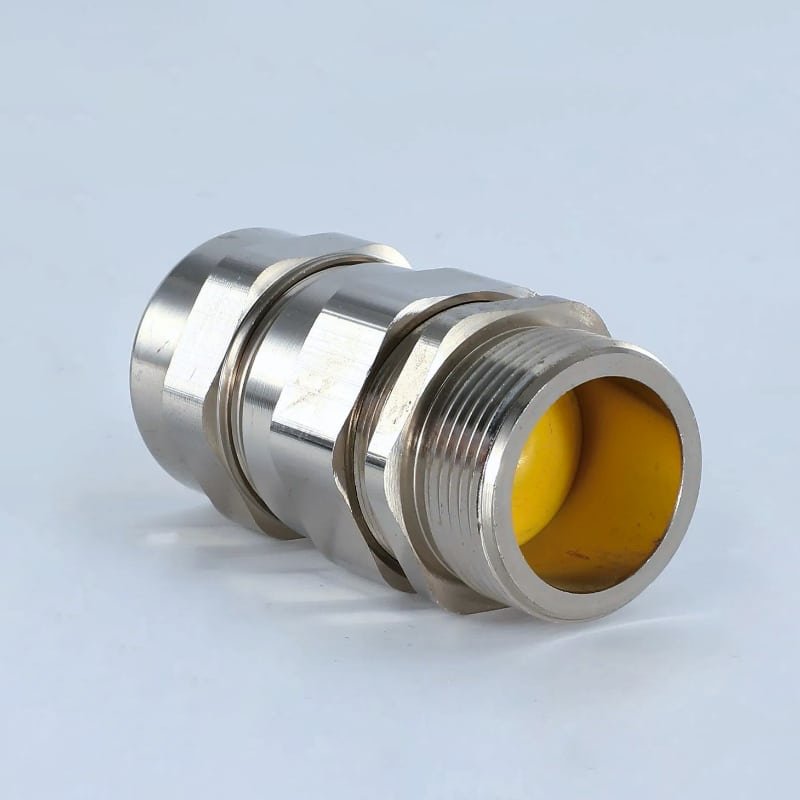
Single Compression Design Features
Unified Sealing Point: Single compression mechanism creates seal through direct compression of sealing element against cable outer jacket or sheath.
Simplified Construction: Fewer components reduce manufacturing complexity and installation time while maintaining reliable sealing for standard applications.
Cost Efficiency: Streamlined design enables competitive pricing for high-volume applications where basic sealing performance meets requirements.
Installation Speed: Single compression point allows rapid installation with standard tools and minimal training requirements.
Double Compression Architecture
Dual Sealing Zones: Inner compression seals against cable jacket while outer compression secures armor, braided shield, or provides secondary environmental protection.
Enhanced Strain Relief: Two compression points distribute mechanical stress across cable length, reducing fatigue and extending service life.
Superior Ingress Protection: Independent sealing zones provide redundant protection against moisture, dust, and chemical ingress.
Armored Cable Compatibility: Outer compression specifically designed to terminate and seal armored cables, braided shields, and corrugated conduits.
Performance Comparison Matrix
| Feature | Single Compression | Double Compression |
|---|---|---|
| Sealing Points | 1 | 2 |
| Installation Time | Fast | Moderate |
| Cost | Lower | Higher |
| Strain Relief | Standard | Superior |
| Ingress Protection | IP66/IP67 | IP68/IP69K |
| Armored Cable Support | Limited | Excellent |
| Maintenance Frequency | Standard | Reduced |
Marcus, a maintenance supervisor at BMW’s manufacturing facility in Munich, Germany, initially specified single compression cable glands for robotic welding stations to minimize costs. However, constant vibration and harsh industrial environment caused frequent seal failures, requiring monthly maintenance and causing production delays. We recommended upgrading to our M20 and M25 double compression brass cable glands with EPDM sealing elements. The dual compression design eliminated seal failures, reduced maintenance frequency by 80%, and improved overall equipment effectiveness. The initial higher investment was recovered within six months through reduced downtime and maintenance costs.
When Should You Choose Single Compression Cable Glands?
Single compression cable glands excel in applications where their streamlined design and cost-effectiveness provide optimal value without compromising essential performance requirements. Choose single compression cable glands for standard indoor installations, non-armored cables, cost-sensitive projects, applications with minimal vibration or movement, installations requiring rapid deployment, and environments where basic IP66/IP67 protection suffices – single compression design delivers reliable sealing performance with simplified installation procedures and competitive pricing that makes them ideal for high-volume applications with moderate environmental demands.
Ideal Application Scenarios
Standard Industrial Installations: Control panels, junction boxes, and equipment enclosures in protected indoor environments with moderate environmental exposure.
Commercial Buildings: HVAC controls, lighting systems, and building automation applications where cost efficiency and installation speed are priorities.
Automotive Applications: Non-critical automotive electronics, interior wiring harnesses, and applications with limited exposure to harsh conditions.
High-Volume Projects: Large-scale installations where standardized specifications and competitive pricing enable significant cost savings.
Cable Type Compatibility
Unarmored Cables: PVC, XLPE, and rubber-jacketed cables without metallic armor or braided shielding that require basic strain relief and sealing.
Standard Instrumentation: Control cables, signal wires, and low-voltage applications with consistent cable diameters and standard jacket materials.
Flexible Cables: Multi-core cables with flexible construction that benefit from single-point compression without armor termination requirements.
Power Cables: Standard power cables in dry indoor locations where enhanced environmental protection isn’t critical.
Environmental Considerations
Protected Environments: Indoor installations with controlled temperature, humidity, and minimal chemical exposure where basic sealing suffices.
Low Vibration: Applications with minimal mechanical stress, vibration, or movement that don’t require enhanced strain relief capabilities.
Standard IP Ratings: Installations requiring IP66 or IP67 protection levels that don’t demand maximum ingress protection performance.
Maintenance Accessibility: Locations where routine maintenance access is available and periodic seal inspection is practical.
Cost-Benefit Analysis
Initial Investment: Lower upfront costs enable budget optimization for large-scale projects with moderate performance requirements.
Installation Efficiency: Simplified installation procedures reduce labor costs and project timelines for high-volume deployments.
Inventory Management: Standardized single compression designs simplify spare parts inventory and maintenance procedures.
Performance Adequacy: Reliable sealing performance meets requirements for many applications without over-engineering or unnecessary complexity.
Why Are Double Compression Cable Glands Essential for Critical Applications?
Double compression cable glands provide superior performance characteristics that make them indispensable for demanding applications requiring maximum reliability and protection. Double compression cable glands are essential for critical applications because they deliver redundant sealing protection, superior strain relief, enhanced ingress protection up to IP68/IP69K ratings, proper armored cable termination, improved long-term reliability, and reduced maintenance requirements – these advanced features ensure optimal performance in harsh environments, safety-critical systems, and applications where failure consequences are severe or costly.

Critical Application Requirements
Hazardous Area Installations: Explosion-proof and intrinsically safe applications where seal integrity is essential for safety certification compliance1.
Marine and Offshore: Saltwater exposure, extreme weather conditions, and constant vibration demand maximum ingress protection and corrosion resistance.
Heavy Industry: Steel mills, mining operations, and chemical processing facilities with harsh environments, corrosive atmospheres, and extreme temperatures.
Safety Systems: Emergency shutdown systems, fire detection networks, and safety instrumented systems where failure isn’t acceptable.
Armored Cable Advantages
Mechanical Protection: Proper termination of steel wire armor, aluminum tape armor, and braided shields2 provides comprehensive cable protection.
EMC Performance: Continuous armor grounding through outer compression maintains electromagnetic compatibility and reduces interference3.
Strain Relief Distribution: Dual compression points distribute mechanical stress between armor and cable jacket, preventing fatigue failures.
Environmental Sealing: Independent sealing of armor and cable jacket prevents moisture migration along armor interstices.
Enhanced Performance Benefits
Redundant Sealing: Two independent sealing zones provide backup protection if one seal experiences degradation or damage.
Extended Service Life: Superior strain relief and environmental protection significantly extend cable and gland service life.
Reduced Maintenance: Enhanced sealing performance reduces maintenance frequency and associated downtime costs.
Higher IP Ratings: Capability to achieve IP68 and IP69K ratings4 for submersion and high-pressure washdown applications.
Long-Term Reliability Factors
Seal Redundancy: Multiple sealing points ensure continued protection even if one seal experiences partial degradation over time.
Stress Distribution: Dual compression reduces stress concentration points that can lead to premature cable or seal failure.
Material Optimization: Advanced sealing materials and designs specifically engineered for long-term environmental exposure.
Quality Assurance: Enhanced testing and certification procedures ensure consistent performance across production batches.
Hassan, operations manager at Saudi Aramco’s refinery in Ras Tanura, Saudi Arabia, faced recurring cable gland failures in crude oil processing units due to extreme temperatures, hydrogen sulfide exposure, and constant vibration. Single compression cable glands failed every 6-8 months, causing costly shutdowns and safety concerns. We supplied our ATEX-certified double compression stainless steel cable glands with Viton seals and proper armor termination capabilities. The dual compression design eliminated failures, achieved 5+ year service life, and maintained perfect seal integrity in the harshest petrochemical environment. The reliability improvement enabled predictive maintenance scheduling and eliminated unplanned shutdowns worth millions in lost production.
How Do You Select the Right Compression Type for Your Application?
Selecting the optimal compression type requires systematic evaluation of application requirements, environmental conditions, and performance priorities. To select the right compression type, evaluate cable construction (armored vs. unarmored), environmental conditions (IP rating requirements, chemical exposure, temperature extremes), mechanical stress factors (vibration, movement, strain), criticality level (safety systems vs. standard applications), maintenance accessibility, and total cost of ownership – this comprehensive assessment ensures optimal balance between performance requirements, installation complexity, and long-term value for your specific application.
Application Assessment Framework
Cable Type Analysis: Determine whether cables are armored, shielded, or standard construction to identify termination requirements and compatibility needs.
Environmental Evaluation: Assess exposure conditions including moisture, chemicals, temperature extremes, and ingress protection requirements.
Mechanical Stress Assessment: Evaluate vibration levels, cable movement, strain requirements, and mechanical protection needs.
Criticality Classification: Determine failure consequences, safety implications, and reliability requirements for the specific application.
Decision Matrix Criteria
| Selection Factor | Single Compression | Double Compression |
|---|---|---|
| Cable Type | Unarmored preferred | Armored cables ideal |
| Environment | Indoor/protected | Harsh/outdoor |
| IP Rating | IP66/IP67 adequate | IP68/IP69K required |
| Vibration | Low/moderate | High/continuous |
| Criticality | Standard applications | Safety-critical systems |
| Budget | Cost-sensitive | Performance-priority |
| Maintenance | Regular access | Limited access |
Environmental Condition Guidelines
Indoor Protected: Single compression typically adequate for controlled environments with moderate temperature and humidity variations.
Outdoor Exposed: Double compression recommended for weather exposure, UV radiation, and temperature cycling applications.
Harsh Industrial: Double compression essential for chemical exposure, extreme temperatures, and corrosive atmospheres.
Marine/Offshore: Double compression mandatory for saltwater exposure, high humidity, and extreme weather conditions.
Cable Construction Considerations
Unarmored Cables: Single compression suitable for PVC, XLPE, and rubber-jacketed cables without metallic protection.
Armored Cables: Double compression required for proper armor termination, grounding, and environmental sealing.
Shielded Cables: Double compression preferred for maintaining shield continuity and EMC performance.
Flexible Cables: Consider cable movement and flexing requirements when selecting compression type and sealing materials.
Total Cost Analysis
Initial Investment: Compare upfront costs including cable glands, installation labor, and any required accessories or tools.
Operating Costs: Evaluate maintenance frequency, replacement intervals, and associated downtime costs over service life.
Failure Consequences: Assess costs of potential failures including equipment damage, production losses, and safety implications.
Life Cycle Value: Calculate total cost of ownership including purchase, installation, maintenance, and replacement over expected service life.
What Are the Installation and Maintenance Considerations?
Proper installation and maintenance procedures are critical for achieving optimal performance from both single and double compression cable glands. Installation and maintenance considerations include proper cable preparation techniques, correct compression torque application, sealing element inspection and replacement schedules, environmental compatibility verification, and systematic maintenance procedures – single compression systems require basic installation skills and standard maintenance, while double compression systems demand enhanced installation expertise, specialized tools, and comprehensive maintenance protocols to ensure optimal performance of both sealing zones.
Installation Best Practices
Cable Preparation: Proper cable stripping, armor preparation, and conductor organization are essential for reliable sealing and termination.
Torque Control: Use calibrated torque wrenches to achieve specified compression without over-tightening that can damage seals or cables.
Seal Inspection: Verify proper seal positioning, compression, and integrity before final installation and system commissioning.
Documentation: Record installation details, torque values, and seal specifications for future maintenance reference.
Single Compression Installation
Simplified Procedure: Single compression point enables rapid installation with standard tools and minimal specialized training.
Torque Requirements: Typically 15-25 Nm for brass glands, 20-30 Nm for stainless steel, depending on size and manufacturer specifications.
Seal Verification: Visual inspection of compression seal ensures proper engagement and uniform compression around cable circumference.
Quality Control: Basic installation checks include seal integrity, cable strain relief, and proper thread engagement.
Double Compression Installation
Sequential Compression: Install inner compression first to secure cable jacket, then apply outer compression for armor or secondary sealing.
Specialized Tools: May require specific wrenches or tools to access both compression points without interference.
Enhanced Training: Installation personnel require additional training on dual compression procedures and quality verification methods.
Comprehensive Testing: Both sealing zones require individual verification and system-level testing for complete installation validation.
Maintenance Scheduling
Inspection Frequency: Single compression systems typically require annual inspection, double compression systems may extend to 2-3 year intervals.
Seal Replacement: Monitor seal condition and replace based on visual inspection, performance testing, or scheduled intervals.
Environmental Monitoring: Track environmental conditions that may accelerate seal degradation or require maintenance schedule adjustments.
Predictive Maintenance: Implement condition monitoring techniques to optimize maintenance timing and prevent unexpected failures.
Conclusion
Selecting between single and double compression cable glands requires careful consideration of application requirements, environmental conditions, and performance priorities. Single compression cable glands offer cost-effective solutions for standard applications with moderate environmental demands, while double compression systems provide superior performance for critical applications, harsh environments, and armored cable installations. The key to success lies in systematic evaluation of cable types, environmental conditions, mechanical stress factors, and total cost of ownership. At Bepto, we’re committed to helping engineers make informed compression choices with our comprehensive range of single and double compression cable glands, expert technical support, and proven solutions that deliver optimal performance for every application! 😉
FAQs About Compression Cable Glands
Q: Can I use single compression cable glands with armored cables?
A: Single compression cable glands are not recommended for armored cables because they cannot properly terminate and seal the armor. Double compression cable glands are specifically designed with outer compression zones to secure armor and provide proper environmental sealing.
Q: What’s the difference in installation time between single and double compression?
A: Single compression installation typically takes 3-5 minutes per gland, while double compression requires 5-8 minutes due to sequential compression procedures and additional quality verification steps. The extra time investment provides significantly enhanced performance and reliability.
Q: How do I know if my application needs IP68 protection?
A: IP68 protection is required for applications with potential submersion, high-pressure washdown, or extreme moisture exposure. If your installation may encounter standing water, pressure washing, or harsh marine conditions, double compression cable glands with IP68 rating are essential.
Q: Are double compression cable glands worth the extra cost?
A: Double compression cable glands provide superior value for critical applications, harsh environments, and armored cables through reduced maintenance, extended service life, and enhanced reliability. Calculate total cost of ownership including potential failure costs to determine optimal value.
Q: Can I upgrade from single to double compression cable glands?
A: Yes, upgrading is possible but may require panel modifications due to different thread sizes or mounting requirements. Evaluate cable compatibility, environmental benefits, and installation complexity when considering upgrades during maintenance or system modifications.
-
“IECEx – International Electrotechnical Commission System for Certification to Standards Relating to Equipment for Use in Explosive Atmospheres”,
https://www.iec.ch/ex. Details certification requirements for electrical equipment in hazardous environments. Evidence role: general_support; Source type: standard. Supports: safety certification compliance. ↩ -
“Armoured Cable”,
https://en.wikipedia.org/wiki/Armoured_cable. Explains the construction and mechanical protection provided by different armor types. Evidence role: general_support; Source type: research. Supports: steel wire armor, aluminum tape armor, and braided shields. ↩ -
“IEEE 299-2006 – Measuring the Effectiveness of Electromagnetic Shielding”,
https://standards.ieee.org/ieee/299/4405/. Establishes uniform measurement procedures for determining the effectiveness of electromagnetic shielding. Evidence role: mechanism; Source type: standard. Supports: reduces interference. ↩ -
“IP Code”,
https://en.wikipedia.org/wiki/IP_Code. Defines international standards for enclosure ingress protection against liquids and solids. Evidence role: standard; Source type: research. Supports: IP68 and IP69K ratings. ↩
