

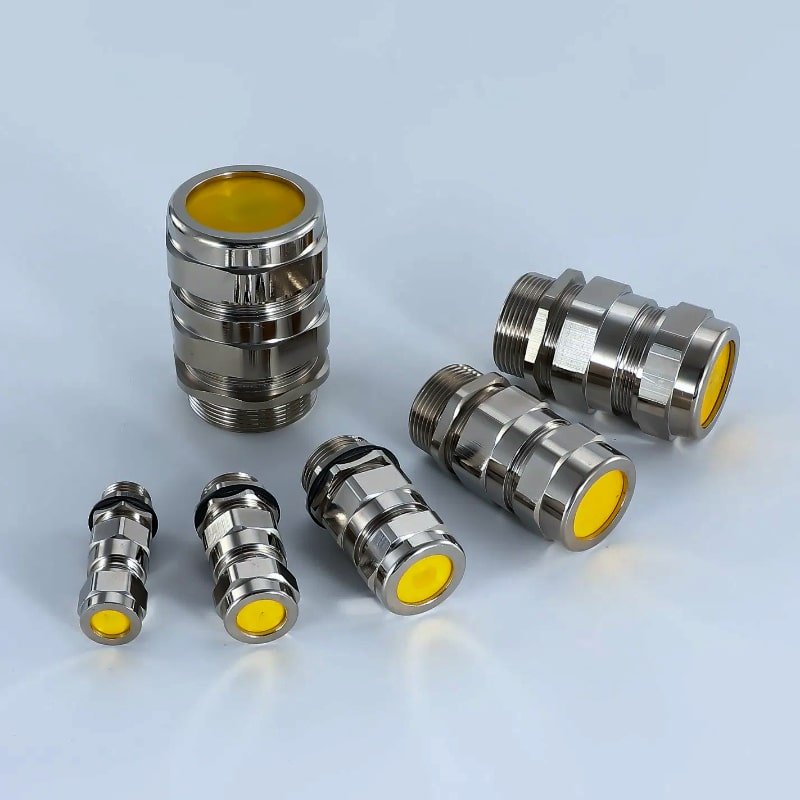
Explosive atmospheres in industrial facilities claim lives and destroy equipment worth millions annually, with improper cable entry systems being a leading cause of catastrophic ignition incidents that devastate operations and endanger personnel. Many engineers underestimate the critical importance of certified hazardous area cable glands, often discovering compliance gaps only during safety audits or after near-miss incidents that could have resulted in explosions, fires, and regulatory shutdowns. Hazardous area cable glands with ATEX, IECEx, and Ex d ratings provide essential explosion protection by preventing ignition sources from entering potentially explosive atmospheres through flameproof enclosures, intrinsically safe barriers, and increased safety designs – these certified cable glands maintain containment integrity, prevent flame propagation, and ensure safe cable entry in Zone 0, Zone 1, and Zone 2 hazardous locations while meeting stringent international safety standards for oil, gas, chemical, pharmaceutical, and mining applications. Throughout my decade of experience supplying explosion-proof cable glands to petrochemical facilities, offshore platforms, and mining operations across Europe, the Middle East, and Asia, I’ve witnessed how proper hazardous area cable gland selection and certification can mean the difference between safe operations and catastrophic incidents that destroy lives, equipment, and entire facilities.
Table of Contents
- What Are Hazardous Area Cable Glands and Why Are They Critical?
- What Do ATEX, IECEx, and Ex d Certifications Actually Mean?
- How Do You Select the Right Explosion-Proof Cable Gland Rating?
- What Are the Key Installation and Maintenance Requirements?
- How Do Different Protection Methods Compare for Specific Applications?
- FAQs About Hazardous Area Cable Glands
What Are Hazardous Area Cable Glands and Why Are They Critical?
Understanding hazardous area cable glands is fundamental for anyone working with electrical installations in potentially explosive environments where safety is paramount. Hazardous area cable glands are specialized explosion-proof cable entry devices designed to prevent ignition of flammable gases, vapors, dusts, or fibers by containing potential sparks, flames, or hot surfaces within certified enclosures – they provide essential protection through flameproof barriers, pressure relief systems, and intrinsic safety measures that prevent explosive atmospheres from igniting while maintaining environmental sealing and mechanical integrity required for safe electrical installations in classified hazardous locations.

Hazardous Area Classification Systems
Zone Classification defines the probability and duration of explosive atmosphere presence1, with Zone 0 indicating continuous presence, Zone 1 occasional presence, and Zone 2 abnormal conditions only – each zone requires specific cable gland protection levels.
Gas Groups categorize flammable substances by ignition energy and flame speed, from Group I (methane) for mining applications to Groups IIA, IIB, and IIC for industrial gases with increasing ignition sensitivity requiring enhanced protection measures.
Temperature Classes specify maximum surface temperatures that cable glands can safely reach without igniting surrounding explosive atmospheres, ranging from T1 (450°C) to T6 (85°C) based on auto-ignition temperatures2 of specific hazardous substances.
Critical Safety Functions
Explosion Containment prevents internal explosions from propagating to external explosive atmospheres through robust flameproof construction, precise gap dimensions, and pressure-resistant materials that withstand internal pressure waves.
Ignition Source Prevention eliminates potential ignition sources including electrical sparks, hot surfaces, mechanical friction, and electrostatic discharge through specialized design features and material selection protocols.
Environmental Protection maintains IP65/IP66/IP68 sealing against moisture, dust, and chemical ingress while preserving explosion protection integrity under extreme temperature, vibration, and corrosive conditions typical in hazardous industrial environments.
Ahmed Hassan, operations manager at Saudi Aramco’s Ras Tanura refinery in Saudi Arabia, faced critical safety compliance issues when upgrading electrical systems in Zone 1 hydrocarbon processing areas. Their existing cable glands lacked proper ATEX certification, creating potential ignition risks during routine maintenance operations. We supplied our stainless steel Ex d flameproof cable glands with ATEX II 2G Ex db IIC T6 certification, ensuring complete compliance with international safety standards. The installation eliminated ignition risks, passed rigorous safety audits, and provided reliable cable entry protection in one of the world’s largest oil refineries while maintaining the corrosion resistance essential for harsh petrochemical environments.
What Do ATEX, IECEx, and Ex d Certifications Actually Mean?
Navigating the complex world of hazardous area certifications requires understanding the specific requirements and applications of each international standard. ATEX, IECEx, and Ex d certifications represent different international standards for explosion protection equipment – ATEX covers European Union requirements for equipment used in potentially explosive atmospheres, IECEx provides global certification acceptance through international cooperation, while Ex d specifically denotes flameproof protection method that contains explosions within enclosures and prevents flame propagation to external explosive atmospheres through precise engineering tolerances and robust construction standards.
ATEX Certification Requirements
ATEX Directive 2014/34/EU mandates explosion protection for equipment used in potentially explosive atmospheres3 throughout European Union member states, requiring comprehensive conformity assessment procedures and CE marking for market access.
Equipment Categories include Category 1 for Zone 0/20 (very high protection), Category 2 for Zone 1/21 (high protection), and Category 3 for Zone 2/22 (normal protection) with corresponding safety integrity levels and design requirements.
Essential Health and Safety Requirements encompass explosion risk assessment, ignition source elimination, explosion containment, and comprehensive technical documentation demonstrating compliance with harmonized European standards.
IECEx Certification System
International Cooperation enables mutual recognition of explosion protection certificates between participating countries, reducing testing costs and accelerating global market access for certified equipment manufacturers and users.
IECEx Scheme includes Equipment Certification (ExCB), Service Facility Certification (ExSF), and Personnel Competency Certification (ExPC) providing comprehensive framework for explosion protection quality assurance and technical competency verification.
Global Acceptance covers over 35 participating countries including major industrial markets, making IECEx certification valuable for international projects and multinational corporations requiring consistent safety standards across multiple jurisdictions.
Ex d Flameproof Protection
Containment Principle allows internal explosions to occur within flameproof enclosures while preventing flame propagation to external explosive atmospheres through precisely controlled gap dimensions4 and robust construction materials.
Design Requirements specify maximum gap widths, minimum engagement lengths, surface roughness limits, and material strength requirements ensuring reliable explosion containment under maximum credible accident scenarios.
Testing Standards include explosion pressure testing, flame non-transmission verification, impact resistance evaluation, and environmental durability assessment confirming long-term protection reliability in harsh industrial conditions.
| Protection Method | Application | Advantages | Limitations |
|---|---|---|---|
| Ex d (Flameproof) | Zone 1/2 Gas | Robust, Field Repairable | Size/Weight Constraints |
| Ex e (Increased Safety) | Zone 1/2 Gas | Compact, Cost-Effective | Limited Fault Tolerance |
| Ex i (Intrinsic Safety) | Zone 0/1/2 | Highest Safety Level | Power Limitations |
| Ex n (Non-Sparking) | Zone 2 Only | Simple, Economical | Limited Protection Level |
How Do You Select the Right Explosion-Proof Cable Gland Rating?
Proper selection of explosion-proof cable gland ratings requires systematic evaluation of hazardous area conditions, regulatory requirements, and operational parameters. Select the right explosion-proof cable gland rating by conducting thorough hazardous area classification assessment to determine zone requirements, identifying specific gas groups and temperature classes present, evaluating environmental conditions including temperature ranges and chemical exposure, considering installation constraints and maintenance accessibility, and ensuring compliance with applicable international standards – systematic selection methodology prevents safety compromises while optimizing performance, reliability, and total cost of ownership for specific hazardous area applications.

Hazardous Area Assessment
Zone Classification Analysis determines the frequency and duration of explosive atmosphere presence, directly influencing required equipment protection levels and certification categories for safe operation.
Gas Group Identification involves analyzing specific flammable substances present, their ignition energies, and flame propagation characteristics to select appropriate equipment group ratings and protection methods.
Temperature Class Evaluation requires understanding auto-ignition temperatures of hazardous substances and maximum surface temperatures that cable glands may reach during normal and fault conditions.
Environmental Considerations
Ambient Temperature Ranges affect cable gland material selection, sealing system design, and thermal expansion characteristics that influence long-term reliability and safety performance in extreme conditions.
Chemical Compatibility ensures cable gland materials resist corrosion, degradation, and failure when exposed to specific chemicals, solvents, and process fluids present in hazardous industrial environments.
Mechanical Stresses including vibration, shock, thermal cycling, and installation forces require robust construction and appropriate material selection for reliable long-term performance.
Certification Requirements
Regional Standards vary between jurisdictions, with ATEX for Europe, NEC/CEC for North America, and IECEx for international applications requiring specific certification documentation and marking requirements.
Third-Party Testing by accredited laboratories provides independent verification of explosion protection performance, ensuring compliance with safety standards and regulatory acceptance for hazardous area installations.
Documentation Requirements include certificates, technical files, installation instructions, and maintenance procedures necessary for regulatory compliance and safe operation throughout equipment service life.
Marcus Weber, chief electrical engineer at BASF’s Ludwigshafen chemical complex in Germany, needed explosion-proof cable glands for a new polyethylene production unit handling ethylene gas (Group IIC). The application required Zone 1 protection with T3 temperature rating due to process temperatures reaching 200°C. We provided our stainless steel Ex d cable glands with ATEX II 2G Ex db IIC T3 certification, specifically designed for the most demanding gas group applications. The installation ensured complete safety compliance, withstood the challenging chemical environment, and provided reliable cable entry protection for critical process control systems while meeting BASF’s stringent safety and quality standards.
What Are the Key Installation and Maintenance Requirements?
Proper installation and maintenance of explosion-proof cable glands are critical for maintaining safety integrity and regulatory compliance throughout their service life. Key installation and maintenance requirements for explosion-proof cable glands include following manufacturer’s certified installation procedures to preserve explosion protection integrity, ensuring proper thread engagement and sealing compression, maintaining specified gap dimensions and surface conditions, conducting regular inspection schedules for damage or deterioration, and documenting all maintenance activities for regulatory compliance – systematic installation and maintenance practices prevent safety degradation while ensuring long-term protection reliability in hazardous area applications.
Installation Best Practices
Surface Preparation requires clean, undamaged threads and mounting surfaces free from paint, corrosion, or contamination that could compromise explosion protection or environmental sealing integrity.
Thread Engagement must meet minimum requirements specified in certification documentation, typically requiring full thread engagement plus additional turns to ensure mechanical strength and explosion containment reliability.
Torque Specifications ensure proper sealing compression and mechanical integrity without over-stressing components or compromising explosion protection gaps and flame barrier effectiveness.
Inspection and Maintenance
Visual Inspection Schedules should include checking for mechanical damage, corrosion, seal deterioration, and proper installation condition at intervals appropriate for environmental severity and operational criticality.
Gap Dimension Verification may be required for flameproof cable glands to ensure explosion protection integrity, particularly after maintenance activities or suspected impact damage that could affect safety performance.
Documentation Requirements include maintenance records, inspection reports, and any modifications or repairs performed to maintain regulatory compliance and demonstrate ongoing safety integrity.
Common Installation Errors
Inadequate Thread Engagement compromises both mechanical strength and explosion protection, potentially allowing flame propagation or catastrophic failure under explosion pressure conditions.
Improper Sealing allows moisture or chemical ingress that can cause corrosion, electrical faults, or degraded explosion protection performance over time.
Contaminated Surfaces prevent proper sealing and may introduce ignition sources or compromise explosion containment through damaged flame barrier surfaces or inadequate gap dimensions.
How Do Different Protection Methods Compare for Specific Applications?
Understanding the comparative advantages and limitations of different explosion protection methods enables optimal selection for specific hazardous area applications. Different explosion protection methods offer distinct advantages for specific applications – Ex d flameproof provides robust protection for Zone 1/2 applications with field maintainability but requires larger enclosures, Ex e increased safety offers compact solutions for Zone 1/2 with simplified installation but limited fault tolerance, Ex i intrinsic safety enables Zone 0 applications with highest safety levels but power limitations, while Ex n non-sparking provides economical Zone 2 protection with installation simplicity but basic protection levels – selection depends on hazardous area classification, operational requirements, maintenance capabilities, and total cost considerations.
Application-Specific Considerations
Zone 0 Applications require intrinsic safety (Ex i) protection as the only method providing adequate safety levels5 for continuous explosive atmosphere presence, despite power and signal limitations.
Zone 1 Applications can utilize flameproof (Ex d), increased safety (Ex e), or intrinsic safety (Ex i) methods depending on power requirements, maintenance needs, and installation constraints.
Zone 2 Applications offer the widest selection including all protection methods plus non-sparking (Ex n) and restricted breathing (Ex nR) for cost-effective solutions in lower-risk environments.
Performance Comparison
Safety Integrity Levels vary significantly between protection methods, with intrinsic safety providing highest levels suitable for Zone 0 while non-sparking methods offer basic protection adequate only for Zone 2 applications.
Maintenance Requirements differ substantially, with flameproof enclosures allowing field maintenance while intrinsic safety circuits require specialized procedures and certified personnel for any modifications or repairs.
Cost Considerations include initial equipment costs, installation complexity, maintenance requirements, and lifecycle expenses that vary significantly between protection methods and application requirements.
Selection Criteria Matrix
| Criteria | Ex d | Ex e | Ex i | Ex n |
|---|---|---|---|---|
| Zone 0 Capability | No | No | Yes | No |
| Power Handling | High | Medium | Low | Medium |
| Maintenance Complexity | Medium | Low | High | Low |
| Initial Cost | High | Medium | High | Low |
| Installation Complexity | Medium | Low | High | Low |
Conclusion
Hazardous area cable glands with proper ATEX, IECEx, and Ex d certifications are essential safety components that protect lives, equipment, and facilities in potentially explosive environments. Understanding the specific requirements of different protection methods, certification standards, and application conditions enables optimal selection that ensures regulatory compliance while meeting operational needs. Proper installation, maintenance, and documentation practices maintain safety integrity throughout equipment service life. At Bepto, we’re committed to providing comprehensive explosion-proof cable gland solutions with certified quality, expert technical support, and proven reliability that protects your most critical hazardous area applications while ensuring full compliance with international safety standards! 😉
FAQs About Hazardous Area Cable Glands
Q: What’s the difference between ATEX and IECEx certification for cable glands?
A: ATEX certification is mandatory for European Union markets while IECEx provides global recognition through international cooperation. Both ensure explosion protection compliance, but ATEX requires CE marking for EU sales while IECEx enables mutual recognition across 35+ participating countries.
Q: Can I use Ex d cable glands in Zone 0 applications?
A: No, Ex d flameproof cable glands are only suitable for Zone 1 and Zone 2 applications. Zone 0 requires intrinsic safety (Ex i) protection methods that prevent ignition energy from reaching hazardous atmospheres under any fault conditions.
Q: How often should explosion-proof cable glands be inspected?
A: Inspection frequency depends on environmental conditions and regulatory requirements, typically ranging from monthly visual checks in harsh environments to annual detailed inspections in moderate conditions. Critical applications may require more frequent inspection based on risk assessment.
Q: What happens if I install a cable gland with wrong temperature rating?
A: Installing cable glands with inadequate temperature ratings creates serious ignition risks that could cause explosions. The cable gland surface temperature must remain below the auto-ignition temperature of hazardous substances present in the area.
Q: Are stainless steel cable glands always better for hazardous areas?
A: Stainless steel offers superior corrosion resistance for harsh chemical environments, but brass cable glands may be adequate for less corrosive conditions at lower cost. Material selection should consider specific environmental conditions, chemical compatibility, and budget constraints while maintaining safety requirements.
-
“Electrical equipment in hazardous areas”,
https://en.wikipedia.org/wiki/Electrical_equipment_in_hazardous_areas. Wikipedia technical page explaining Zone classifications. Evidence role: mechanism; Source type: research. Supports: Defines Zone 0, Zone 1, and Zone 2 atmospheric probabilities. ↩ -
“Autoignition temperature”,
https://en.wikipedia.org/wiki/Autoignition_temperature. Wikipedia page detailing temperature ignition thresholds. Evidence role: mechanism; Source type: research. Supports: T1 to T6 temperature classification standards. ↩ -
“ATEX Directive”,
https://single-market-economy.ec.europa.eu/sectors/mechanical-engineering/atex_en. Official EU Commission documentation on the ATEX framework. Evidence role: standard; Source type: government. Supports: European Union mandates for explosive atmosphere equipment. ↩ -
“IECEx Scheme Overview”,
https://www.iecex.com/certified-equipment-scheme/overview/. IECEx official system guide for explosive atmosphere certification. Evidence role: standard; Source type: standard. Supports: International framework for flameproof gap dimension control. ↩ -
“Intrinsic safety”,
https://en.wikipedia.org/wiki/Intrinsic_safety. Wikipedia technical reference on Ex i protection methodology. Evidence role: mechanism; Source type: research. Supports: Intrinsic safety requirements for Zone 0 environments. ↩
