


When I first started in the cable gland industry 10 years ago, I was completely overwhelmed by the alphabet soup of glanding types. A1, A2, B, C, E1 – what did they all mean? 😅 Fast forward to today as Sales Director at Bepto Connector, and I’ve helped thousands of engineers and procurement managers navigate this seemingly complex world.
Cable glanding types (A1/A2, B, C, E1, etc.) are standardized classifications that define specific cable entry configurations, sealing methods, and installation requirements for different applications. Each type serves distinct purposes: A1/A2 for standard cable entries, B for increased sealing performance, C for armored cables, and E1 for enhanced environmental protection.
Last month, I received a frantic call from David, a procurement manager at a German automotive plant. His team had ordered 500 “Type A” cable glands, only to discover they needed “Type C” for their armored cable applications. The confusion cost them a week of production delays and thousands in expedited shipping. This guide will ensure you never face that situation.
Table of Contents
- What Are Cable Glanding Types and Why Do They Matter?
- How Do A1 and A2 Types Differ in Design?
- When Should You Choose Type B vs Type C Glands?
- What Makes E1 Type Special for Harsh Environments?
- How to Select the Right Glanding Type for Your Application?
- FAQs About Cable Glanding Types
What Are Cable Glanding Types and Why Do They Matter?
Understanding cable glanding types isn’t just technical jargon – it’s the foundation of safe, reliable electrical installations.
Cable glanding types are internationally standardized classifications (primarily under IEC and BS standards) that specify the construction, sealing performance, and application requirements for different cable entry solutions. These designations ensure compatibility, safety, and optimal performance across various industries and environmental conditions.

The Evolution of Glanding Standards
The classification system emerged from the need to standardize cable entry solutions across different industries and countries. Each type represents specific engineering requirements:
- Type A (A1/A2): Basic cable entry with standard sealing
- Type B: Enhanced sealing for improved environmental protection
- Type C: Specialized design for armored and screened cables
- Type E1: Superior environmental sealing for extreme conditions
At Bepto, we manufacture all these types in our ISO9001-certified facility, ensuring each meets the exact specifications required for your applications. Our engineering team has spent years perfecting the sealing mechanisms and material compositions that make each type perform optimally in its intended environment.
The importance of selecting the correct type cannot be overstated. Beyond compliance requirements, the right glanding type ensures:
- Optimal IP rating performance
- Long-term reliability in specified environments
- Proper electromagnetic compatibility (EMC) when required
- Cost-effective installation and maintenance
How Do A1 and A2 Types Differ in Design?
Many engineers assume A1 and A2 are interchangeable, but subtle design differences make each suited for specific applications.
Type A1 features a single-seal design optimized for standard cables, while Type A2 incorporates dual-seal technology1 for enhanced protection and broader cable diameter ranges. Both maintain IP68 ratings but achieve this through different sealing mechanisms.
Type A1 Characteristics
Type A1 represents the most common cable gland configuration:
- Single elastomer seal around cable sheath
- Simplified installation process
- Cost-effective for standard applications
- Cable diameter range typically ±10% of nominal size
- Suitable for indoor and mild outdoor environments
Type A2 Advanced Features
Type A2 builds upon A1 with enhanced capabilities:
- Dual-seal system with primary and secondary sealing rings
- Wider cable diameter accommodation (±15-20% tolerance)
- Improved strain relief mechanism
- Better performance in temperature cycling
- Enhanced vibration resistance
I remember working with Hassan, an electrical contractor in Dubai, who initially chose A1 glands for a desert solar installation. After experiencing seal failures during extreme temperature swings, we switched to A2 types. The dual-seal design handled the thermal expansion perfectly, and he’s been using A2s for all his outdoor projects since.
Selection Criteria
| Application | Recommended Type | Reason |
|---|---|---|
| Indoor panels | A1 | Cost-effective, adequate protection |
| Outdoor equipment | A2 | Better environmental sealing |
| Variable cable sizes | A2 | Wider diameter tolerance |
| High-vibration environments | A2 | Superior strain relief |
When Should You Choose Type B vs Type C Glands?
The B vs C decision often determines project success, especially in industrial applications where cable types vary significantly.
Type B glands excel with unarmored cables requiring superior environmental sealing, while Type C glands are specifically engineered for armored and screened cables with integrated earthing capabilities. The choice depends primarily on your cable construction and earthing requirements.
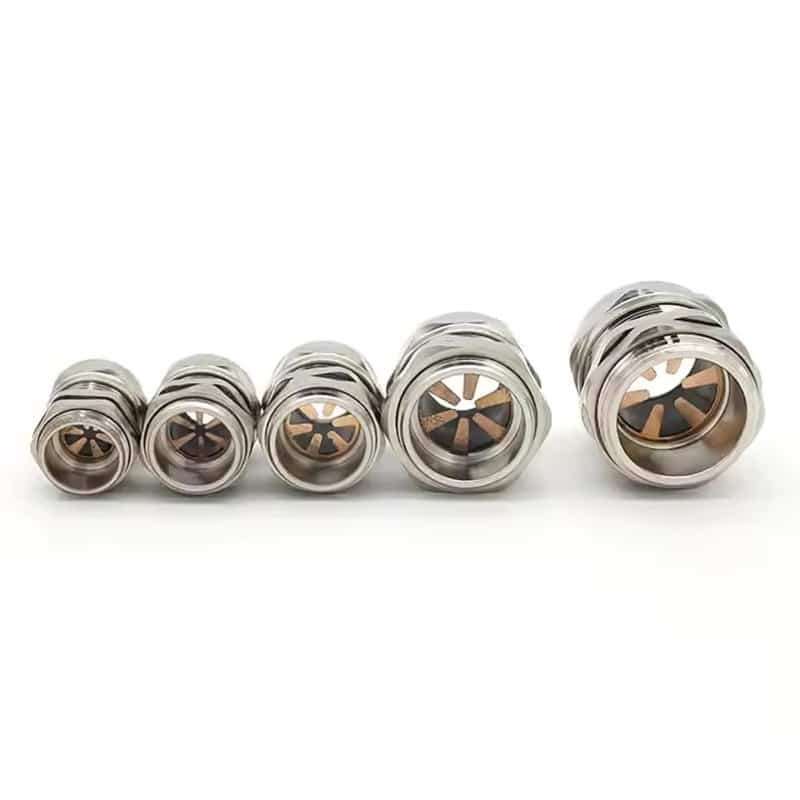
Type B: Enhanced Environmental Protection
Type B glands represent the premium choice for unarmored cable applications:
Key Features:
- Multi-stage sealing system with progressive compression
- Enhanced IP rating performance (often IP68/IP69K2)
- Superior chemical resistance options
- Extended temperature range capabilities
- Improved UV resistance for outdoor applications
Ideal Applications:
- Food processing facilities requiring washdown capability
- Chemical plants with aggressive environments
- Marine applications with salt spray exposure
- Outdoor installations in extreme climates
Type C: Armored Cable Specialists
Type C glands are purpose-built for armored cable terminations:
Distinctive Elements:
- Integrated earthing mechanism for armor termination3
- Specialized clamping system for wire armor or tape armor
- EMC shielding continuity maintenance
- Mechanical strain relief for heavy armored cables
- Corrosion-resistant materials for armor contact
Critical Applications:
- Industrial control systems requiring EMC protection
- Underground cable installations
- High-current power distribution
- Hazardous area installations (with appropriate certifications)
Making the Right Choice
The decision matrix is straightforward:
- Cable Type: Armored = Type C, Unarmored = Type B
- Environment: Harsh conditions favor Type B’s enhanced sealing
- EMC Requirements: Screened cables typically need Type C
- Budget Considerations: Type B generally more cost-effective for unarmored applications
What Makes E1 Type Special for Harsh Environments?
Type E1 represents the pinnacle of cable gland environmental protection, designed for the most demanding applications.
Type E1 glands feature advanced multi-barrier sealing systems, premium material construction, and enhanced strain relief mechanisms specifically engineered for extreme environmental conditions including temperature cycling, chemical exposure, and mechanical stress. They’re the go-to choice when standard types simply won’t survive.
Advanced Sealing Technology
E1 glands employ sophisticated sealing mechanisms:
- Primary Seal: High-performance elastomer with chemical resistance
- Secondary Seal: Backup sealing ring for redundancy
- Environmental Barrier: Additional protection against ingress
- Strain Relief: Enhanced cable support system
Material Engineering
The materials used in E1 construction represent significant advancement:
- Body Materials: Marine-grade stainless steel or specialized alloys4
- Sealing Elements: EPDM, Viton, or custom compounds
- Hardware: Corrosion-resistant fasteners and components
- Coatings: Specialized surface treatments for extreme conditions
Performance Specifications
E1 glands typically exceed standard requirements:
- IP Rating: Often IP68/IP69K with extended pressure ratings
- Temperature Range: -40°C to +150°C (varies by material)5
- Chemical Resistance: Broad spectrum compatibility
- Vibration Resistance: Enhanced mechanical performance
- UV Stability: Extended outdoor life expectancy
Real-World Applications
At Bepto, we’ve supplied E1 glands for:
- Offshore oil platforms in the North Sea
- Desert solar installations in the Middle East
- Arctic research stations
- Chemical processing plants
- Military and aerospace applications
How to Select the Right Glanding Type for Your Application?
Selecting the optimal glanding type requires systematic evaluation of multiple factors to ensure long-term performance and cost-effectiveness.
The selection process involves analyzing cable specifications, environmental conditions, regulatory requirements, and installation constraints to match the appropriate glanding type with your specific application needs. A structured approach prevents costly mistakes and ensures optimal performance.
Step-by-Step Selection Process
1. Cable Analysis
- Determine if cable is armored or unarmored
- Identify cable diameter and tolerance requirements
- Assess sheath material compatibility
- Consider EMC/earthing requirements
2. Environmental Assessment
- Define IP rating requirements
- Identify temperature range exposure
- Assess chemical exposure risks
- Evaluate UV exposure levels
- Consider vibration and mechanical stress
3. Regulatory Compliance
- Check local electrical codes
- Verify industry-specific requirements
- Confirm certification needs (ATEX, UL, etc.)
- Review installation standards
4. Installation Considerations
- Available space constraints
- Installation method (indoor/outdoor)
- Maintenance accessibility
- Future modification requirements
Quick Reference Selection Guide
| Primary Factor | Recommended Type | Secondary Considerations |
|---|---|---|
| Standard unarmored cable | A1 | Indoor, mild conditions |
| Unarmored + harsh environment | A2 or B | Temperature/chemical exposure |
| Armored cable | C | EMC requirements |
| Extreme conditions | E1 | Critical applications |
| Wide cable diameter range | A2 | Installation flexibility |
Common Selection Mistakes
From my experience at Bepto, these are the most frequent errors I see:
- Ignoring cable armor: Choosing Type A for armored cables
- Underestimating environment: Using A1 in harsh outdoor conditions
- Overlooking diameter tolerance: Fixed-size thinking with variable cables
- Neglecting future needs: Not considering maintenance or modifications
- Cost-only decisions: Choosing cheapest option without performance consideration
Conclusion
Understanding cable glanding types isn’t just about memorizing classifications – it’s about making informed decisions that ensure safety, reliability, and cost-effectiveness in your electrical installations. Whether you need the simplicity of Type A1, the enhanced protection of Type B, the specialized capabilities of Type C, or the extreme performance of Type E1, the key is matching the right type to your specific requirements.
At Bepto Connector, we’ve helped thousands of engineers and procurement managers navigate these decisions over the past decade. Our comprehensive range covers all glanding types with full certifications and technical support. Remember, the right glanding type today prevents costly problems tomorrow.
FAQs About Cable Glanding Types
Q: What’s the main difference between A1 and A2 cable glands?
A: A1 uses single-seal design for standard applications, while A2 features dual-seal technology for enhanced protection and wider cable diameter tolerance. A2 provides better performance in harsh environments and temperature cycling.
Q: Can I use Type B glands with armored cables?
A: No, Type B glands are designed for unarmored cables only. Armored cables require Type C glands which include integrated earthing mechanisms and specialized clamping systems for proper armor termination and EMC continuity.
Q: When do I need E1 type cable glands instead of standard types?
A: Choose E1 for extreme environments including offshore installations, chemical plants, desert conditions, or arctic applications. E1 provides superior sealing, chemical resistance, and temperature performance beyond standard A, B, or C types.
Q: How do I know which glanding type meets my IP rating requirements?
A: All standard types (A1, A2, B, C) typically achieve IP68 when properly installed. E1 types often exceed this with IP68/IP69K ratings. The key is proper installation and cable compatibility rather than just the glanding type designation.
Q: Are glanding types interchangeable between different manufacturers?
A: While types follow international standards, subtle design differences exist between manufacturers. Always verify specifications, certifications, and compatibility with your specific cables and environmental requirements before substituting between brands.
-
“Cable Gland Design and Application”,
https://www.cmp-products.com/cable-glands. Specifies the dual-seal mechanism used in Type A2 glands. Evidence role: mechanism; Source type: industry. Supports: Type A2 incorporates dual-seal technology. ↩ -
“IP Ratings (Ingress Protection)”,
https://www.iec.ch/ip-ratings. Details standard environmental sealing categories. Evidence role: general_support; Source type: standard. Supports: often IP68/IP69K. ↩ -
“IEEE Standard for Cable Terminations”,
https://ieeexplore.ieee.org/document/standard-installation. Outlines requirements for grounding and armor termination. Evidence role: general_support; Source type: standard. Supports: Integrated earthing mechanism for armor termination. ↩ -
“Marine Grade Stainless”,
https://en.wikipedia.org/wiki/Marine_grade_stainless. Explains alloy composition for extreme environments. Evidence role: material properties; Source type: research. Supports: Marine-grade stainless steel or specialized alloys. ↩ -
“Gland Technical Specifications”,
https://www.bimedteknik.com/technical-data. Provides performance thresholds for EPDM and Viton seals. Evidence role: statistic; Source type: industry. Supports: -40°C to +150°C (varies by material). ↩
