# IPX7 與 IPX8：對您的裝置而言，實際差異是什麼？

> Source: https://chinacableglands.com/zh-hant/blog/ipx7-vs-ipx8-whats-the-real-world-difference-for-your-device/
> Language: zh-Hant
> Publisher: 倍拓電纜接頭
> Author: Victor Huang
> Published: 2026-04-02
> Updated: 2026-10-28

比較 IPX7 的暫時浸水測試與 IPX8 條件，了解測試深度、時間、外殼密封、連接器狀態，以及另外需要的沖洗防護。

<p><strong>IPX7 涵蓋依明確測試條件進行的暫時浸水；IPX8 則涵蓋設備指定的持續浸水條件。</strong>我會根據實際的水曝露情形選擇：短暫淹水後取出的裝置，與留在水下的感測器，所面對的用途不同。對於 IPX8，應將標示的深度或壓力、持續時間及運作狀態與實際用途比對，再檢查完整外殼與電纜連接。</p>
<blockquote>
<p><strong>重點摘要</strong></p>
<ul>
<li>IPX7 測試持續 30 分鐘，水位依外殼高度設定。</li>
<li>IPX8 條件由相關產品標準或協議訂定，且嚴苛程度必須高於 IPX7。</li>
<li>應將受測的安裝方式、蓋板、電纜進線與連接器狀態，和實際安裝的裝置比對。</li>
<li>若實際曝露包含噴水、化學品、溫度或機械作用，也要加入相應要求。</li>
<li><code>X</code> 所在位置表示第一特徵未指定；如有需要，應另外確認固體異物與粉塵防護。</li>
</ul>
</blockquote>
<h2 id="what-is-the-practical-difference-between-ipx7-and-ipx8">IPX7 與 IPX8 在實際使用上有何差異？</h2>
<p><strong>IP 防護代碼</strong>描述外殼提供的防護。<a href="https://webstore.iec.ch/en/publication/2452">IEC 60529 合併版第 2.2 版</a>是適用的分類標準。<a href="https://www.nema.org/docs/default-source/about-us-document-library/ansi-iec_60529-2020-contents-and-scopef0908377-f8db-4395-8aaa-97331d276fef.pdf">ANSI/IEC 60529-2020 公開範圍說明</a>，相關設備標準會決定外殼分類如何適用於其產品。</p>
<p><strong>IPX7</strong> 是暫時浸水類別；<strong>IPX8</strong> 則是依設備選定條件的持續浸水類別。單看數字較大，無法得知裝置可在水槽中運作多久、深度從何處量起，或哪些連接器必須保持閉合。選擇裝置或進線組件前，我會先比較這些實際細節。</p>
<table>
<thead>
<tr>
<th>比較項目</th>
<th>IPX7</th>
<th>IPX8</th>
</tr>
</thead>
<tbody>
<tr>
<td>起始條件</td>
<td>明確規定條件的暫時浸水測試</td>
<td>適用於持續浸水的條件</td>
</tr>
<tr>
<td>時間與水位</td>
<td>固定測試時間，水位依外殼高度設定</td>
<td>依設備訂定的條件</td>
</tr>
<tr>
<td>實際用途問題</td>
<td>暫時浸水事件是否符合評估條件？</td>
<td>所列條件是否涵蓋預定的浸水用途？</td>
</tr>
<tr>
<td>安裝配置比對</td>
<td>外殼、閉合件、進線及測試狀態相同</td>
<td>外殼、閉合件、進線及標示的運作狀態相同</td>
</tr>
</tbody>
</table>
<p><strong>未指定特性</strong>是指以 <code>X</code> 而非數字表示的位置。在 IPX7 與 IPX8 中，這是第一個位置。因此，該代碼沒有提供接近防護或固體異物防護的第一特徵結果。若粉塵或固體異物是考量因素，應使用完整代碼；<a href="/zh-hant/blog/ip-rating-chart-explained-how-do-you-choose-the-right-ingress-protection-level-for-your-cable-glands/">IP 防護等級圖表</a>說明了這兩個位置。</p>
<h2 id="what-do-the-immersion-test-conditions-mean">浸水測試條件代表什麼？</h2>
<p><a href="https://law.resource.org/pub/us/cfr/ibr/inc/iec/iec.60529.2013.pdf">由 Public.Resource.Org 存檔的 IEC 60529 最終文本</a>，在第 14.2.7 條規定 IPX7 配置，在第 14.2.8 條規定 IPX8 條件。外殼須按使用姿態完全浸入水中。高度小於 850 mm 時，其最低點位於水面下 1,000 mm。高度達 850 mm 或以上時，其最高點位於水面下 150 mm。測試持續 30 分鐘。</p>
<p>水溫與設備溫度通常相差不超過 5 K；對於通電或運動中的設備，相關產品標準可能會修改此要求。IPX8 條件依相關產品標準訂定；若沒有相關標準，則由製造商與使用者協議訂定。其嚴苛程度必須高於 IPX7，並須考量使用時的持續浸水情形。應依適用的設備要求及明確列出的接受準則，一併閱讀這些細節。</p>
<h3 id="worked-example-why-one-metre-deep-needs-a-reference-point">範例：為什麼「水深一公尺」需要基準點</h3>
<p>假設某外殼依指定的直立姿態放置，高度為 400 mm。按 IPX7 的高度配置，外殼底部位於水面下 1,000 mm，因此頂部位於水面下 1,000 − 400 = 600 mm。若進線口位於底部上方 100 mm，該處深度為 900 mm。</p>
<p>再假設另一外殼高度為 1,000 mm。較高外殼的配置是頂部位於水面下 150 mm，因此底部深度為 1,150 mm。這些例子說明，單說「水深一公尺」可能無法指出特定電纜密封接頭或連接器所在位置的深度。我會在圖面上標出基準點，並將實際進線位置與使用時的水線相互比對。</p>
<h3 id="compare-declared-ipx8-conditions-rather-than-a-fixed-number">比對聲明的 IPX8 條件，而非固定數字</h3>
<p>若是水下感測器，應確認最高水位、是否會在水下運作、允許的安裝方向，以及每次曝露的持續時間。也要納入連接器狀態與取出後的處置說明。以高裝置頂部為基準量得的條件，與以裝置最低點為基準量得的條件不同。</p>
<p>例如，假設某 IPX8 聲明以 2 m 深度及 24 小時評估為條件，這兩項資訊可作為有用的起點。若要求設備反覆浸水、每次持續一週，仍須確認持續時間、循環次數及運作狀態。相同深度無法回答這些額外問題。下一步應取得涵蓋該用途的設備規格或應用測試，而不是在零件清單中把數字再提高。</p>
<h2 id="compare-depth-with-pressure-at-the-entry">比較進線處的深度與壓力</h2>
<p><strong>靜水壓力</strong>是靜止液柱所產生的壓力。<a href="https://oceanservice.noaa.gov/facts/pressure.html">NOAA 說明水深增加時壓力會上升</a>。水深是從液面到正在評估的密封件或進線位置量取的垂直距離。液體密度也會影響結果。</p>
<p>靜水壓的液柱壓力分量可表示為：</p>
<div class="article-math article-math-display" data-latex="p_h = \rho g h"><span class="katex"><math xmlns="http://www.w3.org/1998/Math/MathML" display="block"><semantics><mrow><msub><mi>p</mi><mi>h</mi></msub><mo>=</mo><mi>ρ</mi><mi>g</mi><mi>h</mi></mrow><annotation encoding="application/x-tex">p_h = \rho g h</annotation></semantics></math></span></div>
<p>此處，<span class="article-math article-math-inline" data-latex="p_h"><span class="katex"><math xmlns="http://www.w3.org/1998/Math/MathML"><semantics><mrow><msub><mi>p</mi><mi>h</mi></msub></mrow><annotation encoding="application/x-tex">p_h</annotation></semantics></math></span></span> 是液柱產生的壓力，單位為帕斯卡；<span class="article-math article-math-inline" data-latex="\rho"><span class="katex"><math xmlns="http://www.w3.org/1998/Math/MathML"><semantics><mrow><mi>ρ</mi></mrow><annotation encoding="application/x-tex">\rho</annotation></semantics></math></span></span> 表示密度，單位為 kg/m³；<span class="article-math article-math-inline" data-latex="g"><span class="katex"><math xmlns="http://www.w3.org/1998/Math/MathML"><semantics><mrow><mi>g</mi></mrow><annotation encoding="application/x-tex">g</annotation></semantics></math></span></span> 是重力加速度，單位為 m/s²；<span class="article-math article-math-inline" data-latex="h"><span class="katex"><math xmlns="http://www.w3.org/1998/Math/MathML"><semantics><mrow><mi>h</mi></mrow><annotation encoding="application/x-tex">h</annotation></semantics></math></span></span> 是垂直深度，單位為公尺。密封件兩側的實際壓差，也取決於水面與外殼內部的壓力。</p>
<h3 id="worked-example-pressure-at-two-cable-entry-depths">範例：兩種電纜進線深度的壓力</h3>
<p>假設淡水密度均勻，為 1,000 kg/m³，且 <span class="article-math article-math-inline" data-latex="g=9.80665\ \mathrm{m/s^2}"><span class="katex"><math xmlns="http://www.w3.org/1998/Math/MathML"><semantics><mrow><mi>g</mi><mo>=</mo><mn>9.80665</mn><mtext> </mtext><mrow><mi mathvariant="normal">m</mi><mi mathvariant="normal">/</mi><msup><mi mathvariant="normal">s</mi><mn>2</mn></msup></mrow></mrow><annotation encoding="application/x-tex">g=9.80665\ \mathrm{m/s^2}</annotation></semantics></math></span></span>。深度為 0.9 m 的進線處，其液柱壓力分量約為 8.83 kPa；深度為 2 m 時，約為 19.61 kPa，增加 10.79 kPa。若外殼內部壓力與水面處壓力相同，這些數值也就是密封件兩側的壓差。我會用這項計算，以一致單位比較壓力與深度條件。即使外殼和密封接頭相同，較深的進線處仍承受較大的壓力負荷。若加熱、冷卻或運作會改變內部壓力，應將這項變化納入比較。波浪與壓力瞬變應視為另外的負荷。靜態計算說明的是深度造成的壓力分量；是否能防漏，仍取決於完整組件依規定進行的測試。</p>
<p><a class="article-tool-card article-tool-card-link" href="/zh-hant/resource-center/tools/hydrostatic-pressure-calculator/" aria-label="靜水壓力計算器"><span class="article-tool-card-index">工具</span><span class="article-tool-card-kicker">壓力與環境</span><strong class="article-tool-card-title">靜水壓力計算器</strong><span class="article-tool-card-copy">在實際密封件或電纜進線深度計算靜水壓頭，然後與裝置標示的浸沒條件及內部壓力狀態相比。</span><span class="article-tool-card-formula">p = ρgh</span><span class="article-tool-card-inputs" aria-label="計算器輸入項目"><em>液體垂直深度</em><em>液體密度</em><em>重力加速度</em></span><span class="article-tool-card-action">開啟計算器 <span aria-hidden="true">-&gt;</span></span></a></p><p>若是深水或承壓安裝，<a href="/zh-hant/blog/how-do-you-specify-cable-glands-for-subsea-and-underwater-applications/">海底電纜進線指南</a>會進一步說明完整的壓力邊界評估。</p>
<figure class="blog-chart" style="container-type: inline-size;">
<svg xmlns="http&#58;//www.w3.org/2000/svg" viewBox="0 0 480 1030" role="img" aria-labelledby="ipx78-flow-title ipx78-flow-desc" style="font-family:var(--font-body); width: 100% !important; max-width: 100% !important; height: auto !important;" id="cg-typography-cca5c1ced3b5b8cb">
<style>
#cg-typography-cca5c1ced3b5b8cb { --svg-body-screen: 17px; }
@media (max-width: 760px) { #cg-typography-cca5c1ced3b5b8cb { --svg-body-screen: 16px; } }
</style>
<title id="ipx78-flow-title">依水曝露情形選擇 IPX7 或 IPX8</title>
<desc id="ipx78-flow-desc">選型流程先確認水曝露情形，再比較 IPX7 或 IPX8 條件、檢查完整裝置組件，並納入其他相關使用負荷。</desc>
<defs>
<marker id="ipx78-flow-arrow" markerWidth="9" markerHeight="9" refX="8" refY="4.5" orient="auto">
<path d="M0 0L9 4.5L0 9Z" fill="var(--color-primary)"/>
</marker>
</defs>
<text x="240" y="42" text-anchor="middle" fill="var(--color-carbon)" font-size="24" font-weight="700" style="font-size: calc(22px * 480px / 100cqw) !important;">符合實際水曝露情形</text>
<rect x="32" y="72" width="416" height="146" rx="14" fill="var(--surface-card)" stroke="var(--color-cloud)" stroke-width="2"/>
<text x="56" y="106" fill="var(--color-carbon)" font-size="21" font-weight="700" style="font-size: calc(18px * 480px / 100cqw) !important;">1. 界定曝露條件</text>
<text x="56" y="142" fill="var(--color-graphite)" font-size="19" style="font-size: calc(var(--svg-body-screen) * 480px / 100cqw) !important;">暫時浸水還是持續浸水？</text>
<text x="56" y="174" fill="var(--color-graphite)" font-size="19" style="font-size: calc(var(--svg-body-screen) * 480px / 100cqw) !important;">液體 • 深度 • 時間 • 循環</text>
<text x="56" y="206" fill="var(--color-graphite)" font-size="19" style="font-size: calc(var(--svg-body-screen) * 480px / 100cqw) !important;">方向 • 運作 • 取出後處置</text>
<path d="M240 218V260" fill="none" stroke="var(--color-primary)" stroke-width="4" marker-end="url(#ipx78-flow-arrow)"/>
<rect x="32" y="274" width="416" height="206" rx="14" fill="var(--surface-strong)" stroke="var(--color-cloud)" stroke-width="2"/>
<text x="56" y="308" fill="var(--color-carbon)" font-size="21" font-weight="700" style="font-size: calc(18px * 480px / 100cqw) !important;">2. 比較測試條件</text>
<text x="56" y="350" fill="var(--color-carbon)" font-size="20" font-weight="700" style="font-size: calc(16px * 480px / 100cqw) !important;">IPX7</text>
<text x="132" y="350" fill="var(--color-graphite)" font-size="19" style="font-size: calc(var(--svg-body-screen) * 480px / 100cqw) !important;">暫時浸水</text>
<line x1="56" y1="374" x2="424" y2="374" stroke="var(--color-cloud)" stroke-width="2"/>
<text x="56" y="410" fill="var(--color-carbon)" font-size="20" font-weight="700" style="font-size: calc(16px * 480px / 100cqw) !important;">IPX8</text>
<text x="132" y="410" fill="var(--color-graphite)" font-size="19" style="font-size: calc(var(--svg-body-screen) * 480px / 100cqw) !important;">持續浸水</text>
<text x="132" y="442" fill="var(--color-graphite)" font-size="19" style="font-size: calc(var(--svg-body-screen) * 480px / 100cqw) !important;">超出 IPX7 的條件</text>
<path d="M240 480V522" fill="none" stroke="var(--color-primary)" stroke-width="4" marker-end="url(#ipx78-flow-arrow)"/>
<rect x="32" y="536" width="416" height="146" rx="14" fill="var(--surface-card)" stroke="var(--color-cloud)" stroke-width="2"/>
<text x="56" y="570" fill="var(--color-carbon)" font-size="21" font-weight="700" style="font-size: calc(18px * 480px / 100cqw) !important;">3. 檢查完整裝置</text>
<text x="56" y="606" fill="var(--color-graphite)" font-size="19" style="font-size: calc(var(--svg-body-screen) * 480px / 100cqw) !important;">外殼 • 蓋板 • 通氣孔 • 進線口</text>
<text x="56" y="638" fill="var(--color-graphite)" font-size="19" style="font-size: calc(var(--svg-body-screen) * 480px / 100cqw) !important;">電纜 • 連接器 • 安裝</text>
<text x="56" y="670" fill="var(--color-graphite)" font-size="19" style="font-size: calc(var(--svg-body-screen) * 480px / 100cqw) !important;">組裝 • 條件 • 功能</text>
<path d="M240 682V724" fill="none" stroke="var(--color-primary)" stroke-width="4" marker-end="url(#ipx78-flow-arrow)"/>
<rect x="32" y="738" width="416" height="146" rx="14" fill="var(--surface-card)" stroke="var(--color-cloud)" stroke-width="2"/>
<text x="56" y="772" fill="var(--color-carbon)" font-size="21" font-weight="700" style="font-size: calc(18px * 480px / 100cqw) !important;">4. 納入其他使用負荷</text>
<text x="56" y="808" fill="var(--color-graphite)" font-size="19" style="font-size: calc(var(--svg-body-screen) * 480px / 100cqw) !important;">噴水 • 化學品 • 腐蝕</text>
<text x="56" y="840" fill="var(--color-graphite)" font-size="19" style="font-size: calc(var(--svg-body-screen) * 480px / 100cqw) !important;">溫度 • 運動 • 老化</text>
<text x="56" y="872" fill="var(--color-graphite)" font-size="19" style="font-size: calc(var(--svg-body-screen) * 480px / 100cqw) !important;">確認各項相關曝露</text>
<path d="M240 884V926" fill="none" stroke="var(--color-primary)" stroke-width="4" marker-end="url(#ipx78-flow-arrow)"/>
<rect x="32" y="940" width="416" height="62" rx="14" fill="var(--surface-strong)" stroke="var(--color-primary)" stroke-width="3"/>
<text x="240" y="979" text-anchor="middle" fill="var(--color-carbon)" font-size="20" font-weight="700" style="font-size: calc(18px * 480px / 100cqw) !important;">依實際安裝用途選擇</text>
</svg>
<figcaption>先確認水曝露情形，再比對浸水條件，並將完整組件與其他使用負荷一併檢查。</figcaption>
</figure>
<h2 id="check-the-complete-device-including-connectors-and-glands">檢查完整裝置，包括連接器與電纜密封接頭</h2>
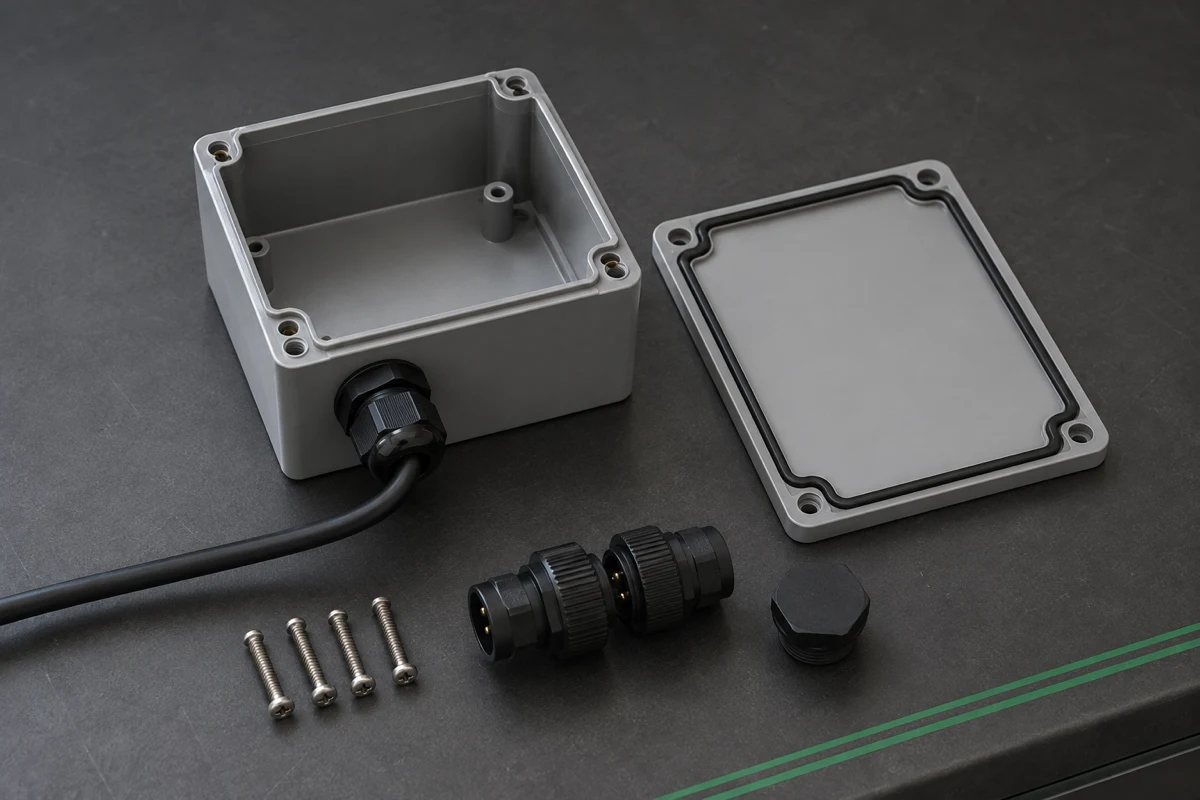
<p><strong>浸水邊界</strong>是指隔開水與受保護內部空間的表面及接縫組合。它包括外殼、蓋板墊片、緊固件、電纜進線口、連接器配合密封件、盲塞、通氣孔及其他開口。我會沿著裝置周圍逐一檢查這道邊界，而不只看各零件標籤。</p>
<p>蓋板閉合時，需使用指定的墊片、接合面與固定方式。電纜進線口需要配用正確的密封件與電纜尺寸，並依規定安裝在外殼壁上。可拆式連接器需要使用評估狀態所指定的配對件或防護蓋。各介面都是可能因組裝方式或損壞而影響密封的不同位置。</p>
<p><a href="https://webstore.iec.ch/en/publication/7034">IEC 62444:2010</a> 涵蓋成套供應的完整電纜密封接頭；公制進線螺紋屬於其直接適用範圍，其他螺紋類型則有相關指引。最終裝置還包括密封接頭與外殼間的接合處，以及其他開口。應將密封接頭尺寸與嵌件、電纜構造、進線螺紋或開孔、外殼壁及所需配件，與受測配置相互比對。</p>
<img alt="工作檯上放置一般外殼、帶墊片的外蓋、含電纜的電纜密封接頭、圓形連接器配對件、緊固件及盲塞" src="/images/blog/ipx7-vs-ipx8-whats-the-real-world-difference-for-your-device/complete-immersion-configuration-1200.webp" srcset="/images/blog/ipx7-vs-ipx8-whats-the-real-world-difference-for-your-device/complete-immersion-configuration-600.webp 600w, /images/blog/ipx7-vs-ipx8-whats-the-real-world-difference-for-your-device/complete-immersion-configuration-1200.webp 1200w" sizes="(max-width: 760px) 100vw, 760px" width="1200" height="800" loading="lazy" decoding="async">
<p><em>蓋板密封墊、固定件、電纜密封接頭、連接器配對及封堵件，構成設備浸水邊界上彼此不同的接合處與開口。</em></p>
<p>對連接器而言，應區分三種狀態：正確配合、使用指定防護蓋閉合，以及開啟。第一種狀態的測試結果不會自動適用於另外兩種狀態。除了連接器的名義尺寸，也要確認耦合方式、電纜端接及配對件。<a href="/zh-hant/blog/how-connector-design-prevents-capillary-action-in-wet-environments/">連接器毛細水路徑指南</a>說明水如何經由配合介面、電纜進線口或電纜本身到達空腔。</p>
<p>維修時若打開蓋板，重新放回潮濕環境前，應依規定恢復密封狀態並固定。即使外殼有正確標示，仍須留意夾入的纖維、損壞的墊片或移位的密封件。開啟或損壞後需要如何檢查與更換，應依裝置說明確認。</p>
<h2 id="add-washdown-chemicals-and-ageing-where-they-occur">在有沖洗、化學品與老化曝露時一併考量</h2>
<p>浸水與水柱噴射對密封件造成的作用不同。若兩者都會發生，應選擇同時經過兩項評估的裝置，例如有文件記載、符合所需噴水及浸水用途的 IPX6/IPX8 組合。IEC 60529 第 6 條將這些用途分開處理。沖洗要求應列明實際水溫、壓力及清潔條件。</p>
<p><a href="https://webstore.iec.ch/en/publication/29728">IEC 60068-2-18:2017</a> 涵蓋滴水、水流衝擊、浸水及高壓水等不同的測試方法。其範圍也將水測試與腐蝕測試分開。若機櫃會以熱水或清潔劑清洗，應將清潔曝露與浸水條件一併比較。<a href="/zh-hant/blog/ip68-vs-ip69k-cable-glands-protection-a-complete-guide-for-industrial-washdown-environments/">IP68 與 IP69K 比較</a>說明了相應的選型問題。</p>
<p>若使用液體與測試用水不同，材料相容性也很重要。應確認清潔劑、鹽濃度、油品或製程液體，以及其溫度與接觸時間。使外殼本體、密封件與電纜外被符合該介質條件。腐蝕、膨潤或表面狀態變化，都可能影響原本密封良好的接合處。</p>
<p>重複使用會形成一連串不同操作：打開及關閉蓋板、配合連接器、彎折電纜、乾燥，再次浸水。若這些操作屬於實際用途，我會規定具代表性的操作循環。之後應檢查是否洩漏，以及設備是否仍符合所需功能。<a href="/zh-hant/blog/immersion-testing-vs-ip-ratings-a-practical-guide-for-vent-plug-validation/">浸水驗證指南</a>說明如何結合標準分類與應用測試。</p>
<h2 id="choose-for-the-actual-use-and-respond-to-water-entry">依實際用途選擇，並處理進水情形</h2>
<p>先根據水曝露情形縮小選擇範圍，再比較實際安裝與其他負荷。以下三種常見情況會導向不同決策：</p>
<table>
<thead>
<tr>
<th>實際用途</th>
<th>實際選型方向</th>
<th>下一步要確認的細節</th>
</tr>
</thead>
<tbody>
<tr>
<td>短暫浸水後會取出的可攜式裝置</td>
<td>將 IPX7 測試與預定浸水事件及取出後處置程序相互比對</td>
<td>深度基準點、裝置狀態、閉合件，以及取出後所需功能</td>
</tr>
<tr>
<td>留在水下的感測器</td>
<td>將所列 IPX8 條件與完整用途比對</td>
<td>運作狀態、持續時間、壓力、液體及使用中的連接</td>
</tr>
<tr>
<td>同時可能遭遇淹水與清洗噴水的設備</td>
<td>浸水與噴水要求都要保留</td>
<td>相關水作用方式、清潔溫度與允許使用的化學品</td>
</tr>
</tbody>
</table>
<p>測試結果與維護說明回答的是不同問題。應以分類結果比對受評估的防護，並依裝置說明判斷何時檢查、乾燥、重新密封或更換零件。除非應用情境明確要求，否則外殼或連接器打開時，應避免讓水進入。</p>
<p>若發現設備內部有水，打開或維修前應依設備安全停機與隔離程序處理。記錄最先潮濕的位置，並分別檢查蓋板、電纜密封接頭、連接器、通氣孔及未使用的開口。水可能沿表面移動，因此積水處不一定就是進水點。<a href="/zh-hant/blog/the-physics-of-water-ingress-how-seals-fail-and-how-to-prevent-it/">進水診斷指南</a>可協助追查作用壓力與連續路徑。</p>
<p><a href="https://webstore.iec.ch/en/publication/70548">IEC 60068-2-17:2023</a> 提供密封試樣的粗漏與細漏測試方法。適當的診斷方法可協助在重做相關水測試前，找出有缺陷的接合處。應依外殼及其預定開口選擇方法；通氣組件則要將設計的氣體路徑納入考量。</p>
<h2 id="conclusion">結論</h2>
<p>IPX7 適用於明確條件下的暫時浸水比較。若所列條件符合設備用途，IPX8 可作為持續浸水的選型依據。實際差異在於水曝露情形與裝置狀態，也包括構成完整外殼的安裝方式、閉合件、電纜進線口及連接器。</p>
<p>我會先確認水線、曝露時間與運作狀態，再將測試條件與實際組件相互比對，並在必要時納入噴水、化學品或重複操作。如此可為設備訂出實用規格，並為使用期間檢查密封件及連接處提供明確依據。</p>
<h2 id="faqs-about-ipx7-and-ipx8">IPX7 與 IPX8 常見問題</h2>
<h3 id="is-ipx8-always-the-better-choice">IPX8 一定是較好的選擇嗎？</h3>
<p>應選擇符合實際用途的防護。若設備短暫浸水後會取出，先比較 IPX7 條件。若設備會持續浸在水中，則將所列 IPX8 條件與所需的運作方式、持續時間及連接狀態相互比對。兩種情況都要納入沖洗或清潔化學品等其他曝露條件。</p>
<h3 id="does-ipx8-mean-a-device-can-stay-underwater-indefinitely">IPX8 是否代表裝置可以無限期留在水下？</h3>
<p>依製造商列出的條件與操作說明，確認預定的浸水用途。檢查持續時間、深度基準點、液體、溫度及所需的連接器狀態。若用途超出這些條件，應增加具代表性的應用評估。</p>
<h3 id="does-x-mean-the-device-has-failed-a-dust-test">X 是否表示裝置未通過防塵測試？</h3>
<p>X 所在位置代表未指定該特性，並非表示裝置通過或未通過防塵測試。若使用環境有粉塵，應選擇所需的第一特徵數字，並比對該評估所採用的完整裝置配置。</p>
<h3 id="can-i-clean-an-ipx8-device-with-a-pressure-washer">可以用高壓清洗機清潔 IPX8 裝置嗎？</h3>
<p>檢查裝置另外標示的噴水或沖洗防護等級，以及清潔說明。還要納入水溫、噴嘴條件與允許使用的清潔劑。浸水測試結果所涵蓋的水曝露，與高壓清洗機的水柱不同。</p>
<h3 id="why-can-a-rated-gland-still-leak-in-an-enclosure">為什麼具防護等級的電纜密封接頭仍可能在外殼中漏水？</h3>
<p>完整的進線防護也取決於電纜尺寸與表面、密封件、安裝孔或螺紋、進線墊片及組裝方式。水也可能從其他接縫進入。更換密封接頭或重做水測試前，應逐一檢查各介面並找出進水路徑。</p>
<h3 id="sources-and-technical-references">資料來源與技術參考</h3>
<ul>
<li><a href="https://webstore.iec.ch/en/publication/2452">IEC 60529，合併版第 2.2 版—外殼提供的防護等級</a>，取用日期：2026-10-28。</li>
<li><a href="https://law.resource.org/pub/us/cfr/ibr/inc/iec/iec.60529.2013.pdf">IEC 60529，第 2.2 版，Public.Resource.Org 存檔最終文本</a>，取用日期：2026-10-28。</li>
<li><a href="https://www.nema.org/docs/default-source/about-us-document-library/ansi-iec_60529-2020-contents-and-scopef0908377-f8db-4395-8aaa-97331d276fef.pdf">NEMA，ANSI/IEC 60529-2020 公開內容與範圍</a>，取用日期：2026-10-28。</li>
<li><a href="https://webstore.iec.ch/en/publication/29728">IEC 60068-2-18:2017 — R 試驗與指南：水</a>，取用日期：2026-10-28。</li>
<li><a href="https://webstore.iec.ch/en/publication/70548">IEC 60068-2-17:2023 — Q 試驗：密封</a>，取用日期：2026-10-28。</li>
<li><a href="https://webstore.iec.ch/en/publication/7034">IEC 62444:2010 — 電氣裝置用電纜密封接頭</a>，取用日期：2026-10-28。</li>
<li><a href="https://oceanservice.noaa.gov/facts/pressure.html">NOAA Ocean Service — 海水深度增加時的壓力變化</a>，取用日期：2026-10-28。</li>
</ul>