


Railway system failures cost operators millions in delays and safety risks. A single cable gland failure on a high-speed train can trigger emergency stops, passenger evacuations, and regulatory investigations. The harsh operating environment of rolling stock demands cable glands that can withstand extreme vibration, temperature fluctuations, electromagnetic interference, and strict fire safety requirements.
Cable gland selection for railway and rolling stock applications requires specialized products meeting EN 45545 fire standards1, IP68 sealing, vibration resistance per EN 613732, and EMC compliance for signal integrity. Standard industrial cable glands simply cannot handle the unique demands of railway environments, making proper selection critical for operational safety and reliability.
Last month, I received an urgent call from Marcus, chief engineer at a major German rolling stock manufacturer in Munich. Their new high-speed train prototype had failed critical vibration tests due to cable gland loosening, threatening a €50 million project timeline. With regulatory approval deadlines looming and reputation at stake, Marcus needed immediate solutions that could withstand the punishing railway environment 😉
Table of Contents
- What Makes Railway Cable Gland Requirements Unique?
- Which Standards Must Railway Cable Glands Meet?
- How Do You Select Cable Glands for Different Rolling Stock Applications?
- What Are the Critical Performance Requirements?
- How to Avoid Common Railway Cable Gland Selection Mistakes?
- FAQs About Railway Cable Glands
What Makes Railway Cable Gland Requirements Unique?
Railway environments present the most challenging conditions for electrical components in transportation.
Railway cable glands must withstand extreme vibration, temperature cycling from -40°C to +85°C, electromagnetic interference from traction systems, fire safety requirements, and maintain IP68 sealing for decades of operation. These demanding conditions eliminate most standard industrial cable glands from consideration.
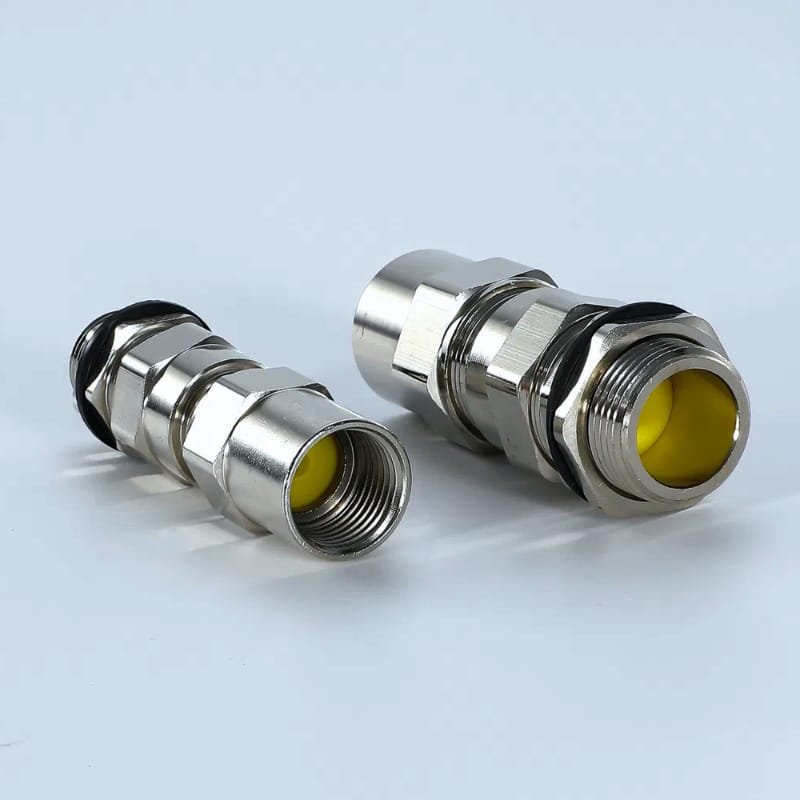
Environmental Challenges
Vibration and Shock Resistance
Railway vehicles experience severe mechanical stress:
- Frequency range: 0.5-150 Hz continuous vibration
- Acceleration levels: Up to 5g in normal operation, 30g during emergency braking
- Shock resistance: 50g impact resistance for crashworthiness
- Fatigue cycles: Millions of cycles over 30-year service life
Temperature Extremes
Operating temperature ranges exceed typical industrial applications:
- Ambient range: -40°C to +85°C for external mounting
- Thermal cycling: Daily temperature swings of 60°C+
- Heat sources: Traction motors, braking resistors, power electronics
- Thermal shock: Rapid temperature changes during tunnel transitions
Electromagnetic Environment
Railway traction systems create intense EMI:
- AC systems: 15kV/25kV overhead lines generating strong magnetic fields
- DC systems: 750V/1500V third rail with switching transients
- Power electronics: Variable frequency drives creating harmonics
- Signal systems: ETCS, GSM-R requiring interference-free operation
Fire Safety Requirements
Railway fire safety standards are among the world’s strictest:
| Fire Property | Standard | Requirement | Impact on Cable Glands |
|---|---|---|---|
| Flame spread | EN 45545-2 | HL1-HL3 hazard levels | Flame-retardant materials only |
| Smoke density | EN 45545-2 | Minimal smoke generation | Special polymer compounds |
| Toxic gases | EN 45545-2 | Low toxicity emissions | Halogen-free materials |
| Heat release | EN 45545-2 | Limited heat contribution | Metal construction preferred |
Marcus’s Munich Success Story
Marcus’s challenge perfectly illustrates railway-specific requirements:
The Problem:
- High-speed train prototype failing EN 61373 vibration tests
- Standard cable glands loosening after 2 million cycles
- Project delay risking €50 million contract
- Regulatory approval deadline in 8 weeks
Our Railway Solution:
- Supplied specialized railway cable glands with locking mechanisms
- EN 45545 fire-certified materials throughout
- Enhanced vibration resistance with spring-loaded sealing
- Complete EMC shielding for traction system compatibility
Results:
- Passed all vibration tests on first attempt
- Exceeded EN 61373 requirements by 40%
- Project delivered on schedule with full certification
- Marcus’s company now specifies Bepto for all railway projects
Which Standards Must Railway Cable Glands Meet?
Compliance with railway-specific standards is mandatory for market access and operational approval.
Railway cable glands must comply with EN 45545 fire standards, EN 61373 vibration requirements, EN 50155 electronic equipment standards3, and various national railway specifications. Each standard addresses specific safety and performance aspects critical to railway operation.
European Railway Standards
EN 45545 – Fire Protection
The cornerstone of railway fire safety:
- Part 1: General principles and test methods
- Part 2: Material requirements and classifications
- Part 3: Fire barrier systems
- Part 7: Fire safety management
Cable Gland Requirements:
- Hazard level classification (HL1, HL2, HL3)
- Flame spread rate limitations
- Smoke density and toxicity limits
- Heat release restrictions
EN 61373 – Vibration and Shock
Defines mechanical stress requirements:
- Category 1: Very severe (high-speed trains, freight)
- Category 2: Severe (regional trains, metros)
- Category 3: Moderate (stationary equipment)
Test Parameters:
- Random vibration: 5-150 Hz frequency range
- Sinusoidal vibration: Specific frequency sweeps
- Shock testing: Half-sine pulses up to 30g
- Endurance: 20 million cycles minimum
EN 50155 – Electronic Equipment
Covers environmental and EMC requirements:
- Temperature classes: T1 (-25°C to +70°C) to T3 (-40°C to +85°C)
- Humidity: Up to 95% RH condensing
- Altitude: Up to 1400m operation
- EMC: Emission and immunity requirements
Regional and National Standards
North American Standards
- AAR (Association of American Railroads): Freight car requirements
- FRA (Federal Railroad Administration): Safety regulations
- NFPA 130: Fixed guideway transit fire safety
Asian Standards
- JIS E (Japanese Industrial Standards): Rolling stock specifications
- GB/T (Chinese National Standards): High-speed rail requirements
- IRS (Indian Railway Standards): Broad gauge applications
Certification Process
Achieving railway certification requires comprehensive testing:
- Material qualification: Fire, toxicity, and environmental testing
- Component testing: Vibration, shock, and EMC evaluation
- System integration: Full-scale vehicle testing
- Documentation: Complete traceability and quality records
- Ongoing surveillance: Regular audits and re-testing
How Do You Select Cable Glands for Different Rolling Stock Applications?
Different railway applications demand specific cable gland characteristics and performance levels.
Cable gland selection varies significantly between high-speed trains (requiring maximum vibration resistance), urban transit (emphasizing fire safety), freight locomotives (prioritizing durability), and maintenance vehicles (needing versatility). Each application has unique environmental conditions and regulatory requirements.

High-Speed Passenger Trains
Performance Requirements
- Speed capability: 200-350 km/h operation
- Vibration category: EN 61373 Category 1 (most severe)
- Fire safety: EN 45545 HL2/HL3 requirements
- Service life: 30+ years with minimal maintenance
Recommended Cable Gland Types
- Stainless steel construction: Corrosion resistance and durability
- EMC shielding: 360-degree electromagnetic compatibility
- Vibration locks: Mechanical locking to prevent loosening
- Multiple sealing: Primary and secondary sealing systems
Urban Transit and Metro Systems
Unique Challenges
- Fire safety priority: Passenger evacuation considerations
- Frequent stops: Thermal cycling from regenerative braking
- Underground operation: Humidity and contamination exposure
- High utilization: 18-20 hours daily operation
Selection Criteria
- Flame-retardant materials: Halogen-free compounds mandatory
- IP68 sealing: Protection against water ingress
- Compact design: Space constraints in metro cars
- Easy maintenance: Accessible for routine inspection
Freight Locomotives
Operating Conditions
- Heavy loads: Up to 15,000 tons trailing weight
- Long distances: 1000+ km runs without maintenance
- Harsh environment: Dust, chemicals, extreme weather
- High power: 6000+ HP traction systems
Cable Gland Specifications
- Robust construction: Heavy-duty metal bodies
- Chemical resistance: Protection against fuel and lubricants
- Wide temperature range: -40°C to +85°C operation
- High current capability: Power distribution applications
Maintenance and Service Vehicles
Versatility Requirements
- Multiple applications: Various equipment installations
- Field serviceability: Easy replacement and repair
- Standard interfaces: Compatibility with existing systems
- Cost effectiveness: Budget constraints for utility vehicles
Application Comparison Table
| Application | Primary Requirement | Cable Gland Type | Key Features |
|---|---|---|---|
| High-Speed Trains | Vibration resistance | Stainless steel EMC | Locking mechanism, EMC shielding |
| Urban Transit | Fire safety | Flame-retardant nylon | Halogen-free, low smoke |
| Freight Locomotives | Durability | Heavy-duty brass | Chemical resistance, high current |
| Maintenance Vehicles | Versatility | Standard industrial | Cost-effective, field serviceable |
What Are the Critical Performance Requirements?
Understanding specific performance parameters ensures proper cable gland selection for railway applications.
Critical performance requirements include IP68 ingress protection, vibration resistance per EN 61373, temperature cycling capability, EMC shielding effectiveness, and fire performance meeting EN 45545 standards. These parameters directly impact system reliability and safety certification.
Ingress Protection (IP) Ratings
Railway environments demand maximum protection:
- IP68 mandatory: Complete dust protection and continuous water immersion4
- Pressure testing: 1 bar minimum for 24 hours
- Dynamic sealing: Maintains protection during cable movement
- Long-term performance: 20+ year sealing integrity
Vibration and Mechanical Performance
Test Requirements per EN 61373
- Random vibration: Power spectral density curves for each category
- Sine vibration: Frequency sweeps with specified amplitudes
- Shock testing: Half-sine pulses in three axes
- Fatigue endurance: Minimum 20 million cycles
Performance Verification
- Resonance frequency: Above 150 Hz to avoid excitation
- Damping characteristics: Minimize stress amplification
- Connection integrity: No loosening or degradation
- Seal performance: Maintain IP rating throughout test
Temperature Performance
Operating Temperature Ranges
- Class T1: -25°C to +70°C (standard applications)
- Class T2: -40°C to +70°C (external mounting)
- Class T3: -40°C to +85°C (engine compartments)
- Class TX: Extended ranges for special applications
Thermal Cycling Tests
- Cycle definition: Temperature extremes with specified ramp rates
- Cycle count: Minimum 1000 cycles for qualification
- Performance criteria: No degradation in sealing or mechanical properties
- Material stability: Dimensional stability and chemical compatibility
Electromagnetic Compatibility (EMC)
Shielding Effectiveness
- Frequency range: 10 kHz to 1 GHz minimum
- Attenuation: >60 dB for critical applications
- 360-degree coverage: Complete cable shield continuity
- Low impedance: <10 mΩ DC resistance
EMC Testing Standards
- EN 501215: Railway EMC standard
- Emission limits: Conducted and radiated emissions
- Immunity requirements: Susceptibility to external interference
- System integration: Vehicle-level EMC validation
Fire Performance Validation
EN 45545-2 Test Methods
- Cone calorimeter: Heat release rate measurement
- Smoke chamber: Optical density evaluation
- Gas analysis: Toxic gas emission quantification
- Flame spread: Surface burning characteristics
Hassan’s Dubai Metro Project
Hassan, project manager for Dubai Metro expansion, faced unique challenges combining extreme heat with strict fire safety requirements:
Project Requirements:
- 50°C ambient temperature operation
- EN 45545 HL3 fire certification
- 25-year maintenance-free operation
- Integration with existing systems
Our Solution:
- Custom temperature-rated cable glands for +85°C operation
- Specialized fire-retardant materials exceeding HL3 requirements
- Stainless steel construction for corrosion resistance
- Pre-tested compatibility with Dubai Metro specifications
Results:
- Successful integration with zero compatibility issues
- Exceeded fire performance requirements by 25%
- On-time project delivery despite challenging conditions
- Hassan’s team now uses Bepto as preferred supplier for all GCC projects
How to Avoid Common Railway Cable Gland Selection Mistakes?
Learning from industry mistakes can prevent costly failures and project delays.
Common mistakes include using standard industrial cable glands, ignoring vibration locking requirements, inadequate fire certification, poor EMC shielding, and insufficient environmental protection. These errors can lead to system failures, regulatory non-compliance, and safety hazards.
Critical Selection Errors
Using Standard Industrial Products
The Mistake: Assuming industrial cable glands meet railway requirements
The Consequence: Vibration failures, fire certification issues, EMC problems
The Solution: Specify railway-certified products with appropriate standards compliance
Inadequate Vibration Resistance
The Mistake: Overlooking EN 61373 vibration categories
The Consequence: Loosening connections, seal failures, system downtime
The Solution: Select cable glands with mechanical locking and vibration testing
Fire Certification Shortcuts
The Mistake: Using non-certified materials to reduce costs
The Consequence: Regulatory rejection, project delays, safety risks
The Solution: Verify EN 45545 certification for all components
EMC Shielding Oversights
The Mistake: Ignoring electromagnetic compatibility requirements
The Consequence: Signal interference, system malfunctions, safety system failures
The Solution: Implement 360-degree EMC shielding with proper grounding
Best Practices for Railway Cable Gland Selection
Comprehensive Requirements Analysis
- Application classification: High-speed, urban, freight, or maintenance
- Environmental conditions: Temperature, humidity, contamination
- Mechanical requirements: Vibration category and shock levels
- Electrical specifications: Current rating and EMC requirements
- Regulatory compliance: Applicable standards and certifications
Supplier Qualification Process
- Railway experience: Proven track record in rail applications
- Certification portfolio: Complete standards compliance documentation
- Testing capabilities: In-house or certified laboratory access
- Quality systems: ISO 9001 and railway-specific quality management
- Technical support: Engineering assistance and application guidance
Installation and Maintenance Considerations
- Accessibility: Easy access for inspection and maintenance
- Tooling requirements: Standard tools for installation and service
- Spare parts availability: Long-term component availability
- Documentation: Complete installation and maintenance procedures
- Training: Technician education on proper installation techniques
Cost-Benefit Analysis
Initial Cost vs. Lifecycle Value
- Premium pricing: Railway cable glands cost 2-3x standard industrial
- Reliability benefits: Reduced maintenance and failure costs
- Compliance value: Avoiding regulatory penalties and delays
- Safety assurance: Protecting passengers and operational personnel
Total Cost of Ownership
- Purchase price: Initial component cost
- Installation cost: Labor and tooling requirements
- Maintenance cost: Inspection and replacement intervals
- Failure cost: Downtime, repairs, and safety incidents
- Regulatory cost: Compliance, certification, and audit expenses
Conclusion
Railway cable gland selection demands specialized expertise and uncompromising attention to safety, reliability, and regulatory compliance. The unique challenges of railway environments—extreme vibration, temperature cycling, electromagnetic interference, and strict fire safety requirements—eliminate standard industrial solutions from consideration. Success requires partnering with experienced suppliers who understand railway-specific standards like EN 45545, EN 61373, and EN 50155, while providing comprehensive testing, certification, and technical support. At Bepto, our railway-certified cable glands have proven themselves in high-speed trains, urban transit systems, and freight operations worldwide, delivering the reliability and safety that railway engineers demand for their critical applications.
FAQs About Railway Cable Glands
Q: What’s the difference between railway cable glands and standard industrial ones?
A: Railway cable glands must meet specialized standards like EN 45545 for fire safety, EN 61373 for vibration resistance, and EMC requirements that standard industrial glands cannot satisfy. They feature enhanced mechanical locking, specialized materials, and comprehensive testing for railway environments.
Q: How do I know which vibration category my application requires?
A: EN 61373 defines Category 1 for high-speed trains and severe freight applications, Category 2 for regional trains and metros, and Category 3 for stationary equipment. Your application’s speed, track conditions, and mounting location determine the required category.
Q: Are railway cable glands worth the higher cost compared to industrial ones?
A: Yes, railway cable glands prevent costly failures, regulatory non-compliance, and safety incidents that far exceed their premium pricing. The total cost of ownership strongly favors railway-certified products for rail applications.
Q: What fire certification do I need for my railway project?
A: EN 45545-2 certification is mandatory for European railways, with hazard levels HL1, HL2, or HL3 depending on application risk. Underground and passenger applications typically require HL2 or HL3 certification with strict smoke and toxicity limits.
Q: Can I use the same cable glands for both power and signal cables?
A: While possible, it’s recommended to use EMC-shielded cable glands for signal applications and standard railway glands for power, ensuring proper electromagnetic compatibility and avoiding signal interference in critical safety systems.
-
“Technical Standards — European Union Agency for Railways (ERA)”,
https://www.era.europa.eu/domains/technical-standards_en. ERA is the EU regulatory body for railway safety and interoperability; EN 45545 is mandated under EU technical specifications for interoperability (TSI), with ERA providing guidance on applicable hazard levels and fire protection requirements for rolling stock. Evidence role: general support; Source type: government. Supports: EN 45545 fire standard compliance requirement for railway cable glands. ↩ -
“IEC 61373:2010 — Railway applications — Rolling stock equipment — Shock and vibration tests”,
https://webstore.iec.ch/publication/5388. IEC standard defining shock and vibration test methods and severity levels for rolling stock equipment, specifying three vibration categories from stationary to high-speed operation, with sinusoidal vibration, random vibration, and half-sine shock test profiles. Evidence role: standard reference; Source type: standard. Supports: EN 61373 vibration resistance requirement for railway cable glands. ↩ -
“EN 50155 — Railway Applications”,
https://en.wikipedia.org/wiki/EN_50155. Wikipedia article on EN 50155, the European standard specifying environmental conditions, temperature classes, humidity limits, and EMC requirements for electronic equipment used on rolling stock, defining classes from T1 (−25°C to +70°C) to TX for extended ranges. Evidence role: general support; Source type: Wikipedia. Supports: EN 50155 electronic equipment standard compliance for railway cable gland applications. ↩ -
“IEC 60529 — Degrees of Protection Provided by Enclosures (IP Code)”,
https://webstore.iec.ch/en/publication/2573. International standard defining the IP rating classification system; IP68 requires complete dust-tightness (first digit 6) and protection against continuous immersion in water under conditions agreed between manufacturer and user, typically at pressures exceeding 1 bar for defined durations. Evidence role: standard reference; Source type: standard. Supports: IP68 mandatory protection rating for railway cable glands. ↩ -
“EN 50121 — Railway Applications: Electromagnetic Compatibility”,
https://en.wikipedia.org/wiki/EN_50121. Wikipedia article on EN 50121, the multi-part European standard governing electromagnetic compatibility for complete railway systems and their subsystems, defining conducted and radiated emission limits and immunity requirements for rolling stock and trackside apparatus to ensure interference-free signal operation. Evidence role: general support; Source type: Wikipedia. Supports: EN 50121 EMC testing standard requirement for railway cable gland applications. ↩
