

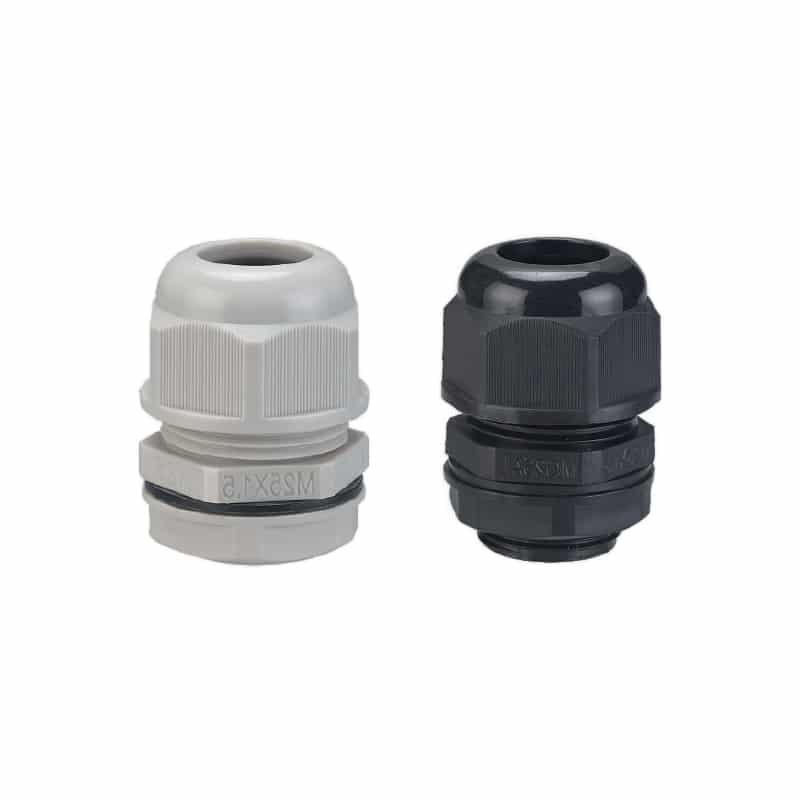
Getting the temperature specifications wrong between your cable gland and cable can lead to catastrophic system failures, costly downtime, and safety hazards. I’ve seen too many projects where engineers assumed “close enough” would work, only to face premature seal failures and cable degradation within months of installation.
The key to ensuring proper temperature matching is understanding that both the cable gland and cable must operate within overlapping temperature ranges, with the gland typically requiring a 10-20°C safety margin above the cable’s maximum operating temperature. This prevents thermal expansion mismatches and maintains seal integrity throughout the system’s lifecycle.
Just last month, I worked with David, a procurement manager from a renewable energy company in Germany, who was dealing with frequent cable failures in their solar installations. The root cause? Temperature mismatched cable glands that couldn’t handle the thermal cycling of their high-temperature cables. Let me share how we solved this challenge and how you can avoid similar costly mistakes.
Table of Contents
- Why Does Temperature Matching Matter?
- How to Identify Your Cable’s Temperature Requirements?
- What Are the Key Temperature Specifications for Cable Glands?
- How to Select the Right Temperature-Matched Cable Gland?
- What Are Common Temperature Matching Mistakes?
- FAQ
Why Does Temperature Matching Matter?
Temperature compatibility isn’t just a technical specification—it’s the foundation of reliable cable management systems. When temperature ranges don’t align properly, you’re setting up your installation for failure.
Proper temperature matching prevents thermal stress, maintains seal integrity, and ensures long-term system reliability by eliminating expansion coefficient mismatches between the cable gland and cable materials.

The Science Behind Temperature Matching
Different materials expand and contract at different rates when exposed to temperature changes. Cable jackets, typically made from PVC, XLPE, or rubber compounds, have specific thermal expansion coefficients. Cable glands, whether nylon, brass, or stainless steel, have their own expansion characteristics.
When these expansion rates don’t align, several problems occur:
- Seal degradation: Rubber seals lose compression, allowing moisture ingress
- Cable stress: Uneven expansion creates mechanical stress on conductors
- Connection loosening: Terminal connections become unreliable
- IP rating failure: Environmental protection is compromised
I remember working with Hassan, an operations manager at a petrochemical facility in Saudi Arabia, who experienced exactly this issue. Their stainless steel cable glands were rated for high temperatures, but the expansion mismatch with their PVC-jacketed control cables caused seal failures during the extreme summer heat. We solved this by switching to cable glands with temperature-matched seal materials and proper expansion joints.
Critical Temperature Zones
Understanding these temperature zones is essential for proper selection:
| Temperature Range | Application Type | Common Issues |
|---|---|---|
| -40°C to +80°C | Standard industrial | Seal hardening in cold, softening in heat |
| +80°C to +150°C | High-temperature industrial | Accelerated aging, thermal cycling stress |
| +150°C to +200°C | Extreme applications | Material degradation, seal failure |
| Above +200°C | Specialized high-temp | Requires ceramic or metal seals |
How to Identify Your Cable’s Temperature Requirements?
Before selecting any cable gland, you must thoroughly understand your cable’s thermal characteristics. This isn’t just about reading the datasheet—it’s about understanding real-world operating conditions.
Start by identifying the cable’s continuous operating temperature, peak temperature rating, and installation environment temperature range, then add a 15-20% safety margin for gland selection.
Essential Cable Temperature Specifications
Every cable manufacturer provides these critical temperature ratings:
Continuous Operating Temperature: This is the maximum temperature the cable can handle during normal operation without degradation. For example, standard PVC cables typically operate continuously at 70°C, while XLPE cables can handle 90°C1.
Peak/Emergency Temperature: The maximum temperature the cable can withstand for short periods (usually 100 hours annually). This is typically 20-30°C above the continuous rating.
Installation Temperature: The minimum temperature at which the cable can be installed without damage. This is crucial for cold climate installations.
Environmental Assessment Checklist
When I work with clients, I always have them complete this environmental assessment:
- Ambient temperature range: What are the minimum and maximum temperatures in the installation area?
- Heat sources: Are there nearby motors, transformers, or heating elements?
- Thermal cycling: Does the temperature fluctuate regularly?
- Direct sunlight exposure: UV and thermal effects combined
- Enclosed spaces: Heat buildup in panels or conduits
David’s German solar project taught me the importance of considering thermal cycling. Solar installations experience dramatic temperature swings—from -20°C winter nights to +80°C summer panel temperatures. Standard cable glands couldn’t handle this cycling, leading to premature failures.
What Are the Key Temperature Specifications for Cable Glands?
Cable gland temperature specifications go beyond simple operating ranges. Understanding these specifications ensures you select glands that will perform reliably throughout their service life.
Cable glands must meet or exceed the cable’s temperature requirements across three critical parameters: continuous operating temperature, short-term temperature rating, and thermal cycling capability.

Material-Specific Temperature Ratings
Different cable gland materials offer distinct temperature capabilities:
Nylon Cable Glands:
- Standard operating range: -40°C to +100°C2
- Short-term rating: +120°C (100 hours annually)
- Best for: General industrial applications, cost-effective solutions
- Limitations: UV degradation, limited chemical resistance at high temperatures
Brass Cable Glands:
- Standard operating range: -40°C to +120°C
- Short-term rating: +150°C
- Best for: Marine applications, moderate high-temperature environments
- Advantages: Excellent thermal conductivity, corrosion resistance
Stainless Steel Cable Glands:
- Standard operating range: -60°C to +200°C
- Short-term rating: +250°C
- Best for: Extreme temperature applications, chemical processing
- Premium choice: Superior durability and temperature stability
Seal Material Considerations
The seal material often determines the actual temperature limit, regardless of the gland body material:
| Seal Material | Temperature Range | Applications |
|---|---|---|
| NBR (Nitrile)3) | -30°C to +100°C | General purpose, oil resistance |
| EPDM | -40°C to +150°C | Weather resistance, steam applications |
| Viton (FKM)4 | -20°C to +200°C | Chemical resistance, high temperature |
| Silicone | -60°C to +200°C | Extreme temperature, food grade |
How to Select the Right Temperature-Matched Cable Gland?
Selecting the perfect temperature-matched cable gland requires a systematic approach that considers not just specifications, but real-world performance requirements.
Follow the “20-degree rule”: select cable glands with operating temperatures at least 20°C above your cable’s maximum rating, and verify that seal materials can handle thermal cycling in your specific environment.
Step-by-Step Selection Process
Step 1: Document Cable Specifications
Create a comprehensive cable profile including:
- Continuous operating temperature
- Peak temperature rating
- Cable jacket material
- Conductor size and type
- Environmental exposure requirements
Step 2: Calculate Safety Margins
Apply these industry-standard safety factors:
- Continuous operation: +20°C above cable rating
- Peak temperature: +15°C above cable peak rating
- Cold temperature: -10°C below minimum installation temperature
Step 3: Material Selection Matrix
For most applications, I recommend this selection hierarchy:
Standard Industrial (≤100°C): Nylon with EPDM seals
Moderate High-Temp (100-150°C): Brass with Viton seals
Extreme Applications (>150°C): Stainless steel with ceramic seals
Marine/Corrosive: Stainless steel with appropriate seal chemistry
Real-World Application Examples
Let me share how this process worked for Hassan’s petrochemical project. His application required:
- Cable rating: 90°C continuous, XLPE insulation
- Environment: +60°C ambient, chemical exposure
- Safety requirements: ATEX Zone 1 certification
Our solution: Stainless steel explosion-proof cable glands rated to 150°C with Viton seals, providing a 60°C safety margin above the cable rating and full chemical compatibility.
Certification and Testing Requirements
Always verify these certifications match your application:
- Temperature cycling tests: IEC 62444 for thermal cycling5
- Aging tests: Long-term temperature exposure validation
- IP rating maintenance: Temperature-dependent sealing performance
- Material compatibility: Chemical resistance at operating temperatures
What Are Common Temperature Matching Mistakes?
After 10+ years in this industry, I’ve seen the same temperature matching mistakes repeated across different projects. Learning from these common errors can save you significant time, money, and headaches.
The most critical mistake is assuming that meeting the cable’s temperature rating is sufficient—you must account for thermal cycling, safety margins, and seal material limitations that often determine real-world performance.
Top 5 Temperature Matching Errors
Mistake #1: Ignoring Thermal Cycling Effects
Many engineers focus only on maximum temperature ratings while ignoring the destructive effects of thermal cycling. Materials that handle steady-state temperatures may fail rapidly under cycling conditions.
Mistake #2: Overlooking Seal Material Limitations
The cable gland body might handle high temperatures, but the seal materials often have lower ratings. I’ve seen stainless steel glands fail because their NBR seals couldn’t handle the temperature cycling.
Mistake #3: Insufficient Safety Margins
Using cable glands rated exactly at the cable’s maximum temperature leaves no room for environmental variations, aging effects, or unexpected temperature spikes.
Mistake #4: Mixing Temperature Standards
Confusing continuous ratings with short-term ratings, or mixing different temperature test standards (IEC vs UL vs NEMA) leads to inappropriate selections.
MistSake #5: Ignoring Installation Environment
Focusing only on the cable’s electrical temperature rating while ignoring ambient conditions, solar heating, or enclosed space heat buildup.
Prevention Strategies
To avoid these mistakes, I always recommend:
- Document everything: Create detailed temperature profiles for each installation
- Test thermal cycling: Verify performance under actual cycling conditions
- Plan for aging: Account for 10-15% performance degradation over time
- Consider worst-case scenarios: Design for maximum expected conditions plus safety margin
- Validate in field conditions: Test assemblies under actual operating conditions
Remember David’s solar project? The initial failure occurred because the engineering team only considered the cable’s electrical rating (90°C) without accounting for the additional 40°C from solar heating and the daily thermal cycling. Our solution included cable glands rated to 150°C with enhanced UV-resistant materials.
Conclusion
Ensuring proper temperature matching between cable glands and cables is fundamental to system reliability and safety. The key is understanding that temperature compatibility goes beyond simple specification matching—it requires considering thermal cycling, safety margins, seal materials, and real-world operating conditions. By following the systematic selection process and avoiding common mistakes, you can prevent costly failures and ensure long-term performance. Remember: invest in proper temperature matching upfront to avoid expensive retrofits and system downtime later.
FAQs About Cable Gland Temperature Matching
Q: What happens if my cable gland temperature rating is lower than my cable’s rating?
A: The cable gland will fail first, potentially causing seal degradation, moisture ingress, and loss of IP protection. This creates a weak point that compromises the entire cable system’s reliability and safety.
Q: How much temperature safety margin should I add when selecting cable glands?
A: Add at least 20°C above your cable’s continuous operating temperature for the gland rating. For critical applications or extreme environments, consider 30-40°C safety margins to account for aging and unexpected temperature spikes.
Q: Can I use the same cable gland for different cable types with different temperature ratings?
A: Only if the cable gland’s temperature rating meets or exceeds the highest-rated cable in your installation. However, this may be over-engineering for lower-temperature cables and could increase costs unnecessarily.
Q: Do cable gland temperature ratings change with different seal materials?
A: Yes, the seal material often determines the actual operating temperature limit regardless of the gland body material. Always verify that both the gland body and seal materials meet your temperature requirements.
Q: How do I verify temperature compatibility for custom or specialized cables?
A: Request detailed thermal specifications from your cable manufacturer, including continuous operating temperature, peak ratings, and thermal cycling test data. Then select cable glands with appropriate safety margins based on these verified specifications.
-
“IEC 60287-1-1:2006 Electric cables – Calculation of the current rating”,
https://webstore.iec.ch/publication/1151. Specifies continuous operating temperature limits for cable insulation materials like PVC and XLPE. Evidence role: standard; Source type: standard. Supports: PVC and XLPE cable operating temperatures. ↩ -
“Polyamide”,
https://en.wikipedia.org/wiki/Polyamide. Details the thermal properties and continuous operating temperature ranges for common nylon compounds used in engineering. Evidence role: mechanism; Source type: research. Supports: Nylon operating temperature range. ↩ -
“Nitrile rubber”,
https://en.wikipedia.org/wiki/Nitrile_rubber. Explains the temperature resistance characteristics and standard operating range of NBR elastomers. Evidence role: general_support; Source type: research. Supports: NBR temperature capabilities. ↩ -
“FKM”,
https://en.wikipedia.org/wiki/FKM. Details the fluoroelastomer composition allowing for high-temperature resistance up to 200°C. Evidence role: mechanism; Source type: research. Supports: Viton operating temperatures. ↩ -
“IEC 62444:2010 Cable glands for electrical installations”,
https://webstore.iec.ch/publication/7033. International standard specifying thermal cycling and temperature testing protocols for cable glands. Evidence role: standard; Source type: standard. Supports: IEC 62444 testing requirements. ↩
