

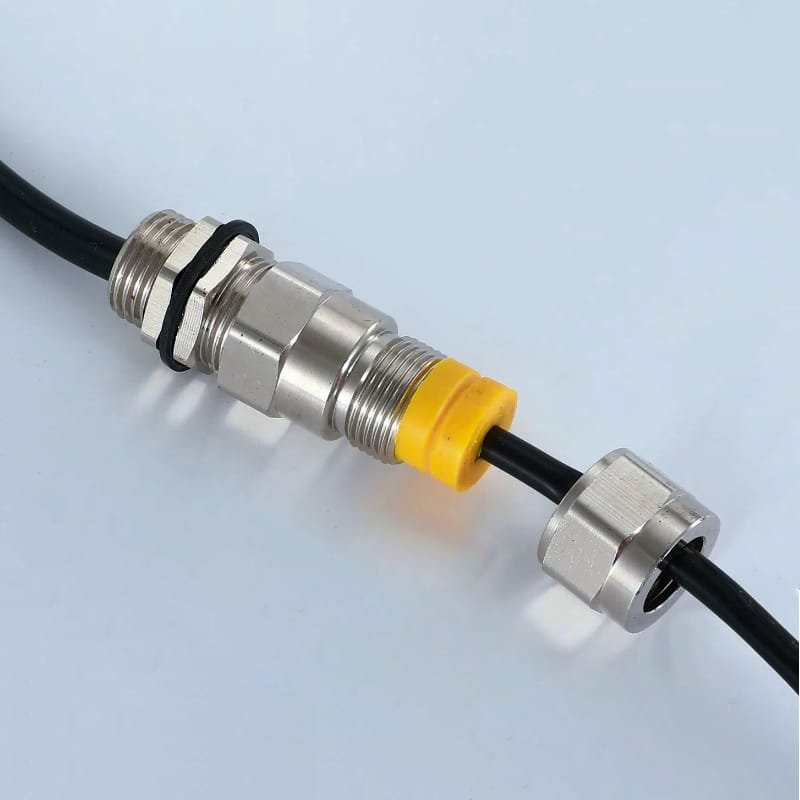
Three weeks ago, Jennifer, a procurement manager at a major automotive manufacturing plant in Detroit, Michigan, called me with a pressing concern. “Samuel, our electrical contractor is recommending double compression brass glands for our new production line, but they cost 40% more than single compression types. I need to understand if the extra cost is justified or if we’re being oversold.” Her dilemma reflects a common challenge in the industry – understanding when the additional complexity and cost of double compression glands truly provides value.
Single compression brass glands use one sealing point to secure cables, while double compression glands feature two independent sealing zones that provide enhanced cable retention, superior environmental protection, and improved strain relief for demanding applications. The choice between these designs significantly impacts installation reliability, long-term performance, and total cost of ownership.
Having guided thousands of engineers and procurement professionals through this decision over the past decade, I’ve learned that the single vs. double compression choice isn’t just about initial cost – it’s about matching gland design to application requirements for optimal performance and value. Let me share the technical insights that will help you make the right choice. 😉
Table of Contents
- What Are Single and Double Compression Brass Glands?
- How Do the Sealing Mechanisms Compare?
- What Are the Performance Differences?
- Which Applications Benefit from Each Design?
- How Do Installation and Maintenance Compare?
- FAQs About Single vs Double Compression Glands
What Are Single and Double Compression Brass Glands?
Single compression brass glands utilize one compression seal to secure and seal cables, while double compression designs feature two independent sealing zones that provide redundant protection and enhanced mechanical retention for critical applications.

The fundamental difference lies in the sealing architecture. Single compression glands rely on one compression point where a sealing ring or gasket is compressed against the cable outer sheath to create both mechanical retention and environmental seal. Double compression glands incorporate two separate sealing zones, each with independent compression mechanisms that can accommodate different cable geometries and provide backup protection.
Single Compression Design Architecture
Core Components
Single compression brass glands feature streamlined construction:
- Gland body: Main housing with internal thread for compression nut
- Compression nut: Threaded component that applies sealing force
- Sealing ring: Elastomer seal that compresses against cable sheath
- Lock nut: Secures gland body to enclosure wall
Sealing Mechanism
The single compression system operates through direct compression:
- Axial compression: Compression nut forces sealing ring against cable
- Radial compression: Seal deforms inward to grip cable circumference
- Unified sealing: Single seal provides both retention and environmental protection
- Simple geometry: Straightforward compression path with minimal components
Double Compression Design Architecture
Enhanced Component System
Double compression glands incorporate additional sealing elements:
- Outer compression zone: Primary seal for environmental protection
- Inner compression zone: Secondary seal for enhanced retention
- Intermediate body: Separates compression zones for independent operation
- Dual sealing rings: Separate elastomer seals for each compression zone
- Progressive compression: Sequential compression for optimized sealing
Independent Sealing Zones
Each compression zone operates independently:
- Zone 1 (Outer): Focuses on environmental sealing and initial cable grip
- Zone 2 (Inner): Provides enhanced mechanical retention and backup sealing
- Redundant protection: Failure of one zone doesn’t compromise overall performance
- Optimized compression: Each zone can be tuned for specific cable characteristics
Technical Specifications Comparison
| Specification | Single Compression | Double Compression |
|---|---|---|
| Component Count | 4-5 components | 6-8 components |
| Sealing Points | 1 primary seal | 2 independent seals |
| Cable Size Range | Standard tolerance | Extended tolerance |
| Pull-out Force | 500-1000N | 800-1500N |
| IP Rating | IP65-IP67 | IP68-IP69K |
| Installation Time | 2-3 minutes | 4-5 minutes |
| Cost Factor | 1.0x baseline | 1.3-1.5x baseline |
At Bepto, we manufacture both single and double compression brass glands using premium CW617N brass alloy. Our single compression designs excel in standard industrial applications, while our double compression variants are engineered for harsh environments, critical systems, and applications requiring maximum reliability.
Material and Manufacturing Considerations
Brass Alloy Selection
Both designs utilize identical brass material properties:
- CW617N composition: Lead-free brass meeting RoHS requirements1
- Mechanical properties: 380-420 MPa tensile strength2
- Corrosion resistance: Excellent performance in industrial environments
- Machinability: Precision manufacturing of complex geometries
Quality Control Standards
Our manufacturing processes ensure consistent quality across both designs:
- Dimensional accuracy: ±0.05mm tolerance on critical sealing surfaces
- Thread precision: ISO metric and BSP threading standards
- Surface finish: Ra 0.8μm on sealing surfaces for optimal performance
- Assembly testing: 100% functional testing before shipment
How Do the Sealing Mechanisms Compare?
Single compression glands create one compression seal through direct axial force, while double compression designs utilize two independent sealing zones with progressive compression that accommodates cable variations and provides redundant environmental protection.
Single Compression Sealing Process
Direct Compression Method
Single compression glands employ straightforward sealing mechanics:
- Initial positioning: Cable inserted through gland with sealing ring positioned
- Compression application: Nut tightening compresses seal against cable sheath
- Radial deformation: Seal material flows inward to conform to cable geometry
- Sealing completion: Single compression point provides complete environmental seal
Sealing Performance Characteristics
- Pressure rating: Typically achieves IP65-IP67 protection levels
- Cable tolerance: Accommodates ±0.5mm cable diameter variation
- Compression force: 200-400N typical compression force required
- Seal integrity: Dependent on single sealing interface quality
Double Compression Sealing Process
Progressive Compression Method
Double compression glands utilize sequential sealing approach:
Phase 1: Outer Zone Compression
- Primary sealing: Outer compression ring engages cable sheath
- Environmental protection: Initial barrier against moisture and contaminants
- Load distribution: Compression force distributed over larger area
- Cable centering: Outer seal centers cable for inner zone engagement
Phase 2: Inner Zone Compression
- Secondary sealing: Inner compression ring provides backup protection
- Enhanced retention: Higher compression force for mechanical grip
- Fine adjustment: Accommodates cable variations not handled by outer zone
- Redundant protection: Independent seal maintains integrity if outer zone fails
Sealing Performance Analysis
Environmental Protection Comparison
Double compression designs provide superior environmental protection:
Moisture Ingress Protection
- Single compression: One barrier against moisture penetration
- Double compression: Two independent barriers with different failure modes
- Redundancy factor: Double compression maintains protection if one seal fails
- Long-term reliability: Extended service life in harsh environments
Pressure Resistance
- Single compression: Limited by single seal compression capability
- Double compression: Combined resistance of both sealing zones
- Burst pressure: Typically 2-3x higher than single compression designs
- Sustained pressure: Better performance under continuous pressure exposure
I worked with Hassan, a maintenance engineer at a chemical processing facility in Saudi Arabia, who was experiencing frequent seal failures with single compression glands in high-pressure wash-down areas. After switching to our double compression brass glands, his facility has operated for over three years without a single sealing failure, even under 10 bar pressure washing conditions.
Cable Accommodation Capabilities
Size Tolerance Handling
Double compression designs accommodate wider cable size variations:
Single Compression Limitations
- Fixed geometry: Single seal must accommodate entire cable size range
- Compromise performance: Optimal sealing only at mid-range cable sizes
- Size sensitivity: Performance degrades at size extremes
- Installation precision: Requires careful cable size matching
Double Compression Advantages
- Adaptive sealing: Each zone can optimize for different cable characteristics
- Extended range: Accommodates broader cable size variations
- Consistent performance: Maintains sealing across entire size range
- Installation flexibility: More forgiving of cable size variations
Seal Material Optimization
Elastomer Selection
Both designs utilize advanced sealing materials:
- NBR (Nitrile): Standard applications, -20°C to +80°C
- EPDM: Enhanced temperature range, -40°C to +120°C
- Viton (FKM): Chemical resistance, -20°C to +200°C3
- Silicone: Food grade applications, -60°C to +180°C
Seal Geometry Optimization
- Single compression: Unified seal profile for all functions
- Double compression: Specialized profiles for each sealing zone
- Contact pressure: Optimized for specific sealing requirements
- Durometer selection: Matched to application compression forces
What Are the Performance Differences?
Double compression brass glands deliver superior mechanical retention, enhanced environmental protection, and extended service life compared to single compression designs, but require higher initial investment and more complex installation procedures.
Mechanical Performance Comparison
Cable Retention Strength
Double compression glands provide significantly enhanced mechanical retention:
Pull-out Force Analysis
- Single compression: 500-1000N typical retention force
- Double compression: 800-1500N enhanced retention capability
- Safety factor: 50-100% improvement in mechanical security
- Dynamic loading: Better performance under vibration and thermal cycling
Strain Relief Capabilities
- Single compression: Limited strain relief from single compression point
- Double compression: Distributed strain relief across two compression zones
- Cable protection: Reduced stress concentration at gland entry
- Bend radius: Improved cable bend radius management
Environmental Protection Performance
IP Rating Achievements
Double compression designs achieve superior environmental protection:
| Protection Level | Single Compression | Double Compression |
|---|---|---|
| Dust Protection | IP6X standard | IP6X enhanced |
| Water Protection | IP65-IP67 | IP68-IP69K |
| Pressure Rating | 1-3 bar | 5-10 bar |
| Temperature Cycling | Good | Excellent |
| Chemical Resistance | Standard | Enhanced |
| UV Resistance | Good | Excellent |
Long-term Sealing Integrity
- Seal degradation: Double compression maintains protection as seals age
- Thermal cycling: Better accommodation of expansion/contraction cycles
- Chemical exposure: Redundant protection against chemical attack
- Maintenance intervals: Extended service life reduces maintenance frequency
Temperature Performance Analysis
Thermal Expansion Accommodation
Double compression glands better accommodate thermal effects:
- Cable expansion: Independent zones accommodate different expansion rates
- Seal stability: Reduced stress on individual sealing elements
- Temperature cycling: Maintains sealing integrity through thermal cycles
- Material compatibility: Better matching of expansion coefficients
Operating Temperature Ranges
- Standard applications: -20°C to +80°C for both designs
- Enhanced seals: -40°C to +120°C with EPDM sealing
- High temperature: Up to +200°C with specialized Viton seals
- Thermal shock: Double compression better handles rapid temperature changes
Vibration and Dynamic Loading
Vibration Resistance
Industrial applications often involve significant vibration exposure:
- Single compression: Vibration can cause seal relaxation over time
- Double compression: Redundant sealing maintains integrity under vibration
- Fatigue resistance: Distributed loading reduces individual component stress
- Long-term stability: Better performance in high-vibration environments
Dynamic Cable Movement
- Thermal movement: Better accommodation of cable thermal expansion
- Mechanical flexing: Reduced stress concentration at cable entry
- Installation tolerance: More forgiving of installation variations
- Service accessibility: Easier maintenance without complete disassembly
Last year, I assisted Roberto, a project engineer at a mining operation in Chile, with persistent gland failures due to extreme vibration from heavy machinery. The single compression glands were failing every 6-8 months, causing costly production interruptions. After upgrading to our double compression brass glands, the installation has operated for over 18 months without a single failure, saving significant maintenance costs and downtime.
Cost-Performance Analysis
Total Cost of Ownership
While double compression glands cost more initially, they often provide better long-term value:
Initial Cost Factors
- Material cost: 30-50% higher due to additional components
- Manufacturing complexity: More complex machining and assembly
- Quality control: Enhanced testing requirements
- Inventory investment: Higher unit cost affects inventory value
Long-term Value Factors
- Maintenance reduction: Fewer seal failures and replacements
- Downtime prevention: Higher reliability reduces production interruptions
- Extended service life: Longer replacement intervals
- Performance consistency: Maintained performance over service life
Which Applications Benefit from Each Design?
Single compression brass glands excel in standard industrial applications with stable conditions, while double compression designs are essential for harsh environments, critical systems, and applications requiring maximum reliability and extended service life.
Single Compression Applications
Optimal Use Cases
Single compression brass glands provide excellent value in controlled environments:
Standard Industrial Applications
- Indoor installations: Protected environments with stable conditions
- Control panels: Low-stress applications with minimal environmental exposure
- Machinery connections: Standard industrial equipment with normal operating conditions
- Building services: HVAC, lighting, and general electrical distribution
Specific Industry Applications
- Manufacturing facilities: General production equipment and control systems
- Commercial buildings: Office buildings, retail spaces, and light industrial
- Telecommunications: Indoor equipment rooms and controlled environments
- Data centers: Server rooms and network equipment installations
Application Characteristics
- Stable temperatures: -10°C to +60°C operating range
- Low vibration: Minimal mechanical stress and movement
- Standard cables: Common cable types with consistent dimensions
- Cost sensitivity: Budget-conscious applications requiring reliable basic performance
Double Compression Applications
Critical Performance Requirements
Double compression brass glands are essential for demanding applications:
Harsh Environmental Conditions
- Outdoor installations: Weather exposure, temperature extremes, UV radiation
- Marine environments: Salt spray, high humidity, pressure washing
- Chemical processing: Chemical exposure, high temperatures, pressure variations
- Mining operations: Dust, vibration, mechanical stress, extreme conditions
High-Reliability Systems
- Power generation: Critical electrical infrastructure requiring maximum uptime
- Oil and gas: Hazardous locations with zero-tolerance for failures4
- Transportation: Railway, automotive, and aerospace applications
- Medical facilities: Life-critical systems requiring redundant protection
Specific Application Examples
Petrochemical Industry
- Refinery installations: High temperature, chemical exposure, pressure washing
- Offshore platforms: Salt spray, extreme weather, vibration from waves
- Pipeline facilities: Remote locations, difficult maintenance access
- Storage terminals: Fire safety requirements, hazardous area classifications
Power Generation
- Wind turbines: Extreme weather, vibration, difficult maintenance access
- Solar installations: UV exposure, thermal cycling, outdoor conditions
- Hydroelectric plants: High humidity, water exposure, vibration
- Nuclear facilities: Critical safety systems, radiation exposure, high reliability requirements
I recently worked with Ahmed, a maintenance supervisor at a desalination plant in Abu Dhabi, UAE, who was experiencing frequent gland failures due to the combination of salt spray, high temperatures, and pressure washing maintenance procedures. The single compression glands were failing every 3-4 months, requiring costly emergency repairs. After upgrading to our double compression brass glands with Viton seals, the facility has operated for over two years without a single gland failure, dramatically reducing maintenance costs and improving system reliability.
Application Selection Criteria
Decision Matrix
Use this framework to select the optimal gland design:
| Factor | Single Compression | Double Compression |
|---|---|---|
| Environmental severity | Low-Medium | Medium-High |
| Reliability requirements | Standard | Critical |
| Maintenance accessibility | Good | Limited |
| Cost sensitivity | High | Medium |
| Service life requirements | 5-10 years | 10-20 years |
| Performance consistency | Good | Excellent |
Selection Guidelines
Choose Single Compression When:
- Indoor, controlled environments with stable conditions
- Standard industrial applications with normal operating parameters
- Cost is primary consideration with adequate performance acceptable
- Easy maintenance access allows regular inspection and replacement
- Cable sizes are consistent and within normal tolerance ranges
Choose Double Compression When:
- Harsh outdoor or industrial environments with extreme conditions
- Critical systems where failure is not acceptable
- Difficult maintenance access requires extended service life
- Wide cable size variations need accommodation
- Regulatory requirements mandate enhanced environmental protection
- Long-term cost of ownership is more important than initial cost
Industry-Specific Recommendations
Manufacturing and Industrial
- General manufacturing: Single compression for standard applications
- Food processing: Double compression for wash-down areas
- Pharmaceutical: Double compression for critical production equipment
- Automotive: Double compression for harsh production environments
Infrastructure and Utilities
- Power distribution: Single compression for indoor substations
- Water treatment: Double compression for all outdoor and wet applications
- Telecommunications: Single compression for equipment rooms, double for outdoor
- Transportation: Double compression for all mobile and outdoor applications
How Do Installation and Maintenance Compare?
Single compression brass glands offer simpler installation with fewer components and steps, while double compression glands require more complex procedures but provide enhanced long-term reliability and reduced maintenance frequency.
Installation Complexity Analysis
Single Compression Installation Process
Step-by-Step Procedure
Single compression glands follow straightforward installation:
- Thread gland body into enclosure knockout to proper depth
- Insert cable through compression nut and sealing ring
- Position sealing ring at correct location on cable sheath
- Hand-tighten compression nut until seal engages cable
- Apply final torque to achieve specified compression
Installation Time and Tools
- Typical installation time: 2-3 minutes per gland
- Required tools: Standard wrenches, torque wrench for final tightening
- Skill level: Basic electrical installation skills sufficient
- Error potential: Low risk due to simple assembly sequence
Common Installation Issues
- Over-compression: Excessive torque can damage seal or cable sheath
- Under-compression: Insufficient sealing force compromises environmental protection
- Misalignment: Improper cable positioning affects sealing performance
- Thread damage: Cross-threading during installation
Double Compression Installation Process
Enhanced Installation Procedure
Double compression glands require more detailed installation:
Phase 1: Component Assembly
- Thread gland body into enclosure with proper thread engagement
- Assemble compression components in correct sequence
- Insert cable through all compression elements
- Position outer sealing ring at specified location
Phase 2: Progressive Compression
5. Apply outer compression to engage primary sealing zone
6. Verify outer seal integrity through visual inspection
7. Apply inner compression to engage secondary sealing zone
8. Final torque application to both compression zones
Installation Requirements
- Installation time: 4-5 minutes per gland
- Required tools: Multiple wrenches, calibrated torque wrench, inspection tools
- Skill level: Intermediate electrical installation experience recommended
- Quality control: More inspection points require careful attention
Torque Specifications and Procedures
Single Compression Torque Requirements
| Gland Size | Body Torque | Compression Nut Torque |
|---|---|---|
| M12 | 15-20 Nm | 8-12 Nm |
| M16 | 20-25 Nm | 10-15 Nm |
| M20 | 25-30 Nm | 12-18 Nm |
| M25 | 30-40 Nm | 15-22 Nm |
| M32 | 40-50 Nm | 20-28 Nm |
Double Compression Torque Requirements
| Gland Size | Body Torque | Outer Compression | Inner Compression |
|---|---|---|---|
| M12 | 15-20 Nm | 6-10 Nm | 8-12 Nm |
| M16 | 20-25 Nm | 8-12 Nm | 10-15 Nm |
| M20 | 25-30 Nm | 10-14 Nm | 12-18 Nm |
| M25 | 30-40 Nm | 12-18 Nm | 15-22 Nm |
| M32 | 40-50 Nm | 15-22 Nm | 20-28 Nm |
Maintenance Requirements Comparison
Single Compression Maintenance
Inspection Schedule
- Visual inspection: Every 6 months for environmental degradation
- Torque verification: Annual check of compression nut tightness
- Seal replacement: Every 3-5 years depending on conditions
- Performance testing: IP rating verification during major maintenance5
Maintenance Procedures
- Seal inspection: Check for cracking, hardening, or deformation
- Compression check: Verify adequate compression force maintained
- Thread condition: Inspect for corrosion or damage
- Cable condition: Check for sheath damage at seal interface
Maintenance Costs
- Labor time: 5-10 minutes per gland for routine inspection
- Replacement parts: Single sealing ring, minimal component cost
- Frequency: More frequent maintenance due to single point of failure
- Downtime: Quick maintenance but more frequent interruptions
Double Compression Maintenance
Enhanced Maintenance Schedule
- Visual inspection: Annual inspection due to redundant protection
- Torque verification: Bi-annual check of both compression zones
- Seal replacement: Every 5-8 years with staggered replacement possible
- Performance testing: Extended intervals due to redundant sealing
Advanced Maintenance Procedures
- Zone-specific inspection: Each compression zone evaluated independently
- Selective maintenance: Outer zone can be serviced without inner zone disruption
- Predictive maintenance: Better monitoring of seal condition through redundancy
- Extended service: Longer intervals between major maintenance events
Long-term Maintenance Benefits
- Reduced frequency: Longer intervals between maintenance cycles
- Selective replacement: Individual zones can be serviced as needed
- Predictive capability: Early warning of seal degradation
- Lower total cost: Reduced maintenance frequency offsets higher initial cost
I assisted Maria, a facility manager at a pharmaceutical manufacturing plant in Barcelona, Spain, with developing maintenance schedules for over 200 cable glands throughout her facility. The areas using double compression glands required maintenance only half as frequently as those with single compression designs, resulting in 40% lower annual maintenance costs despite the higher initial investment.
Installation Training Requirements
Single Compression Training
- Training duration: 2-4 hours basic installation training
- Skill requirements: Basic electrical installation experience
- Common mistakes: Over-tightening, improper cable preparation
- Certification: Standard electrical installation certification adequate
Double Compression Training
- Training duration: 4-8 hours comprehensive installation training
- Skill requirements: Intermediate electrical installation experience
- Advanced techniques: Progressive compression, zone-specific torquing
- Certification: Enhanced training recommended for critical applications
Quality Control and Testing
Installation Verification
Both designs require proper installation verification:
- Visual inspection: Proper component alignment and assembly
- Torque verification: Calibrated torque wrench confirmation
- IP rating testing: Environmental protection verification
- Electrical continuity: Bonding and grounding path verification where applicable
Performance Documentation
- Installation records: Component specifications and torque values
- Test results: IP rating and electrical continuity measurements
- Maintenance schedule: Planned inspection and replacement intervals
- Performance tracking: Long-term reliability monitoring
Conclusion
The choice between single and double compression brass glands ultimately depends on balancing initial cost against long-term performance requirements. Single compression designs excel in controlled environments where cost efficiency is paramount, while double compression glands provide superior reliability and extended service life in demanding applications.
At Bepto, we manufacture both single and double compression brass glands to the highest quality standards, using premium CW617N brass alloy and advanced sealing technologies. Our comprehensive product range ensures optimal solutions for applications ranging from standard industrial installations to the most demanding harsh environment applications.
Understanding the technical differences, performance characteristics, and application requirements enables informed decisions that optimize both initial investment and long-term operational costs. Whether you choose single or double compression designs, proper selection, installation, and maintenance will ensure reliable performance and maximum value from your cable gland investment.
FAQs About Single vs Double Compression Glands
Q: Are double compression glands always better than single compression?
A: No, double compression glands are better for harsh environments and critical applications, but single compression glands provide excellent value for standard indoor applications. The choice depends on environmental conditions, reliability requirements, and cost considerations rather than one design being universally superior.
Q: Can I replace single compression glands with double compression glands directly?
A: Yes, if the thread sizes match, double compression glands can typically replace single compression glands in the same enclosure knockouts. However, verify that the increased gland length doesn’t create clearance issues and that the enhanced performance justifies the additional cost.
Q: How much longer do double compression glands last compared to single compression?
A: Double compression glands typically last 50-100% longer than single compression designs in harsh environments, with service life extending from 3-5 years to 5-10 years depending on conditions. In controlled environments, both designs can achieve similar service life.
Q: Do double compression glands require special installation tools?
A: Double compression glands use standard installation tools but require calibrated torque wrenches for proper installation of both compression zones. The installation process is more complex, requiring attention to sequential compression procedures and multiple torque specifications.
Q: What’s the cost difference between single and double compression brass glands?
A: Double compression brass glands typically cost 30-50% more than equivalent single compression designs due to additional components and manufacturing complexity. However, the reduced maintenance frequency and extended service life often provide better total cost of ownership in demanding applications.
-
“RoHS Directive”,
https://environment.ec.europa.eu/topics/waste-and-recycling/rohs-directive_en. The European Union directive restricting the use of hazardous substances in electrical and electronic equipment. Evidence role: standard; Source type: government. Supports: lead-free brass meeting RoHS requirements. ↩ -
“Brass”,
https://en.wikipedia.org/wiki/Brass. Detailed overview of brass alloys, including their mechanical and physical properties. Evidence role: general_support; Source type: research. Supports: 380-420 MPa tensile strength. ↩ -
“ASTM D1418 – 22”,
https://www.astm.org/d1418-22.html. Standard practice for rubber and solid elastomers nomenclature, including FKM types. Evidence role: standard; Source type: standard. Supports: chemical resistance, -20°C to +200°C for FKM. ↩ -
“About IECEx”,
https://www.iecex.com/about-iecex/. International electrotechnical commission system for certification to standards relating to equipment for use in explosive atmospheres. Evidence role: standard; Source type: standard. Supports: hazardous locations with zero-tolerance for failures. ↩ -
“IP Ratings”,
https://www.iec.ch/ip-ratings. Explanation of Ingress Protection (IP) ratings established by the International Electrotechnical Commission. Evidence role: standard; Source type: standard. Supports: IP rating verification during major maintenance. ↩
