

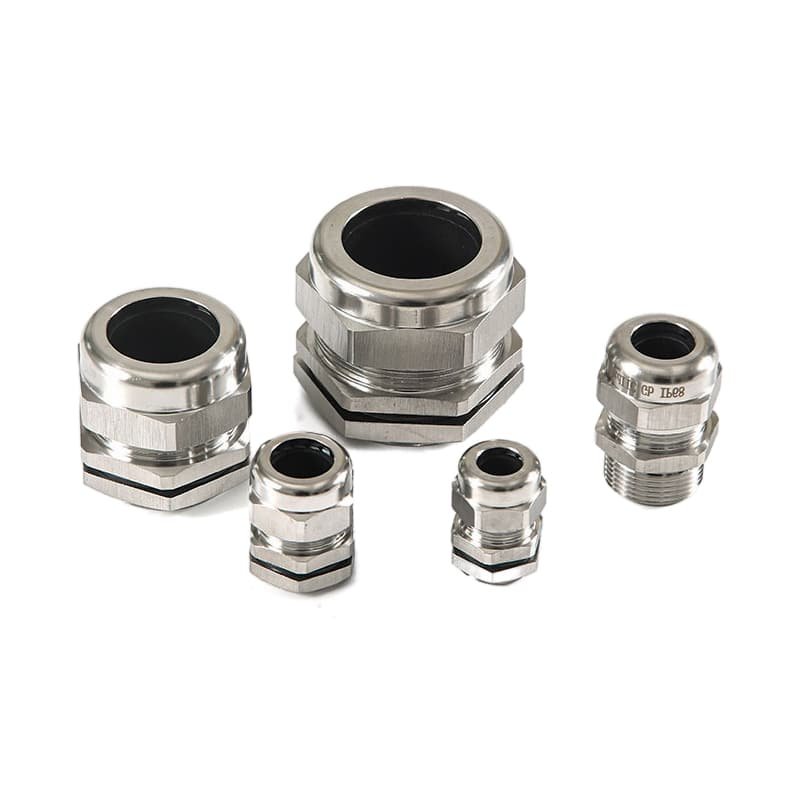
Last month, I received a frantic call from Marcus, an offshore wind farm project manager in Denmark. “Samuel, we have a crisis. Our cable glands failed at 15 meters depth, and we’re facing a complete system shutdown. The manufacturer claimed they were ‘waterproof,’ but they clearly weren’t designed for actual submersion!” This expensive lesson highlights a critical distinction that many engineers overlook.
Watertight cable glands for submersion are specialized IP68-rated components designed to maintain complete seal integrity under continuous underwater pressure, featuring enhanced sealing systems, pressure-resistant materials, and precise manufacturing tolerances that far exceed standard waterproof ratings.
Understanding the difference between splash-resistant, waterproof, and true submersion-rated cable glands can save you from catastrophic failures, project delays, and safety hazards. After a decade of supplying cable glands for underwater applications worldwide, I’ve learned that proper specification is absolutely critical for subsea success. 😉
Table of Contents
- What Makes Cable Glands Truly Watertight for Submersion?
- How Do IP68 Ratings Apply to Submersion Applications?
- What Are the Key Design Features for Underwater Performance?
- How Do You Select the Right Submersion Cable Gland?
- What Are the Installation and Maintenance Requirements?
- FAQs About Watertight Cable Glands
What Makes Cable Glands Truly Watertight for Submersion?
The distinction between waterproof and submersion-rated is more than marketing terminology – it’s engineering reality.
True watertight cable glands for submersion feature multiple redundant sealing barriers, pressure-compensated designs, marine-grade materials, and specialized elastomers that maintain integrity under continuous hydrostatic pressure, unlike standard waterproof glands that only handle surface water exposure.

Understanding Hydrostatic Pressure Challenges
When Hassan’s oil platform project in the North Sea required cable glands for 50-meter submersion, we had to completely rethink the sealing approach. At 50 meters depth, the hydrostatic pressure reaches 6 bar (87 psi)1 – enough to force water through even microscopic gaps in standard seals.
Pressure Effects on Standard Glands:
- 10 meters depth: 2 bar pressure can compress standard O-rings beyond their elastic limit
- 20 meters depth: 3 bar pressure often causes seal extrusion in conventional designs
- 50+ meters depth: 6+ bar pressure requires specialized pressure-resistant sealing systems
Multi-Barrier Sealing Systems
Our submersion-rated glands employ a three-stage sealing approach:
Primary Seal: High-durometer Viton O-rings in precision-machined grooves resist pressure deformation
Secondary Seal: Backup O-ring system provides redundancy if primary seal is compromised
Tertiary Protection: Metal-to-metal thread sealing creates final barrier against water ingress
Material Specifications for Submersion
| Component | Standard Waterproof | Submersion-Rated | Performance Difference |
|---|---|---|---|
| Body Material | Brass/Nylon | Marine Bronze/SS316L | Superior corrosion resistance |
| Seal Material | NBR/EPDM | Viton/FFKM | Pressure and chemical resistance |
| Thread Tolerance | ±0.1mm | ±0.05mm | Precision sealing surface |
| Surface Finish | Ra 1.6 | Ra 0.8 | Enhanced seal contact |
The material upgrade alone increases costs by 60-80%, but it’s essential for reliable underwater performance.
Pressure Compensation Features
Unlike surface applications, submersion glands must handle both external water pressure and potential internal pressure from temperature changes. Our designs include:
- Pressure-resistant seal grooves that prevent seal extrusion
- Controlled compression ratios that maintain seal effectiveness under pressure
- Venting capabilities for applications requiring pressure equalization
How Do IP68 Ratings Apply to Submersion Applications?
IP68 ratings provide the foundation for submersion protection, but understanding the specifics is crucial for proper selection.
IP68 ratings for submersion specify continuous immersion protection, but the actual depth and duration must be defined by the manufacturer, with typical ratings ranging from 1-meter shallow submersion to 100+ meter deep-sea applications, each requiring different design approaches.
Decoding IP68 Specifications
The “8” in IP68 indicates protection against continuous immersion, but manufacturers must specify:
Depth Rating: Maximum submersion depth (1m, 10m, 50m, 100m+)
Duration: Continuous or temporary immersion capability
Pressure Rating: Maximum hydrostatic pressure tolerance
Temperature Range: Operating temperature limits under submersion
IP68 Submersion Categories
Shallow Submersion (IP68 – 1m):
- Pool equipment, fountain installations
- Temporary flooding scenarios
- Low-pressure applications
Medium Submersion (IP68 – 10m):
- Marina electrical systems
- Aquaculture installations
- Shallow offshore applications
Deep Submersion (IP68 – 50m+):
- Offshore wind farms
- Subsea oil & gas equipment
- Deep-water marine installations
Marcus’s Danish wind farm required IP68 glands rated for 20-meter continuous submersion. The original supplier’s IP68 rating was only tested to 1 meter – a specification mismatch that cost the project €200,000 in repairs and downtime.
Testing Standards for Submersion
IEC 60529 Standard Requirements2:
- Immersion at specified depth for specified duration
- No water ingress affecting operation
- Electrical continuity maintained throughout test
- Post-test inspection for seal integrity
Enhanced Testing for Critical Applications:
- Extended duration testing (72+ hours)
- Thermal cycling under pressure
- Vibration testing while submerged
- Chemical compatibility verification
At Bepto, our submersion-rated glands undergo 168-hour (7-day) immersion testing at 1.5x rated depth to ensure long-term reliability.
What Are the Key Design Features for Underwater Performance?
Submersion cable glands require specialized design features that go far beyond standard waterproof construction.
Key design features for underwater performance include pressure-resistant sealing systems, corrosion-resistant materials, strain relief optimization for underwater cables, and specialized thread designs that maintain integrity under hydrostatic pressure and thermal cycling.

Advanced Sealing Technologies
Quad-Ring Sealing Systems:
Our premium submersion glands use four separate sealing barriers:
- Cable seal: Direct seal around cable jacket
- Thread seal: Metal-to-metal or O-ring thread sealing
- Backup seal: Secondary O-ring for redundancy
- Atmospheric seal: Prevents internal condensation
Progressive Compression Design:
Unlike standard glands that rely on single-point compression, our submersion designs use progressive compression that:
- Distributes sealing force evenly
- Prevents over-compression damage
- Maintains seal integrity through thermal cycling
- Allows for controlled cable movement
Specialized Thread Designs
Metric Fine Threads: Provide superior sealing surface area compared to standard coarse threads
Precision Tolerances: ±0.05mm tolerance ensures perfect seal contact
Thread Sealant Compatibility: Designed for use with marine-grade thread compounds
Anti-Seize Features: Prevent galvanic corrosion in dissimilar metal installations
Cable Compatibility Optimization
Hassan’s North Sea platform required glands for specialized subsea cables with unique jacket materials. We developed custom sealing inserts to accommodate:
Polyurethane Jackets: Require specific elastomer compounds for chemical compatibility
Armored Cables: Need specialized strain relief for steel wire armor
Fiber Optic Cables: Demand precise bend radius control to prevent signal loss
High-Voltage Cables: Require enhanced electrical clearances and tracking resistance
Corrosion Resistance Features
Material Selection:
- Body: Super duplex stainless steel (2507)3 for extreme corrosion resistance
- Hardware: Inconel or Hastelloy for fasteners in aggressive environments
- Coatings: Specialized marine coatings for additional protection
Galvanic Compatibility:
- Careful material selection to prevent galvanic corrosion
- Isolation techniques for dissimilar metal connections
- Sacrificial anode integration where required
How Do You Select the Right Submersion Cable Gland?
Proper selection requires careful analysis of environmental conditions, cable specifications, and performance requirements.
Selecting submersion cable glands requires evaluating maximum depth, continuous vs. temporary submersion, cable type compatibility, environmental conditions, and certification requirements, with proper sizing based on cable diameter, pressure rating, and material compatibility for the specific underwater application.
Selection Criteria Matrix
| Factor | Shallow (1-5m) | Medium (5-20m) | Deep (20m+) |
|---|---|---|---|
| Pressure Rating | 1.5 bar | 3 bar | 5+ bar |
| Seal Material | EPDM/NBR | Viton standard | Viton/FFKM premium |
| Body Material | Marine brass | SS316L | Super duplex SS |
| Testing Duration | 24 hours | 72 hours | 168+ hours |
| Cost Factor | 1x | 2-3x | 4-6x |
Environmental Assessment
Water Chemistry Analysis:
- Salinity levels (fresh, brackish, seawater)
- Chemical contaminants (oils, acids, bases)
- Temperature variations (-5°C to +60°C typical)
- Biological factors (marine growth, bacteria)
Physical Conditions:
- Current velocity and direction
- Wave action and surge effects
- Sediment and debris exposure
- Installation accessibility
Cable Compatibility Verification
Marcus’s wind farm project taught us the importance of cable-gland compatibility verification:
Cable Jacket Material: Must be chemically compatible with seal elastomers
Cable Diameter Range: Ensure proper seal compression without over-tightening
Armor Compatibility: Verify strain relief design handles cable armor properly
Bend Radius: Confirm gland design doesn’t exceed cable minimum bend radius
Certification Requirements
Marine Applications:
- Lloyd’s Register type approval
- DNV GL certification for offshore use4
- ABS approval for marine installations
Oil & Gas Applications:
- ATEX certification for hazardous areas5
- API specifications for offshore platforms
- NORSOK standards for North Sea applications
Renewable Energy:
- IEC 61400 series for wind applications
- UL listing for North American installations
- CE marking for European compliance
What Are the Installation and Maintenance Requirements?
Proper installation and maintenance are critical for achieving rated submersion performance.
Installation of submersion cable glands requires specialized procedures including torque specifications, thread sealant application, pressure testing verification, and proper cable preparation, while maintenance involves regular inspection schedules, seal replacement protocols, and performance monitoring to ensure continued underwater integrity.
Pre-Installation Requirements
Cable Preparation:
- Clean cable jacket thoroughly to remove contaminants
- Verify cable diameter matches gland specifications
- Check for jacket damage that could compromise sealing
- Apply cable preparation compound if specified
Thread Preparation:
- Clean all threads with appropriate solvent
- Apply marine-grade thread sealant as specified
- Verify thread condition and dimensional accuracy
- Check for damage or contamination
Installation Procedures
Step-by-Step Process:
- Initial Assembly: Hand-tighten gland components to ensure proper alignment
- Cable Insertion: Insert cable to specified depth without forcing
- Compression Application: Apply specified torque in stages (typically 50%, 75%, 100%)
- Seal Verification: Check for proper seal compression and alignment
- Final Torque: Apply final torque specification using calibrated tools
Critical Torque Specifications:
- M20 glands: 25-30 Nm typical
- M25 glands: 35-40 Nm typical
- M32 glands: 45-50 Nm typical
- Larger sizes: Consult manufacturer specifications
Hassan’s platform installation required documented torque verification for each gland, with certificates provided for insurance and regulatory compliance.
Pressure Testing Protocol
Factory Testing:
- All submersion glands receive individual pressure testing
- Test pressure: 1.5x rated working pressure minimum
- Test duration: 30 minutes minimum at full pressure
- Documentation provided with each gland
Field Verification:
- Recommended for critical applications
- Portable pressure testing equipment available
- Test at 1.2x working pressure for 15 minutes
- Document results for maintenance records
Maintenance Schedules
Inspection Intervals:
- Monthly: Visual inspection for obvious damage or leakage
- Quarterly: Detailed inspection including electrical testing
- Annually: Complete disassembly and seal replacement if required
- Major overhaul: Every 5 years or per manufacturer recommendation
Maintenance Procedures:
- Torque verification and adjustment
- Seal condition assessment
- Thread condition inspection
- Electrical continuity testing
- Documentation of all findings
Conclusion
Watertight cable glands for submersion represent a specialized category requiring careful specification, proper installation, and regular maintenance. The distinction between standard waterproof and true submersion-rated glands is critical – as Marcus learned in Denmark, the wrong choice can result in catastrophic failures and enormous costs.
At Bepto, we manufacture submersion-rated cable glands to the highest standards, with individual testing and certification for depths up to 100 meters. Our technical team works closely with customers to ensure proper selection and specification for each unique underwater application.
Remember: when it comes to submersion applications, there’s no substitute for proper engineering and quality components. The initial investment in true submersion-rated glands pays dividends in reliability, safety, and peace of mind.
FAQs About Watertight Cable Glands
Q: What’s the difference between waterproof and submersion-rated cable glands?
A: Submersion-rated glands are designed for continuous underwater pressure exposure with specialized sealing systems, while waterproof glands only handle surface water contact. Submersion glands feature pressure-resistant seals, marine-grade materials, and enhanced testing protocols for depths beyond 1 meter.
Q: How deep can submersion cable glands be installed?
A: Depth capability varies by design and manufacturer, ranging from 1-meter shallow applications to 100+ meter deep-sea installations. Standard submersion glands typically handle 10-50 meters, while specialized deep-sea versions can exceed 100 meters with proper pressure rating and material selection.
Q: Do submersion cable glands require special installation procedures?
A: Yes, submersion glands require precise torque specifications, marine-grade thread sealants, proper cable preparation, and often individual pressure testing. Installation must follow manufacturer procedures exactly to achieve rated performance, unlike standard glands that allow more installation flexibility.
Q: How often should submersion cable glands be maintained?
A: Maintenance schedules depend on depth and environment, but typically include monthly visual inspections, quarterly detailed inspections, and annual seal replacement consideration. Critical deep-water applications may require more frequent inspection, while shallow installations can extend intervals based on performance history.
Q: Can regular IP68 cable glands be used for submersion applications?
A: Not necessarily – IP68 ratings must specify depth and duration limits. Many IP68 glands are only tested to 1-meter depth for 30 minutes, inadequate for true submersion applications. Always verify the specific depth rating and continuous immersion capability before specifying for underwater use.
-
“Hydrostatic Pressure”,
https://en.wikipedia.org/wiki/Hydrostatic_pressure. Explains the relationship between water depth and hydrostatic pressure. Evidence role: mechanism; Source type: Wikipedia. Supports: At 50 meters depth, the hydrostatic pressure reaches 6 bar (87 psi). ↩ -
“IP Code”,
https://en.wikipedia.org/wiki/IP_Code. Details the IEC 60529 standard for continuous immersion testing. Evidence role: standard; Source type: Wikipedia. Supports: IEC 60529 Standard Requirements. ↩ -
“Duplex stainless steel”,
https://en.wikipedia.org/wiki/Duplex_stainless_steel. Describes the corrosion resistance properties of super duplex alloys in marine environments. Evidence role: material property; Source type: Wikipedia. Supports: Super duplex stainless steel (2507). ↩ -
“Type Approval Certification”,
https://www.dnv.com/services/type-approval-certification/. Outlines the DNV certification process for marine and offshore equipment. Evidence role: standard; Source type: industry. Supports: DNV GL certification for offshore use. ↩ -
“ATEX directive”,
https://en.wikipedia.org/wiki/ATEX_directive. European Union directive detailing requirements for equipment in explosive atmospheres. Evidence role: standard; Source type: Wikipedia. Supports: ATEX certification for hazardous areas. ↩
