


Last week, Marcus, a controls engineer from a major automotive plant in Stuttgart, called me in panic. “Samuel, our entire production line went down because moisture got into our sensor cables through poorly selected glands. We’re losing €50,000 per hour!” This scenario happens more often than you’d think in industrial automation.
Cable glands for industrial automation must provide IP-rated sealing1, EMC shielding2, and vibration resistance while accommodating diverse cable types in demanding manufacturing environments. The right selection prevents costly downtime and ensures reliable signal transmission in automated systems.
After helping hundreds of automation projects across Europe, Asia, and the Americas, I’ve learned that gland selection can make or break an automation installation. Let me share the systematic approach that’s saved my clients millions in avoided failures.
Table of Contents
- What Makes Automation Glands Different?
- Which Cable Types Require Special Glands?
- How to Match IP Ratings to Your Environment?
- What About EMC Protection Requirements?
- How to Size Glands for Multiple Cable Types?
- FAQs About Industrial Automation Cable Glands
What Makes Automation Glands Different?
Industrial automation environments demand far more from cable glands than standard electrical installations. The combination of sensitive electronics, harsh conditions, and critical uptime requirements creates unique challenges.
Automation cable glands must simultaneously provide environmental sealing, electromagnetic compatibility, mechanical strain relief, and accommodate the diverse cable types found in modern manufacturing systems. Unlike basic electrical glands, they’re engineered for multi-parameter performance.
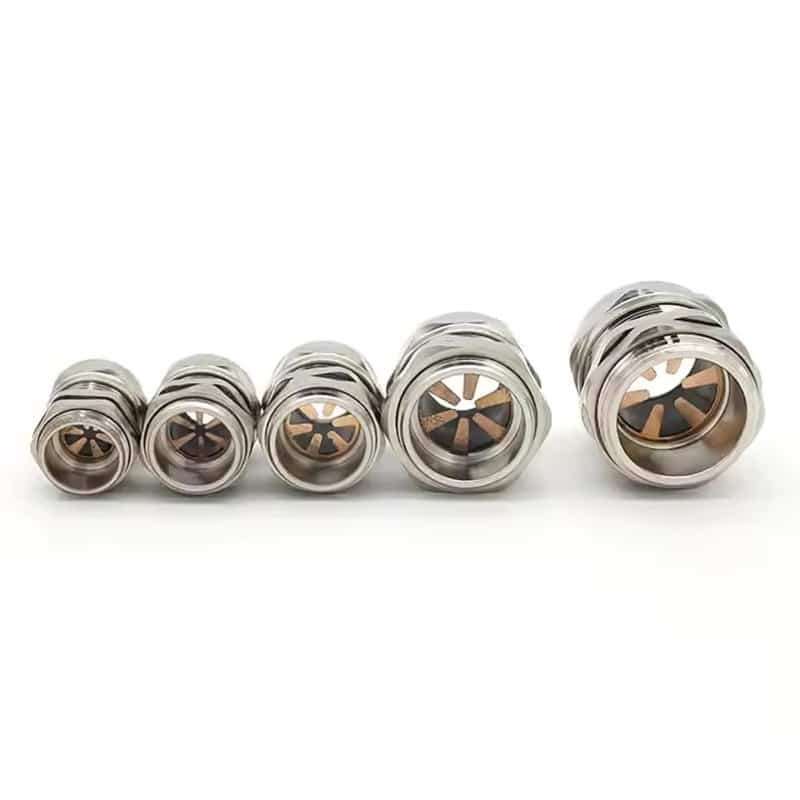
Critical Performance Requirements
In automation applications, cable glands face a perfect storm of challenges:
Environmental Stresses: Temperature cycling from -40°C to +125°C, humidity variations, chemical exposure from cleaning agents, and potential washdown procedures requiring IP67/IP68 ratings.
Electromagnetic Interference: High-frequency drives, switching power supplies, and wireless communications create EMI that can disrupt sensitive control signals without proper shielding.
Mechanical Demands: Constant vibration from machinery, cable flexing from moving equipment, and potential impact damage require robust strain relief and retention systems.
Automation-Specific Design Features
At Bepto, our automation-grade glands incorporate several specialized features:
- Multi-seal technology: Primary and secondary sealing barriers
- 360-degree EMC shielding: Continuous electromagnetic protection
- Vibration-resistant threads: Special thread profiles prevent loosening
- Chemical-resistant materials: Specialized compounds for harsh cleaning environments
- Quick-disconnect options: Facilitate rapid maintenance and troubleshooting
These features integrate with our complete automation connectivity ecosystem, including junction boxes, field-installable connectors, and cable assemblies available through chinacableglands.com.
Which Cable Types Require Special Glands?
Automation systems use an incredibly diverse range of cable types, each with specific gland requirements. Understanding these relationships is crucial for reliable installations.
Different automation cable types – from power and control to Fieldbus3 and fiber optic – require specifically designed glands that accommodate their unique construction, shielding requirements, and environmental needs.
Power and Motor Cables
Characteristics: Heavy-duty construction, large conductors, often armored or shielded
Gland Requirements:
- High current ratings (up to 63A)
- Strain relief for heavy cables
- EMC versions for VFD applications4
- Explosion-proof options for hazardous areas
I remember helping Yuki, a plant manager in Osaka, solve persistent motor failures. The issue wasn’t the motors – it was inadequate glands allowing moisture into VFD cables, creating ground faults. Switching to our EMC-rated brass glands with enhanced sealing eliminated the problem completely.
Control and Signal Cables
Characteristics: Multi-conductor, often shielded, smaller gauge wires
Gland Requirements:
- Precise cable diameter matching
- Shield continuity maintenance
- Protection against signal interference
- Easy termination for maintenance
Fieldbus and Communication Cables
Characteristics: Twisted pair construction, impedance-controlled, highly sensitive to EMI
Gland Requirements:
- EMC shielding mandatory
- Minimal signal degradation
- Proper impedance matching
- Protection against moisture ingress
Specialized Cable Considerations
| Cable Type | Key Challenges | Gland Solution |
|---|---|---|
| Servo Motor | High-frequency noise, flexible | EMC with strain relief |
| Encoder | Precise signals, EMI sensitive | Shielded with grounding |
| Safety (SIL) | Reliability critical | Redundant sealing |
| Fiber Optic | Bend radius critical | Specialized bend protection |
| Hybrid Power/Data | Multiple requirements | Multi-chamber design |
How to Match IP Ratings to Your Environment?
Environmental protection is non-negotiable in automation applications. However, over-specifying can waste money while under-specifying risks catastrophic failures.
Match IP ratings to actual environmental conditions: IP54 for dry indoor environments, IP65 for dust/water exposure, IP67 for temporary immersion, and IP68 for continuous submersion or high-pressure washdown.
Understanding IP Rating Components
The IP (Ingress Protection) code consists of two digits:
- First digit (0-6): Solid particle protection
- Second digit (0-8): Liquid ingress protection
Application-Specific IP Requirements
Food & Beverage (IP67/IP68)
- High-pressure washdown procedures
- Caustic cleaning chemicals
- Temperature extremes from freezing to steam cleaning
- FDA-compliant materials required
Automotive Manufacturing (IP65/IP67)
- Metal cutting fluid exposure
- Welding spatter and grinding dust
- Paint booth overspray
- Robotic cell washdown
Chemical Processing (IP67/IP68)
- Corrosive atmosphere exposure
- Potential submersion scenarios
- Explosion-proof requirements (ATEX/IECEx)
- Temperature cycling stress
Environmental Assessment Checklist
Before specifying IP ratings, evaluate:
- Moisture Sources: Condensation, washdown, rain, process fluids
- Particle Exposure: Dust type, size, concentration levels
- Cleaning Procedures: Pressure levels, chemical compatibility
- Temperature Cycling: Thermal expansion/contraction effects
- Maintenance Access: Frequency of gland disconnection needs
What About EMC Protection Requirements?
Electromagnetic compatibility is often overlooked until problems arise. In automation environments filled with variable frequency drives, switching power supplies, and wireless devices, EMC protection is essential.
EMC cable glands provide 360-degree electromagnetic shielding through conductive materials and proper grounding, preventing interference that can disrupt sensitive automation signals and cause system malfunctions.
 

Common EMI Sources in Automation
High-Power Sources:
- Variable frequency drives (VFDs)
- Servo amplifiers
- Welding equipment
- Induction heating systems
Communication Interference:
- WiFi networks
- Bluetooth devices
- Cell phone signals
- Radio frequency identification (RFID)
EMC Gland Selection Criteria
Shielding Effectiveness: Look for glands with >60dB shielding effectiveness across relevant frequency ranges (typically 10MHz to 1GHz for automation).
Grounding Continuity: Ensure 360-degree shield connection with low impedance path to ground. Our EMC glands use spring-loaded contacts for reliable shield termination.
Material Compatibility: Brass and stainless steel provide excellent conductivity. Avoid aluminum in corrosive environments where galvanic corrosion could compromise shielding.
Installation Best Practices for EMC
- Continuous Shielding: Maintain shield integrity from source to destination
- Proper Grounding: Use star grounding topology where possible
- Cable Routing: Separate power and signal cables, avoid parallel runs
- Enclosure Integration: Ensure gland shielding connects to enclosure ground
How to Size Glands for Multiple Cable Types?
Proper sizing ensures reliable sealing while accommodating thermal expansion and cable movement. This is particularly challenging in automation where cable sizes vary dramatically.
Size automation glands by measuring actual cable outer diameter, adding 15-20% for thermal expansion, and selecting from standard metric or NPT thread sizes5 that provide proper compression seal engagement.
Measurement Best Practices
Cable Diameter Measurement:
- Measure at the thickest point including any protective sheathing
- Account for cable deformation under compression
- Consider temperature-related expansion (typically 2-3%)
Bundle Considerations:
- Calculate equivalent diameter for multiple cables
- Allow space for individual cable movement
- Consider using multiple single-cable glands vs. one large gland
Standard Sizing Guidelines
| Cable OD Range | Metric Thread | NPT Thread | Typical Applications |
|---|---|---|---|
| 3-6.5mm | M12 | 1/4″ | Sensor cables, small control |
| 4-8mm | M16 | 3/8″ | Standard control cables |
| 6-12mm | M20 | 1/2″ | Power cables, thick control |
| 10-18mm | M25 | 3/4″ | Motor cables, large bundles |
| 13-24mm | M32 | 1″ | Heavy power, armored cables |
Advanced Sizing Considerations
Temperature Compensation: In applications with wide temperature swings, select glands with flexible sealing elements that maintain compression across the temperature range.
Cable Movement: For cables subject to flexing or vibration, choose glands with strain relief features and avoid over-tightening that could damage cable jackets.
Future Expansion: Consider slightly larger glands if additional cables may be added later, but ensure minimum cable diameter requirements are met for proper sealing.
Conclusion
Selecting the right cable glands for industrial automation isn’t just about making connections – it’s about ensuring system reliability, preventing costly downtime, and protecting sensitive equipment from environmental and electromagnetic threats.
From Marcus’s moisture ingress disaster to Yuki’s EMC challenges, I’ve seen how proper gland selection can transform automation reliability. The key is understanding your specific environment, cable types, and performance requirements, then matching them to glands engineered for automation demands.
At Bepto, we’ve spent over a decade perfecting automation-grade glands that meet the unique challenges of modern manufacturing. Whether you need basic environmental protection or advanced EMC shielding, our engineering team can help you select the optimal solution for your application.
Ready to bulletproof your automation installation? Contact our technical specialists at chinacableglands.com for application-specific recommendations and technical support.
FAQs About Industrial Automation Cable Glands
Q: What’s the difference between standard electrical glands and automation glands?
A: Automation glands provide enhanced EMC shielding, higher IP ratings, vibration resistance, and accommodate diverse cable types found in manufacturing environments. Standard electrical glands typically only provide basic environmental sealing without EMC protection or specialized strain relief features.
Q: Do I need EMC cable glands for all automation applications?
A: EMC glands are essential for sensitive signal cables, fieldbus communications, and any application near high-power equipment like VFDs or welders. Power cables and basic control circuits in low-EMI environments may not require EMC protection, but it’s often worth the small cost increase for insurance.
Q: How do I determine the correct IP rating for my automation environment?
A: Assess your specific conditions: IP54 for clean, dry indoor environments; IP65 for dust and water spray exposure; IP67 for temporary water immersion or high-pressure washdown; IP68 for continuous submersion. Consider cleaning procedures, environmental exposure, and safety requirements.
Q: Can I use plastic glands in automation applications?
A: Plastic glands work for basic applications but lack EMC shielding and may not withstand harsh industrial environments. Brass or stainless steel glands provide better durability, EMC protection, and chemical resistance required in most automation installations.
Q: What’s the most common mistake in automation gland selection?
A: Under-specifying EMC protection is the biggest mistake, followed by incorrect IP rating selection. Many engineers focus only on cable fit and ignore electromagnetic compatibility, leading to signal interference and system reliability issues that are expensive to troubleshoot later.
-
Learn how to interpret the Ingress Protection (IP) code for electrical enclosures and sealing devices. ↩
-
Understand the principles and standards of electromagnetic compatibility (EMC) for reliable signal integrity. ↩
-
Discover the fundamentals and types of Fieldbus protocols used in industrial automation networks. ↩
-
Explore the function and benefits of Variable Frequency Drives (VFDs) in controlling AC motor speed. ↩
-
Consult the specifications for National Pipe Thread Taper (NPT) for pipe and cable gland sizing. ↩
