

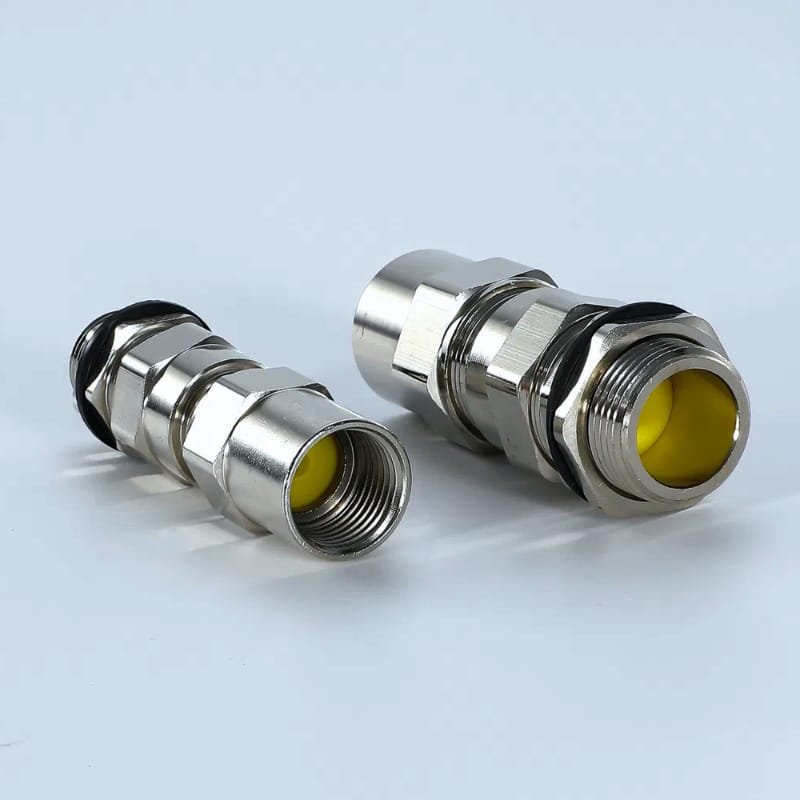
Vibration-induced cable gland failures can shut down critical rail systems, disable backup generators during emergencies, and create dangerous electrical faults that put lives at risk. Standard cable glands simply aren’t designed to handle the constant mechanical stress from engines, rolling stock, and industrial machinery, leading to loosened connections, seal failures, and catastrophic system breakdowns.
High-vibration cable glands require specialized strain relief systems, vibration-resistant sealing materials, reinforced thread designs, and enhanced clamping mechanisms that maintain electrical integrity and environmental protection under continuous mechanical stress from rail operations, generator sets, and mobile equipment1. These specialized glands incorporate features like spring-loaded seals, locking thread compounds, and flexible cable management to prevent vibration-induced failures.
Having worked with railway operators across Europe and generator manufacturers worldwide—from diesel locomotive fleets to emergency backup systems—I’ve seen how proper vibration-resistant cable glands can mean the difference between reliable operation and costly downtime. Let me share the essential knowledge every engineer needs for high-vibration applications.
Table of Contents
- What Makes Vibration Different from Static Applications?
- Which Cable Gland Features Resist Vibration Damage?
- How Do Rail Applications Affect Cable Gland Selection?
- What Special Requirements Do Generator Sets Have?
- How to Ensure Proper Installation and Maintenance?
- FAQs About High-Vibration Cable Glands
What Makes Vibration Different from Static Applications?
Vibration creates dynamic mechanical stress that causes standard cable glands to loosen, seals to fail, and cables to fatigue through continuous flexing—requiring specialized designs with enhanced strain relief, vibration-dampening materials, and secure locking mechanisms.
Understanding vibration characteristics is crucial because different frequencies and amplitudes create unique failure modes that must be addressed through proper gland selection.

Vibration Frequency Analysis
Low Frequency (1-20 Hz): Large amplitude movements from engines and heavy machinery create significant mechanical stress on cable entries. This requires robust strain relief and flexible cable management to prevent fatigue failures.
Medium Frequency (20-100 Hz): Common in rail applications and rotating equipment, these frequencies can cause resonance in cable gland components2, leading to loosening and seal degradation over time.
High Frequency (100+ Hz): Generated by high-speed machinery and electrical equipment, these vibrations can cause micro-movements that gradually degrade sealing surfaces and electrical connections.
Multi-Axis Vibration: Real-world applications often involve complex vibration patterns in multiple directions simultaneously, requiring cable glands that can handle omnidirectional stress without failure.
I remember working with Thomas, a maintenance engineer for a major European rail operator based in Frankfurt. His fleet was experiencing recurring cable failures at locomotive electrical panels, causing service delays and safety concerns. Investigation revealed that standard cable glands were loosening under the constant vibration from diesel engines. After upgrading to our vibration-resistant stainless steel glands with spring-loaded seals and thread-locking compounds, their failure rate dropped by 85%. 😊
Failure Mechanisms in Vibrating Environments
Thread Loosening: Continuous vibration can cause threaded connections to gradually loosen, compromising both sealing and strain relief. This is particularly problematic with standard thread designs that lack positive locking features.
Seal Degradation: Constant movement causes seals to work against their seating surfaces, leading to wear, cracking, and eventual failure of environmental protection.
Cable Fatigue: Inadequate strain relief allows vibration to transmit directly to cables, causing conductor breakage and insulation failure at the point of cable entry.
Connection Corrosion: Micro-movements at electrical connections can break down protective films, allowing corrosion to develop and increase resistance over time.
Environmental Interaction
Temperature Cycling: Vibrating equipment often experiences significant temperature variations that compound mechanical stress through thermal expansion and contraction.
Contamination Ingress: Vibration-induced seal failures allow moisture, dust, and chemicals to enter electrical enclosures, creating additional reliability and safety hazards.
Electromagnetic Effects: High-vibration environments often involve electrical equipment that generates electromagnetic interference, requiring EMC-compatible cable gland solutions.
Which Cable Gland Features Resist Vibration Damage?
Vibration-resistant cable glands incorporate spring-loaded sealing systems, positive thread locking mechanisms, enhanced strain relief designs, and vibration-dampening materials that maintain integrity under continuous mechanical stress.
These specialized features work together to prevent the common failure modes that affect standard glands in dynamic environments.
Advanced Sealing Technologies
Spring-Loaded Seals: These maintain constant sealing pressure even as components experience micro-movements from vibration. The spring action compensates for thermal expansion and mechanical settling that would compromise static seals.
Multi-Stage Sealing: Redundant sealing systems provide backup protection if primary seals are compromised. This typically includes both O-ring and compression seal designs in a single gland.
Vibration-Resistant Materials: Specialized elastomers maintain flexibility and sealing properties under continuous flexing. Materials like fluorocarbon and silicone compounds resist fatigue better than standard rubber seals.
Dynamic Seal Design: Seals designed specifically for moving applications incorporate features like rounded contact surfaces and low-friction materials that reduce wear under vibration.

Mechanical Reinforcement Features
| Feature | Standard Gland | Vibration-Resistant Gland | Benefit |
|---|---|---|---|
| Thread Design | Standard metric | Reinforced with locking compound | Prevents loosening |
| Strain Relief | Basic compression | Multi-stage with flex protection | Reduces cable fatigue |
| Body Material | Standard brass/nylon | Reinforced metal construction | Handles mechanical stress |
| Seal System | Single O-ring | Spring-loaded multi-seal | Maintains sealing under movement |
Enhanced Thread Designs: Vibration-resistant glands often feature modified thread profiles, thread-locking compounds, or mechanical locking mechanisms that prevent loosening under continuous vibration.
Reinforced Construction: Heavy-duty materials and construction methods ensure gland bodies can withstand mechanical stress without cracking or deformation that would compromise sealing.
Integrated Strain Relief: Advanced strain relief systems distribute mechanical stress over longer cable lengths, preventing fatigue failures at the critical entry point.
Cable Management Integration
Flexible Conduit Compatibility: Many high-vibration applications require flexible conduit systems that can accommodate movement while protecting cables. Compatible gland designs ensure system integrity.
Multi-Cable Capability: Vibration-resistant glands often need to accommodate multiple cables while maintaining individual strain relief and sealing for each conductor.
Service Loop Accommodation: Proper cable management includes provisions for service loops that absorb movement and prevent stress concentration at gland entry points.
Marcus, who manages generator maintenance for a large hospital system in Dubai, learned about integrated cable management after experiencing failures in their emergency backup systems. The original installations used standard glands without proper strain relief, causing cable failures during routine generator testing. Our complete vibration-resistant solution with integrated cable management eliminated these failures and improved system reliability for critical medical equipment.
How Do Rail Applications Affect Cable Gland Selection?
Railway applications create unique challenges including extreme vibration levels, wide temperature ranges, electromagnetic interference from traction systems, and stringent safety requirements that demand specialized cable gland solutions with railway-specific certifications.
Understanding rail-specific requirements is essential because standard industrial glands rarely meet the demanding conditions of railway operations.
Railway Vibration Characteristics
Locomotive Applications: Diesel engines create intense low-frequency vibration combined with high-frequency components from turbochargers and electrical systems. Cable glands must handle multi-directional stress while maintaining EMC shielding.
Rolling Stock Systems: Passenger and freight cars experience track-induced vibration, wheel impact, and coupling forces that create complex stress patterns requiring robust strain relief systems.
Trackside Equipment: Signal systems, switches, and monitoring equipment face ground-transmitted vibration plus electromagnetic interference from passing trains with high-power electrical systems.
Pantograph Systems: Electric rail systems create additional challenges with high-voltage switching transients and electromagnetic fields that require specialized EMC cable glands.
Railway Standards and Certifications
EN 45545 Fire Safety: Railway cable glands must meet strict fire performance requirements including low smoke emission, flame spread resistance, and toxic gas limitations3.
EN 50155 Electronic Equipment: This standard defines environmental requirements for railway electronics, including vibration resistance, temperature cycling, and electromagnetic compatibility.
Railway-Specific IP Ratings: Standard IP ratings may be insufficient for railway applications, which often require enhanced protection against high-pressure washing and extreme weather conditions.
Shock and Vibration Testing: Railway glands must pass standardized tests including IEC 61373 for railway applications, which defines specific vibration profiles and test procedures4.
Material Considerations for Rail
Corrosion Resistance: Railway environments expose equipment to road salt, industrial chemicals, and moisture, requiring materials like 316L stainless steel for long-term reliability.
UV Resistance: Outdoor railway applications need materials that resist ultraviolet degradation from prolonged sun exposure without becoming brittle or losing sealing properties.
Temperature Performance: Railway equipment must operate from -40°C to +85°C while maintaining sealing and mechanical integrity across this entire range.
Fire Resistance: Railway applications often require halogen-free materials that won’t contribute to toxic gas generation during fire incidents.
What Special Requirements Do Generator Sets Have?
Generator set applications demand cable glands that can handle intense engine vibration, high operating temperatures, fuel and oil exposure, plus rapid temperature cycling from start-stop operations while maintaining reliable electrical connections for critical power systems.
Generator environments combine multiple stress factors that require comprehensive gland solutions designed specifically for power generation applications.
Engine Vibration Management
Diesel Engine Characteristics: Large diesel generators create intense low-frequency vibration from combustion forces plus high-frequency components from fuel injection and turbocharging systems.
Gas Engine Considerations: Natural gas generators often produce different vibration patterns with higher frequency components that can cause resonance in standard cable gland designs.
Mounting Location Effects: Cable glands mounted directly on engine blocks experience maximum vibration, while those on isolated control panels have different stress patterns requiring tailored solutions.
Load Variation Impact: Generator load changes create varying vibration patterns as engines adjust speed and power output, requiring glands that perform across the entire operating range.
Chemical Resistance Requirements
Fuel Exposure: Diesel fuel, gasoline, and natural gas condensate can attack standard sealing materials, requiring chemical-resistant elastomers and protective coatings.
Oil Contamination: Engine oil, hydraulic fluid, and coolant leaks create contaminated environments that can degrade cable glands and compromise sealing integrity.
Exhaust Gas Effects: Hot exhaust gases contain corrosive compounds that can attack metallic components and degrade polymer materials over time.
Cleaning Chemical Compatibility: Generator maintenance involves pressure washing and chemical cleaning that cable glands must withstand without degradation.
Power System Integration
EMC Requirements: Generators create electromagnetic interference that requires EMC cable glands to prevent disruption of control systems and connected equipment.
Grounding and Bonding: Proper electrical grounding through cable glands is critical for generator safety systems and electromagnetic compatibility.
High-Temperature Performance: Engine compartments can reach 120°C or higher, requiring cable glands rated for extreme temperature operation.
Emergency Operation: Backup generators must operate reliably after extended standby periods, requiring glands that maintain performance despite thermal cycling and aging.
Ahmed, who manages a large data center facility in Riyadh, experienced the importance of generator-specific cable glands during a critical power outage. Their backup generators failed to start reliably due to corroded connections at cable glands that couldn’t handle the harsh engine compartment environment. After upgrading to our high-temperature, chemical-resistant stainless steel glands designed for generator applications, their backup systems achieved 100% reliability during subsequent testing.
How to Ensure Proper Installation and Maintenance?
Proper installation and maintenance of high-vibration cable glands requires specialized techniques, regular inspection schedules, and systematic monitoring to detect early signs of vibration-induced degradation before failures occur.
Installation quality directly affects long-term reliability in demanding vibration environments where standard practices may be inadequate.
Installation Best Practices
Torque Management: Use calibrated torque wrenches to achieve manufacturer specifications without over-tightening that can damage vibration-resistant features. Document all torque values for maintenance tracking.
Thread Preparation: Apply appropriate thread-locking compounds during installation to prevent loosening while allowing for future maintenance access. Choose compounds compatible with operating temperatures and chemicals.
Strain Relief Configuration: Install strain relief systems according to manufacturer specifications, ensuring proper cable bend radius and adequate support length to prevent fatigue failures.
Vibration Isolation: Where possible, use vibration isolation mounts or flexible connections to reduce transmitted vibration to cable gland installations.
Inspection and Monitoring
Visual Inspection Schedule: Establish regular inspection intervals based on vibration severity and operating conditions. High-vibration applications may require monthly inspections while moderate environments need quarterly checks.
Torque Verification: Periodically check installation torque to ensure connections haven’t loosened. Use torque-indicating devices or witness marks to detect movement.
Seal Condition Assessment: Look for signs of seal wear, cracking, or displacement that indicate vibration damage. Replace seals showing any degradation before failure occurs.
Cable Condition Monitoring: Inspect cables for signs of fatigue, abrasion, or stress concentration at gland entry points. Address any issues before conductor failure occurs.
Predictive Maintenance
Vibration Monitoring: Use accelerometers or vibration analysis equipment to monitor changes in vibration patterns5 that might affect cable gland performance.
Thermal Imaging: Regular thermal inspections can detect developing connection problems before they cause failures. Look for hot spots indicating increased resistance.
Electrical Testing: Periodic insulation resistance and continuity testing helps identify degrading connections or seal failures that compromise electrical integrity.
Documentation Systems: Maintain comprehensive records of all inspections, measurements, and maintenance activities to identify trends and optimize maintenance intervals.
Failure Analysis and Prevention
Root Cause Analysis: When failures occur, conduct thorough investigations to determine whether vibration, temperature, chemicals, or other factors contributed to the problem.
Upgrade Opportunities: Use failure analysis results to identify opportunities for upgrading to more robust cable gland solutions that better match application requirements.
Training Programs: Ensure maintenance personnel understand the unique requirements of high-vibration applications and proper installation techniques for specialized glands.
Conclusion
Selecting cable glands for high-vibration environments requires understanding the unique failure modes created by continuous mechanical stress and choosing specialized solutions with vibration-resistant features. Success depends on matching gland capabilities to specific application requirements while implementing proper installation and maintenance practices.
The key to reliable performance in vibrating applications lies in comprehensive system design that addresses vibration isolation, strain relief, and long-term durability. At Bepto, our vibration-resistant cable glands incorporate spring-loaded sealing systems, reinforced construction, and specialized materials designed for the demanding conditions of rail, generator, and mobile equipment applications. With proper selection, installation, and maintenance, these systems provide the reliable performance essential for critical infrastructure and mobile equipment operations.
FAQs About High-Vibration Cable Glands
Q: What’s the difference between regular and vibration-resistant cable glands?
A: Vibration-resistant cable glands feature spring-loaded seals, reinforced thread designs, enhanced strain relief, and specialized materials that maintain integrity under continuous mechanical stress. Regular glands lack these features and will fail quickly in vibrating environments.
Q: How often should I inspect cable glands in high-vibration applications?
A: Inspection frequency depends on vibration severity – monthly for intense vibration like locomotive engines, quarterly for moderate vibration like stationary generators, and annually for low-vibration applications. Always inspect after any unusual vibration events or equipment modifications.
Q: Can I use thread-locking compound on cable gland installations?
A: Yes, thread-locking compounds are recommended for high-vibration applications to prevent loosening. Use medium-strength compounds that allow disassembly for maintenance, and ensure compatibility with operating temperatures and chemical exposure in your application.
Q: What IP rating do I need for railway cable glands?
A: Railway applications typically require IP67 minimum for outdoor installations, with IP69K preferred for areas subject to high-pressure washing. Indoor applications may use IP65, but consider higher ratings for better long-term reliability in harsh rail environments.
Q: How do I calculate the right strain relief length for vibrating cables?
A: Strain relief length should be 6-10 times the cable diameter for high-vibration applications, with longer lengths for more severe vibration. The strain relief should extend the cable bend radius over sufficient length to prevent stress concentration at the gland entry point.
-
“IEC 60068-2-64:2008 Environmental testing – Part 2-64: Tests – Test Fh: Vibration, broadband random and guidance”,
https://webstore.iec.ch/en/publication/547. IEC 60068-2-64 explains broadband random vibration testing for specimens subjected to dynamic loads in transportation and operational environments such as land vehicles. Evidence role: mechanism; Source type: standard. Supports: continuous mechanical stress from rail operations, generator sets, and mobile equipment. ↩ -
“IEC 60068-2-6:2007 Environmental testing – Part 2-6: Tests – Test Fc: Vibration (sinusoidal)”,
https://webstore.iec.ch/en/publication/544. IEC 60068-2-6 provides a sinusoidal vibration test method used to identify mechanical weakness, performance degradation, mechanical robustness, and dynamic behavior. Evidence role: mechanism; Source type: standard. Supports: these frequencies can cause resonance in cable gland components. ↩ -
“DS/EN 45545-2:2020+A1:2023 Railway applications – Fire protection on railway vehicles – Part 2”,
https://webstore.ansi.org/Standards/DS/DSEN455452020A12023. EN 45545-2 specifies fire behaviour requirements, hazard levels, test procedures, and reaction-to-fire performance requirements for materials and components used on railway vehicles. Evidence role: general_support; Source type: standard. Supports: Railway cable glands must meet strict fire performance requirements including low smoke emission, flame spread resistance, and toxic gas limitations. ↩ -
“IEC 61373 Ed. 2.0 b:2010 Railway applications – Rolling stock equipment – Shock and vibration tests”,
https://webstore.ansi.org/standards/iec/iec61373ed2010. IEC 61373 specifies shock and vibration testing requirements for equipment used on railway vehicles so it can withstand service conditions over its expected life. Evidence role: general_support; Source type: standard. Supports: IEC 61373 for railway applications, which defines specific vibration profiles and test procedures. ↩ -
“ISO 20816-1:2016 Mechanical vibration — Measurement and evaluation of machine vibration — Part 1”,
https://www.iso.org/standard/63180.html. ISO 20816-1 establishes general procedures for measuring and evaluating machine vibration, including operational monitoring and acceptance testing for reliable long-term operation. Evidence role: mechanism; Source type: standard. Supports: Use accelerometers or vibration analysis equipment to monitor changes in vibration patterns. ↩
