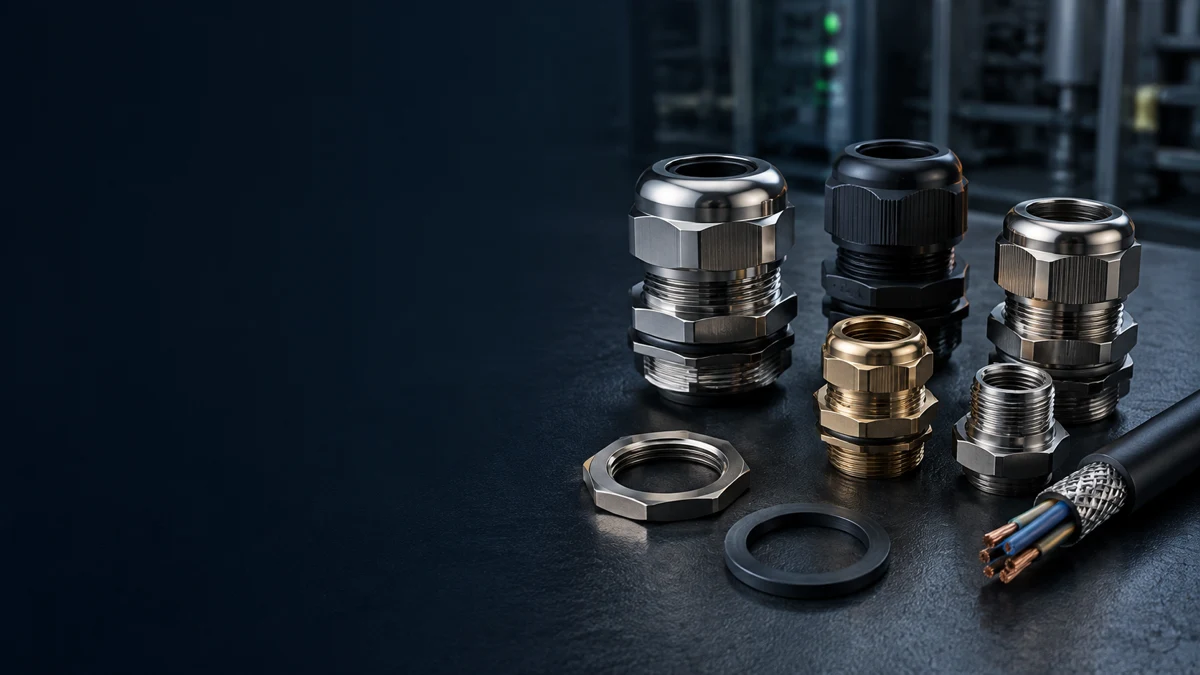
# 這些電纜密封接頭術語到底代表什麼？

> Source: https://chinacableglands.com/zh-hant/blog/what-do-all-these-cable-gland-terms-actually-mean/
> Language: zh-Hant
> Publisher: 倍拓電纜接頭
> Author: Edward Wang
> Published: 2026-02-19
> Updated: 2026-10-29

學習電纜密封接頭術語，掌握清楚的零件定義、M20 與電纜範圍示例、密封與保持功能，以及 IP、EMC、ATEX 和 IECEx 的實務指引。

<p><strong>電纜密封接頭術語描述電纜引入口的零件、尺寸與功能。</strong>我會依照電纜接觸設備的順序閱讀：電纜構造、電纜密封與夾持、安裝螺紋、外殼密封，接著是所需的電氣與環境功能。這個順序能把繁複的規格轉化為一連串具體的選擇。</p>
<p>例如，<strong>M20 × 1.5</strong> 表示安裝螺紋，而 <strong>7–10 mm 電纜範圍</strong>則表示特定接頭型式所接受的電纜直徑。<strong>壓帽</strong>操作電纜側機構；<strong>鎖緊螺帽</strong>固定通孔安裝。理解這些差異有助於挑選能互相配合的零件，並向供應商提出明確問題。</p>
<blockquote>
<p><strong>重點摘要</strong></p>
<ul>
<li>沿著組裝方向，從電纜外護套一路查看至外殼壁。</li>
<li>將引入口螺紋尺寸與電纜直徑範圍視為不同尺寸閱讀。</li>
<li>找出電纜密封件與外殼密封件，再辨識電纜保持及電氣路徑。</li>
<li>IP 用於侵入防護，EMC 指電磁相容性，而 Ex 標誌用於危險區域選型。</li>
<li>將材料與核准說明和確切的接頭型式及使用條件配對。</li>
</ul>
</blockquote>
<h2 id="read-a-specification-by-its-physical-functions">依實際功能閱讀規格</h2>
<p><strong>電纜密封接頭</strong>會形成電纜進入設備的引入口，並提供其構造所指定的功能，例如密封與電纜保持。<a href="https://webstore.iec.ch/en/publication/7034">IEC 62444:2010</a> 涵蓋完整供貨接頭的構造與性能。如需更廣泛的介紹，請參閱<a href="/zh-hant/blog/what-is-a-cable-gland-your-complete-guide-to-understanding-cable-glands-and-their-applications/">完整電纜密封接頭指南</a>。</p>
<p>我會將規格拆分為六個欄位。每個欄位都指向不同的選型部分：產品名稱用來辨識組件，尺寸用來確認配合，額定值則描述適用條件下的性能。將這些欄位合併閱讀，比把冗長的產品名稱視為不可拆分的整體描述更有用。</p>
<table>
<thead>
<tr>
<th>欄位</th>
<th>常見術語</th>
<th>如何運用</th>
</tr>
</thead>
<tbody>
<tr>
<td>產品身分</td>
<td>電纜密封接頭、電纜固定接頭、轉接頭、封堵塞</td>
<td>找出確切型號與組裝圖面</td>
</tr>
<tr>
<td>實體零件</td>
<td>本體、壓帽、嵌件、鎖緊螺帽、墊圈</td>
<td>辨識各零件及其位置</td>
</tr>
<tr>
<td>功能</td>
<td>密封、保持、應力釋放、鎧裝夾持、等電位連接</td>
<td>將所需功能指派給相關介面</td>
</tr>
<tr>
<td>尺寸</td>
<td>引入口螺紋、電纜範圍、螺紋長度、壁厚</td>
<td>將電纜與外殼條件和接頭圖面比較</td>
</tr>
<tr>
<td>性能</td>
<td>IP 代碼、保持等級、轉移阻抗</td>
<td>依標示條件檢視所選配置</td>
</tr>
<tr>
<td>核准與市場途徑</td>
<td>Ex 標誌、ATEX、IECEx</td>
<td>將產品與用途配對至適用文件</td>
</tr>
</tbody>
</table>
<p><strong>電纜固定接頭</strong>是在某些市場用來指稱電纜引入與夾持產品的術語。這個名稱在日常用法上與電纜密封接頭有所重疊，但確切功能仍由相關產品標準或產品登錄界定。比較報價時，我會將電纜類型、安裝介面、密封與保持要求一併列出，不論產品使用哪個名稱。</p>
<figure>
<img alt="無品牌標示的電纜密封接頭本體、配件及已準備好的電纜，排列作為術語參考" src="/images/blog/what-do-all-these-cable-gland-terms-actually-mean/cable-gland-terminology-workbench.webp" srcset="/images/blog/what-do-all-these-cable-gland-terms-actually-mean/cable-gland-terminology-workbench.webp 1200w" sizes="(max-width: 760px) 100vw, 760px" width="1200" height="675" loading="lazy" decoding="async" />
<figcaption>金屬與深色本體的電纜密封接頭旁，放著一個鬆開的鎖緊螺帽、環形密封件，以及一條露出編織層與導體的電纜。</figcaption>
</figure>
<h2 id="cable-gland-parts-from-the-cable-to-the-panel">從電纜到面板認識電纜密封接頭零件</h2>
<p><strong>本體</strong>是主要結構件，承載安裝介面並支撐密封或夾持元件。<strong>壓帽</strong>在許多設計中也稱為帽螺帽或壓縮螺帽；鎖緊時，它會操作電纜周圍的機構。</p>
<p><strong>密封嵌件</strong>是會變形並接觸電纜外護套的元件。視構造而定，可能由另一個元件提供夾持力，也可能由同一組構造同時執行密封與夾持。我會先查看剖面圖上的電纜接觸表面，再辨識哪個零件形成密封、哪個零件阻止移動。</p>
<p>在外殼處，<strong>引入口密封件</strong>會封住接頭與面板之間的介面。它可能是安裝於溝槽中的 O 形環、肩部下方的密封墊圈，或該引入口指定的其他配置。<strong>密封座面</strong>是密封件就位的表面；接頭安裝時，其表面狀況、平面度與尺寸都很重要。</p>
<p><strong>鎖緊螺帽</strong>通常將接頭固定在無螺紋引入口孔的背面。它的作用與電纜側壓帽不同。在攻牙孔中，接頭的外螺紋引入口會與外殼的內螺紋接合；是否使用鎖緊螺帽，取決於允許的安裝方式。</p>
<table>
<thead>
<tr>
<th>零件或配件</th>
<th>在組裝中的作用</th>
<th>有用的選型細節</th>
</tr>
</thead>
<tbody>
<tr>
<td>本體</td>
<td>接頭的主要結構與安裝介面</td>
<td>材料、引入口螺紋、長度及支援的內部零件</td>
</tr>
<tr>
<td>壓帽</td>
<td>操作電纜側機構</td>
<td>鎖緊指示，以及相配的本體／嵌件</td>
</tr>
<tr>
<td>密封嵌件</td>
<td>接觸電纜外護套，形成電纜密封</td>
<td>電纜形狀、直徑範圍與材料相容性</td>
</tr>
<tr>
<td>引入口墊圈或 O 形環</td>
<td>密封接頭與外殼之間的介面</td>
<td>座面幾何形狀、材料與安裝後的壓縮量</td>
</tr>
<tr>
<td>鎖緊螺帽</td>
<td>固定適當的通孔安裝</td>
<td>螺紋配合、有效接合長度與背面操作空間</td>
</tr>
<tr>
<td>接地片</td>
<td>等電位連接配置中使用的導電配件</td>
<td>接觸表面與指定的電氣路徑</td>
</tr>
<tr>
<td>護罩</td>
<td>部分接頭系統使用的外部護罩</td>
<td>預定的防護功能與檢查可及性</td>
</tr>
</tbody>
</table>
<p>零件名稱與構造各不相同。更換零件時，我會依照零件圖確認確切的本體、壓帽與嵌件組合，不會只因名稱相似就混用零件。<a href="/zh-hant/blog/the-engineers-guide-to-gland-accessories-locknuts-serrated-washers-and-shrouds/">電纜密封接頭配件指南</a>會進一步說明鎖緊螺帽、墊圈與接地片。</p>
<h2 id="how-do-sealing-retention-and-strain-relief-differ">密封、保持與應力釋放有何不同？</h2>
<p><strong>電纜密封</strong>可控制電纜周圍的侵入；<strong>引入口密封</strong>則控制接頭與外殼接合處的侵入。洩漏可能沿任一路徑發生，因此閱讀組裝圖或調查面板內部進水時，我會找出這兩處密封。</p>
<p><strong>電纜保持功能</strong>可抵抗電纜相對於接頭移動。<strong>應力釋放</strong>功能則在指定配置下管理傳至電纜端接處的機械負載。電纜支撐、彎曲情形及接頭的夾持構造都會影響負載路徑。請依電纜與用途選擇所需的保持性能，並以安裝時的支撐配置控制持續拉力或移動。</p>
<p><strong>鎧裝夾具</strong>會夾持電纜的<strong>鎧裝</strong>層。鎧裝是機械防護層；<strong>屏蔽層</strong>或<strong>遮蔽層</strong>則用於控制電磁耦合。某些電纜構造兼具不同作用，但僅憑名稱無法判定適用的接頭介面。<a href="/zh-hant/blog/armored-vs-unarmored-cable-glands-which-one-do-you-really-need/">鎧裝與非鎧裝電纜指南</a>說明電纜各層如何影響接頭選擇。</p>
<p><strong>保護性等電位連接</strong>會建立指定安全功能所需的電氣連接。金屬接頭、鎧裝端接或接地片都可能是該路徑的一部分。我會追查電纜、接頭、外殼與保護導體之間的完整路徑，再依電氣設計要求進行連接與驗證。EMC 屏蔽層端接的電氣功能不同，須採用各自適合的接觸配置。</p>
<figure class="blog-chart" style="container-type: inline-size;">
<svg xmlns="http://www.w3.org/2000/svg" viewBox="0 0 760 1234.38" role="img" aria-labelledby="cg-terms-title cg-terms-desc" style="font-family:var(--font-body); width: 100% !important; max-width: 100% !important; height: auto !important;" id="cg-typography-e26d39ddde41a584">
<title id="cg-terms-title">依實體介面理解電纜密封接頭術語</title>
<desc id="cg-terms-desc">三階段示意圖分開呈現電纜各層與接頭電纜側功能，接著展示分解的引入口介面。接頭本體位於壁面外側，引入口密封件位於其肩部與壁面之間；安裝螺紋朝內延伸，連接至另一側的鎖緊螺帽。</desc>
<defs>
<marker id="cg-terms-arrow" markerWidth="10" markerHeight="10" refX="9" refY="5" orient="auto">
<path d="M0 0L10 5L0 10Z" fill="var(--color-primary)"/>
</marker>
</defs>
<text x="380" y="42" text-anchor="middle" fill="var(--color-carbon)" font-size="40" font-weight="700">從電纜到外殼</text>
<text x="380" y="84.4107" text-anchor="middle" fill="var(--color-graphite)" font-size="32"><tspan x="380" dy="0">先查看電纜各層，</tspan><tspan x="380" dy="38">再查看兩個引入口介面。</tspan></text>
<rect x="48" y="152.411" width="664" height="264.643" rx="16" fill="var(--surface-card)" stroke="var(--color-primary)" stroke-width="3"/>
<text x="76" y="192.411" fill="var(--color-carbon)" font-size="34" font-weight="700">1. 電纜各層</text>
<circle cx="186" cy="281.732" r="62" fill="var(--color-graphite)"/>
<circle cx="186" cy="281.732" r="45" fill="var(--color-cloud)"/>
<circle cx="186" cy="281.732" r="30" fill="var(--color-ash)" stroke="var(--color-primary)" stroke-width="4" stroke-dasharray="8 6"/>
<circle cx="176" cy="268.411" r="8" fill="var(--color-primary)"/>
<circle cx="198" cy="290.732" r="8" fill="var(--color-primary)"/>
<text x="284" y="238.411" fill="var(--color-carbon)" font-size="32" font-weight="700">外護套</text>
<text x="284" y="270.411" fill="var(--color-graphite)" font-size="32">選配鎧裝層</text>
<text x="284" y="307.732" fill="var(--color-graphite)" font-size="32">內墊層與線芯</text>
<text x="284" y="345.054" fill="var(--color-graphite)" font-size="32"><tspan x="284" dy="0">讓這些層次</tspan><tspan x="284" dy="38">與電纜圖面相符。</tspan></text>
<line x1="380" y1="421.054" x2="380" y2="461.054" stroke="var(--color-primary)" stroke-width="4" marker-end="url(#cg-terms-arrow)"/>
<rect x="48" y="473.054" width="664" height="337.321" rx="16" fill="var(--surface-card)" stroke="var(--color-primary)" stroke-width="3"/>
<text x="76" y="513.054" fill="var(--color-carbon)" font-size="34" font-weight="700">2. 電纜側功能</text>
<path d="M88 615.054 H664" stroke="var(--color-graphite)" stroke-width="42" stroke-linecap="round"/>
<rect x="218" y="571.054" width="106" height="88" rx="20" fill="var(--color-ash)" stroke="var(--color-primary)" stroke-width="4"/>
<path d="M358 573.054 L416 597.054 V633.054 L358 657.054 Z" fill="var(--surface-card)" stroke="var(--color-primary)" stroke-width="4"/>
<rect x="466" y="569.054" width="78" height="92" rx="12" fill="var(--color-cloud)" stroke="var(--color-graphite)" stroke-width="3" stroke-dasharray="8 6"/>
<text x="150" y="687.054" text-anchor="middle" fill="var(--color-graphite)" font-size="32"><tspan x="150" dy="0">電纜 </tspan><tspan x="150" dy="28">外護套</tspan></text>
<text x="270" y="687.054" text-anchor="middle" fill="var(--color-carbon)" font-size="32" font-weight="700"><tspan x="270">電纜</tspan><tspan x="270" dy="34">密封件</tspan></text>
<text x="414" y="687.054" text-anchor="middle" fill="var(--color-carbon)" font-size="32" font-weight="700"><tspan x="414">電纜</tspan><tspan x="414" dy="34">夾持</tspan></text>
<path d="M505 661.054 L580 652.054" fill="none" stroke="var(--color-graphite)" stroke-width="2"/><text x="580" y="687.054" text-anchor="middle" fill="var(--color-graphite)" font-size="32"><tspan x="580">鎧裝</tspan><tspan x="580" dy="34">夾具*</tspan></text>
<text x="76" y="758.375" fill="var(--color-graphite)" font-size="32"><tspan x="76" dy="0">*鎧裝夾具視電纜構造而定。</tspan><tspan x="76" dy="38">另行辨識電氣路徑。</tspan></text>
<line x1="380" y1="814.375" x2="380" y2="854.375" stroke="var(--color-primary)" stroke-width="4" marker-end="url(#cg-terms-arrow)"/>
<rect x="48" y="866.375" width="664" height="244" rx="16" fill="var(--surface-card)" stroke="var(--color-primary)" stroke-width="3"/>
<text x="76" y="906.375" fill="var(--color-carbon)" font-size="34" font-weight="700">3. 引入口零件（分解圖）</text>
<path d="M92 990.375 H590" stroke="var(--color-graphite)" stroke-width="38" stroke-linecap="round"/>
<rect x="302" y="940.375" width="46" height="100" rx="4" fill="var(--surface-card)" stroke="var(--color-carbon)" stroke-width="5"/>
<path d="M314 952.375 V1028.38 M326 952.375 V1028.38 M338 952.375 V1028.38" stroke="var(--color-carbon)" stroke-width="2"/>
<rect x="278" y="950.375" width="22" height="80" rx="8" fill="var(--color-primary)"/>
<rect x="180" y="944.375" width="96" height="92" rx="14" fill="var(--surface-card)" stroke="var(--color-primary)" stroke-width="4"/>
<path d="M348 960.375 H510 M348 982.375 H510 M348 1004.38 H510 M348 1026.38 H510" stroke="var(--color-primary)" stroke-width="4"/>
<path d="M542 948.375 L590 966.375 V1014.38 L542 1032.38 L520 990.375 Z" fill="var(--color-ash)" stroke="var(--color-graphite)" stroke-width="3"/>
<path d="M289 1032.38 L235 1052.38" fill="none" stroke="var(--color-primary)" stroke-width="2"/>
<path d="M326 1042.38 L345 1052.38" fill="none" stroke="var(--color-primary)" stroke-width="2"/>
<path d="M472 1030.38 L470 1052.38" fill="none" stroke="var(--color-primary)" stroke-width="2"/>
<path d="M555 1034.38 L620 1052.38" fill="none" stroke="var(--color-primary)" stroke-width="2"/>
<text x="235" y="1067.38" text-anchor="middle" fill="var(--color-carbon)" font-size="32" font-weight="700"><tspan x="235">引入口</tspan><tspan x="235" dy="34">密封件</tspan></text>
<text x="345" y="1067.38" text-anchor="middle" fill="var(--color-carbon)" font-size="32" font-weight="700">壁面</text>
<text x="470" y="1067.38" text-anchor="middle" fill="var(--color-carbon)" font-size="32" font-weight="700"><tspan x="470">引入口</tspan><tspan x="470" dy="34">螺紋</tspan></text>
<text x="620" y="1067.38" text-anchor="middle" fill="var(--color-carbon)" font-size="32" font-weight="700"><tspan x="620">鎖緊螺帽</tspan></text>
<rect x="48" y="1132.38" width="664" height="82" rx="12" fill="var(--color-ash)" stroke="var(--color-primary)" stroke-width="3"/>
<text x="380" y="1161.38" text-anchor="middle" fill="var(--color-carbon)" font-size="32" font-weight="700"><tspan x="380" dy="0">型號圖面可確認 </tspan><tspan x="380" dy="38">零件順序與介面。</tspan></text>
</svg>
<figcaption>以概念示意圖呈現電纜各層與功能區域，再以分解圖展示引入口中的本體、引入口密封件、壁面、螺紋與鎖緊螺帽。</figcaption>
</figure>
<p><strong>單壓縮式</strong>與<strong>雙壓縮式</strong>是常見的產品系列描述。請依特定組裝圖確認密封區與夾持區的位置。對鎧裝電纜而言，尺寸可能包含外護套、鎧裝層下方的內墊層以及鎧裝層本身，且各介面有各自的可接受範圍。</p>
<p><strong>屏障式電纜密封接頭</strong>在其構造中使用指定的屏障元件或密封填料，常見於危險區域應用。安裝程序會界定電纜準備與屏障組裝方式。請依其防護概念、可接受的電纜構造及證書條件選擇確切型式。</p>
<h2 id="what-do-the-thread-and-size-markings-mean">螺紋與尺寸標記代表什麼？</h2>
<p><strong>引入口螺紋</strong>會將接頭連接至設備或轉接頭。<strong>電纜範圍</strong>則描述所選接頭與嵌件允許的電纜尺寸。<strong>螺紋長度</strong>與<strong>壁厚</strong>描述安裝層疊結構。我會將這些欄位分開記錄，即使型錄把它們放在同一列也一樣。</p>
<p>以 <strong>M20 × 1.5</strong> 為例，M 表示公制螺紋形式，20 是以毫米表示的公稱<strong>大徑</strong>，1.5 則是<strong>螺距</strong>。大徑是外螺紋牙頂之間的直徑；螺距是相鄰螺紋對應點的軸向間距。<a href="https://webstore.iec.ch/en/publication/2112">IEC 60423:2007</a> 規定導管螺紋及相關配件的尺寸要求。</p>
<p>對理想的單頭螺紋而言，每轉一圈會前進一個螺距。因此移動量為：</p>
<div class="article-math article-math-display" data-latex="a = nP"><span class="katex"><math xmlns="http://www.w3.org/1998/Math/MathML" display="block"><semantics><mrow><mi>a</mi><mo>=</mo><mi>n</mi><mi>P</mi></mrow><annotation encoding="application/x-tex">a = nP</annotation></semantics></math></span></div>
<p>此處，<span class="article-math article-math-inline" data-latex="a"><span class="katex"><math xmlns="http://www.w3.org/1998/Math/MathML"><semantics><mrow><mi>a</mi></mrow><annotation encoding="application/x-tex">a</annotation></semantics></math></span></span> 表示以毫米為單位的軸向移動量，<span class="article-math article-math-inline" data-latex="n"><span class="katex"><math xmlns="http://www.w3.org/1998/Math/MathML"><semantics><mrow><mi>n</mi></mrow><annotation encoding="application/x-tex">n</annotation></semantics></math></span></span> 為轉數，<span class="article-math article-math-inline" data-latex="P"><span class="katex"><math xmlns="http://www.w3.org/1998/Math/MathML"><semantics><mrow><mi>P</mi></mrow><annotation encoding="application/x-tex">P</annotation></semantics></math></span></span> 則表示每轉以毫米為單位的螺距。螺距為 1.5 mm 時，完整轉動四圈可產生 <span class="article-math article-math-inline" data-latex="a=4\times1.5=6\ \mathrm{mm}"><span class="katex"><math xmlns="http://www.w3.org/1998/Math/MathML"><semantics><mrow><mi>a</mi><mo>=</mo><mn>4</mn><mo>×</mo><mn>1.5</mn><mo>=</mo><mn>6</mn><mtext> </mtext><mrow><mi mathvariant="normal">m</mi><mi mathvariant="normal">m</mi></mrow></mrow><annotation encoding="application/x-tex">a=4\times1.5=6\ \mathrm{mm}</annotation></semantics></math></span></span> 的理想移動量。半圈為 0.75 mm。這項幾何計算描述沿軸線的移動；實際就位與鎖緊指示決定組裝後的接合狀態。</p>
<p><a class="article-tool-card article-tool-card-link" href="/zh-hant/resource-center/tools/metric-thread-pitch-turns-calculator/" aria-label="公制螺紋螺距與圈數計算器"><span class="article-tool-card-index">工具</span><span class="article-tool-card-kicker">螺紋與引入口幾何尺寸</span><strong class="article-tool-card-title">公制螺紋螺距與圈數計算器</strong><span class="article-tool-card-copy">輸入已核實的公制單頭螺紋螺距及軸向移動量，即可計算轉數與旋轉角度。以本例而言，1.5 mm 螺距與 6 mm 移動量可得四圈；有效螺紋接合長度與鎖緊方式仍應分別確認。</span><span class="article-tool-card-formula">N = L / P; θ = 360° × N</span><span class="article-tool-card-inputs" aria-label="計算器輸入項目"><em>螺距</em><em>所需軸向移動距離</em></span><span class="article-tool-card-action">開啟計算器 <span aria-hidden="true">-&gt;</span></span></a></p><p><strong>螺紋接合長度</strong>是公、母螺紋實際互相接合的部分。<strong>螺紋退尾段</strong>是完整螺紋牙型末端附近的過渡區。墊圈、接地片或厚面板可能占用部分可用安裝長度，因此須在完整堆疊配置完成後檢查有效接合長度。</p>
<p><strong>NPT</strong> 是 National Pipe Taper（美制錐管螺紋）的縮寫，屬於英制錐管螺紋系統。<a href="https://www.asme.org/codes-standards/find-codes-standards/b1201-pipe-threads-general-purpose-inch">ASME B1.20.1</a> 涵蓋其尺寸與<strong>量規檢驗</strong>，以及相關管螺紋形式。量規檢驗會使用適當的量規與方法，確認螺紋符合指定幾何形狀。</p>
<p><strong>PG</strong> 是既有設備與型錄中可見的另一種螺紋標示。公制、PG 與 NPT 各自需要相配的介面。比較公稱數字前，我會先辨識螺紋系統與標示；不同系統中接近的直徑並不代表螺紋相配。</p>
<p><strong>轉接頭</strong>提供兩種指定介面。<strong>縮徑轉接頭</strong>是一種轉接頭，用來將較小的接頭介面連接至較大的接收介面，但仍須依產品的命名慣例判定。訂購時請明確記錄公端與母端。<a href="/zh-hant/blog/how-to-master-cable-gland-thread-conversion-between-npt-pg-and-metric-systems/">公制、PG 與 NPT 螺紋指南</a>會進一步說明配對方式。</p>
<h2 id="why-can-two-m20-glands-accept-different-cables">為何兩個 M20 接頭可接納不同電纜？</h2>
<p>安裝螺紋與電纜側開口屬於不同介面。兩個接頭可以共用 M20 × 1.5 螺紋，但採用不同的密封嵌件、夾持零件與電纜範圍。<a href="/zh-hant/blog/what-does-m20-cable-gland-actually-mean-a-spec-breakdown/">M20 規格指南</a>說明這項標示；電纜資料與確切型式則決定是否配合。</p>
<p>假設某圓形電纜的標示外徑為 9.8 mm，公差為 ±0.3 mm，其尺寸範圍為 9.5–10.1 mm。假設兩款候選接頭都具有所需的 M20 × 1.5 引入口：A 的電纜範圍為 7–10 mm，B 為 9–12 mm。這些是示意範圍，並非 Bepto 產品規格。</p>
<table>
<thead>
<tr>
<th>尺寸檢查</th>
<th>候選 A：7–10 mm</th>
<th>候選 B：9–12 mm</th>
</tr>
</thead>
<tbody>
<tr>
<td>電纜公稱直徑，9.8 mm</td>
<td>在範圍內</td>
<td>在範圍內</td>
</tr>
<tr>
<td>電纜最小直徑，9.5 mm</td>
<td>高於下限 2.5 mm</td>
<td>高於下限 0.5 mm</td>
</tr>
<tr>
<td>電纜最大直徑，10.1 mm</td>
<td>超出上限 0.1 mm</td>
<td>低於上限 1.9 mm</td>
</tr>
<tr>
<td>完整標示範圍的判定</td>
<td>需要不同範圍或型式</td>
<td>繼續檢查其餘電纜與組裝條件</td>
</tr>
</tbody>
</table>
<p>根據我對這兩款假設候選接頭的分析，螺紋與電纜公稱直徑使兩者都能列入候選，但電纜公差會排除 A。B 可涵蓋完整尺寸範圍。接著我會檢查護套材料、圓度、所需夾持與密封性能，以及任何鎧裝或屏蔽介面。加強鎖緊 A 並不能擴大其標示的電纜範圍。</p>
<p>對於開設無螺紋孔的面板，還要區分<strong>間隙孔</strong>與<strong>攻牙孔</strong>。間隙孔允許外螺紋穿過，以採用指定的固定配置；攻牙孔則具有相配的內螺紋。請參閱<a href="/zh-hant/blog/how-to-select-the-correct-entry-hole-size-for-your-cable-gland/">引入口孔指南</a>，選擇孔型、密封座面與配件堆疊配置。</p>
<h2 id="what-do-ip-and-emc-mean-on-a-gland-datasheet">接頭資料表中的 IP 與 EMC 代表什麼？</h2>
<p><strong>IP 代碼</strong>分類外殼對危險部位接近、固體異物與水的防護。<a href="https://webstore.iec.ch/en/publication/2452">IEC 60529</a> 是相關分類標準。第一位特徵數字涉及接近危險部位與固體異物；第二位涉及水。X 表示尚未指定相應的數字。</p>
<p>用於浸水時，請將深度、持續時間及安裝條件與標示的分類一併查閱。若用於噴水或沖洗，請採用適用的水測試要求。我會將電纜、密封與安裝配置和所選接頭的條件比較，再檢查完整外殼邊界。<a href="/zh-hant/blog/ip-rating-chart-explained-how-do-you-choose-the-right-ingress-protection-level-for-your-cable-glands/">IP 防護等級指南</a>涵蓋各個代碼數值。</p>
<p><strong>EMI</strong> 是電磁干擾。<strong>EMC</strong> 是電磁相容性：設備應能在電磁環境中正常運作，同時控制其產生的干擾。<strong>EMC 接頭</strong>採用特定構造，旨在引入口處端接屏蔽層或維持屏蔽連續性。</p>
<p><strong>轉移阻抗</strong>描述屏蔽介面一側的電流，與依指定量測配置耦合至另一側的電壓之間的關係。<strong>屏蔽衰減</strong>則以比值表達屏蔽性能，通常以分貝表示。兩項結果都須連同頻率與測試配置閱讀。</p>
<p><a href="https://webstore.iec.ch/en/publication/67390">IEC 62153-4-10:2015+A1:2020</a> 說明用於穿牆件與電磁墊片的雙同軸方法。若評估接頭，請確認量測涵蓋的屏蔽接觸幾何形狀與電纜構造。環向編織層接觸與較長的排流線連接會形成不同的實際電流路徑，因此我會檢查預定端接方式，而不會只根據 EMC 標示選擇。</p>
<h2 id="how-do-ex-atex-and-iecex-relate-to-one-another">Ex、ATEX 與 IECEx 之間有何關係？</h2>
<p><strong>Ex</strong> 指與爆炸性環境相關的設備或安裝事項。完整標示提供選型細節：防護概念、設備組別、氣體或粉塵組別、溫度資訊、設備保護等級，以及適用條件。證書與說明文件會將這些欄位連結至特定產品。</p>
<p><strong>設備保護等級（EPL）</strong>描述相關 Ex 標準所指定的保護等級。<strong>溫度等級</strong>是氣體環境設備標示所使用的溫度分類；粉塵設備則可標示最高表面溫度。<strong>環境溫度範圍</strong>描述設備涵蓋的周遭溫度條件。將接頭與安裝條件配對時，請把這些欄位分開閱讀。</p>
<p><a href="https://webstore.iec.ch/en/publication/66049">IEC 60079-14:2024</a> 涵蓋其範圍內 Ex 設備的電氣安裝設計、選擇、安裝與初始檢查。我會依安裝現場的危險區域要求，確認所需標示及允許的電纜引入配置。<a href="/zh-hant/blog/how-do-you-choose-the-perfect-cable-gland-for-hazardous-area-applications/">危險區域選型指南</a>會進一步說明這些判斷。</p>
<p><strong>ATEX</strong> 在設備選型中通常指 Directive 2014/34/EU 下的歐盟架構。<a href="https://single-market-economy.ec.europa.eu/sectors/mechanical-engineering/equipment-potentially-explosive-atmospheres-atex_en">European Commission 設備指引</a>說明，將涵蓋產品投放至歐盟市場所須遵循的基本要求與符合性程序。</p>
<p><strong>IECEx</strong> 是國際符合性評鑑制度。其<a href="https://www.iecex.com/certified-equipment-scheme/overview/">認證設備制度</a>採用獨立的產品評鑑、製造品質評鑑及線上證書系統。在相關文件中，<strong>ExTR</strong> 表示 Ex 測試報告，<strong>QAR</strong> 表示品質評鑑報告。</p>
<table>
<thead>
<tr>
<th>術語</th>
<th>選型時的意義</th>
</tr>
</thead>
<tbody>
<tr>
<td>Ex 標示</td>
<td>該設備特定的技術防護資訊</td>
</tr>
<tr>
<td>ATEX 設備途徑</td>
<td>適用的歐盟法律與符合性要求</td>
</tr>
<tr>
<td>IECEx 證書</td>
<td>特定產品與範圍的國際制度紀錄</td>
</tr>
<tr>
<td>證書附表</td>
<td>與證書相關的產品細節、型式及條件</td>
</tr>
<tr>
<td>特殊使用條件</td>
<td>預定安裝中必須納入的條件</td>
</tr>
</tbody>
</table>
<p>先確認目的地與專案要求，再將確切接頭型式、標示與安裝方式配對至相關紀錄。ATEX 與 IECEx 可能採用相關標準，但兩者的文件與市場角色仍各不相同。</p>
<h2 id="material-and-manufacturing-vocabulary">材料與製造用語</h2>
<p><strong>黃銅</strong>、<strong>不鏽鋼</strong>與<strong>聚醯胺</strong>代表廣泛的材料類別。<strong>鍍鎳黃銅</strong>是指以黃銅為基材、表面覆有鎳層。<strong>彈性體</strong>是用於密封件等可變形零件的橡膠狀材料；<strong>EPDM</strong> 是乙烯丙烯二烯橡膠。</p>
<p>採購時，應將材料類別名稱展開為零件所需的材料資訊。我會確認合金或聚合物牌號、密封材料、表面處理與使用條件。因耐腐蝕性而選用的本體，與為化學相容性而選用的密封件，分別處理引入口暴露情況的不同部分。</p>
<table>
<thead>
<tr>
<th>描述中的用語</th>
<th>意義</th>
<th>接著確認的細節</th>
</tr>
</thead>
<tbody>
<tr>
<td>基材</td>
<td>塗層下方的材料</td>
<td>基礎合金與材料狀態</td>
</tr>
<tr>
<td>材料狀態</td>
<td>加工後形成的材料狀態</td>
<td>零件指定的狀態</td>
</tr>
<tr>
<td>硬度</td>
<td>以指定壓痕方法量測的抗力</td>
<td>方法、尺度與允許範圍</td>
</tr>
<tr>
<td>孔隙率</td>
<td>材料中的孔洞，或塗層中評估的不連續處</td>
<td>位置、方法與允收準則</td>
</tr>
<tr>
<td>CNC 加工</td>
<td>以電腦控制加工成形</td>
<td>圖面尺寸、公差與表面粗糙度</td>
</tr>
<tr>
<td>壓鑄、鍛造或射出成型</td>
<td>製造製程名稱</td>
<td>適用的材料與成品要求</td>
</tr>
</tbody>
</table>
<p>對於「耐化學性」或「耐紫外線」等描述，請確認暴露條件以及須維持的性能。前者可由化學物質種類、濃度、溫度及接觸時間界定；後者則須確認紫外線暴露與評估的材料性能。這能讓供應商清楚掌握要求，也有助於比較不同供應商的描述。</p>
<h2 id="turn-the-terms-into-a-useful-order-line">將術語整理成實用的訂購明細</h2>
<p>例如，<code>M20 × 1.5, 電纜 7–10 mm, IP68, EMC, ATEX</code> 這樣的明細，包含數種不同選擇。我會將它展開為明確型號與工作所需的介面。這樣日後評估替代品時，每個欄位的依據都仍清楚可見。</p>
<p>先確認電纜構造與完整尺寸範圍，再補上外殼螺紋孔或間隙孔配置、壁厚、可用螺紋接合長度及密封座面。接著辨識引入口必須執行的電纜密封、保持、鎧裝、屏蔽與等電位連接功能。</p>
<p>最後列出材料與溫度要求、相關侵入條件，以及所需的 Ex 核准途徑。請在組裝參考資料中列出指定密封件、鎖緊螺帽、轉接頭與其他配件。未使用的孔需要適當的<strong>封堵塞</strong>；封堵塞是針對該引入口及其所需性能另行選擇的封閉件。</p>
<p>可採用以下實用格式：</p>
<p><code>型號與型式 | 電纜構造與範圍 | 引入口介面與安裝方式 | 所需功能 | 材料與使用條件 | 適用的額定值與核准紀錄 | 配件</code></p>
<p>更換零件時，請將每個欄位與已安裝的配置比較。M20 螺紋即使不變，也可能配上不同的電纜嵌件、密封材料、螺紋長度或屏蔽接觸方式。逐欄比較可指出接受替代品前須注意哪些實際功能。</p>
<h2 id="conclusion">結論</h2>
<p>我會沿著電纜進入外殼的路徑閱讀電纜密封接頭術語。先確認電纜各層、密封件與夾持方式，再配對安裝螺紋、外殼密封與固定零件。最後補上所需的電氣功能、暴露條件與核准途徑，完成選型。</p>
<p>實例說明了這一點的重要性：兩個 M20 接頭可以配合同一安裝介面，但只有一個能接納電纜的完整直徑範圍。清楚的術語能將這項差異轉化為可執行的產品選擇。</p>
<h2 id="faqs-about-cable-gland-terms">電纜密封接頭術語常見問題</h2>
<h3 id="are-cable-gland-and-cord-grip-the-same-thing">電纜密封接頭與電纜固定接頭是同一種東西嗎？</h3>
<p>兩者在日常用法上可能重疊。請確認相關產品標準或產品登錄所指定的功能與構造，再比較電纜類型、安裝方式、密封與保持。比較以不同地區名稱銷售的產品時，我會使用這些欄位。</p>
<h3 id="does-m20-mean-a-gland-accepts-a-20-mm-cable">M20 代表接頭可接納直徑 20 mm 的電纜嗎？</h3>
<p>M20 表示公制引入口螺紋的公稱直徑。M20 × 1.5 中的螺距為 1.5 mm。可接受的電纜範圍取決於確切的接頭與密封嵌件，因此應另行查閱，並納入電纜的尺寸公差。</p>
<h3 id="what-is-the-difference-between-a-locknut-and-a-compression-nut">鎖緊螺帽與壓縮螺帽有何不同？</h3>
<p>鎖緊螺帽通常用於將接頭固定在外殼的適當通孔安裝位置。壓縮螺帽或壓帽則操作電纜側的密封或夾持機構。請依確切組裝圖面與鎖緊指示配對兩者。</p>
<h3 id="how-should-i-interpret-ip68-on-a-cable-gland">如何解讀電纜密封接頭上的 IP68？</h3>
<p>請將標示的浸水條件與所需電纜、安裝方式及配件一併閱讀。將其與應用的深度、持續時間及暴露條件比較，再檢查完整外殼配置。若用於噴水或沖洗，請另採用適用的水測試要求。</p>
<h3 id="what-is-the-difference-between-atex-and-iecex">ATEX 與 IECEx 有何不同？</h3>
<p>ATEX 設備要求涉及 Directive 2014/34/EU 下的歐盟法律與符合性途徑。IECEx 是國際符合性評鑑制度，具有產品證書與線上紀錄。先確認目的地市場所需途徑，再核實特定產品及其條件。</p>
<h3 id="sources-and-technical-references">來源與技術參考資料</h3>
<ul>
<li><a href="https://webstore.iec.ch/en/publication/7034">IEC 62444:2010 — 電氣裝置用電纜密封接頭</a>，查閱日期：2026-10-29。</li>
<li><a href="https://webstore.iec.ch/en/publication/2112">IEC 60423:2007 — 導管與配件的導管尺寸及螺紋</a>，查閱日期：2026-10-29。</li>
<li><a href="https://www.asme.org/codes-standards/find-codes-standards/b1201-pipe-threads-general-purpose-inch">ASME B1.20.1 — 一般用途英制管螺紋</a>，查閱日期：2026-10-29。</li>
<li><a href="https://webstore.iec.ch/en/publication/2452">IEC 60529 — 外殼提供的防護等級</a>，查閱日期：2026-10-29。</li>
<li><a href="https://webstore.iec.ch/en/publication/67390">IEC 62153-4-10:2015+A1:2020 — 貫通件與電磁墊片的轉移阻抗及屏蔽衰減</a>，查閱日期：2026-10-29。</li>
<li><a href="https://webstore.iec.ch/en/publication/66049">IEC 60079-14:2024 — Ex 電氣安裝的設計、選擇、安裝與初始檢查</a>，查閱日期：2026-10-29。</li>
<li><a href="https://single-market-economy.ec.europa.eu/sectors/mechanical-engineering/equipment-potentially-explosive-atmospheres-atex_en">歐盟執行委員會 — 可能爆炸性環境用設備（ATEX）</a>，查閱日期：2026-10-29。</li>
<li><a href="https://www.iecex.com/certified-equipment-scheme/overview/">IECEx — 認證設備計畫概覽</a>，查閱日期：2026-10-29。</li>
</ul>
