# 電纜密封接頭經常見工業溶劑曝露後的性能

> Source: https://chinacableglands.com/zh-hant/blog/the-performance-of-cable-glands-after-exposure-to-common-industrial-solvents/
> Language: zh-Hant
> Publisher: 倍拓電纜接頭
> Author: Victor Huang
> Published: 2026-02-26
> Updated: 2026-10-29

了解工業溶劑如何影響電纜密封接頭的密封件、外護套與接合處，並查看濕態與回復後的計算範例，以及完整進線組件的性能檢查。

<p>溶劑曝露後<strong>電纜密封接頭的性能</strong>，取決於密封件、電纜外護套、接頭本體與安裝介面的變化。即使金屬本體外觀未變，膨潤、軟化、龜裂或材料流失仍可能影響密封及電纜夾持。我會先確認流體可接觸到的部件，再比較曝露前、接觸後不久及回復後的部件狀態與完整組裝進線組件的各項功能。</p>
<blockquote>
<p><strong>重點摘要</strong></p>
<ul>
<li>確認實際的溶劑混合物，以及其接觸電纜密封接頭的方式。</li>
<li>除接頭本體外，也要檢查密封件、電纜外護套、墊圈、塗層與螺紋處理。</li>
<li>比較濕態與已定義的回復狀態；兩者差異可能影響運作與重新啟動。</li>
<li>以材料測試說明變化，再檢查完整進線組件的必要功能。</li>
<li>清潔劑變更時，應依新配方與接觸條件重新進行比較。</li>
</ul>
</blockquote>
<h2 id="how-solvents-change-the-working-interfaces">溶劑如何改變作用介面</h2>
<p><strong>溶劑吸收</strong>是液體進入材料的過程。對聚合物密封件或電纜護套而言，這可能改變其尺寸與剛性。<strong>抽出</strong>則是可溶性成分從材料中移除。吸收與抽出可能在同一次曝露中同時發生，因此僅看淨質量變化，無法判斷哪一種過程占主導。</p>
<p>對受壓密封件而言，膨潤會改變材料占據可用空間的程度。軟化則可能改變密封件受載時的變形方式。乾燥後，流體流失及任何被抽出的成分可能使厚度或硬度不同。其影響取決於配方、曝露與幾何形狀；濕態與回復後狀態都可能重要。</p>
<p>我會將每項觀察結果與零件的功能連結：</p>
<table>
<thead>
<tr>
<th>觀察結果</th>
<th>對進線部位可能造成的影響</th>
<th>應檢查的功能</th>
</tr>
</thead>
<tbody>
<tr>
<td>密封件膨潤或軟化</td>
<td>改變密封腔內材料的狀態及其受壓反應</td>
<td>密封、電纜夾持與密封件位置</td>
</tr>
<tr>
<td>電纜外護套軟化、膨潤或龜裂</td>
<td>改變密封件及夾持部位作用的表面</td>
<td>電纜固定與面向電纜的密封</td>
</tr>
<tr>
<td>塑膠本體或蓋帽龜裂</td>
<td>可能降低螺紋或結構完整性</td>
<td>閉合、安裝與固定</td>
</tr>
<tr>
<td>塗層剝離或金屬腐蝕</td>
<td>可能影響密封面、螺紋或導電接合部</td>
<td>進線處密封、可維護性及指定的等電位連接</td>
</tr>
<tr>
<td>黏著劑或填充膠變化</td>
<td>可能干擾黏結或填充介面</td>
<td>該配方材料所負責的功能</td>
</tr>
</tbody>
</table>
<p>受到組裝應力的聚合物，反應可能不同於未受應力的試件。若龜裂是可能的失效途徑，鎖緊的螺紋、成型應力及受載固定的電纜都值得留意。<a href="https://store.astm.org/standards/d543">ASTM D543-21</a>除浸泡及濕敷或擦拭等塑膠試驗方式外，也包括在施加應變下曝露於試劑的測試。</p>
<h2 id="start-with-the-cleaner-formulation-and-contact-pattern">先確認清潔劑配方與接觸型態</h2>
<p>「除油劑」或「電氣清潔劑」等名稱描述的是用途，不代表單一化學物質。異丙醇、丙酮、烴類混合物及配方型水性清潔劑，接觸同一電纜密封接頭時可能有非常不同的方式。我會先確認實際產品、稀釋比例及污染物，再比較材料選項。</p>
<p>使用清潔劑配方與接觸型態來定義材料比較條件：</p>
<table>
<thead>
<tr>
<th>清潔劑或製程流體說明</th>
<th>應確認的細節</th>
<th>有用的比較項目</th>
</tr>
</thead>
<tbody>
<tr>
<td>酒精清潔劑，例如 IPA/水混合液</td>
<td>酒精濃度、水分比例、添加劑與擦拭方式</td>
<td>濕態，以及實際乾燥間隔後的狀態</td>
</tr>
<tr>
<td>酮類溶劑，例如丙酮或 MEK</td>
<td>確切溶劑或混合物、溫度及接觸時間</td>
<td>密封件、電纜護套及受應力塑膠零件的反應</td>
</tr>
<tr>
<td>烴類除油劑</td>
<td>具名配方、成分混合物及任何循環使用的製程殘留物</td>
<td>各受液體潤濕的聚合物，以及塗層或接合表面的變化</td>
</tr>
<tr>
<td>以水稀釋的配方型清潔劑</td>
<td>稀釋比例、相關時的 pH、添加劑、沖洗方式及殘留物</td>
<td>完整的清潔／沖洗循環，以及接合部內殘留的液體</td>
</tr>
<tr>
<td>混合製程液體洩漏</td>
<td>實際混合物及可能的污染物</td>
<td>洩漏物組成及其在進線處可能停留的時間</td>
</tr>
</tbody>
</table>
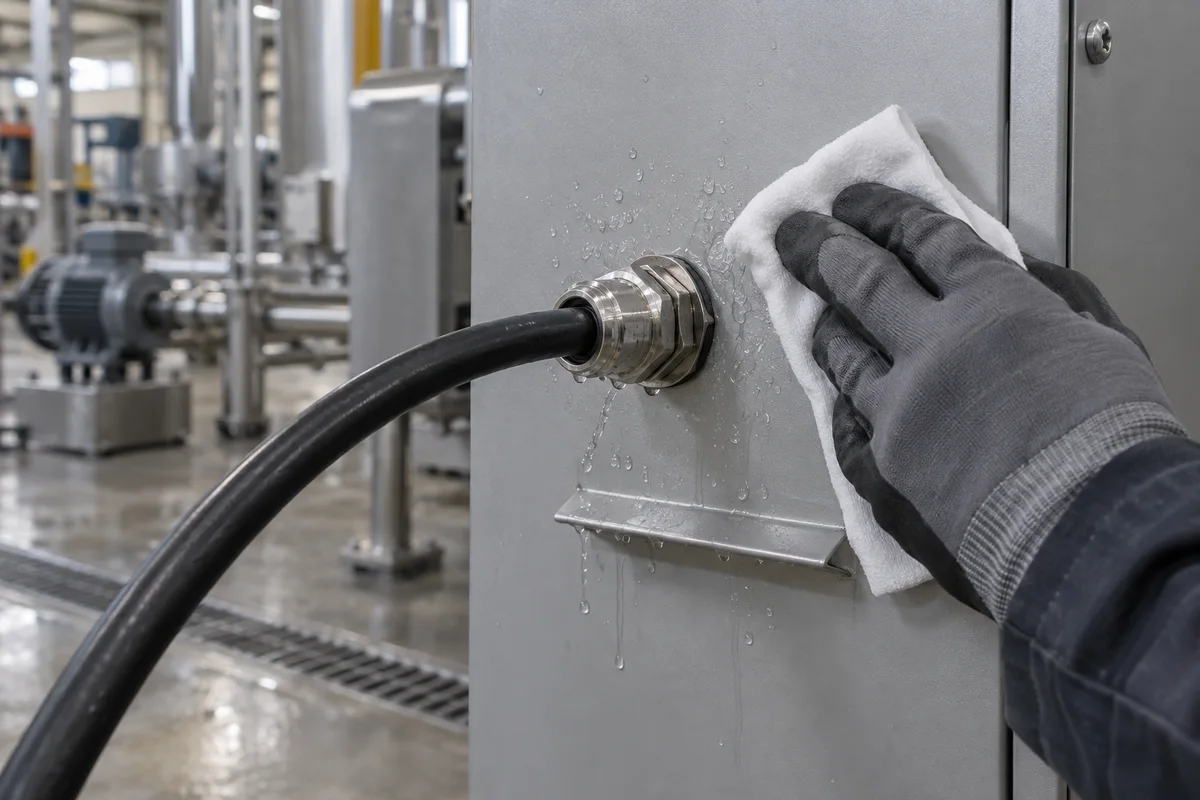
<p>外殼表面看似乾燥後，液體仍可能停留在墊圈後方或蓋帽內。蒸氣、短暫擦拭、反覆飛濺與連續浸泡所接觸的部位及持續時間各不相同。比較時應納入溫度、排液、乾燥間隔及電纜負載。</p>
<figure class="blog-chart">
<img alt="戴手套的手正在擦拭工業外殼面板外側的液體，旁邊安裝著金屬電纜密封接頭及黑色電纜。" src="/images/blog/the-performance-of-cable-glands-after-exposure-to-common-industrial-solvents/field-wipe-contact.webp" srcset="/images/blog/the-performance-of-cable-glands-after-exposure-to-common-industrial-solvents/field-wipe-contact-600.webp 600w, /images/blog/the-performance-of-cable-glands-after-exposure-to-common-industrial-solvents/field-wipe-contact.webp 1200w" sizes="(max-width: 720px) 100vw, 1200px" width="1200" height="800" loading="lazy" decoding="async" />
<figcaption>戴手套的手正在擦拭外殼面板，液滴則聚集在已安裝的密封接頭周圍。</figcaption>
</figure>
<p><a href="https://webstore.iec.ch/en/publication/63034">IEC 60068-2-74:1999+AMD1:2018</a> 提供意外接觸情境的液體污染測試架構。其範圍不包括證明產品適用於連續接觸液體。測試應符合實際使用事件；若實際用途為浸泡，則應採用連續接觸評估。</p>
<p>準備曝露測試時，請依流體的安全資料及廠區化學品處理程序操作。若必須拆開接合部或測試電氣功能，也需要適當的隔離措施與測試安排。</p>
<h2 id="inspect-every-part-reached-by-the-fluid">檢查流體可到達的每個部件</h2>
<p>可見的本體只是電纜進線組件的一部分。即使不鏽鋼或鍍層金屬本體外觀完整，其密封件、電纜外護套或安裝墊圈仍可能發生變化。我會先追蹤流體從外殼表面到電纜與進線接合部的路徑，再決定要比較哪些試件。</p>
<table>
<thead>
<tr>
<th>位置</th>
<th>評估時納入</th>
<th>重要原因</th>
</tr>
</thead>
<tbody>
<tr>
<td>接頭本體與蓋帽</td>
<td>確切聚合物或合金、表面處理及受載螺紋</td>
<td>龜裂、變形、腐蝕或難以閉合</td>
</tr>
<tr>
<td>電纜密封件</td>
<td>實際配方、硫化狀態、尺寸及受壓狀態</td>
<td>與電纜護套接觸及可用的密封空間</td>
</tr>
<tr>
<td>電纜護套</td>
<td>實際電纜結構、護套材料、外徑及表面</td>
<td>電纜密封接頭會密封並夾持此表面</td>
</tr>
<tr>
<td>面板進線處</td>
<td>墊圈或 O 形環、螺紋處理、塗層及貼合面</td>
<td>液體滯留及另一條獨立洩漏路徑</td>
</tr>
<tr>
<td>鎧裝或屏蔽接點</td>
<td>金屬、表面處理、接觸壓力及殘留物</td>
<td>夾持力及任何必要的電氣連接</td>
</tr>
<tr>
<td>填充或黏結部位</td>
<td>具名的密封／填充／黏著材料配方、固化狀態及允許的清潔方式</td>
<td>黏結或阻隔功能的完整性</td>
</tr>
</tbody>
</table>
<p><a href="/zh-hant/blog/which-cable-gland-materials-provide-the-best-chemical-resistance/">化學耐受性指南</a>有助於初步篩選材料。將確切的材料配方與表面處理納入組件比較。即使兩個密封件都標示為 EPDM、矽膠或其他同一材料族群，其配方與生產歷史仍可能不同。</p>
<figure class="blog-chart">
<img alt="實驗室工作檯上有已安裝的電纜密封接頭、分開放置的零散試樣、帶蓋玻璃罐、卡尺、托盤及空白紙張。" src="/images/blog/the-performance-of-cable-glands-after-exposure-to-common-industrial-solvents/controlled-solvent-exposure-evaluation.webp" srcset="/images/blog/the-performance-of-cable-glands-after-exposure-to-common-industrial-solvents/controlled-solvent-exposure-evaluation.webp 1200w" sizes="(max-width: 760px) 100vw, 760px" width="1200" height="675" loading="lazy" decoding="async" />
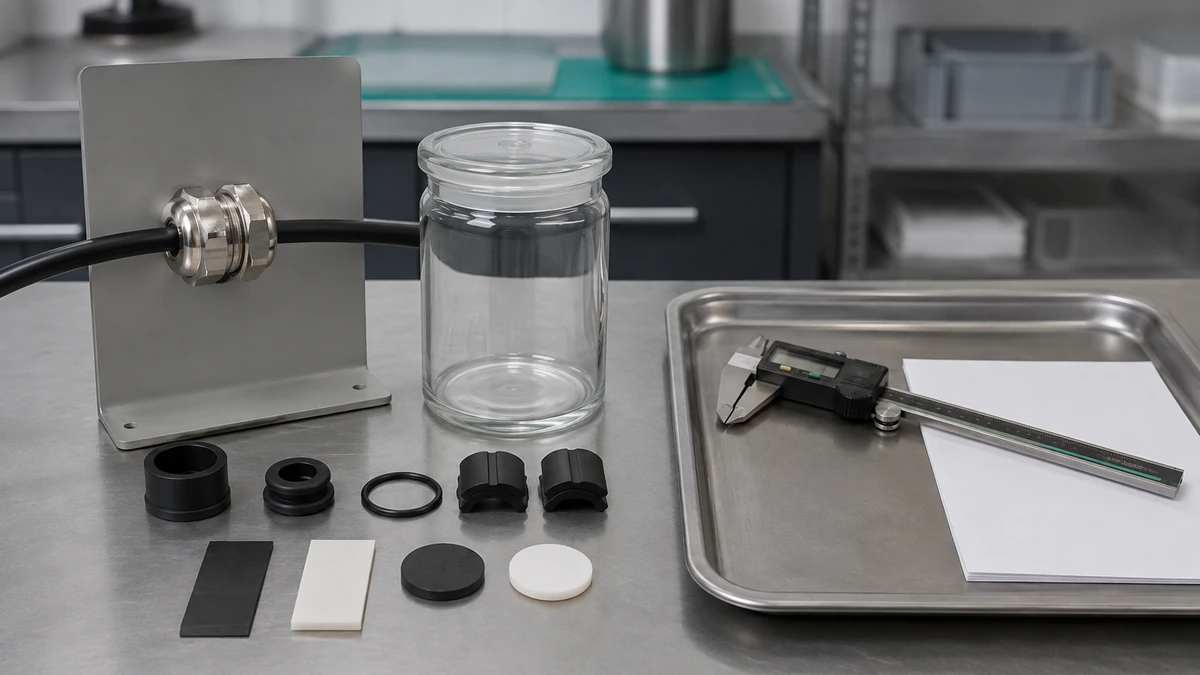
<figcaption>實驗室工作檯上排列著已安裝的電纜引入口、分開的試樣、帶蓋玻璃容器、卡尺及空白紙張。</figcaption>
</figure>
<h2 id="use-material-measurements-to-explain-the-response">用材料量測結果說明反應</h2>
<p><strong>材料相容性</strong>是指已識別試件在指定流體與曝露條件下的反應。<strong>完整組件性能</strong>則是指整個進線組件是否仍能執行必要功能。前者有助於說明後者，尤其在隱藏的密封件或電纜護套主導結果時。</p>
<p>使用能代表實際生產材料的試件。未曝露對照件應採用可比較的處理與調理條件，藉此區分量測漂移或儲存影響與流體影響。若要與標準片材或試片比較，零件幾何形狀及受載狀態也很重要。</p>
<figure class="blog-chart">
<picture>
<source media="(max-width: 640px)" srcset="/images/blog/the-performance-of-cable-glands-after-exposure-to-common-industrial-solvents/segregated-specimen-carrier-loading-600.webp" type="image/webp">
<img alt="開啟的曝露試驗箱內有一個由軌條支撐的載具，分開的治具中放置密封元件、金屬電纜密封接頭及一段電纜護套。" src="/images/blog/the-performance-of-cable-glands-after-exposure-to-common-industrial-solvents/segregated-specimen-carrier-loading.webp" width="1200" height="800" loading="lazy" decoding="async" />
</picture>
<figcaption>分開的治具固定密封件、接頭本體及一段電纜，載具再送入開啟的試驗箱。</figcaption>
</figure>
<table>
<thead>
<tr>
<th>材料或零件</th>
<th>相關方法</th>
<th>量測結果可說明的內容</th>
</tr>
</thead>
<tbody>
<tr>
<td>塑膠本體、蓋帽或護套試件</td>
<td>ASTM D543-21</td>
<td>在選定曝露與應力條件下，質量、尺寸、外觀及機械性質的變化</td>
</tr>
<tr>
<td>橡膠密封件或墊圈</td>
<td><a href="https://store.astm.org/standards/d471">ASTM D471-16a(2021)</a></td>
<td>液體對質量、體積、尺寸、硬度及機械性質的影響</td>
</tr>
<tr>
<td>金屬本體、墊圈或試片</td>
<td><a href="https://store.astm.org/standards/g31">ASTM G31-21(2025)</a></td>
<td>浸泡腐蝕比較，尤其是質量損失；需定義溶液、溫度、時間及處理方式</td>
</tr>
</tbody>
</table>
<p>橡膠測試應將淨質量變化與抽出的材料質量分開。對塑膠而言，若零件安裝後受載，應納入應力條件。金屬則除了寬廣表面，也要檢查關鍵螺紋與接觸位置。ASTM G31不包括對局部腐蝕及環境助長裂紋的特定評估；若相關，應使用適當的其他方法調查這些機制。</p>
<p>依安裝情況採用確切的試劑與曝露方式。嚴苛的初步篩選可以排除不適合的候選材料；具代表性的組件比較則可確認所選零件是否能共同運作。記錄方法與試件層級，讓電纜、密封件或清潔劑變更時仍可參考結果。</p>
<h2 id="compare-baseline-wet-state-and-recovery">比較基準狀態、濕態與回復後狀態</h2>
<p><strong>曝露後狀態</strong>是指試件依指定方式排液或擦拭，並經過量測延遲時間後的狀態。<strong>回復後狀態</strong>是指經過定義的時間、氣氛、溫度及任何允許的清潔後所處的狀態。液體揮發或材料在移除後持續變化時，這些條件有助於比較結果。</p>
<p>我會在測試前設定順序：</p>
<ol>
<li>量測調理後的基準值，並保留匹配的未曝露對照件。</li>
<li>施加指定的流體接觸、溫度、時間與負載。</li>
<li>依選定方式排液或擦拭，並在指定延遲時間後量測。</li>
<li>在定義的條件下回復，再重複相關量測。</li>
<li>依使用要求的狀態比較完整進線組件的功能。</li>
</ol>
<p>檢查尺寸時，應使用相同的基準面及儀器接觸力。軟質密封件可能在量測端頭下變形，因此接觸力不同可能看起來像材料變化。請記錄試件取出後經過的時間，因為處理期間液體快速流失可能改變讀值。</p>
<figure class="blog-chart">
<picture>
<source media="(max-width: 640px)" srcset="/images/blog/the-performance-of-cable-glands-after-exposure-to-common-industrial-solvents/finished-seal-thickness-comparator-600.webp" type="image/webp">
<img alt="顯示空白的厚度比較儀，其接觸腳抵住成品電纜密封接頭的密封件；相符的對照密封件置於另一個托架中。" src="/images/blog/the-performance-of-cable-glands-after-exposure-to-common-industrial-solvents/finished-seal-thickness-comparator.webp" width="1200" height="800" loading="lazy" decoding="async" />
</picture>
<figcaption>比較儀的接觸端會在已界定的表面接觸完成品密封件，配對對照樣品則留在另一個托架中。</figcaption>
</figure>
<h3 id="worked-example-mass-gain-followed-by-a-net-loss">計算示例：質量先增加，之後淨損失</h3>
<p>以一個假設的密封件試件為例，其基準質量為 5.00 g。經過指定曝露、排液及量測延遲時間後，質量為 5.30 g。指定回復期間後，質量為 4.90 g。假設匹配的未曝露對照件保持穩定，且全程採用相同處理方式。</p>
<p>原始值 <span class="article-math article-math-inline" data-latex="x_0"><span class="katex"><math xmlns="http://www.w3.org/1998/Math/MathML"><semantics><mrow><msub><mi>x</mi><mn>0</mn></msub></mrow><annotation encoding="application/x-tex">x_0</annotation></semantics></math></span></span> 與後續值 <span class="article-math article-math-inline" data-latex="x_1"><span class="katex"><math xmlns="http://www.w3.org/1998/Math/MathML"><semantics><mrow><msub><mi>x</mi><mn>1</mn></msub></mrow><annotation encoding="application/x-tex">x_1</annotation></semantics></math></span></span> 的帶正負號百分比變化為：</p>
<div class="article-math article-math-display" data-latex="\Delta x_{\%}=100\frac{x_1-x_0}{x_0}"><span class="katex"><math xmlns="http://www.w3.org/1998/Math/MathML" display="block"><semantics><mrow><mi mathvariant="normal">Δ</mi><msub><mi>x</mi><mi mathvariant="normal">%</mi></msub><mo>=</mo><mn>100</mn><mfrac><mrow><msub><mi>x</mi><mn>1</mn></msub><mo>−</mo><msub><mi>x</mi><mn>0</mn></msub></mrow><msub><mi>x</mi><mn>0</mn></msub></mfrac></mrow><annotation encoding="application/x-tex">\Delta x_{\%}=100\frac{x_1-x_0}{x_0}</annotation></semantics></math></span></div>
<table>
<thead>
<tr>
<th>量測狀態</th>
<th>質量</th>
<th>相對 5.00 g 基準值的變化</th>
</tr>
</thead>
<tbody>
<tr>
<td>基線</td>
<td>5.00 g</td>
<td>0%</td>
</tr>
<tr>
<td>曝露後</td>
<td>5.30 g</td>
<td>+6.0%</td>
</tr>
<tr>
<td>回復後</td>
<td>4.90 g</td>
<td>−2.0%</td>
</tr>
</tbody>
</table>
<p>濕態結果為 100 × (5.30 − 5.00) / 5.00 = +6.0%。回復後結果為 −2.0%，並未完全回到基準值。在將變化歸因於抽出前，我會先調查材料流失與處理方式的影響。另行量測抽出量有助於區分這些原因。</p>
<p>此示例也說明質量增加不等於體積膨潤。質量反映吸收與流失的淨平衡；尺寸與體積必須另行量測。這兩種結果都無法單獨證明密封件的接觸壓力或洩漏性能。</p>
<figure class="blog-chart" style="container-type: inline-size;">
<svg xmlns="http://www.w3.org/2000/svg" viewBox="0 0 560 1120" role="img" aria-labelledby="solvent-lanes-title solvent-lanes-desc" style="font-family:var(--font-body); width: 100% !important; max-width: 100% !important; height: auto !important;" id="cg-typography-c99db547ad82fbe5">
<style>
#cg-typography-c99db547ad82fbe5 { --svg-body-screen: 17px; }
@media (max-width: 760px) { #cg-typography-c99db547ad82fbe5 { --svg-body-screen: 16px; } }
</style>
<title id="solvent-lanes-title">追蹤溶劑曝露後的材料與電纜進線變化</title>
<desc id="solvent-lanes-desc">比較矩陣將基準、曝露後、回復及判定階段，與材料觀察及完整電纜進線功能配對。</desc>
<text x="280" y="51" text-anchor="middle" fill="var(--color-carbon)" font-size="34" font-weight="700" style="font-size: calc(22px * 560px / 100cqw) !important;">溶劑曝露後</text>
<text x="280" y="91" text-anchor="middle" fill="var(--color-graphite)" font-size="27" style="font-size: calc(var(--svg-body-screen) * 560px / 100cqw) !important;">追蹤材料與組件變化</text>
<rect x="28" y="120" width="504" height="132" rx="16" fill="var(--surface-card)" stroke="var(--color-primary)" stroke-width="3"/>
<text x="52" y="161" fill="var(--color-carbon)" font-size="27" font-weight="700" style="font-size: calc(18px * 560px / 100cqw) !important;">配合實際曝露條件</text>
<text x="52" y="198" fill="var(--color-graphite)" font-size="22" style="font-size: calc(var(--svg-body-screen) * 560px / 100cqw) !important;">液體 · 濃度 · 溫度</text>
<text x="52" y="230" fill="var(--color-graphite)" font-size="22" style="font-size: calc(var(--svg-body-screen) * 560px / 100cqw) !important;">方式 · 時間 · 負荷 · 排液</text>
<text x="40" y="307" fill="var(--color-carbon)" font-size="25" font-weight="700" style="font-size: calc(18px * 560px / 100cqw) !important;">狀態</text>
<text x="174" y="307" fill="var(--color-carbon)" font-size="25" font-weight="700" style="font-size: calc(18px * 560px / 100cqw) !important;">材料</text>
<text x="356" y="307" fill="var(--color-carbon)" font-size="25" font-weight="700" style="font-size: calc(18px * 560px / 100cqw) !important;">組件</text>
<rect x="28" y="326" width="504" height="704" rx="14" fill="var(--surface-card)" stroke="var(--color-graphite)" stroke-width="3"/>
<path d="M158 326V1030M340 326V1030M28 502H532M28 678H532M28 854H532" fill="none" stroke="var(--color-graphite)" stroke-width="3"/>
<text x="40" y="378" fill="var(--color-carbon)" font-size="23" font-weight="700" style="font-size: calc(18px * 560px / 100cqw) !important;">基線</text>
<text x="174" y="373" fill="var(--color-carbon)" font-size="23" font-weight="700" style="font-size: calc(18px * 560px / 100cqw) !important;">初始狀態</text>
<text x="174" y="410" fill="var(--color-carbon)" font-size="22" style="font-size: calc(var(--svg-body-screen) * 560px / 100cqw) !important;">記錄初始</text>
<text x="174" y="442" fill="var(--color-carbon)" font-size="22" style="font-size: calc(var(--svg-body-screen) * 560px / 100cqw) !important;">特性</text>
<text x="356" y="373" fill="var(--color-carbon)" font-size="23" font-weight="700" style="font-size: calc(18px * 560px / 100cqw) !important;">電纜進線</text>
<text x="356" y="410" fill="var(--color-carbon)" font-size="22" style="font-size: calc(16px * 560px / 100cqw) !important;">電纜 + 面板</text>
<text x="356" y="442" fill="var(--color-carbon)" font-size="22" style="font-size: calc(var(--svg-body-screen) * 560px / 100cqw) !important;">測試功能</text>
<text x="40" y="553" fill="var(--color-carbon)" font-size="23" font-weight="700" style="font-size: calc(18px * 560px / 100cqw) !important;">曝露後</text>
<text x="40" y="583" fill="var(--color-carbon)" font-size="23" font-weight="700" style="font-size: calc(18px * 560px / 100cqw) !important;">原態</text>
<text x="174" y="549" fill="var(--color-carbon)" font-size="23" font-weight="700" style="font-size: calc(18px * 560px / 100cqw) !important;">排液／擦拭</text>
<text x="174" y="586" fill="var(--color-carbon)" font-size="22" style="font-size: calc(var(--svg-body-screen) * 560px / 100cqw) !important;">記錄每次</text>
<text x="174" y="618" fill="var(--color-carbon)" font-size="22" style="font-size: calc(var(--svg-body-screen) * 560px / 100cqw) !important;">量測時間</text>
<text x="356" y="549" fill="var(--color-carbon)" font-size="23" font-weight="700" style="font-size: calc(18px * 560px / 100cqw) !important;">濕態</text>
<text x="356" y="586" fill="var(--color-carbon)" font-size="22" style="font-size: calc(var(--svg-body-screen) * 560px / 100cqw) !important;">測試功能</text>
<text x="356" y="618" fill="var(--color-carbon)" font-size="22" style="font-size: calc(var(--svg-body-screen) * 560px / 100cqw) !important;">使用期間</text>
<text x="40" y="730" fill="var(--color-carbon)" font-size="22" font-weight="700" style="font-size: calc(18px * 560px / 100cqw) !important;">回復</text>
<text x="174" y="725" fill="var(--color-carbon)" font-size="23" font-weight="700" style="font-size: calc(var(--svg-body-screen) * 560px / 100cqw) !important;">界定時間</text>
<text x="174" y="762" fill="var(--color-carbon)" font-size="22" style="font-size: calc(var(--svg-body-screen) * 560px / 100cqw) !important;">記錄處理</text>
<text x="174" y="794" fill="var(--color-carbon)" font-size="22" style="font-size: calc(var(--svg-body-screen) * 560px / 100cqw) !important;">重新量測</text>
<text x="356" y="725" fill="var(--color-carbon)" font-size="23" font-weight="700" style="font-size: calc(var(--svg-body-screen) * 560px / 100cqw) !important;">重複檢查</text>
<text x="356" y="762" fill="var(--color-carbon)" font-size="22" style="font-size: calc(var(--svg-body-screen) * 560px / 100cqw) !important;">經過相同</text>
<text x="356" y="794" fill="var(--color-carbon)" font-size="22" style="font-size: calc(var(--svg-body-screen) * 560px / 100cqw) !important;">回復時間</text>
<text x="40" y="906" fill="var(--color-carbon)" font-size="23" font-weight="700" style="font-size: calc(18px * 560px / 100cqw) !important;">判定</text>
<text x="174" y="901" fill="var(--color-carbon)" font-size="23" font-weight="700" style="font-size: calc(18px * 560px / 100cqw) !important;">性質</text>
<text x="174" y="938" fill="var(--color-carbon)" font-size="22" style="font-size: calc(var(--svg-body-screen) * 560px / 100cqw) !important;">比較</text>
<text x="356" y="901" fill="var(--color-carbon)" font-size="23" font-weight="700" style="font-size: calc(18px * 560px / 100cqw) !important;">結果</text>
<text x="356" y="938" fill="var(--color-carbon)" font-size="22" style="font-size: calc(var(--svg-body-screen) * 560px / 100cqw) !important;">對照</text>
<text x="356" y="970" fill="var(--color-carbon)" font-size="22" style="font-size: calc(var(--svg-body-screen) * 560px / 100cqw) !important;">設定限值</text>
<text x="280" y="1072" text-anchor="middle" fill="var(--color-carbon)" font-size="24" font-weight="700" style="font-size: calc(var(--svg-body-screen) * 560px / 100cqw) !important;">維持曝露條件與時間安排</text>
<text x="280" y="1104" text-anchor="middle" fill="var(--color-carbon)" font-size="24" font-weight="700" style="font-size: calc(var(--svg-body-screen) * 560px / 100cqw) !important;">供每次比較使用。</text>
</svg>
<figcaption>曝露前、接觸後不久，以及指定回復期間後，均比較材料狀態與電纜進線功能。</figcaption>
</figure>
<h2 id="connect-dimensional-change-to-the-seal-geometry">將尺寸變化與密封件幾何形狀連結起來</h2>
<p>密封件自由尺寸的變化可能改變材料在電纜、接頭本體與壓緊部件之間的貼合方式。其影響取決於空腔及受力配置。我會先將量測狀態與該幾何形狀相互比較，再判斷哪些完整電纜進線功能需要特別留意。</p>
<h3 id="worked-example-a-fixed-gap-flat-gasket">計算範例：固定間隙平墊片</h3>
<p>以簡化的假設案例說明：一片平墊片夾在剛性平行面之間，間隙固定為 3.20 mm。假設其自由厚度在基準狀態為 4.00 mm、曝露後為 4.20 mm、回復後為 3.92 mm。這些是示意性的厚度量測值，與質量範例分開。各狀態下的自由厚度均以相同的受控方法量測。</p>
<p>自由厚度 <span class="article-math article-math-inline" data-latex="t"><span class="katex"><math xmlns="http://www.w3.org/1998/Math/MathML"><semantics><mrow><mi>t</mi></mrow><annotation encoding="application/x-tex">t</annotation></semantics></math></span></span> 與固定的安裝間隙 <span class="article-math article-math-inline" data-latex="g"><span class="katex"><math xmlns="http://www.w3.org/1998/Math/MathML"><semantics><mrow><mi>g</mi></mrow><annotation encoding="application/x-tex">g</annotation></semantics></math></span></span> 已知時，幾何壓縮率為：</p>
<div class="article-math article-math-display" data-latex="C=100\frac{t-g}{t}"><span class="katex"><math xmlns="http://www.w3.org/1998/Math/MathML" display="block"><semantics><mrow><mi>C</mi><mo>=</mo><mn>100</mn><mfrac><mrow><mi>t</mi><mo>−</mo><mi>g</mi></mrow><mi>t</mi></mfrac></mrow><annotation encoding="application/x-tex">C=100\frac{t-g}{t}</annotation></semantics></math></span></div>
<table>
<thead>
<tr>
<th>狀態</th>
<th>自由厚度</th>
<th>3.20 mm 間隙下的厚度減少量</th>
<th>幾何壓縮率</th>
</tr>
</thead>
<tbody>
<tr>
<td>基線</td>
<td>4.00 mm</td>
<td>0.80 mm</td>
<td>20.0%</td>
</tr>
<tr>
<td>曝露後</td>
<td>4.20 mm</td>
<td>1.00 mm</td>
<td>23.8%</td>
</tr>
<tr>
<td>回復後</td>
<td>3.92 mm</td>
<td>0.72 mm</td>
<td>18.4%</td>
</tr>
</tbody>
</table>
<p>在這個假設的幾何配置中，我發現濕態與回復後狀態的壓縮率變化方向相反。濕態計算為 100 × 1.00 / 4.20 = 23.8%；回復後則為 100 × 0.72 / 3.92 = 18.4%。剛性、形狀及接觸狀態的變化，還可能進一步影響實際密封件。</p>
<p><a class="article-tool-card article-tool-card-link" href="/zh-hant/resource-center/tools/gasket-compression-calculator/" aria-label="墊片壓縮計算器"><span class="article-tool-card-index">工具</span><span class="article-tool-card-kicker">密封幾何尺寸</span><strong class="article-tool-card-title">墊片壓縮計算器</strong><span class="article-tool-card-copy">以固定間隙範例為例，將 4.00、4.20 及 3.92 mm 的自由厚度與相同的 3.20 mm 安裝間隙比較。結果描述幾何關係，不代表接觸壓力或合格限值。</span><span class="article-tool-card-formula">c = (t0 − t1) / t0 × 100%</span><span class="article-tool-card-inputs" aria-label="計算器輸入項目"><em>墊片自由厚度</em><em>墊片安裝後厚度</em></span><span class="article-tool-card-action">開啟計算器 <span aria-hidden="true">-&gt;</span></span></a></p><p>這個平墊片模型有助於說明安裝密封。電纜密封接頭的錐形嵌件具有不同且受限的幾何形狀，因此應依其實際設計與量測值判斷。無論採用哪一種配置，都應在相關狀態下進行所需的密封與電纜固定檢查。</p>
<h2 id="recheck-the-complete-entrys-functions">重新檢查完整電纜進線組件的功能</h2>
<p><a href="https://webstore.iec.ch/en/publication/7034">IEC 62444:2010</a> 涵蓋完整電纜密封接頭的結構與性能。因此，若結論涉及密封或電纜固定，曝露後的比較應使用所選接頭，並搭配指定的電纜與進線配置。納入會影響載荷或洩漏路徑的配件。</p>
<p>曝露前後進行比較時，應維持相同的組裝方法與電纜條件。未計畫的拆卸、新增潤滑劑或額外鎖緊，都可能改變接合處，並掩蓋正在調查的反應。若方法要求拆除或重新組裝，應將其納入已界定的比較程序。</p>
<table>
<thead>
<tr>
<th>功能</th>
<th>相關曝露狀態下的檢查項目</th>
</tr>
</thead>
<tbody>
<tr>
<td>電纜側密封件</td>
<td>在實際外護套、直徑及組裝配置下，確認規定的洩漏或侵入防護結果</td>
</tr>
<tr>
<td>電纜固定</td>
<td>以曝露過的電纜與接頭確認規定的載荷或位移反應</td>
</tr>
<tr>
<td>面板進線密封</td>
<td>墊圈或 O 型環的貼合、塗層狀態及進線處的洩漏路徑</td>
</tr>
<tr>
<td>機械完整性</td>
<td>裂紋、變形、螺紋、扳手平面、零件位置及安裝穩固性</td>
</tr>
<tr>
<td>指定電氣功能</td>
<td>沿預定路徑確認規定的等電位連接、導通或屏蔽層接觸結果</td>
</tr>
</tbody>
</table>
<p>若設備在表面潮濕時運轉，應納入該使用狀態。若設備在清潔與乾燥期間後重新啟動，則應納入相應的回復後狀態。接頭本體外觀沒有變化，無法排除進線組件其他位置隱藏的密封件、電纜外護套或塗層問題。<a href="/zh-hant/blog/what-is-iec-62444-standard-and-why-does-it-matter-for-cable-gland-selection/">IEC 62444 選型指南</a>說明完整產品的範圍。</p>
<h2 id="choose-the-response-from-the-observed-failure-path">根據觀察到的失效路徑選擇應對方式</h2>
<p>決定應變更哪些項目時，我會一併考量材料觀察結果與功能測試結果。實用的結果應針對限制性能的介面提出具體應對方式，例如改用不同的密封件配方、採用核准的清潔配方，或調整路徑以避免液體積聚在接合處。</p>
<table>
<thead>
<tr>
<th>綜合結果</th>
<th>實務應對方向</th>
</tr>
</thead>
<tbody>
<tr>
<td>密封件發生變化且洩漏增加</td>
<td>檢視密封件配方、電纜表面、曝露條件及壓縮配置。</td>
</tr>
<tr>
<td>外護套發生變化且電纜固定力下降</td>
<td>重新評估電纜外護套與接頭的搭配；單獨更換接頭本體材料無法解決外護套問題。</td>
</tr>
<tr>
<td>接頭本體完好，但進線處墊圈劣化</td>
<td>選用相容的墊圈，或修訂允許採用的清潔方式。</td>
</tr>
<tr>
<td>回復後的性質改善，但濕態功能不合格</td>
<td>降低或避免運轉時接觸液體，或選擇適用於該狀態的組裝配置。</td>
</tr>
<tr>
<td>外觀穩定，但某項功能劣化</td>
<td>使用相關功能檢查，追查隱藏的接觸或洩漏路徑。</td>
</tr>
<tr>
<td>所有規定功能均維持可接受</td>
<td>規定清潔與維護方式時，沿用已測試的組合及曝露條件。</td>
</tr>
</tbody>
</table>
<p><a href="/zh-hant/blog/epdm-vs-silicone-seals-which-material-delivers-superior-cable-gland-performance-in-your-application/">EPDM 與矽膠密封件比較</a>有助於對照這兩類材料。遇到溶劑問題時，應將選擇範圍縮小至確切的配方與接觸條件。更換材料時，也需要接頭製造商核准的密封件配置。</p>
<p>在可行時，應從源頭控制曝露：依指示使用允許的清潔劑，避免液體積聚在進線接合處，並維持預定的排液方式。在整批已安裝設備上採用新的清潔方法前，先確認其適用性。若發生意外溢漏，應遵循現場應變程序，並在受影響設備恢復使用前評估受液體潤濕的零件。</p>
<h2 id="use-repeated-exposure-to-assess-the-service-duty">以重複曝露評估使用工況</h2>
<p>單次擦拭、一次溢漏及重複清潔循環可能造成不同結果。應使潤濕時間、溫度、乾燥間隔及機械載荷符合所評估的工況。延長比較時，應觀察材料變化與完整電纜進線功能兩方面的趨勢，不要只依賴最後一張照片。</p>
<p>估算使用壽命時，<a href="https://www.itl.nist.gov/div898/handbook/apr/section1/apr14.htm">NIST 物理加速模型</a>要求加速條件與使用條件產生相同的失效機制。不同機制可能具有不同的加速因子。較高溫度或持續浸泡可能改變主導過程，因此需有合理依據將這些結果與實際使用狀況連結。</p>
<p>若嚴苛試驗的目的在比較候選材料，我會將其用於此用途。日曆壽命估算還需要經驗證的應力－壽命關係及適當的長期證據。<a href="/zh-hant/blog/cable-gland-durability-testing-a-head-to-head-comparison-simulating-10-years-of-industrial-use/">加速耐久試驗指南</a>說明這項不同的工作。</p>
<h2 id="conclusion">結論</h2>
<p>溶劑曝露可能經由密封件、電纜外護套、接頭本體、塗層或安裝接合處改變電纜密封接頭的性能。我會確認實際流體與接觸模式，比較材料的濕態及回復後狀態，再檢查完整進線組件的規定功能。</p>
<p>這些範例說明為何必須將各步驟一併考量：濕態下增加的質量可能在回復後變成質量損失，而同一固定密封間隙在曝露後可能產生不同的幾何壓縮率。利用這些觀察結果找出限制性能的介面，並選擇相容的材料、組裝配置或清潔方式。</p>
<h2 id="faqs-about-cable-gland-performance-after-solvent-exposure">電纜密封接頭溶劑曝露後性能常見問題</h2>
<h3 id="can-a-chemical-resistance-chart-establish-the-glands-ip-performance">耐化學性對照表能否確立電纜密封接頭的 IP 性能？</h3>
<p>對照表有助於初步篩選材料對某種流體的適用性。完整進線組件的密封效果也取決於密封件、電纜外護套、安裝接合處及組裝方式。應在代表性曝露後，針對指定配置檢查規定的侵入防護功能。</p>
<h3 id="should-an-occasional-wipe-be-tested-by-immersion">偶爾擦拭是否應以浸泡方式測試？</h3>
<p>選擇能代表實際作業的接觸方式。擦拭或潑濺會涉及排液與乾燥，而持續浸泡可能不會呈現這些過程。浸泡可作為另一種嚴苛的初步篩選方式；但使用狀況比較應維持實際接觸模式與溫度。</p>
<h3 id="does-swelling-mean-the-seal-has-failed">膨潤是否代表密封件已失效？</h3>
<p>膨潤會改變材料的尺寸與貼合情形。其功能影響取決於膨潤幅度、幾何形狀、剛性及受壓狀態。量測變化後，應在相關濕態及回復後條件下，檢查完整組件的密封與電纜固定功能。</p>
<h3 id="when-should-post-exposure-measurements-be-taken">曝露後應何時量測？</h3>
<p>試驗前先界定基準狀態、排液或擦拭方式、量測延遲時間及回復期間。應採用可比較的溫度、處理方式與量測力。否則，快速蒸發及材料持續變化可能使不同試件的讀數難以比較。</p>
<h3 id="can-an-accelerated-solvent-test-predict-service-life">加速溶劑試驗能否預測使用壽命？</h3>
<p>壽命估算需要有合理依據的試驗與使用條件關聯，該關聯須維持主導失效機制，並具備驗證資料及不確定度評估。即使不指定日曆壽命，比較性曝露試驗仍可協助選擇材料與清潔方式。</p>
<h3 id="sources-and-technical-references">資料來源與技術參考</h3>
<ul>
<li><a href="https://store.astm.org/standards/d543">ASTM D543-21 — 塑膠耐化學試劑評估</a>，查閱日期：2026-10-29。</li>
<li><a href="https://webstore.iec.ch/en/publication/63034">IEC 60068-2-74:1999+AMD1:2018 CSV — 試驗 Xc：液體污染</a>，查閱日期：2026-10-29。</li>
<li><a href="https://store.astm.org/standards/d471">ASTM D471-16a(2021) — 橡膠性質：液體的影響</a>，查閱日期：2026-10-29。</li>
<li><a href="https://store.astm.org/standards/g31">ASTM G31-21(2025) — 金屬實驗室浸泡腐蝕試驗</a>，查閱日期：2026-10-29。</li>
<li><a href="https://webstore.iec.ch/en/publication/7034">IEC 62444:2010 — 電氣裝置用電纜密封接頭</a>，查閱日期：2026-10-29。</li>
<li><a href="https://www.itl.nist.gov/div898/handbook/apr/section1/apr14.htm">NIST Engineering Statistics Handbook — 物理加速模型</a>，查閱日期：2026-10-29。</li>
</ul>