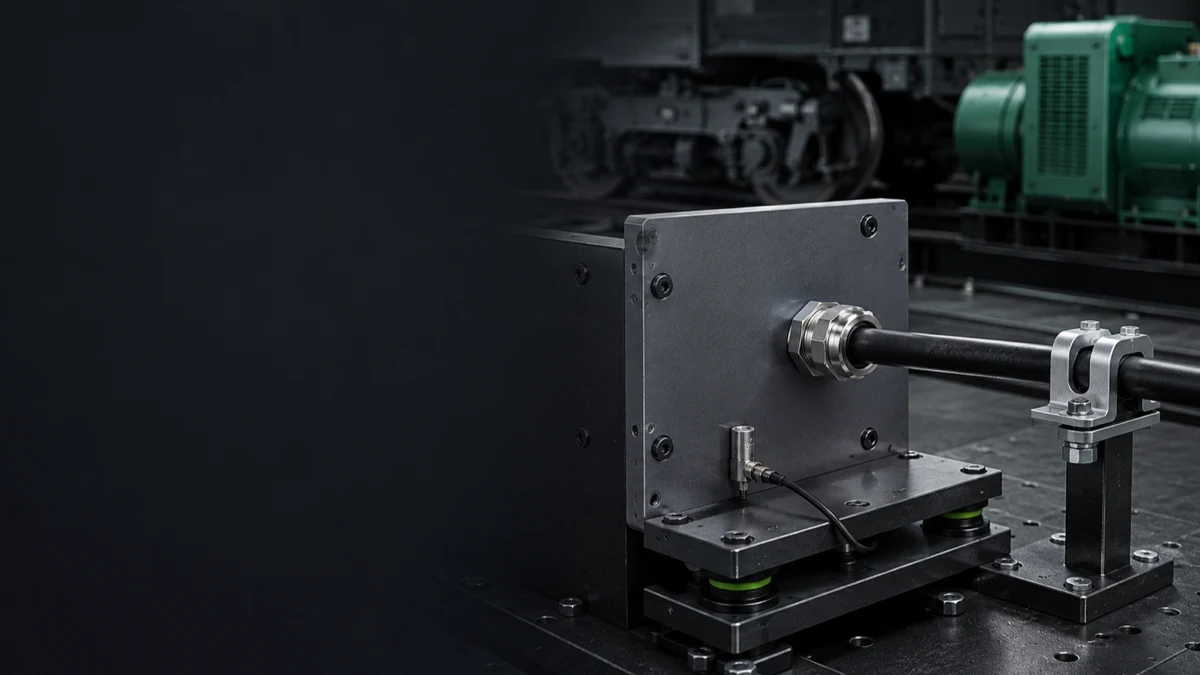
# 如何選擇適用於鐵路與發電機組等高振動環境的電纜密封接頭？

> Source: https://chinacableglands.com/zh-hant/blog/how-to-select-cable-glands-for-high-vibration-environments-like-rail-and-generator-sets/
> Language: zh-Hant
> Publisher: 倍拓電纜接頭
> Author: Edward Wang
> Published: 2026-02-22
> Updated: 2026-05-10

依鐵路與發電機組的振動工況，界定運動、安裝方式、電纜支撐、引入口功能及完整組件所需佐證，據此選擇電纜密封接頭。

<p><strong>選擇適用於高振動環境的電纜密封接頭，應從實際引入口處的運動及電纜支撐路徑著手。</strong> 我也會檢查外殼接合處及在振動工況下必須維持的功能。僅有「抗振」標示或單一加速度數值並不足夠。應界定鐵路隨機振動與衝擊、引擎相關激振、啟動與停止，或電纜移動等工況，再依該工況比較完整的接頭與電纜組件。</p>
<p>若要將現場量測轉換為具代表性的試驗剖面，請先參考 <a href="/zh-hant/blog/cable-gland-vibration-field-and-laboratory-evidence/">現場至實驗室振動指南</a>。本文使用引入口處的運動及電纜負荷，初步篩選鐵路車輛或發電機組適用的接頭。以下步驟會排除負荷路徑未受控制的配置，並找出安裝仍需補齊的佐證。</p>
<blockquote>
<p><strong>重點摘要</strong></p>
<ul>
<li>界定接頭安裝點的振動，包括波形、頻率成分、軸向、持續時間、衝擊及運轉狀態。</li>
<li>將接頭、電纜、支撐、外殼壁、墊圈或鎖緊螺帽，以及安裝方式視為同一動態配置。</li>
<li>接頭用於其宣告的密封與固定功能；外部電纜支撐則用於控制自由跨距、彎曲及質量。</li>
<li>鐵路試驗類別只能用於其明確指定的安裝位置與配置；不可自動套用到發電機組。</li>
<li>若佐證未涵蓋確切的電纜、安裝、支撐、配件或試後功能檢查，應拒絕該選項。</li>
</ul>
</blockquote>
<h2 id="define-the-vibration-duty-at-the-cable-entry">界定電纜引入口處的振動工況</h2>
<p><strong>振動工況</strong> 是相關運轉狀態下接頭安裝點的運動與衝擊。在引擎、轉向架、機櫃框架、隔振面板或電纜支撐處進行的量測，不會自動代表其他位置。結構路徑與彈性支座可能降低某些頻率的振動，也可能放大另一些頻率的振動。使用結果前，我會記錄量測位置及方法。</p>
<p>例如，引擎可能有明顯的旋轉頻率成分，而控制面板則會在自身共振頻率響應，使運動放大。安裝於該面板的接頭會承受面板響應及相連電纜的運動。應納入運轉、轉速與負載變化、啟動、停止及可信的異常事件。僅記錄安靜的穩態工況，可能漏掉主導條件。</p>
<p>至少應區分以下輸入：</p>
<ul>
<li><strong>正弦成分：</strong> 重複音調、旋轉階次與諧波，或可能激發共振的掃頻。旋轉階次是與轉速相關的頻率成分。</li>
<li><strong>寬頻隨機成分：</strong> 振動能量分布於多個頻率；應記錄頻譜、位準、軸向及持續時間。</li>
<li><strong>衝擊與暫態事件：</strong> 聯結處撞擊、軌道不連續、啟動、停止、引擎失火、切換、搬運或異常跳脫。</li>
<li><strong>由電纜帶動的運動：</strong> 彎曲、甩動、微小反覆移動造成的接觸磨耗（微動磨損），或電纜質量與支撐位置造成的負荷。</li>
</ul>
<p><a href="https://webstore.iec.ch/en/publication/544">IEC 60068-2-6:2007</a> 規定在特定嚴重度下，用於評估機械弱點或性能損失的正弦試驗。 <a href="https://webstore.iec.ch/en/publication/547">IEC 60068-2-64:2008</a> 涵蓋寬頻隨機試驗，並提醒單獨的隨機輸入可能無法涵蓋隨機與重複振動的組合作用。我會依相關規格取得嚴重度及驗收準則。這兩份標準頁面都沒有訂定通用的接頭試驗位準。</p>
<p>NIST 的 <a href="https://www.nist.gov/programs-projects/dynamic-mechanical-metrology-acceleration-force-and-acoustics/vibration">振動校正工作</a> 將加速度計靈敏度與相位視為隨頻率變化的特性。我會連同運轉轉速與負載，保留量測位置、方向、感測器安裝方式、校正、取樣率及濾波器。也要保存原始時間紀錄或頻譜。若沒有頻率與量測情境，單一峰值無法指出接頭的主導特徵。</p>
<figure>
<img alt="安裝於外殼板上的電纜密封接頭、獨立電纜支撐及治具上的感測器" src="/images/blog/how-to-select-cable-glands-for-high-vibration-environments-like-rail-and-generator-sets/high-vibration-cable-entry-test-rig.webp" srcset="/images/blog/how-to-select-cable-glands-for-high-vibration-environments-like-rail-and-generator-sets/high-vibration-cable-entry-test-rig.webp 1200w" sizes="(max-width: 760px) 100vw, 760px" width="1200" height="675" loading="lazy" decoding="async" />
<figcaption>試驗配置：電纜密封接頭安裝於外殼板上，治具底座設有儀器，另有獨立夾具控制電纜跨距。</figcaption>
</figure>
<h2 id="select-cable-glands-for-high-vibration-environments-by-load-path">依負荷路徑選擇適用於高振動環境的電纜密封接頭</h2>
<p><strong>動態負荷路徑</strong> 描述電纜慣性與運動如何對接頭及外殼施加負荷。負荷可能經由電纜護套、密封件或固定零件、本體、螺紋或鎖緊螺帽、墊圈及面板傳遞。獨立夾具可先控制電纜，減少出口處的運動。</p>
<p>兩個相同接頭，若一條電纜附近的支撐位於剛性壁面，另一條電纜則跨越柔性面板，承受的彎曲可能不同。我會記錄電纜質量、結構、彎曲方向、第一個支撐點及其剛度。也要記錄面板厚度、引入口形式及配件。這些資料可說明接頭是否依預期固定電纜，或成為該路徑唯一的支撐。</p>
<p>我會分別指定各項功能。密封件接觸明確界定的電纜表面；固定功能則抵抗指定軸向負荷或移動。鎧裝夾具接觸指定鎧裝。電磁相容性（EMC）元件將相容的屏蔽層接入其電氣路徑。外部支撐則控制電纜質量、自由跨距、彎曲及運動。 <a href="/zh-hant/blog/how-do-cable-glands-balance-strain-relief-and-sealing-for-maximum-protection/">應力釋放與密封指南</a> 說明各項功能為何都需要分別檢查。</p>
<figure class="blog-chart" style="container-type: inline-size;">
<svg xmlns="http://www.w3.org/2000/svg" viewBox="0 0 760 1458" role="img" aria-labelledby="cg-hv-title cg-hv-desc" style="font-family:var(--font-body); width: 100% !important; max-width: 100% !important; height: auto !important;" id="cg-typography-998d8cd263956130">
<style>
#cg-typography-998d8cd263956130 { --svg-body-screen: 17px; }
@media (max-width: 760px) { #cg-typography-998d8cd263956130 { --svg-body-screen: 16px; } }
</style>
<title id="cg-hv-title">高振動電纜引入負荷路徑</title>
<desc id="cg-hv-desc">垂直示意圖顯示電纜運動、外部支撐、接頭密封與固定區域、引入口接合處及外殼反作用力，藉此分別選定並驗證各項功能。</desc>
<defs>
<marker id="cg-hv-arrow" markerWidth="10" markerHeight="10" refX="9" refY="5" orient="auto">
<path d="M0 0L10 5L0 10Z" fill="var(--color-primary)"/>
</marker>
</defs>
<text x="380" y="42" text-anchor="middle" fill="var(--color-carbon)" font-size="27" font-weight="700" style="font-size: calc(22px * 760px / 100cqw) !important;"><tspan    style="font-size: inherit !important;" x="380" y="42" dy="0">在運動傳至 </tspan><tspan    style="font-size: inherit !important;" x="380" y="98.4402" dy="0">端接點</tspan></text>
<text x="380" y="146" text-anchor="middle" fill="var(--color-graphite)" font-size="18" style="font-size: calc(var(--svg-body-screen) * 760px / 100cqw) !important;"><tspan    style="font-size: inherit !important;" x="380" y="146" dy="0">追蹤每一項作用力穿過已安裝電纜引入 </tspan><tspan    style="font-size: inherit !important;" x="380"   y="190" dy="0">配置的路徑。</tspan></text>
<rect x="48" y="228" width="664" height="218" rx="16" fill="var(--surface-card)" stroke="var(--color-primary)" stroke-width="3"/>
<text x="76" y="270" fill="var(--color-carbon)" font-size="22" font-weight="700" style="font-size: calc(18px * 760px / 100cqw) !important;">1. 電纜運動與慣性</text>
<path d="M112 338C190 298 258 378 336 338S482 298 560 338" fill="none" stroke="var(--color-carbon)" stroke-width="28" stroke-linecap="round"/>
<path d="M574 304V370M574 304L558 322M574 304L590 322M574 370L558 352M574 370L590 352" fill="none" stroke="var(--color-primary)" stroke-width="4"/>
<text x="620" y="334" fill="var(--color-graphite)" font-size="18" style="font-size: calc(var(--svg-body-screen) * 760px / 100cqw) !important;">彎曲</text>
<text x="620" y="380" fill="var(--color-graphite)" font-size="18" style="font-size: calc(var(--svg-body-screen) * 760px / 100cqw) !important;"><tspan x="620" style="font-size: inherit !important;" y="380" dy="0">與 </tspan><tspan x="620" style="font-size: inherit !important;" y="424" dy="0">甩動</tspan></text>
<line x1="380" y1="450" x2="380" y2="494" stroke="var(--color-primary)" stroke-width="4" marker-end="url(#cg-hv-arrow)"/>
<rect x="48" y="506" width="664" height="300" rx="16" fill="var(--surface-card)" stroke="var(--color-primary)" stroke-width="3"/>
<text x="76" y="548" fill="var(--color-carbon)" font-size="22" font-weight="700" style="font-size: calc(18px * 760px / 100cqw) !important;">2. 外部支撐控制自由跨距</text>
<path d="M98 614H334" stroke="var(--color-carbon)" stroke-width="28" stroke-linecap="round"/>
<rect x="260" y="576" width="74" height="76" rx="12" fill="var(--color-ash)" stroke="var(--color-carbon)" stroke-width="4"/>
<path d="M274 590V638M320 590V638" stroke="var(--color-primary)" stroke-width="5"/>
<text x="370" y="602" fill="var(--color-carbon)" font-size="20" font-weight="700" style="font-size: calc(18px * 760px / 100cqw) !important;">電纜夾具或導引件</text>
<text x="370" y="646" fill="var(--color-graphite)" font-size="18" style="font-size: calc(var(--svg-body-screen) * 760px / 100cqw) !important;"><tspan    style="font-size: inherit !important;" x="370" y="646" dy="0">支撐位置與 </tspan><tspan    style="font-size: inherit !important;" x="370" y="690" dy="0">剛度</tspan></text>
<text x="370" y="734" fill="var(--color-graphite)" font-size="18" style="font-size: calc(var(--svg-body-screen) * 760px / 100cqw) !important;"><tspan    style="font-size: inherit !important;" x="370" y="734" dy="0">會改變接頭處的 </tspan><tspan    style="font-size: inherit !important;" x="370" y="778" dy="0">運動與負荷。</tspan></text>
<line x1="380" y1="810" x2="380" y2="854" stroke="var(--color-primary)" stroke-width="4" marker-end="url(#cg-hv-arrow)"/>
<rect x="48" y="866" width="664" height="250" rx="16" fill="var(--surface-card)" stroke="var(--color-primary)" stroke-width="3"/>
<text x="76" y="908" fill="var(--color-carbon)" font-size="22" font-weight="700" style="font-size: calc(18px * 760px / 100cqw) !important;">3. 接頭各項功能維持獨立</text>
<path d="M92 996H650" stroke="var(--color-carbon)" stroke-width="34" stroke-linecap="round"/>
<rect x="222" y="952" width="104" height="88" rx="18" fill="var(--color-ash)" stroke="var(--color-carbon)" stroke-width="4"/>
<path d="M360 952L420 974V1018L360 1040Z" fill="var(--surface-card)" stroke="var(--color-carbon)" stroke-width="4"/>
<rect x="454" y="946" width="80" height="100" rx="12" fill="var(--color-ash)" stroke="var(--color-carbon)" stroke-width="4"/>
<path d="M274 1040L170 1058M390 1040L380 1058M494 1046L590 1058" fill="none" stroke="var(--color-graphite)" stroke-width="2"/><text x="170" y="1100" text-anchor="middle" fill="var(--color-carbon)" font-size="20" font-weight="700" style="font-size: calc(16px * 760px / 100cqw) !important;">電纜密封</text>
<text x="380" y="1100" text-anchor="middle" fill="var(--color-carbon)" font-size="20" font-weight="700" style="font-size: calc(16px * 760px / 100cqw) !important;">固定</text>
<text x="590" y="1100" text-anchor="middle" fill="var(--color-carbon)" font-size="20" font-weight="700" style="font-size: calc(16px * 760px / 100cqw) !important;">接頭本體</text>
<line x1="380" y1="1120" x2="380" y2="1164" stroke="var(--color-primary)" stroke-width="4" marker-end="url(#cg-hv-arrow)"/>
<rect x="48" y="1176" width="664" height="240" rx="16" fill="var(--surface-card)" stroke="var(--color-primary)" stroke-width="3"/>
<rect x="184" y="1198" width="42" height="56" rx="5" fill="var(--surface-card)" stroke="var(--color-carbon)" stroke-width="5"/>
<path d="M195 1208V1244M207 1208V1244M219 1208V1244" stroke="var(--color-carbon)" stroke-width="2"/>
<text x="258" y="1214" fill="var(--color-carbon)" font-size="20" font-weight="700" style="font-size: calc(18px * 760px / 100cqw) !important;"><tspan    style="font-size: inherit !important;" x="258" y="1214" dy="0">4. 引入口接合處閉合 </tspan><tspan    style="font-size: inherit !important;" x="258" y="1262" dy="0">負荷路徑</tspan></text>
<text x="258" y="1306" fill="var(--color-graphite)" font-size="18" style="font-size: calc(var(--svg-body-screen) * 760px / 100cqw) !important;">一併驗證螺紋或鎖緊螺帽、引入口密封件、</text>
<text x="258" y="1350" fill="var(--color-graphite)" font-size="18" style="font-size: calc(var(--svg-body-screen) * 760px / 100cqw) !important;">面板及安裝配置。</text>
</svg>
<figcaption>四階段負荷路徑依序呈現電纜運動、外部支撐、各自獨立的接頭功能，以及將負荷傳至外殼面板的引入口接合處。</figcaption>
</figure>
<p>使用圖示追蹤負荷。我會依電纜結構、彎曲限值、運動、溫度、支撐剛度及設備說明設定支撐距離。 <a href="/zh-hant/blog/where-are-the-critical-stress-points-in-cable-glands-according-to-fea-analysis/">電纜密封接頭有限元素分析指南</a> 使用有限元素分析（FEA）檢查應力，並說明自由跨距與面板拘束如何改變動態負荷路徑。</p>
<h2 id="convert-failure-modes-into-rejection-rules">將失效模式轉換為拒收準則</h2>
<p><strong>拒收準則</strong> 用來排除存在未受控制振動失效機制的配置。選擇較重的本體前，我會先評估電纜路徑與接合處。即使接頭本體剛性很高，電纜仍可能在出口處彎曲、密封件可能超出範圍，或接合處可能在柔性面板中移動。</p>
<table>
<thead>
<tr>
<th>觀察到或可信的機制</th>
<th>選型問題</th>
<th>符合以下情況時拒收</th>
</tr>
</thead>
<tbody>
<tr>
<td>引入口接合處鬆脫或微動磨損</td>
<td>螺紋接合或貫穿孔接合如何固定？</td>
<td>未界定就位狀態、旋合長度、墊圈、鎖緊螺帽或允許的防鬆方式</td>
</tr>
<tr>
<td>出口處的電纜運動</td>
<td>第一個支撐點在哪裡？會形成什麼彎曲？</td>
<td>接頭必須吸收路徑運動，卻沒有明確支撐或電纜限值</td>
</tr>
<tr>
<td>密封壓縮變化</td>
<td>確切的密封件能否在其電纜範圍內維持功能？</td>
<td>佐證採用不同直徑、配方、溫度，或僅限靜態條件</td>
</tr>
<tr>
<td>護套磨耗或電纜拔出</td>
<td>固定的是哪個表面？適用哪個位移限值？</td>
<td>試驗沒有涵蓋指定電纜或試後密封檢查</td>
</tr>
<tr>
<td>鎧裝或屏蔽層移動</td>
<td>夾持或接觸的是哪一層電纜？</td>
<td>五金或佐證假設了不同的鎧裝、編織層、箔層或等電位連接路徑</td>
</tr>
<tr>
<td>面板或外殼響應</td>
<td>引入口壁面能否維持接合處就位？</td>
<td>佐證使用剛性治具，但實際應用採用尚未驗證的柔性面板</td>
</tr>
</tbody>
</table>
<p>除了運動，也要檢查密封性能是否隨時間及溫度改變。電纜或本體的微小運動，可能與壓縮永久變形、蠕變、膨潤或冷流同時發生。反覆運動不代表任何密封件都適用於移動接觸。我會參考 <a href="/zh-hant/blog/why-is-cold-flow-critical-in-cable-gland-seals-and-how-can-you-prevent-it/">密封件冷流指南</a> 檢查時間依賴變形聲明背後的材料、溫度、幾何及負荷。</p>
<h2 id="separate-rail-and-generator-selection-branches">分別處理鐵路與發電機組的選型</h2>
<p><strong>鐵路車輛與發電機組需要不同的振動佐證。</strong> 兩者採用相同的選型步驟，但須分別界定輸入、安裝、附近危害及適用文件。某一產業的試驗剖面不能自動驗證另一種應用。</p>
<h3 id="rail-vehicle-equipment">鐵路車輛設備</h3>
<p><a href="https://webstore.iec.ch/en/publication/68999">IEC 61373:2026</a> 涵蓋鐵路車輛設備的衝擊與振動試驗，並依不同安裝類別採用不同程序。該標準也列出排除項目，並允許對不同於固定軌道行駛車輛的運輸環境採用特定等級。我會先確認接頭在設備內的位置，以及設備在車輛上的位置，再檢查類別、軸向、安裝、治具、電纜支撐及功能檢查。</p>
<p>例如，車體安裝設備不能自動沿用轉向架或車軸附近位置的試驗輸入。可拆卸接頭板的剛度也可能不同於受測機櫃。套用鐵路試驗結果前，應比對車輛位置、設備邊界、彈性安裝、面板、電纜自由跨距及軸向。</p>
<p>附近機櫃或一般組件通過試驗，不會使接頭取得「IEC 61373 認證」。我會確認試件是否包含所選接頭尺寸、電纜、支撐、引入口、配件及安裝狀態。我會另行檢查防火表現，並參考 <a href="/zh-hant/blog/railway-fire-safety-standards-how-do-you-select-cable-glands-that-meet-critical-fire-resistance-requirements/">鐵路防火安全用電纜密封接頭指南</a>。防火與振動結果不能互相證明對方的功能。</p>
<h3 id="generator-set-equipment">發電機組設備</h3>
<p>發電機組可能同時出現運轉階次、啟動、停止及負載變化。引擎、交流發電機、底架與外殼會形成結構傳遞路徑；隔振、熱、油液、冷卻液、燃料及清潔劑也會帶來其他條件。我會在面板及電纜路徑處界定或量測運動，再選擇設備或專案的試驗方法。加速度數值相近，並不足以合理套用鐵路類別。</p>
<p>曝露條件可能改變本體、密封件及支撐的選擇，卻不能解決振動問題。我會參考 <a href="/zh-hant/blog/which-cable-gland-materials-provide-the-best-chemical-resistance/">耐化學性選型指南</a> 評估流體，再參考 <a href="/zh-hant/blog/how-to-choose-the-right-cable-gland-material-for-your-application-environment/">應用環境材料指南</a> 評估溫度、紫外線（UV）曝露、濕氣及腐蝕。逐項檢查各種條件；相關條件會互相作用時，還要驗證整體組件及曝露順序。</p>
<h2 id="control-the-cable-route-outside-the-gland">控制接頭外部的電纜路徑</h2>
<p><strong>電纜彎曲與運動跨距必須有明確限值。</strong> 我會取得電纜製造商針對此電纜及安裝狀態提供的彎曲因數，量測外徑（OD），並確認第一個支撐點。保留足夠空間，避免電纜在運轉移動時推抵接頭、壁面邊緣、門或鄰近零件。</p>
<p>固定支撐前，先製作靜態樣架。讓電纜沿軸向穿過接頭，安裝預定的第一個支撐，再將未標記的模板貼在彎曲外側。我會記錄支撐位置與間隙，再用量得的外徑及提供的彎曲因數計算下方數值。凡超出限值的路徑都要調整。</p>
<figure class="article-image">
<picture>
<source media="(max-width: 640px)" srcset="/images/blog/how-to-select-cable-glands-for-high-vibration-environments-like-rail-and-generator-sets/supported-route-bend-radius-layout-600.webp" type="image/webp">
<img alt="靜止發電機組底架上的電纜引入口，設有獨立支撐，未標記的凹形模板接觸電纜彎曲外側" src="/images/blog/how-to-select-cable-glands-for-high-vibration-environments-like-rail-and-generator-sets/supported-route-bend-radius-layout.webp" width="1200" height="750" loading="lazy" decoding="async">
</picture>
<figcaption>規劃路徑時，以獨立夾具支撐電纜，並用未標記模板接觸彎曲外側；與受控電纜限值比較前，先記錄實際幾何及間隙。</figcaption>
</figure>
<p><a class="article-tool-card article-tool-card-link" href="/zh-hant/resource-center/tools/cable-bend-radius-calculator/" aria-label="電纜彎曲半徑計算器"><span class="article-tool-card-index">工具</span><span class="article-tool-card-kicker">電纜尺寸</span><strong class="article-tool-card-title">電纜彎曲半徑計算器</strong><span class="article-tool-card-copy">使用已確認的電纜外徑及製造商提供的彎曲係數，估算初步最小彎曲半徑。接著另行檢查動態彎折限值、支撐間距、移動包絡範圍、外殼間隙及確切的安裝說明。</span><span class="article-tool-card-formula">Rmin = F × OD; Dbend = 2 × Rmin</span><span class="article-tool-card-inputs" aria-label="計算器輸入項目"><em>電纜外徑</em><em>指定彎曲係數</em><em>引入口後直線段預留長度</em></span><span class="article-tool-card-action">開啟計算器 <span aria-hidden="true">-&gt;</span></span></a></p><p>計算器只檢查幾何。它不會選擇彎曲因數、預測疲勞壽命、設定支撐距離或核准接頭。我會將固定安裝與反覆彎曲的限值分開處理，並遵循電纜結構及製造商條件。</p>
<p>螺紋防鬆劑不是通用修復方式。它可能改變摩擦、就位、拆卸、化學與溫度相容性及核准範圍。只有在接頭、配合材料、說明及適用核准允許時，我才會使用。電纜支撐、機械固定、正確鎖緊及穩定的承靠面仍須另行檢查。</p>
<h2 id="verify-the-assembled-entry-against-the-required-functions">依必要功能驗證已組裝的引入口</h2>
<p><strong>最終選型需要完整引入口組件的佐證。</strong> 單獨的鬆散接頭或材料試片並不足夠。 <a href="https://webstore.iec.ch/en/publication/7034">IEC 62444:2010</a> 涵蓋交付的完整接頭。振動前、振動期間（若有要求）及振動後，我會先界定必要檢查，包括必要時的侵入防護（IP）。</p>
<p>記錄接頭型號與尺寸、電纜結構及量得的直徑、密封件或嵌件，以及鎧裝或屏蔽層的準備方式。接著記錄引入口螺紋、墊圈或鎖緊螺帽、面板材料與厚度、鎖緊方式、治具及支撐。也要記錄軸向、剖面、持續時間、調節處理及驗收限值。依這些細節與選定安裝配置的相符程度，判定能否採用該試驗。</p>
<p>軸向位移檢查應使用電纜上的同一個參考點。在已停止的治具上安裝指定支撐及接頭外側可拆卸的套環。將位移探棒與電纜對齊，使探頭接觸套環端面。我會記錄初始讀值及設定座標。曝露後停止治具，在擾動組件前重複量測。</p>
<figure class="article-image">
<picture>
<source media="(max-width: 640px)" srcset="/images/blog/how-to-select-cable-glands-for-high-vibration-environments-like-rail-and-generator-sets/entry-displacement-reference-check-600.webp" type="image/webp">
<img alt="顯示器空白的位移探棒接觸靜止接頭與面板治具上的電纜參考套環" src="/images/blog/how-to-select-cable-glands-for-high-vibration-environments-like-rail-and-generator-sets/entry-displacement-reference-check.webp" width="1200" height="750" loading="lazy" decoding="async">
</picture>
<figcaption>在已停止的治具上，軸向探棒接觸可拆卸的電纜參考套環，獨立夾具則固定電纜跨距；依已界定的試驗計畫，記錄曝露前後的位置。</figcaption>
</figure>
<p>試後檢查應依必要功能進行，可能包括電纜或接合處位移、密封件位置、可見損傷、導通或屏蔽，以及完整安裝引入口的侵入情況。我會在試驗前訂定準則。若沒有功能限值，振動台試驗只能證明試件完成了振動程序。</p>
<h2 id="conclusion">結論</h2>
<p>我會沿著負荷路徑，從設備與電纜走向追蹤引入口處的運動，再一路檢查支撐、密封或固定零件、本體、接合處及外殼。鐵路車輛與發電機組可沿用相同方法，但兩者的輸入、安裝、曝露及適用佐證不同。</p>
<p>從引入口處的量測或界定剖面開始。若路徑要求接頭吸收未受控制的跨距運動，我會拒收。比較能代表實際電纜、面板、配件、安裝及試後功能的完整組件。僅有「抗振」標籤或其他應用的試驗類別，無法補足這些細節。</p>
<h2 id="faqs-about-high-vibration-cable-gland-selection">高振動環境電纜密封接頭選型常見問題</h2>
<h3 id="what-makes-a-cable-gland-suitable-for-a-high-vibration-environment">哪些條件能使電纜密封接頭適用於高振動環境？</h3>
<p>完整配置必須符合所界定的振動工況。我會檢查接頭、電纜、密封或固定零件、引入口接合處、面板、支撐幾何、安裝方式及必要功能。僅有高強度本體或鎖固特徵，無法控制電纜甩動、錯誤的密封配合、面板運動或不相符的試驗剖面。</p>
<h3 id="should-rail-and-generator-set-glands-use-the-same-vibration-test">鐵路與發電機組的接頭應使用相同的振動試驗嗎？</h3>
<p>不一定。鐵路車輛設備可能適用 IEC 61373 中相應的類別及安裝位置。發電機組則有自身的結構路徑、運轉階次、啟動、停止、隔振及鄰近環境。應在電纜引入口處界定或量測各自的工況，並採用適用的設備或專案方法，而非依產業名稱複製試驗剖面。</p>
<h3 id="does-thread-locking-compound-prevent-every-vibration-failure">螺紋防鬆劑能避免所有振動失效嗎？</h3>
<p>不能。它只處理螺紋接合問題的一部分，且可能改變摩擦、就位、拆卸、溫度或化學相容性及核准範圍。它無法控制無支撐的電纜跨距、電纜範圍錯誤、密封件變形、柔性面板、不適用的鎖緊螺帽配置，或鎧裝與屏蔽層準備方式。請遵循確切產品及安裝要求。</p>
<h3 id="how-close-should-the-first-cable-support-be-to-the-gland">第一個電纜支撐點應離接頭多近？</h3>
<p>沒有通用的電纜直徑倍數。我會依電纜質量、剛度、結構、彎曲限值、運動、方向、支撐剛度、接頭功能及設備說明判定。界定運動與電纜限值後，安排支撐，使引入口處的彎曲與慣性負荷維持在已驗證的基準內。</p>
<h3 id="does-an-ip-rating-prove-vibration-resistance">IP 等級能證明抗振性能嗎？</h3>
<p>不能。IP 分類說明在指定試驗條件下的侵入防護性能，但不能證明耐正弦振動、隨機振動、衝擊、電纜移動、接合處鬆脫或疲勞。若這些功能有要求，應在具代表性的動態曝露後，對完整接頭、電纜、引入口及配件重做相關防護與機械檢查。</p>
<h3 id="sources-and-technical-references">來源與技術參考資料</h3>
<ul>
<li><a href="https://webstore.iec.ch/en/publication/544">IEC 60068-2-6:2007－正弦振動測試</a>，檢索日期：2026-09-08。</li>
<li><a href="https://webstore.iec.ch/en/publication/547">IEC 60068-2-64:2008－寬頻隨機振動測試</a>，檢索日期：2026-09-08。</li>
<li><a href="https://www.nist.gov/programs-projects/dynamic-mechanical-metrology-acceleration-force-and-acoustics/vibration">NIST－振動校正</a>，檢索日期：2026-09-08。</li>
<li><a href="https://webstore.iec.ch/en/publication/68999">IEC 61373:2026－鐵路車輛設備的衝擊與振動試驗</a>，檢索日期：2026-09-08。</li>
<li><a href="https://webstore.iec.ch/en/publication/7034">IEC 62444:2010－電氣裝置用電纜密封接頭</a>，檢索日期：2026-09-08。</li>
</ul>
