# 溫度循環如何影響外殼密封？透氣有何作用？

> Source: https://chinacableglands.com/zh-hant/blog/how-temperature-cycling-affects-enclosure-seals-and-the-role-of-venting/
> Language: zh-Hant
> Publisher: 倍拓電纜接頭
> Author: Victor Huang
> Published: 2026-03-13
> Updated: 2026-09-30

分辨壓力驅動的密封負荷、熱膨脹、應力鬆弛、老化與凝露，再判斷外殼透氣實際能在哪些方面發揮作用。

<p><strong>溫度循環會經由氣體壓力、接合處移動、材料反應及濕氣影響外殼密封。</strong>我會先找出原因，再決定是否加裝透氣元件。合適的透氣元件可能減少升溫或降溫造成的壓力差，但無法修正壁面、墊片、緊固件、引入口與電纜之間的尺寸不匹配。密封力流失、永久變形及化學老化都需要各自的處理方式。</p>
<p>多孔透氣元件也會交換水蒸氣，須另行評估。我會以同一時間基準記錄溫度、壓力、移動或接觸力指標及洩漏情況。只有當壓力確實是問題的重要成因，且透氣後的外殼仍符合其他要求時，才加裝透氣元件。</p>
<blockquote>
<p><strong>重點摘要</strong></p>
<ul>
<li>選擇處理方式前，先區分氣體壓力負荷、接合處移動、隨時間變化的密封表現及濕氣。</li>
<li>記錄各零件溫度，不能只記錄試驗箱空氣的最低及最高溫度。</li>
<li>只有在已安裝狀態下的雙向流量能配合變化速率時，透氣元件才能降低殘餘壓力。</li>
<li>壓縮永久變形及應力鬆弛需要各自的材料與組裝佐證。</li>
<li>以相同試驗順序比較密封與透氣配置，並分別記錄 IP 防護與凝露結果。</li>
</ul>
</blockquote>
<h2 id="how-temperature-cycling-affects-enclosure-seals-through-four-load-paths">溫度循環如何透過四種負荷路徑影響外殼密封</h2>
<p><strong>溫度循環</strong>會定義溫度、變化速率、停留時間、重複次數、介質、運轉狀態及恢復條件。停留時間是維持在某個溫度的時間。<strong>差壓</strong>是內部壓力減去外部壓力。<strong>應力鬆弛</strong>是在變形大致不變時，作用力隨時間降低。<strong>壓縮永久變形</strong>是經指定壓縮及恢復程序後仍殘留的變形。</p>
<p>我會分開看待這些量。在高溫停留期間，氣體壓力、尺寸、墊片作用力及露點裕度可能同時改變。循環後發現洩漏，無法單獨指出哪種機制影響最大。</p>
<table>
<thead>
<tr>
<th>負荷路徑</th>
<th>溫度循環會改變什麼</th>
<th>壓力平衡透氣元件能否降低此影響？</th>
<th>用於辨識此路徑的佐證</th>
</tr>
</thead>
<tbody>
<tr>
<td>受困氣體壓力</td>
<td>內部氣體狀態相對於環境壓力的變化。</td>
<td>可以，但前提是已安裝流量能將殘餘壓力維持在有依據的限值內。</td>
<td>以同步方式量測內外絕對壓力及溫度。</td>
</tr>
<tr>
<td>熱機械接合處移動</td>
<td>相對尺寸、間隙、壓縮量、對準度、緊固件負荷及電纜引入口位置。</td>
<td>不能。</td>
<td>零件溫度、受控幾何配置，以及移動或接觸力的間接指標。</td>
</tr>
<tr>
<td>隨時間變化的密封反應</td>
<td>在所述時間與溫度下的作用力衰減、恢復、殘留變形及損傷。</td>
<td>不能。</td>
<td>密封膠料與試件方法，接著檢查模製密封件及組件的佐證。</td>
</tr>
<tr>
<td>濕氣狀態</td>
<td>水蒸氣狀態、冷表面溫度、直接侵入及液體所在位置。</td>
<td>單靠透氣元件無法處理。</td>
<td>露點比較、最先出現液體的位置、侵入試驗及壓力曲線。</td>
</tr>
</tbody>
</table>
<figure class="blog-chart" style="container-type: inline-size;">
<svg xmlns="http&#58;//www.w3.org/2000/svg" viewBox="0 0 480 1368" role="img" aria-labelledby="thermal-vent-title thermal-vent-desc" style="font-family:var(--font-body); width: 100% !important; max-width: 100% !important; height: auto !important;" id="cg-typography-e82ef8ecd3714db5">
<style>
#cg-typography-e82ef8ecd3714db5 { --svg-body-screen: 17px; }
@media (max-width: 760px) { #cg-typography-e82ef8ecd3714db5 { --svg-body-screen: 16px; } }
</style>
<title id="thermal-vent-title">單一溫度循環下外殼的四種反應</title>
<desc id="thermal-vent-desc">四張編號卡片將同一溫度循環對應至氣體壓力、接合處移動、隨時間變化的密封反應及濕氣狀態。透氣流量作用於壓差；同步量測可區分各種反應。</desc>
<text x="240" y="36" text-anchor="middle" fill="var(--color-carbon)" font-size="26" font-weight="700" style="font-size: calc(22px * 480px / 100cqw) !important;">一次溫度循環</text>
<text x="240" y="70" text-anchor="middle" fill="var(--color-carbon)" font-size="22" style="font-size: calc(var(--svg-body-screen) * 480px / 100cqw) !important;">同步量測四種反應</text>
<rect x="24" y="96" width="432" height="142" rx="16" fill="var(--surface-card)" stroke="var(--color-primary)" stroke-width="3"/>
<text x="44" y="134" fill="var(--color-carbon)" font-size="24" font-weight="700" style="font-size: calc(18px * 480px / 100cqw) !important;">已界定的溫度循環</text>
<text x="44" y="174" fill="var(--color-carbon)" font-size="22" style="font-size: calc(var(--svg-body-screen) * 480px / 100cqw) !important;">速率 • 停留時間 • 重複次數</text>
<text x="44" y="208" fill="var(--color-carbon)" font-size="22" style="font-size: calc(var(--svg-body-screen) * 480px / 100cqw) !important;">通電狀態 • 恢復條件</text>
<rect x="24" y="272" width="432" height="202" rx="16" fill="var(--surface-card)" stroke="var(--color-primary)" stroke-width="3"/>
<text x="44" y="311" fill="var(--color-carbon)" font-size="24" font-weight="700" style="font-size: calc(18px * 480px / 100cqw) !important;">1  氣體壓力</text>
<text x="44" y="348" fill="var(--color-carbon)" font-size="22" style="font-size: calc(var(--svg-body-screen) * 480px / 100cqw) !important;">氣體狀態與環境的差異</text>
<text x="44" y="380" fill="var(--color-carbon)" font-size="22" style="font-size: calc(var(--svg-body-screen) * 480px / 100cqw) !important;">量測兩側壓力。</text>
<text x="44" y="423" fill="var(--color-carbon)" font-size="22" font-weight="700" style="font-size: calc(var(--svg-body-screen) * 480px / 100cqw) !important;">透氣流量可以降低</text>
<text x="44" y="453" fill="var(--color-carbon)" font-size="22" font-weight="700" style="font-size: calc(var(--svg-body-screen) * 480px / 100cqw) !important;">殘餘壓差。</text>
<rect x="24" y="494" width="432" height="202" rx="16" fill="var(--surface-card)" stroke="var(--color-graphite)" stroke-width="2"/>
<text x="44" y="533" fill="var(--color-carbon)" font-size="24" font-weight="700" style="font-size: calc(18px * 480px / 100cqw) !important;">2  接合處移動</text>
<text x="44" y="570" fill="var(--color-carbon)" font-size="22" style="font-size: calc(var(--svg-body-screen) * 480px / 100cqw) !important;">零件不等量膨脹</text>
<text x="44" y="602" fill="var(--color-carbon)" font-size="22" style="font-size: calc(var(--svg-body-screen) * 480px / 100cqw) !important;">追蹤間隙、壓縮量及對準度。</text>
<text x="44" y="645" fill="var(--color-carbon)" font-size="22" font-weight="700" style="font-size: calc(var(--svg-body-screen) * 480px / 100cqw) !important;">膨脹與約束</text>
<text x="44" y="675" fill="var(--color-carbon)" font-size="22" font-weight="700" style="font-size: calc(var(--svg-body-screen) * 480px / 100cqw) !important;">會影響接合處移動。</text>
<rect x="24" y="716" width="432" height="202" rx="16" fill="var(--surface-card)" stroke="var(--color-graphite)" stroke-width="2"/>
<text x="44" y="755" fill="var(--color-carbon)" font-size="24" font-weight="700" style="font-size: calc(18px * 480px / 100cqw) !important;">3  隨時間變化的密封反應</text>
<text x="44" y="792" fill="var(--color-carbon)" font-size="22" style="font-size: calc(var(--svg-body-screen) * 480px / 100cqw) !important;">作用力衰減、永久變形及恢復</text>
<text x="44" y="824" fill="var(--color-carbon)" font-size="22" style="font-size: calc(var(--svg-body-screen) * 480px / 100cqw) !important;">密封膠料、負荷及歷史須相符。</text>
<text x="44" y="867" fill="var(--color-carbon)" font-size="22" font-weight="700" style="font-size: calc(var(--svg-body-screen) * 480px / 100cqw) !important;">時間與溫度會影響</text>
<text x="44" y="897" fill="var(--color-carbon)" font-size="22" font-weight="700" style="font-size: calc(var(--svg-body-screen) * 480px / 100cqw) !important;">殘留作用力及恢復狀況。</text>
<rect x="24" y="938" width="432" height="202" rx="16" fill="var(--surface-card)" stroke="var(--color-graphite)" stroke-width="2"/>
<text x="44" y="977" fill="var(--color-carbon)" font-size="24" font-weight="700" style="font-size: calc(18px * 480px / 100cqw) !important;">4  濕氣狀態</text>
<text x="44" y="1014" fill="var(--color-carbon)" font-size="22" style="font-size: calc(var(--svg-body-screen) * 480px / 100cqw) !important;">水蒸氣、冷表面及洩漏</text>
<text x="44" y="1046" fill="var(--color-carbon)" font-size="22" style="font-size: calc(var(--svg-body-screen) * 480px / 100cqw) !important;">追蹤露點及最先出現的液體。</text>
<text x="44" y="1089" fill="var(--color-carbon)" font-size="22" font-weight="700" style="font-size: calc(var(--svg-body-screen) * 480px / 100cqw) !important;">比較表面溫度</text>
<text x="44" y="1119" fill="var(--color-carbon)" font-size="22" font-weight="700" style="font-size: calc(var(--svg-body-screen) * 480px / 100cqw) !important;">與露點，並定位洩漏。</text>
<rect x="24" y="1176" width="432" height="164" rx="16" fill="var(--surface-card)" stroke="var(--color-primary)" stroke-width="3"/>
<text x="44" y="1214" fill="var(--color-carbon)" font-size="24" font-weight="700" style="font-size: calc(18px * 480px / 100cqw) !important;">使用同一時間基準比較</text>
<text x="44" y="1254" fill="var(--color-carbon)" font-size="22" style="font-size: calc(var(--svg-body-screen) * 480px / 100cqw) !important;">壓力 • 溫度 • 移動</text>
<text x="44" y="1286" fill="var(--color-carbon)" font-size="22" style="font-size: calc(var(--svg-body-screen) * 480px / 100cqw) !important;">密封力 • 濕氣 • 洩漏</text>
<text x="44" y="1320" fill="var(--color-carbon)" font-size="22" style="font-size: calc(var(--svg-body-screen) * 480px / 100cqw) !important;">只改變透氣元件後重複試驗。</text>
</svg>
<figcaption>同一溫度循環會造成壓力、接合處移動、密封反應及濕氣變化。每張編號卡片都將該反應與量測項目配對；使用同一時間基準比較，有助辨識洩漏或密封力流失的來源。</figcaption>
</figure>
<h2 id="build-one-synchronized-thermal-cycle-profile">建立一組同步的溫度循環曲線</h2>
<p>我會依產品工況或適用要求界定試驗順序。IEC <a href="https://webstore.iec.ch/en/publication/71503">60068-2-14:2023</a>規定用於分析試件反應的環境溫度變化方法，但無法指定通用的外殼循環。記錄起始、冷熱設定點、變化速率、停留時間、重複次數、轉換方式、空氣或液體介質、通電狀態及恢復條件。另須說明初始密封壓力與濕氣狀態。</p>
<p>我會量測零件溫度，而不只依賴試驗箱程式。密封件、壁面、電纜、緊固件及受困氣體可能遵循不同的溫度曲線。熱容量或熱輸入不同時，應使用多個感測器。量測密封區、壁面、引入口、鄰近內部空氣，以及通電後造成溫差的熱源；並以同一時間基準記錄內外絕對壓力。</p>
<p>例如，試驗箱快速變溫時，壁面可能比氣體或厚重安裝板更早改變溫度。緩慢的高溫停留可能減少暫時溫差，卻讓作用力有更多時間衰減。我會比較完整曲線：即使兩組試驗的端點相同，峰值、移動及殘留作用力仍可能不同。</p>
<h2 id="trace-the-gas-pressure-path-before-crediting-venting">判斷透氣效果前，先追蹤氣體壓力路徑</h2>
<p>NIST <a href="https://nvlpubs.nist.gov/nistpubs/Legacy/circ/nbscircular279.pdf">Circular 279</a>說明氣體溫度、壓力及密度之間的關係。在近乎剛性的密封外殼中，加熱受困氣體通常會升高壓力，冷卻則通常會降低壓力。我會在氣體定律比值中使用相對真空的絕對壓力及克耳文溫度。表壓是相對環境的壓力，套用該模型前必須換算。</p>
<p>實際外殼會彎曲、洩漏，也可能不均勻地交換熱量。設備亦會減少自由空氣體積。可在這些限制內使用氣體定律進行初步篩查，但無法據此確定實際密封負荷或透氣流量。應在循環期間量測整個邊界兩側的壓差。</p>
<p><strong>殘餘差壓</strong>是因氣體交換並非即時完成而留下的壓力差。我會依空氣體積、溫度變化速率、環境壓力歷程及流道限制，比較兩個流動方向。<a href="/zh-hant/blog/the-impact-of-altitude-changes-on-sealed-electronics-and-how-venting-solves-it/">海拔與透氣指南</a>涵蓋環境壓力變化速率。</p>
<p>我會在相同循環下比較密封與透氣配置的壓力曲線。外殼、外蓋、膜材、安裝密封件、方向、污染、內部間隙應保持具代表性。僅憑孔徑或介質名稱，無法確認安裝後的流量。</p>
<figure>
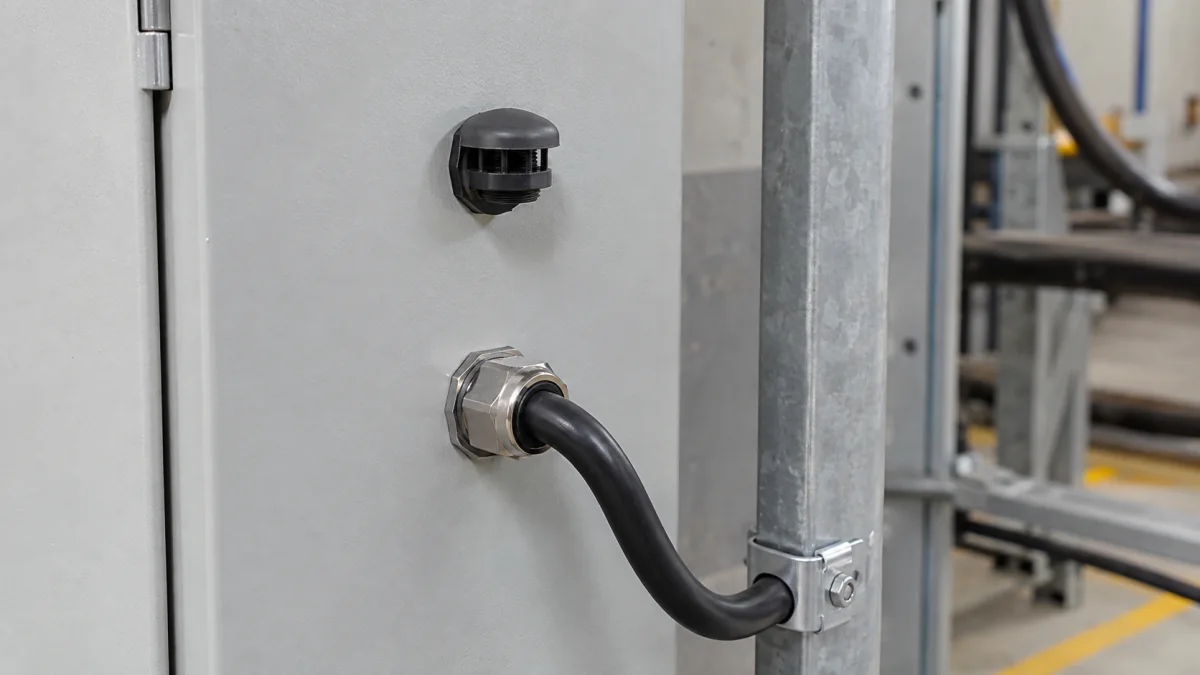
<img alt="封閉外殼側板上方有黑色開槽透氣元件，下方另有電纜密封接頭與受支撐的黑色電纜" src="/images/blog/how-temperature-cycling-affects-enclosure-seals-and-the-role-of-venting/installed-vent-and-cable-entry.webp" srcset="/images/blog/how-temperature-cycling-affects-enclosure-seals-and-the-role-of-venting/installed-vent-and-cable-entry-600.webp 600w, /images/blog/how-temperature-cycling-affects-enclosure-seals-and-the-role-of-venting/installed-vent-and-cable-entry.webp 1200w" sizes="(max-width: 640px) 100vw, 760px" width="1200" height="675" loading="lazy" decoding="async">
<figcaption>此示意圖呈現外殼側板上的一個開槽透氣接頭，以及與電纜密封接頭分開的開孔；電纜在引入口外另有支撐。</figcaption>
</figure>
<p>我會先將壓力峰值與外殼壁面、墊片、引入口、視窗及接合處有依據的正、負壓力限值比較，再檢查移動、洩漏或接觸力是否隨壓力變化。若壓力降低後仍持續洩漏，可能是其他機制占主導。壓力降低本身不能證明壽命較長。密封的柔性補償器藉由改變體積補償壓力，不是利用多孔氣體流動。<a href="/zh-hant/blog/pressure-compensation-seals-an-alternative-to-traditional-vent-plugs/">壓力補償器比較指南</a>說明這項差異。</p>
<figure style="container-type: inline-size;">
<svg xmlns="http://www.w3.org/2000/svg" id="thermal-pressure-cycle-inline-svg" viewBox="0 0 760 1540" role="img" aria-labelledby="thermal-pressure-cycle-inline-svg-title thermal-pressure-cycle-inline-svg-desc" style="display:block;width:100%;height:auto; width: 100% !important; max-width: 100% !important; height: auto !important;">
<style>
#thermal-pressure-cycle-inline-svg { --svg-body-screen: 17px; }
@media (max-width: 760px) { #thermal-pressure-cycle-inline-svg { --svg-body-screen: 16px; } }
</style>
<title id="thermal-pressure-cycle-inline-svg-title">密封與透氣配置的定性壓力曲線</title><desc id="thermal-pressure-cycle-inline-svg-desc">同一溫度循環對齊到使用相同時間基準的密封與透氣差壓反應。透氣配置仍會有非零壓差；只比較條件相符的配置。</desc><style>#thermal-pressure-cycle-inline-svg{--bg:#f7faf8;--card:#fff;--ink:#15231e;--muted:#52635c;--line:#b8cbc1;--metal:#d8e3dd;--outline:#52635c;--green:#008f31;--green-ink:#00742c;--green-soft:#e9f4ed;--blue:#2672a4;--blue-ink:#174f72;--blue-soft:#e8f4fa;--amber:#a56300;--amber-ink:#815000;--amber-soft:#fff5df;--white:#fff;--dark-panel:#153e2b}:root[data-theme="dark"] #thermal-pressure-cycle-inline-svg{--bg:#111b17;--card:#1e2e25;--ink:#edf5ee;--muted:#c4d5c9;--line:#657e6b;--metal:#708879;--outline:#c0d4c4;--green:#72dc89;--green-ink:#9ce8ae;--green-soft:#284934;--blue:#71bbef;--blue-ink:#a3d9fc;--blue-soft:#223d4d;--amber:#f2bc64;--amber-ink:#ffd49a;--amber-soft:#46371f;--white:#fff;--dark-panel:#17452d}</style><rect width="760" height="1540" fill="var(--bg)"/><g font-family="Arial, Helvetica, sans-serif"><text x="45" y="58" fill="var(--ink)" font-size="40" font-weight="700" style="font-size: calc(22px * 760px / 100cqw) !important;">密封與透氣壓力比較</text><text x="45" y="114" fill="var(--ink)" font-size="40" font-weight="700" style="font-size: calc(22px * 760px / 100cqw) !important;">經過一次溫度循環</text><text x="45" y="157" fill="var(--muted)" font-size="28" font-weight="400" style="font-size: calc(var(--svg-body-screen) * 760px / 100cqw) !important;">定性曲線使用相同時間基準。</text><rect x="45" y="190" width="670" height="68" rx="18" fill="var(--green-soft)" stroke="var(--line)" stroke-width="3"/><text x="380" y="235" fill="var(--green-ink)" font-size="30" font-weight="700" text-anchor="middle" style="font-size: calc(18px * 760px / 100cqw) !important;">條件相符的配置</text><rect x="45" y="286" width="670" height="330" rx="18" fill="var(--card)" stroke="var(--line)" stroke-width="3"/><text x="78" y="347" fill="var(--green-ink)" font-size="35" font-weight="700" style="font-size: calc(18px * 760px / 100cqw) !important;">溫度</text><text x="78" y="389" fill="var(--muted)" font-size="29" font-weight="400" style="font-size: calc(var(--svg-body-screen) * 760px / 100cqw) !important;">相同的溫度循環</text><rect x="45" y="644" width="670" height="330" rx="18" fill="var(--card)" stroke="var(--line)" stroke-width="3"/><text x="78" y="705" fill="var(--green-ink)" font-size="35" font-weight="700" style="font-size: calc(18px * 760px / 100cqw) !important;">密封</text><text x="78" y="747" fill="var(--muted)" font-size="29" font-weight="400" style="font-size: calc(16px * 760px / 100cqw) !important;">差壓</text><rect x="45" y="1002" width="670" height="330" rx="18" fill="var(--card)" stroke="var(--line)" stroke-width="3"/><text x="78" y="1063" fill="var(--green-ink)" font-size="35" font-weight="700" style="font-size: calc(18px * 760px / 100cqw) !important;">透氣</text><text x="78" y="1105" fill="var(--muted)" font-size="29" font-weight="400" style="font-size: calc(16px * 760px / 100cqw) !important;">差壓</text><path d="M95 551H666" fill="none" stroke="var(--line)" stroke-width="3" stroke-linecap="round" stroke-linejoin="round" /><path d="M100 546 C157 546 183 428 252 428 S346 546 412 546 S505 440 574 440 S639 546 660 546" fill="none" stroke="var(--amber)" stroke-width="9" stroke-linecap="round" stroke-linejoin="round" /><path d="M95 874H666" fill="none" stroke="var(--line)" stroke-width="3" stroke-linecap="round" stroke-linejoin="round" stroke-dasharray="12 10"/><path d="M100 874 C150 874 179 775 250 775 S347 905 414 905 S510 788 578 788 S643 874 660 874" fill="none" stroke="var(--green)" stroke-width="9" stroke-linecap="round" stroke-linejoin="round" /><text x="370" y="955" fill="var(--muted)" font-size="28" font-weight="700" text-anchor="middle" style="font-size: calc(16px * 760px / 100cqw) !important;">零點基準</text><path d="M95 1232H666" fill="none" stroke="var(--line)" stroke-width="3" stroke-linecap="round" stroke-linejoin="round" stroke-dasharray="12 10"/><path d="M100 1232 C158 1232 190 1175 250 1175 S350 1244 414 1244 S511 1185 578 1185 S642 1232 660 1232" fill="none" stroke="var(--blue)" stroke-width="9" stroke-linecap="round" stroke-linejoin="round" /><text x="535" y="1111" fill="var(--ink)" font-size="29" font-weight="700" text-anchor="middle" style="font-size: calc(16px * 760px / 100cqw) !important;">殘餘壓力</text><path d="M555 1124L578 1178" fill="none" stroke="var(--muted)" stroke-width="4" stroke-linecap="round" stroke-linejoin="round" /><text x="370" y="1313" fill="var(--muted)" font-size="28" font-weight="700" text-anchor="middle" style="font-size: calc(16px * 760px / 100cqw) !important;">零點基準</text><path d="M80 1408H685" fill="none" stroke="var(--muted)" stroke-width="5" stroke-linecap="round" stroke-linejoin="round" /><path d="M685 1408L669 1398L669 1418Z" fill="var(--muted)" stroke="var(--muted)" stroke-width="2" stroke-linecap="round" stroke-linejoin="round" /><text x="375" y="1472" fill="var(--muted)" font-size="33" font-weight="700" text-anchor="middle" style="font-size: calc(var(--svg-body-screen) * 760px / 100cqw) !important;">相同時間基準</text><text x="680" y="1517" fill="var(--muted)" font-size="29" font-weight="400" text-anchor="end" style="font-size: calc(16px * 760px / 100cqw) !important;">時間</text></g></svg>
<figcaption>使用相同溫度循環及時間基準繪製密封與透氣配置的差壓曲線；以剩餘壓差比較透氣所造成的影響。</figcaption>
</figure>
<h2 id="trace-thermomechanical-joint-movement-separately">分別追蹤熱機械接合處的移動</h2>
<p>我會分開追蹤零件移動。壁面、墊片承座、緊固件、接頭、護套、視窗及黏接接合處的溫度與膨脹反應可能各不相同。約束會把自由膨脹轉為間隙或壓縮量、剪切、彎曲或緊固件負荷的變化。透氣無法改變這些性質或尺寸公差；即使它降低了疊加的氣體負荷，接合處仍可能持續移動。</p>
<p>我會從固定基準追蹤至密封接觸處的尺寸變化，並分開標示徑向（向外或向內）移動，以及沿引入口方向的軸向移動。標明允許的滑移與彎曲。<a href="/zh-hant/blog/how-do-thermal-expansion-coefficients-affect-cable-gland-seal-integrity-during-temperature-cycles/">熱膨脹係數指南</a>涵蓋係數初步評估及引入口介面。</p>
<p>例如，面板彎曲或鎖扣間距改變，可能降低門板墊片的接觸。接頭本體、嵌件、護套、面板及支撐件的移動，可能改變引入口的密封壓縮量。兩者都不能證明內部壓力就是成因。</p>
<table>
<thead>
<tr>
<th>接合處佐證</th>
<th>有用的量測項目</th>
<th>單靠此項無法證明什麼</th>
</tr>
</thead>
<tbody>
<tr>
<td>零件溫度曲線</td>
<td>壁面、密封件、緊固件、電纜及內部五金件實際的時間變化與溫度梯度。</td>
<td>間隙、接觸力、洩漏或材料損傷。</td>
</tr>
<tr>
<td>尺寸或位移曲線</td>
<td>選定特徵之間相對移動的方向與幅度。</td>
<td>未量測介面處的密封力。</td>
</tr>
<tr>
<td>緊固件或鎖扣負荷指標</td>
<td>受儀器監測接合處的夾持行為變化。</td>
<td>整個周邊各處的局部墊片壓力。</td>
</tr>
<tr>
<td>洩漏或侵入觀察</td>
<td>該受佐證組件與試驗條件下的失效狀態。</td>
<td>成因是否為壓力、移動、老化、損傷或組裝錯誤。</td>
</tr>
</tbody>
</table>
<figure style="container-type: inline-size;">
<svg xmlns="http://www.w3.org/2000/svg" id="thermal-joint-movement-inline-svg" viewBox="0 0 760 1854" role="img" aria-labelledby="thermal-joint-movement-inline-svg-title thermal-joint-movement-inline-svg-desc" style="display:block;width:100%;height:auto; width: 100% !important; max-width: 100% !important; height: auto !important;">
<style>
#thermal-joint-movement-inline-svg { --svg-body-screen: 17px; }
@media (max-width: 760px) { #thermal-joint-movement-inline-svg { --svg-body-screen: 16px; } }
</style>
<title id="thermal-joint-movement-inline-svg-title">電纜引入接合處移動剖面圖</title><desc id="thermal-joint-movement-inline-svg-desc">軸向視圖追蹤固定的外殼壁面、接頭本體及承座介面。另一個徑向視圖呈現密封件與電纜之間的壓縮，以及可能的滑移或彎曲。</desc><style>#thermal-joint-movement-inline-svg{--bg:#f7faf8;--card:#fff;--ink:#15231e;--muted:#52635c;--line:#b8cbc1;--metal:#d8e3dd;--outline:#52635c;--green:#008f31;--green-ink:#00742c;--green-soft:#e9f4ed;--blue:#2672a4;--blue-ink:#174f72;--blue-soft:#e8f4fa;--amber:#a56300;--amber-ink:#815000;--amber-soft:#fff5df;--white:#fff;--dark-panel:#153e2b}:root[data-theme="dark"] #thermal-joint-movement-inline-svg{--bg:#111b17;--card:#1e2e25;--ink:#edf5ee;--muted:#c4d5c9;--line:#657e6b;--metal:#708879;--outline:#c0d4c4;--green:#72dc89;--green-ink:#9ce8ae;--green-soft:#284934;--blue:#71bbef;--blue-ink:#a3d9fc;--blue-soft:#223d4d;--amber:#f2bc64;--amber-ink:#ffd49a;--amber-soft:#46371f;--white:#fff;--dark-panel:#17452d}</style><rect width="760" height="1854" fill="var(--bg)"/><g font-family="Arial, Helvetica, sans-serif"><text x="45" y="58" fill="var(--ink)" font-size="41" font-weight="700" style="font-size: calc(22px * 760px / 100cqw) !important;">追蹤接合處移動</text><text x="45" y="114" fill="var(--ink)" font-size="41" font-weight="700" style="font-size: calc(22px * 760px / 100cqw) !important;">並以固定基準為起點</text><text x="45" y="157" fill="var(--muted)" font-size="28" font-weight="400" style="font-size: calc(var(--svg-body-screen) * 760px / 100cqw) !important;">分開呈現軸向組件堆疊移動與徑向</text><text x="45" y="199.215" fill="var(--muted)" font-size="28" font-weight="400" style="font-size: calc(var(--svg-body-screen) * 760px / 100cqw) !important;">密封接觸。</text><rect x="40" y="230" width="680" height="690" rx="18" fill="var(--card)" stroke="var(--line)" stroke-width="3"/><text x="75" y="289" fill="var(--green-ink)" font-size="36" font-weight="700" style="font-size: calc(18px * 760px / 100cqw) !important;">軸向引入組件堆疊</text><text x="75" y="334" fill="var(--muted)" font-size="29" font-weight="400" style="font-size: calc(var(--svg-body-screen) * 760px / 100cqw) !important;">基準點 → 壁面 → 承座 → 本體</text><rect x="70" y="354" width="277" height="106" rx="18" fill="var(--green-soft)" stroke="var(--line)" stroke-width="3"/><text x="208" y="398" fill="var(--ink)" font-size="28" font-weight="700" text-anchor="middle" style="font-size: calc(18px * 760px / 100cqw) !important;"><tspan    style="font-size: inherit !important;" x="208" y="398" dy="0">固定</tspan><tspan    style="font-size: inherit !important;" x="208" y="446" dy="0">基準點</tspan></text><rect x="300" y="468" width="66" height="302" rx="10" fill="var(--metal)" stroke="var(--outline)" stroke-width="5"/><rect x="145" y="548" width="500" height="160" rx="44" fill="var(--metal)" stroke="var(--outline)" stroke-width="5"/><rect x="365" y="538" width="19" height="178" rx="8" fill="var(--green)" stroke="var(--green)" stroke-width="2"/><path d="M100 628H660" fill="none" stroke="var(--blue)" stroke-width="28" stroke-linecap="round" stroke-linejoin="round" /><path d="M207 460V459H330" fill="none" stroke="var(--muted)" stroke-width="4" stroke-linecap="round" stroke-linejoin="round" /><text x="500" y="393" fill="var(--green-ink)" font-size="29" font-weight="700" text-anchor="middle" style="font-size: calc(18px * 760px / 100cqw) !important;">軸向堆疊</text><text x="500" y="438.9" fill="var(--green-ink)" font-size="29" font-weight="700" text-anchor="middle" style="font-size: calc(18px * 760px / 100cqw) !important;">移動</text><path d="M408 485H620" fill="none" stroke="var(--green)" stroke-width="6" stroke-linecap="round" stroke-linejoin="round" /><path d="M408 485L425 475L425 495Z" fill="var(--green)" stroke="var(--green)" stroke-width="2" stroke-linecap="round" stroke-linejoin="round" /><path d="M620 485L603 475L603 495Z" fill="var(--green)" stroke="var(--green)" stroke-width="2" stroke-linecap="round" stroke-linejoin="round" /><text x="112" y="799" fill="var(--muted)" font-size="29" font-weight="700" style="font-size: calc(16px * 760px / 100cqw) !important;">接頭本體</text><path d="M220 790L246 712" fill="none" stroke="var(--muted)" stroke-width="4" stroke-linecap="round" stroke-linejoin="round" /><text x="387" y="800" fill="var(--ink)" font-size="29" font-weight="700" style="font-size: calc(18px * 760px / 100cqw) !important;">承座介面</text><path d="M455 775L377 722" fill="none" stroke="var(--muted)" stroke-width="4" stroke-linecap="round" stroke-linejoin="round" /><text x="330" y="882" fill="var(--muted)" font-size="29" font-weight="700" text-anchor="middle" style="font-size: calc(16px * 760px / 100cqw) !important;">外殼壁面</text><rect x="40" y="954" width="680" height="739" rx="18" fill="var(--card)" stroke="var(--line)" stroke-width="3"/><text x="75" y="1014" fill="var(--green-ink)" font-size="36" font-weight="700" style="font-size: calc(18px * 760px / 100cqw) !important;">徑向接觸</text><text x="75" y="1058" fill="var(--muted)" font-size="29" font-weight="400" style="font-size: calc(var(--svg-body-screen) * 760px / 100cqw) !important;">密封件與電纜的介面</text><text x="75" y="1120" fill="var(--muted)" font-size="29" font-weight="700" style="font-size: calc(16px * 760px / 100cqw) !important;">密封件或嵌件</text><path d="M293 1110L320 1250" fill="none" stroke="var(--muted)" stroke-width="4" stroke-linecap="round" stroke-linejoin="round" /><text x="445" y="1088" fill="var(--green-ink)" font-size="28" font-weight="700" style="font-size: calc(18px * 760px / 100cqw) !important;"><tspan    style="font-size: inherit !important;" x="445" y="1088" dy="0">徑向</tspan><tspan    style="font-size: inherit !important;" x="445" y="1136" dy="0">壓縮量</tspan></text><text x="445" y="1184" fill="var(--green-ink)" font-size="28" font-weight="700" style="font-size: calc(18px * 760px / 100cqw) !important;">變化</text><path d="M323 1238H445" fill="none" stroke="var(--green)" stroke-width="6" stroke-linecap="round" stroke-linejoin="round" /><path d="M323 1238L340 1228L340 1248Z" fill="var(--green)" stroke="var(--green)" stroke-width="2" stroke-linecap="round" stroke-linejoin="round" /><path d="M445 1238L428 1228L428 1248Z" fill="var(--green)" stroke="var(--green)" stroke-width="2" stroke-linecap="round" stroke-linejoin="round" /><circle cx="380" cy="1432" r="163" fill="var(--metal)" stroke="var(--outline)" stroke-width="4"/><circle cx="380" cy="1432" r="120" fill="var(--green-soft)" stroke="var(--green-ink)" stroke-width="5"/><circle cx="380" cy="1432" r="76" fill="var(--blue)" stroke="var(--blue-ink)" stroke-width="5"/><text x="380" y="1424" fill="var(--white)" font-size="32" font-weight="700" text-anchor="middle" style="font-size: calc(16px * 760px / 100cqw) !important;">電纜</text><text x="380" y="1462" fill="var(--white)" font-size="28" font-weight="400" text-anchor="middle" style="font-size: calc(16px * 760px / 100cqw) !important;">護套</text><path d="M146 1572C196 1534 246 1544 290 1580" fill="none" stroke="var(--blue)" stroke-width="6" stroke-linecap="round" stroke-linejoin="round" /><path d="M290 1580L277 1563L268 1581Z" fill="var(--blue)" stroke="var(--blue)" stroke-width="2" stroke-linecap="round" stroke-linejoin="round" /><rect x="110" y="1609" width="540" height="65" rx="18" fill="var(--blue-soft)" stroke="var(--blue)" stroke-width="3"/><text x="380" y="1653" fill="var(--blue-ink)" font-size="31" font-weight="700" text-anchor="middle" style="font-size: calc(18px * 760px / 100cqw) !important;">滑移／彎曲</text><rect x="40" y="1724" width="680" height="105" rx="18" fill="var(--dark-panel)" stroke="var(--dark-panel)" stroke-width="2"/><text x="380" y="1771" fill="var(--white)" font-size="29" font-weight="700" text-anchor="middle" style="font-size: calc(18px * 760px / 100cqw) !important;">先追蹤約束與相對</text><text x="380" y="1816.9" fill="var(--white)" font-size="29" font-weight="700" text-anchor="middle" style="font-size: calc(18px * 760px / 100cqw) !important;">移動</text></g></svg>
<figcaption>從外殼基準追蹤接頭本體、密封件與電纜之間的相對移動，並分別呈現徑向壓縮量、軸向組件堆疊變化及允許的滑移或彎曲。</figcaption>
</figure>
<h2 id="separate-immediate-loading-from-time-dependent-seal-loss">區分即時負荷與隨時間流失的密封能力</h2>
<p>ASTM <a href="https://store.astm.org/d0395-18r25.html">D395-18(2025)</a>涵蓋恆定作用力或撓度下的橡膠壓縮永久變形。我會依工況選擇試驗方法，並保留時間、溫度及恢復要求。ASTM <a href="https://store.astm.org/e0328-26.html">E328-26</a>涵蓋近似固定約束下的應力鬆弛，包括墊片緊密度降低的情況。</p>
<p>這是不同的量測。壓縮永久變形不等於洩漏率，作用力衰減也不等於侵入防護（IP）。壽命預測需要相符的材料、試件、負荷、溫度、時間、歷史條件及驗收準則。</p>
<p>我會分開看待初始循環與後續循環，也會分開觀察高溫反應與室溫恢復。彈性體可能一開始能跟隨移動，但高溫停留後會流失作用力；也可能在低溫下變硬，回暖後恢復。切口、扭轉、缺陷、潤滑劑、流體、紫外線（UV）曝曬或化學品會造成其他機制。<a href="/zh-hant/blog/how-does-environmental-aging-affect-cable-gland-seal-performance-over-time/">環境老化指南</a>涵蓋累積曝露。記錄作用開始時間及恢復後是否持續，以區分可逆反應、作用力流失、永久變形及損傷。</p>
<h2 id="separate-condensation-from-direct-ingress">區分凝露與直接侵入</h2>
<p>冷卻後，我會調查不只一種濕氣路徑。<a href="https://gml.noaa.gov/ozwv/wvap/instrument.html">NOAA 對水蒸氣的說明</a>描述冷表面使周圍空氣冷卻時所發生的凝露。露點是水蒸氣開始形成液體時的溫度。直接侵入則可能經由透氣元件安裝處、門板墊片、電纜引入口、損傷處或其他開口發生。</p>
<p>視條件而定，多孔透氣元件可能讓水蒸氣雙向通過。壓差降低可能減少水氣經由非預期縫隙流動；但我仍會評估冷表面與積液情況。透氣既不會加熱這些表面，也不會排走液體。</p>
<p>我會找出最先出現液體的位置，並記錄附近空氣溫度、相對濕度、冷表面溫度及壓力。<a href="/zh-hant/blog/how-do-ip-rated-vent-plugs-prevent-condensation-damage-in-critical-electronic-enclosures/">具 IP 等級的透氣元件與凝露指南</a>會分開處理露點、侵入與壓力佐證。確認有凝露時須進行此類評估；凝露本身不能視為墊片洩漏的證明。</p>
<p><a class="article-tool-card article-tool-card-link" href="/zh-hant/resource-center/tools/dew-point-condensation-calculator/" aria-label="露點與凝露計算器"><span class="article-tool-card-index">工具</span><span class="article-tool-card-kicker">壓力與環境</span><strong class="article-tool-card-title">露點與凝露計算器</strong><span class="article-tool-card-copy">輸入循環中同一時間點的局部空氣溫度與相對濕度，再將計算所得露點與量得的最冷內部表面溫度比較。</span><span class="article-tool-card-formula">γ = ln(RH/100) + 17.62T/(243.12+T); Td = 243.12γ/(17.62−γ)</span><span class="article-tool-card-inputs" aria-label="計算器輸入項目"><em>空氣溫度</em><em>相對濕度</em></span><span class="article-tool-card-action">開啟計算器 <span aria-hidden="true">-&gt;</span></span></a></p><p>IEC <a href="https://webstore.iec.ch/en/publication/2452">60529</a>將外殼的防護等級分類為防止接觸、固體異物及水的侵入。加裝透氣元件後，我會重新評估變更過的邊界。將透氣元件、密封件、壁面、門板、引入口、封堵件、方向、組裝狀態及試驗條件，與最終 IP 佐證逐一核對。不能自動沿用原有代碼。</p>
<h2 id="use-a-controlled-comparison-to-isolate-the-role-of-venting">以受控比較分離透氣的實際作用</h2>
<p>我會先使用具代表性的外殼及明確界定的循環，量測內外壓力、關鍵溫度，以及有用的移動或力指標。增加洩漏或功能檢查時，不要擾動密封件。先測試預定的密封基準配置。</p>
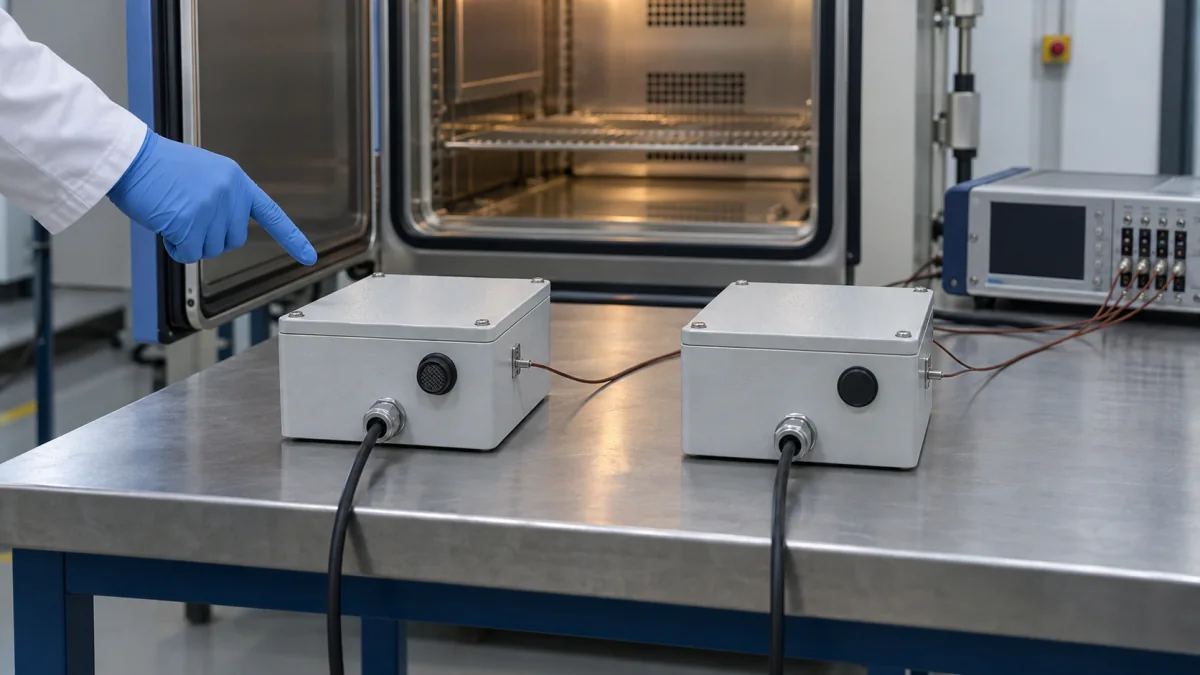
<p>接著依圖面安裝指定的透氣元件，保留其他零件及設定不變，再重複相同順序。若須使用兩個試件，記錄其材料、公差及組裝差異。外觀相似不能證明兩者相同。</p>
<figure>
<img alt="兩個封閉外殼試件分別裝有透氣元件與實心塞，帶有電纜引入口及感測器導線，旁邊是開啟的溫度試驗箱" src="/images/blog/how-temperature-cycling-affects-enclosure-seals-and-the-role-of-venting/sealed-vented-comparison.webp" srcset="/images/blog/how-temperature-cycling-affects-enclosure-seals-and-the-role-of-venting/sealed-vented-comparison-600.webp 600w, /images/blog/how-temperature-cycling-affects-enclosure-seals-and-the-role-of-venting/sealed-vented-comparison.webp 1200w" sizes="(max-width: 640px) 100vw, 760px" width="1200" height="675" loading="lazy" decoding="async">
<figcaption>此示意試驗台景象呈現兩個封閉試件：一個裝有開槽壁面透氣元件，另一個裝有實心塞，另有分開的電纜引入口及感測器導線。照片之外仍須有紀錄才能證明規格相同及溫度循環結果相當。</figcaption>
</figure>
<table>
<thead>
<tr>
<th>觀察到的比較結果</th>
<th>可支持的解讀</th>
<th>下一步措施</th>
</tr>
</thead>
<tbody>
<tr>
<td>壓力峰值降低，接合處移動或洩漏也減少。</td>
<td>在所涵蓋的循環條件中，壓力負荷是影響因素之一。</td>
<td>驗證透氣能力、流量維持、安裝、侵入防護及其他必要狀態。</td>
</tr>
<tr>
<td>壓力峰值降低，但接合處移動未變。</td>
<td>熱機械幾何影響可能獨立於壓力。</td>
<td>檢查溫度梯度、約束、公差堆疊、緊固件及支撐。</td>
</tr>
<tr>
<td>壓力峰值降低，但恢復後密封力仍持續下降。</td>
<td>隨時間變化的材料反應或損傷可能是主要因素。</td>
<td>核對密封膠料試驗佐證，並檢查模製密封件與表面。</td>
</tr>
<tr>
<td>出現濕氣，但未發現相符的介面洩漏。</td>
<td>仍可能是凝露或受困濕氣。</td>
<td>比較冷表面溫度與當地露點，並追蹤液體位置。</td>
</tr>
<tr>
<td>透氣後壓力仍高，或變化落後於循環。</td>
<td>已安裝流量可能不足或受到限制。</td>
<td>檢查雙向流量、外蓋、污染、方向、數量及間隙。</td>
</tr>
</tbody>
</table>
<p>我會依實際量測狀態解讀結果。室溫恢復後的洩漏測試，不能證明低溫轉換期間的接觸狀況；高溫時壓力偏低，也不能證明冷卻期間的內流量充足；初始乾燥測試則不能涵蓋後續的水、灰塵、油、冰、清潔或老化。先界定限值，評估兩個流動方向，再於具代表性的狀態調節或變更後重複受影響的量測。</p>
<h2 id="conclusion">結論</h2>
<p>溫度循環會影響壓力、幾何配置、密封反應及濕氣。我只會將透氣效果歸因於已安裝元件雙向流量所能降低的氣體負荷。水蒸氣交換須另行評估。透氣無法修正尺寸不匹配、恢復密封力、阻止老化、加熱表面、排走液體或證明符合侵入防護要求。</p>
<p>我會在同一份同步紀錄中比較密封與透氣狀態。若壓力、移動及洩漏同步改變，可能支持有限範圍內的透氣效益。壓力降低後症狀仍在，就應追查接合處、材料或濕氣佐證。這才能找出透氣元件實際需要解決的密封問題。</p>
<h2 id="faqs-about-temperature-cycling-enclosure-seals-and-venting">溫度循環、外殼密封與透氣常見問題</h2>
<h3 id="does-temperature-cycling-always-damage-an-enclosure-seal">溫度循環一定會損壞外殼密封嗎？</h3>
<p>不一定。結果取決於各零件溫度、變化速率、停留時間、循環次數、幾何配置、約束、密封膠料、壓縮量、先前使用歷程、壓差及組裝品質。界定的循環可能揭露弱點，但僅有最低及最高溫度，無法證明已損壞或預測使用壽命。</p>
<h3 id="can-venting-prevent-thermal-expansion-mismatch-at-a-gasket">透氣能防止墊片的熱膨脹不匹配嗎？</h3>
<p>不能。透氣可以降低外殼邊界兩側的氣體壓差，但不會改變零件尺寸、膨脹係數、溫度梯度、緊固件約束、面板彎曲、電纜移動、墊片壓縮量或隨時間變化的材料行為。這些負荷路徑須分別試驗。</p>
<h3 id="does-lower-differential-pressure-prove-the-seal-will-last-longer">差壓降低能證明密封壽命較長嗎？</h3>
<p>不能。這只證明該配置在該循環中的量測壓力負荷較低。宣稱壽命還需要相關材料、幾何配置、應力、溫度、時間、環境曝露、損傷及功能佐證。不要把單一壓力曲線換算成維護週期。</p>
<h3 id="should-ingress-be-tested-during-or-after-temperature-cycling">應在溫度循環期間還是之後測試侵入防護？</h3>
<p>依產品規格及關注的失效狀態所要求的順序進行。於高溫或低溫狀態下測試，與恢復後測試可能回答不同問題。記錄確切外殼配置、狀態調節順序、侵入方法、觀察結果及驗收準則。</p>
<h3 id="how-can-a-test-show-whether-venting-actually-helped-the-seal">如何透過試驗確認透氣確實改善了密封狀況？</h3>
<p>以同一時間基準量測內外壓力、關鍵零件溫度、相關移動或接觸力指標及洩漏情況。在相同循環下，比較基準配置及指定的透氣配置。只有壓力變化與密封反應同步改變時，才能將改善歸因於透氣。</p>
<h3 id="sources-and-technical-references">來源與技術參考資料</h3>
<ul>
<li><a href="https://nvlpubs.nist.gov/nistpubs/Legacy/circ/nbscircular279.pdf">NIST Circular 279－氣體溫度、壓力與密度的關係</a>，查閱日期：2026-09-08。</li>
<li><a href="https://webstore.iec.ch/en/publication/71503">IEC 60068-2-14:2023－環境試驗，第 N 試驗：溫度變化</a>，查閱日期：2026-09-08。</li>
<li><a href="https://store.astm.org/d0395-18r25.html">ASTM D395-18(2025)－橡膠性能標準試驗方法：壓縮永久變形</a>，查閱日期：2026-09-08。</li>
<li><a href="https://store.astm.org/e0328-26.html">ASTM E328-26－材料與結構的應力鬆弛標準試驗方法</a>，查閱日期：2026-09-08。</li>
<li><a href="https://gml.noaa.gov/ozwv/wvap/instrument.html">NOAA 全球監測實驗室－水蒸氣測量儀器說明</a>，查閱日期：2026-09-08。</li>
<li><a href="https://webstore.iec.ch/en/publication/2452">IEC 60529:1989+A1:1999+A2:2013－外殼提供的防護等級</a>，查閱日期：2026-09-08。</li>
</ul>