# 醫療設備與潔淨室應如何選擇合適的電纜密封接頭？

> Source: https://chinacableglands.com/zh-hant/blog/how-do-you-select-the-right-cable-glands-for-medical-equipment-and-cleanrooms/
> Language: zh-Hant
> Publisher: 倍拓電纜接頭
> Author: Edward Wang
> Published: 2026-02-16
> Updated: 2026-09-16

依據安裝位置、接觸途徑、清潔暴露、介面及確切配置證據，為醫療設備與潔淨室選擇電纜密封接頭。

<p><strong>醫療設備與潔淨室的電纜密封接頭，應先界定引入口位置與作用，再選擇材料或額定值。</strong>盤點接觸途徑、受控空間暴露、清潔方式、電纜、外殼及電氣功能，接著比對確切組件的證據。「醫療級」和「潔淨室級」都不是通用的接頭分類。我會依<a href="/zh-hant/blog/what-is-iec-62444-standard-and-why-does-it-matter-for-cable-gland-selection/">IEC 62444 完整產品範圍界線</a>評估實際設備或受控空間。</p>
<blockquote>
<p><strong>重點摘要</strong></p>
<ul>
<li>先界定電纜引入口屬於接觸病患、接觸產品、暴露於潔淨室，或位於受控邊界之外。</li>
<li>記錄實際清潔劑、施用方式、接觸、溫度、沖洗、乾燥、頻率及其他環境負荷。</li>
<li>分別檢查電纜側密封、固定保持、外殼側密封、外露幾何及電氣功能等介面。</li>
<li>將材料名稱、IP 代碼、生物相容性聲明及潔淨室標示視為有明確範圍的證據，不可當成全面核准。</li>
<li>若確切配置與要求衝突，應排除該候選方案；缺少證據時應維持未決，不可自行推定符合。</li>
</ul>
</blockquote>
<h2 id="medical-and-cleanroom-labels-do-not-define-one-product-class">醫療與潔淨室標示不代表單一產品類別</h2>
<p><strong>醫療或潔淨室標示</strong>只是一種起始描述，並非電纜密封接頭類別。它未明確界定接觸途徑、電纜範圍、密封膠料、清潔方式、幾何、面板接合、電氣功能、試驗方法或法規範圍。因此，帶有相同標示的兩種引入口，可能需要不同證據。</p>
<p><a href="https://www.ecfr.gov/current/title-21/chapter-I/subchapter-H/part-820">21 CFR Part 820</a>規定其適用範圍內成品醫療器材製造商的品質系統要求。該法規並未創設通用的 FDA 電纜密封接頭類別。我會依成品器材要求評估零組件與組件。同樣地，潔淨室分類針對空間及其控制措施；不能據此選定接頭材料。</p>
<h2 id="locate-the-cable-entry-before-choosing-materials">先確認電纜引入口位置，再選擇材料</h2>
<p><strong>接觸途徑</strong>是器材材料直接或間接接觸人體的路徑。我會先定位引入口，確認它接觸什麼、哪些物質會到達該處、哪一側受控，以及該引入口會穿越哪個開口。這樣便能讓病患接觸規則、製藥空間控制及一般外殼要求各自適用於正確範圍。</p>
<p><a href="https://www.accessdata.fda.gov/scripts/cdrh/cfdocs/cfstandards/detail.cfm?standard__identification_no=47116">FDA 對 ISO 10993-1:2025 的部分認可紀錄</a>將生物學評估與直接或間接病患接觸連結起來，亦包含個人防護裝置的使用者接觸。若要對接頭要求或宣稱生物安全性，應先界定該接觸途徑。若設備維修側的引入口不涉及此類接觸，應另行評估。</p>
<table>
<thead>
<tr>
<th>引入口位置或作用</th>
<th>選型前須界定</th>
<th>不可據此推定</th>
</tr>
</thead>
<tbody>
<tr>
<td>病患接觸途徑</td>
<td>直接或間接接觸、暴露材料、接觸時間、成品器材配置及適用器材要求</td>
<td>不得由樹脂系列或「USP Class VI」聲明推定成品醫療器材已獲核准。</td>
</tr>
<tr>
<td>產品或製程接觸邊界</td>
<td>暴露的材料或流體、清潔與滅菌途徑、殘留物控制、排液及製程驗收準則</td>
<td>不得由醫療標示推定產品相容性或無菌性。</td>
</tr>
<tr>
<td>暴露於潔淨室但不接觸產品的引入口</td>
<td>房間側、暴露表面、粒子或殘留物機制、清潔可及性及維護造成的干擾</td>
<td>不得由潔淨室等級推定通用接頭設計。</td>
</tr>
<tr>
<td>設備內部或維修側</td>
<td>外殼環境、電纜移動、熱、化學品、可及性及電氣功能</td>
<td>附近有潔淨室，不代表每個隱藏組件都會接觸產品。</td>
</tr>
</tbody>
</table>
<p>我會描繪實際邊界。一個組件可能有經清潔的房間側本體，而鎖緊螺帽位於外殼內。電纜可能穿越受控邊界，但其接頭並未接觸病患或產品。不可將整台設備視為單一暴露區域。</p>
<p>例如，考慮診斷分析儀上的兩個引入口。一個位於封閉維修面板後方，遠離使用者及日常清潔範圍；其功能要求可能包括配合、固定保持、密封及安全佈線。另一個穿越外殼表面，每天由工作人員擦拭。即使使用相同電纜，仍須界定清潔方式、可接近的幾何設計及相容的外露零件。</p>
<p>兩處位置都不會自動構成病患接觸途徑，也不會自動適用於潔淨室。我會分別建立候選清單。證據須對應各引入口的外露零件、清潔方法及成品設備中的作用。一份證書無法回答所有問題。</p>
<h2 id="convert-cleaning-and-contamination-exposure-into-bounded-requirements">將清潔與污染暴露轉化為有明確範圍的要求</h2>
<p><strong>清潔暴露</strong>是指到達已安裝引入口的藥劑、條件及操作。我會記錄化學品與配方、濃度、施用方式、接觸時間、溫度、頻率、沖洗、乾燥及殘留物。視情況納入製程化學品、消毒劑蒸氣、輻射、熱、壓力或擦拭。</p>
<p><a href="https://www.ecfr.gov/current/title-21/chapter-I/subchapter-C/part-211/subpart-C/section-211.42">21 CFR 211.42</a>涵蓋製藥設施設計及明確界定的無菌製程區域。該法規不會指定電纜密封接頭，也不會將藥品製造要求套用於每一種器材。在此類區域中，應遵循污染控制及清潔規範。超出該範圍時，分析儀須依自身預定用途、接觸途徑、外殼及環境要求評估。</p>
<p>我會逐一比較材料。本體、表面處理、彈性體、墊圈、鎖緊螺帽、電纜護套、標籤及外殼塗層，對相同暴露可能有不同反應。<a href="/zh-hant/blog/how-to-choose-the-right-cable-gland-material-for-your-application-environment/">特定應用的材料比較</a>有助於評估具名介質與條件，但不能據此認定不鏽鋼、聚合物或某一密封件系列在所有情況下都最合適。</p>
<p>我也會同步檢查幾何與化學相容性。螺紋、突變處、受損表面處理、凹槽及隱蔽接合處，可能積存液體或妨礙檢查。應分別檢查外表面、面板接合處、電纜護套及可及性。確認已安裝方向下的排液、沖洗、乾燥及檢查方式。表面處理限值及量測方法應依設備或設施要求。</p>
<figure>
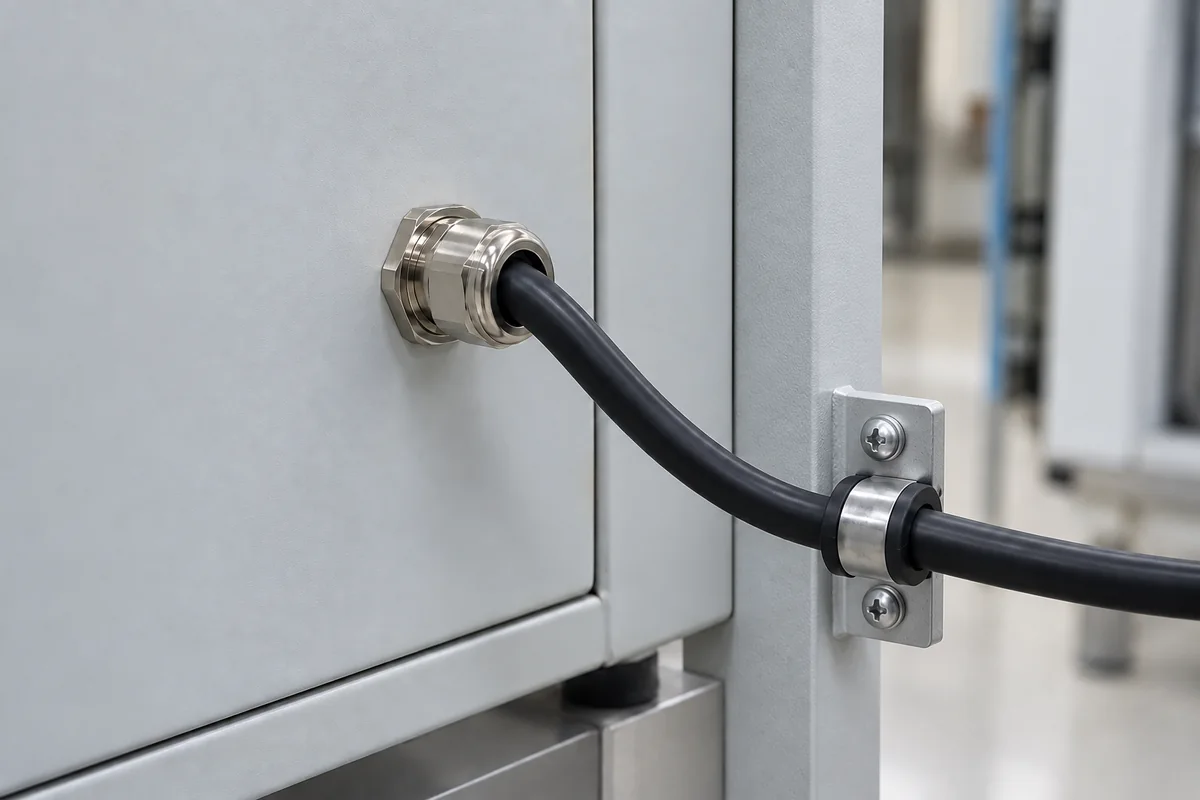
<img alt="設備面板外側的引入口示意：一個金屬電纜密封接頭、一條黑色電纜，以及另行安裝於下游的支撐夾具。" src="/images/blog/how-do-you-select-the-right-cable-glands-for-medical-equipment-and-cleanrooms/equipment-entry-and-cable-support.webp" srcset="/images/blog/how-do-you-select-the-right-cable-glands-for-medical-equipment-and-cleanrooms/equipment-entry-and-cable-support-600.webp 600w, /images/blog/how-do-you-select-the-right-cable-glands-for-medical-equipment-and-cleanrooms/equipment-entry-and-cable-support.webp 1200w" sizes="(max-width: 640px) 100vw, 760px" width="1200" height="800" loading="lazy" decoding="async">
<figcaption>外側引入口示意圖，顯示接頭與面板的接合處，以及延伸至獨立支撐夾具的電纜路徑。</figcaption>
</figure>
<h2 id="separate-the-cable-entry-functions">分開檢查各項電纜引入功能</h2>
<p><strong>電纜引入功能</strong>是指在單一介面上指定的一項功能。我會分別檢查電纜密封、固定保持、面板密封、外露表面的可清潔性，以及任何保護等電位連接或屏蔽層接觸。某一項功能的證據不能代替另一項。以下流程依應用情境檢查四個配置面向。</p>
<figure class="blog-chart" style="container-type: inline-size;">
<svg xmlns="http&#58;//www.w3.org/2000/svg" viewBox="0 0 480 1660" role="img" aria-labelledby="med-select-title med-select-desc" style="font-family:var(--font-body); width: 100% !important; max-width: 100% !important; height: auto !important;" id="cg-typography-a49c86a6b47b47d5">
<style>
#cg-typography-a49c86a6b47b47d5 { --svg-body-screen: 17px; }
@media (max-width: 760px) { #cg-typography-a49c86a6b47b47d5 { --svg-body-screen: 16px; } }
</style>
<title id="med-select-title">醫療設備與潔淨室電纜密封接頭的選型界線</title>
<desc id="med-select-desc">四階段垂直決策圖，將引入口位置與暴露條件連結至介面檢查及確切配置的證據。</desc>
<defs><marker id="med-select-arrow" markerWidth="10" markerHeight="10" refX="9" refY="5" orient="auto"><path d="M0 0L10 5L0 10Z" fill="var(--color-primary)"/></marker></defs>
<text x="240" y="42" text-anchor="middle" fill="var(--color-carbon)" font-size="26" font-weight="700" style="font-size: calc(22px * 480px / 100cqw) !important;">選定引入口邊界</text>
<text x="240" y="76" text-anchor="middle" fill="var(--color-graphite)" font-size="19" style="font-size: calc(var(--svg-body-screen) * 480px / 100cqw) !important;">四項檢查逐步界定確切配置。</text>
<rect x="24" y="110" width="432" height="280" rx="16" fill="var(--surface-card)" stroke="var(--color-primary)" stroke-width="3"/>
<text x="48" y="150" fill="var(--color-carbon)" font-size="21" font-weight="700" style="font-size: calc(18px * 480px / 100cqw) !important;">1. 確認引入口位置</text>
<circle cx="62" cy="204" r="17" fill="var(--color-ash)" stroke="var(--color-primary)" stroke-width="3"/>
<path d="M54 204H70M62 196V212" fill="none" stroke="var(--color-primary)" stroke-width="3"/>
<text x="96" y="198" fill="var(--color-carbon)" font-size="20" font-weight="700" style="font-size: calc(18px * 480px / 100cqw) !important;">病患或產品接觸途徑</text>
<text x="96" y="228" fill="var(--color-graphite)" font-size="19" style="font-size: calc(var(--svg-body-screen) * 480px / 100cqw) !important;">界定接觸路徑：直接、</text>
<text x="96" y="254" fill="var(--color-graphite)" font-size="19" style="font-size: calc(var(--svg-body-screen) * 480px / 100cqw) !important;">間接，或位於維修側。</text>
<rect x="45" y="292" width="34" height="28" rx="6" fill="var(--color-ash)" stroke="var(--color-primary)" stroke-width="3"/>
<text x="96" y="300" fill="var(--color-carbon)" font-size="20" font-weight="700" style="font-size: calc(18px * 480px / 100cqw) !important;">受控空間邊界</text>
<text x="96" y="330" fill="var(--color-graphite)" font-size="19" style="font-size: calc(var(--svg-body-screen) * 480px / 100cqw) !important;">標示房間側、維修側、</text>
<text x="96" y="356" fill="var(--color-graphite)" font-size="19" style="font-size: calc(var(--svg-body-screen) * 480px / 100cqw) !important;">可及性及外露表面。</text>
<path d="M240 390V426" fill="none" stroke="var(--color-primary)" stroke-width="4" marker-end="url(#med-select-arrow)"/>
<rect x="24" y="440" width="432" height="280" rx="16" fill="var(--surface-card)" stroke="var(--color-primary)" stroke-width="3"/>
<text x="48" y="480" fill="var(--color-carbon)" font-size="21" font-weight="700" style="font-size: calc(18px * 480px / 100cqw) !important;">2. 界定暴露條件</text>
<path d="M46 530H78M46 552H78M46 574H78M46 596H78" fill="none" stroke="var(--color-primary)" stroke-width="4" stroke-linecap="round"/>
<text x="96" y="526" fill="var(--color-carbon)" font-size="20" font-weight="700" style="font-size: calc(18px * 480px / 100cqw) !important;">清潔與再處理</text>
<text x="96" y="556" fill="var(--color-graphite)" font-size="19" style="font-size: calc(var(--svg-body-screen) * 480px / 100cqw) !important;">藥劑・接觸・熱・沖洗</text>
<text x="96" y="582" fill="var(--color-graphite)" font-size="19" style="font-size: calc(var(--svg-body-screen) * 480px / 100cqw) !important;">乾燥・頻率・殘留物</text>
<text x="96" y="632" fill="var(--color-carbon)" font-size="20" font-weight="700" style="font-size: calc(18px * 480px / 100cqw) !important;">環境與移動</text>
<text x="96" y="662" fill="var(--color-graphite)" font-size="19" style="font-size: calc(var(--svg-body-screen) * 480px / 100cqw) !important;">粒子・液體・電纜負荷</text>
<text x="96" y="688" fill="var(--color-graphite)" font-size="19" style="font-size: calc(var(--svg-body-screen) * 480px / 100cqw) !important;">電氣功能要求・維護</text>
<path d="M240 720V756" fill="none" stroke="var(--color-primary)" stroke-width="4" marker-end="url(#med-select-arrow)"/>
<rect x="24" y="770" width="432" height="410" rx="16" fill="var(--surface-card)" stroke="var(--color-primary)" stroke-width="3"/>
<text x="48" y="810" fill="var(--color-carbon)" font-size="21" font-weight="700" style="font-size: calc(18px * 480px / 100cqw) !important;">3. 檢查各項功能</text>
<circle cx="62" cy="868" r="18" fill="var(--color-ash)" stroke="var(--color-primary)" stroke-width="3"/>
<path d="M50 868H74" fill="none" stroke="var(--color-primary)" stroke-width="5"/>
<text x="96" y="858" fill="var(--color-carbon)" font-size="20" font-weight="700" style="font-size: calc(18px * 480px / 100cqw) !important;">電纜側介面</text>
<text x="96" y="888" fill="var(--color-graphite)" font-size="19" style="font-size: calc(var(--svg-body-screen) * 480px / 100cqw) !important;">密封範圍・護套・輪廓</text>
<text x="96" y="914" fill="var(--color-graphite)" font-size="19" style="font-size: calc(var(--svg-body-screen) * 480px / 100cqw) !important;">固定保持・移動・支撐</text>
<rect x="44" y="956" width="36" height="36" rx="6" fill="var(--color-ash)" stroke="var(--color-primary)" stroke-width="3"/>
<circle cx="62" cy="974" r="7" fill="none" stroke="var(--color-primary)" stroke-width="3"/>
<text x="96" y="962" fill="var(--color-carbon)" font-size="20" font-weight="700" style="font-size: calc(18px * 480px / 100cqw) !important;">外殼與表面</text>
<text x="96" y="992" fill="var(--color-graphite)" font-size="19" style="font-size: calc(var(--svg-body-screen) * 480px / 100cqw) !important;">引入口密封・承靠・表面處理</text>
<text x="96" y="1018" fill="var(--color-graphite)" font-size="19" style="font-size: calc(var(--svg-body-screen) * 480px / 100cqw) !important;">可及性・排液・方向</text>
<path d="M46 1086H78M50 1072L74 1100M74 1072L50 1100" fill="none" stroke="var(--color-primary)" stroke-width="3" stroke-linecap="round"/>
<text x="96" y="1072" fill="var(--color-carbon)" font-size="20" font-weight="700" style="font-size: calc(18px * 480px / 100cqw) !important;">必要的電氣功能</text>
<text x="96" y="1102" fill="var(--color-graphite)" font-size="19" style="font-size: calc(var(--svg-body-screen) * 480px / 100cqw) !important;">等電位連接・屏蔽層接觸</text>
<text x="96" y="1128" fill="var(--color-graphite)" font-size="19" style="font-size: calc(var(--svg-body-screen) * 480px / 100cqw) !important;">絕緣・設備範圍</text>
<path d="M240 1180V1216" fill="none" stroke="var(--color-primary)" stroke-width="4" marker-end="url(#med-select-arrow)"/>
<rect x="24" y="1230" width="432" height="300" rx="16" fill="var(--surface-card)" stroke="var(--color-primary)" stroke-width="3"/>
<text x="48" y="1270" fill="var(--color-carbon)" font-size="21" font-weight="700" style="font-size: calc(18px * 480px / 100cqw) !important;">4. 比對證據</text>
<path d="M44 1316H80V1354H44ZM53 1328H71M53 1340H71" fill="none" stroke="var(--color-primary)" stroke-width="3" stroke-linejoin="round"/>
<text x="96" y="1314" fill="var(--color-carbon)" font-size="20" font-weight="700" style="font-size: calc(18px * 480px / 100cqw) !important;">確切產品配置</text>
<text x="96" y="1344" fill="var(--color-graphite)" font-size="19" style="font-size: calc(var(--svg-body-screen) * 480px / 100cqw) !important;">零件・電纜・密封件・配件</text>
<text x="96" y="1370" fill="var(--color-graphite)" font-size="19" style="font-size: calc(var(--svg-body-screen) * 480px / 100cqw) !important;">引入口・說明・版本</text>
<text x="48" y="1422" fill="var(--color-carbon)" font-size="20" font-weight="700" style="font-size: calc(18px * 480px / 100cqw) !important;">範圍相符的評估</text>
<text x="48" y="1452" fill="var(--color-graphite)" font-size="19" style="font-size: calc(var(--svg-body-screen) * 480px / 100cqw) !important;">使每項宣稱都對應到具名</text>
<text x="48" y="1478" fill="var(--color-graphite)" font-size="19" style="font-size: calc(var(--svg-body-screen) * 480px / 100cqw) !important;">配置及驗收範圍。</text>
<text x="240" y="1580" text-anchor="middle" fill="var(--color-primary)" font-size="19" font-weight="700" style="font-size: calc(18px * 480px / 100cqw) !important;"><tspan    style="font-size: inherit !important;" x="240" y="1580" dy="0">選型前，逐項核對</tspan><tspan    style="font-size: inherit !important;" x="240" y="1611.05" dy="0">所有要求</tspan></text>
</svg>
<figcaption>四階段選型圖將引入口位置及暴露條件，連結至電纜、外殼、表面、電氣及證據檢查。</figcaption>
</figure>
<p>我會記錄電纜構造、護套材料配方、外徑（OD）最小與最大值、輪廓、表面、移動及支撐。<a href="/zh-hant/blog/what-is-cable-gland-clamping-range-and-why-does-it-matter-for-your-installation/">夾持範圍判定方法</a>說明為何只看標稱直徑並不足夠。若密封位置有凸肋、波紋、損傷或非圓形，則須確認<a href="/zh-hant/blog/how-to-ensure-proper-sealing-on-uneven-or-corrugated-cables/">非圓形密封邊界</a>。不可假設圓形密封件也能密封這些表面。</p>
<p>在外殼側，我會檢查攻牙引入口或間隙孔、壁面或承靠面、平面度及塗層。也要納入面板密封件、墊圈、鎖緊螺帽、配件、可用螺紋接合長度及內部空間。電纜配合良好無法證明此接合處符合要求；面板密封也不能證明固定保持能力。</p>
<p>我會辨識暴露於清潔的接合處，並確認已安裝狀態下的可及性、沖洗、乾燥及檢查方式。必要的保護等電位連接、電磁相容性（EMC）屏蔽層接觸、絕緣或其他電氣功能，都須有各自的獨立路徑與試驗界線。</p>
<h2 id="build-the-shortlist-from-exact-interface-data">依據確切介面資料建立候選清單</h2>
<p><strong>候選條件衝突</strong>是指已知要求超出候選組件聲明範圍。我會先確認電纜及引入口幾何，再排除與暴露、形狀、電氣功能或證據不符的選項。若先依標示或本體材料選型，這些要求仍會懸而未決。</p>
<table>
<thead>
<tr>
<th>選型欄位</th>
<th>須蒐集的確切資料</th>
<th>候選方案必須提供</th>
<th>應排除或暫不定案的情況</th>
</tr>
</thead>
<tbody>
<tr>
<td>位置與接觸作用</td>
<td>病患、產品、房間、邊界、外殼或維修側的關係</td>
<td>適用於實際接觸途徑的證據</td>
<td>以籠統的醫療宣稱取代位置分析。</td>
</tr>
<tr>
<td>電纜側介面</td>
<td>構造、完整外徑範圍、輪廓、護套、移動及支撐</td>
<td>確切允許的電纜範圍與構造，以及所需的固定保持或密封宣稱</td>
<td>已記錄範圍不符，或缺少電纜公差資料。</td>
</tr>
<tr>
<td>外殼介面</td>
<td>引入口類型、壁面或承靠面、表面處理、組件堆疊及可及性</td>
<td>相容圖面、可用螺紋或鎖緊螺帽配置，以及引入口密封方法</td>
<td>配合、承靠或組件適用範圍尚未釐清。</td>
</tr>
<tr>
<td>清潔與環境</td>
<td>具名藥劑及循環、殘留物、熱、液體、粒子與機械負荷</td>
<td>組件特定限值，或在相關條件下的代表性評估</td>
<td>相容性僅依據一般材料系列。</td>
</tr>
<tr>
<td>外露幾何</td>
<td>已安裝方向、表面可及性、接合處、排液及檢查方法</td>
<td>能符合設備所定清潔方法的幾何</td>
<td>必要表面無法觸及、沖洗、乾燥或檢查。</td>
</tr>
<tr>
<td>電氣功能</td>
<td>等電位連接、屏蔽、絕緣、導通，或無特殊功能</td>
<td>每項必要功能的確切構造與試驗依據</td>
<td>將金屬本體視為自動具備電氣功能的證明。</td>
</tr>
</tbody>
</table>
<p>電纜尺寸達到聲明範圍的邊界值，不代表必然不適用。我會依確切介面，比對其完整製造公差範圍與使用條件。若接近清潔試驗限值，應確認材料配方、試件或零件狀態、驗收準則及其與整個組件的關聯性。缺少資料不能視為安全裕度。</p>
<h2 id="use-evidence-at-the-right-scope">使用適當範圍的證據</h2>
<p><strong>配置證據</strong>會列明產品、介面、條件及使用限值。我會以材料聲明確認牌號或材料配方，但不能據此證明固定保持、侵入防護、可清潔性、生物安全性或反覆暴露後的性能。零組件試驗可能有幫助，但設備本身還可能包含試驗未涵蓋的接合處、殘留物、製程變更或接觸途徑。</p>
<p><a href="https://webstore.iec.ch/en/publication/7034">IEC 62444:2010</a>涵蓋供應狀態的完整接頭。應確認每項宣稱涵蓋的接頭功能與組件。該標準不能證明房間等級、病患接觸適用性、清潔驗證或完整外殼配置。</p>
<p><a href="https://webstore.iec.ch/en/publication/2452">IEC 60529</a>用於分類外殼侵入防護（IP）。我會將其受測組件及條件與要求相配。該標準不能證明無菌、可清潔性、耐化學性、生物相容性、房間等級或可無限制沖洗。<a href="/zh-hant/blog/ip-protection-ratings-explained-how-to-choose-the-right-cable-gland-based-on-iec-60529-standards/">IP 證據檢查</a>有助於比對確切報告與已安裝的引入口。</p>
<p>我會依下列順序建立證據：</p>
<ol>
<li><strong>識別。</strong>記錄接頭料號與版本、密封件或嵌件、配件、電纜構造與範圍、引入口圖面及說明。</li>
<li><strong>材料與表面。</strong>確認牌號或化合物、相關配方或表面處理、製造狀態及暴露條件。</li>
<li><strong>功能。</strong>依所述組件，比對固定保持、密封、機械、電氣及環境試驗結果。</li>
<li><strong>成品設備。</strong>評估接觸途徑、安裝、外殼、清潔或再處理，以及器材或設施判準。</li>
</ol>
<p>若牌號、材料配方、表面處理或製造方式會影響選型，我會保留可追溯性。即使外部尺寸相同，替代品仍可能改變證據的適用性。應保留能確認識別、範圍、限值及持續相關性的紀錄。增加文件數量無法彌補缺少的配置比對。</p>
<h2 id="apply-clear-rejection-rules-before-final-selection">最終選型前先套用明確的排除條件</h2>
<p><strong>排除條件</strong>是會使候選組件遭剔除的明確衝突。若答案缺少但可補足，我會暫不定案。這可區分不相容的選項與仍待補證據的選項。</p>
<p>若密封膠料不明，或暴露限值缺少適用條件，我會暫不定案。若試驗使用不同電纜或配件組合，或未涵蓋成品的接觸途徑，也同樣處理。選型前，應由負責設備、設施或產品的單位提供紀錄以補足這些缺口。</p>
<p>對於製藥設備的貫穿件，我會使用<a href="/zh-hant/blog/how-do-pharmaceutical-labs-maintain-cleanroom-standards-with-cable-glands-a-complete-guide-to-contamination-free-electrical-connections/">潔淨室邊界控制指南</a>。該指南涵蓋安裝、清潔、重新合格驗證、監測及變更。本文的目標是為已界定的器材或潔淨室用途，建立有技術依據的引入口組件。</p>
<h2 id="conclusion">結論</h2>
<p>我會依引入口的實際作用，為醫療設備與潔淨室選擇電纜密封接頭。先定位引入口、界定接觸與清潔暴露，再分開確認電纜、外殼、表面及電氣功能。每項要求都須以涵蓋完整組件的證據佐證。</p>
<p>已知衝突會使候選方案遭排除；缺少適用範圍時則維持未決。只有在電纜、接頭、密封件、配件、引入口、幾何及成品設備要求彼此相符時，才能完成選型。僅憑材料、IP 代碼或證書，無法證明所有功能均符合要求。</p>
<h2 id="faq-cable-glands-for-medical-equipment-and-cleanrooms">醫療設備與潔淨室電纜密封接頭常見問題</h2>
<h3 id="is-there-a-universal-medical-grade-cable-gland-standard">是否有通用的醫療級電纜密封接頭標準？</h3>
<p>沒有。「醫療級」並未定義通用的電纜密封接頭類別。首先確認接頭在成品器材或設施中的作用，包括是否接觸病患或產品、清潔暴露、電纜與外殼介面，以及電氣功能。再依實際適用的確切產品與配置證據，比對每項要求。</p>
<h3 id="does-a-cable-gland-need-biocompatibility-evidence-in-every-medical-device">每一種醫療器材的電纜密封接頭都需要生物相容性證據嗎？</h3>
<p>不需要。是否需要取決於成品器材是否造成直接或間接的人體接觸，以及相關接觸途徑、時間、材料、製程及法規要求。位於維修外殼內的接頭可能完全不涉及此類接觸。未確認相關性前，不可將原料聲明直接套用於成品器材。</p>
<h3 id="does-stainless-steel-automatically-make-a-gland-cleanroom-compatible">不鏽鋼能自動使電纜密封接頭適用於潔淨室嗎？</h3>
<p>不能。確切合金、表面處理、密封件、墊圈、電纜護套、外殼表面、外部幾何、清潔循環、殘留物及已安裝狀態下的可及性都很重要。不鏽鋼可能適用於某些暴露條件，但不相容的密封件、無法觸及的接合處、受損表面或不匹配的電纜介面，仍可能使完整引入口不適用。</p>
<h3 id="does-an-ip68-rating-prove-suitability-for-cleanroom-cleaning">IP68 等級能證明適用於潔淨室清潔嗎？</h3>
<p>不能。IP 代碼說明受測配置與條件下的外殼侵入防護，但無法證明耐化學性、可清潔性、生物安全性、無菌、粒子控制、房間等級或反覆清潔後的性能。應查核相關 IP 報告，並另行評估實際清潔暴露。</p>
<h3 id="what-evidence-should-close-the-final-cable-gland-selection">完成電纜密封接頭選型需要哪些證據？</h3>
<p>確認接頭與密封件、電纜構造及完整直徑範圍，以及配件。保留圖面與說明，並附上材料、表面處理及相關功能證據。接著比對成品設備的接觸、清潔、外殼、電氣及設施要求。若有衝突，應排除該組件；若涵蓋範圍不全，則維持未決。</p>
<h3 id="sources-and-technical-references">來源與技術參考資料</h3>
<ul>
<li><a href="https://www.ecfr.gov/current/title-21/chapter-I/subchapter-H/part-820">21 CFR Part 820，品質管理系統規章－《電子聯邦法規》</a>，查閱日期：2026-09-25。</li>
<li><a href="https://www.accessdata.fda.gov/scripts/cdrh/cfdocs/cfstandards/detail.cfm?standard__identification_no=47116">ISO 10993-1:2025 部分認可紀錄－FDA</a>，查閱日期：2026-09-25。</li>
<li><a href="https://www.ecfr.gov/current/title-21/chapter-I/subchapter-C/part-211/subpart-C/section-211.42">21 CFR 211.42，設計與施工特徵－FDA</a>，查閱日期：2026-09-25。</li>
<li><a href="https://webstore.iec.ch/en/publication/7034">IEC 62444:2010，電氣裝置用電纜密封接頭－IEC</a>，查閱日期：2026-09-25。</li>
<li><a href="https://webstore.iec.ch/en/publication/2452">IEC 60529，外殼提供的防護等級－IEC</a>，查閱日期：2026-09-25。</li>
</ul>
