# 製藥實驗室如何以電纜密封接頭維持潔淨室標準？無污染電氣連接完整指南

> Source: https://chinacableglands.com/zh-hant/blog/how-do-pharmaceutical-labs-maintain-cleanroom-standards-with-cable-glands-a-complete-guide-to-contamination-free-electrical-connections/
> Language: zh-Hant
> Publisher: 倍拓電纜接頭
> Author: Victor Huang
> Published: 2026-01-26
> Updated: 2026-05-17

透過明確的介面、清潔佐證、安裝紀錄、重新合格驗證及變更管制，管理製藥環境中的電纜引入口。

<p><strong>製藥實驗室透過管控每個電纜穿透處，維持潔淨室標準。</strong> 我會將引入口視為具有可檢查表面與接合處的明確開口。使用者需求必須說明潔淨室側風險、清潔暴露、電纜及外殼介面，以及驗收判準；也須規定作業後檢查及需要重新合格驗證的變更。</p>
<p>我將「無污染」視為管控目標，而非產品保證。電纜密封接頭本身無法界定潔淨室等級、無菌性、壓力控制或清潔驗證。它僅能在所述電纜、配件、外殼、安裝及維護配置範圍內，發揮有文件佐證的功能。</p>
<p><a href="https://health.ec.europa.eu/system/files/2022-08/20220825_gmp-an1_en_0.pdf">歐盟 GMP 附錄 1</a> 適用於無菌藥品製造。GMP 是優良製造規範的縮寫。該附錄透過設施策略、廠房設施、合格驗證、監測與驗證流程來組織污染管控。適用時，我會依設施策略管理電纜穿透處。附錄不會核准某一款接頭產品。</p>
<blockquote>
<p><strong>重點摘要</strong></p>
<ul>
<li>界定穿透處的位置、暴露側、污染機制、清潔要求及作業後應執行的檢查。</li>
<li>將暴露表面、電纜介面、外殼介面及清潔暴露分成獨立的管控邊界。</li>
<li>記錄確切電纜、接頭、配件、外殼引入口及安裝方法，再驗證兩處密封介面。</li>
<li>安裝或變更後，重新合格驗證受影響的潔淨室管控。不可僅憑 IP 代碼、材料名稱、照片或通用「製藥級」標籤推定適用於潔淨室。</li>
</ul>
</blockquote>
<h2 id="start-with-the-cleanroom-user-requirement">從潔淨室使用者需求開始</h2>
<p>我會將「適用於潔淨室」轉化為可觀察及檢查的要求。辨識房間或區域、製程、產品暴露、法規範圍及清潔方式。記錄環境控制、維護空間及作業後檢查。僅憑房間等級無法選定接頭材料、IP 等級或螺紋。IP 是侵入防護的縮寫。</p>
<p><a href="https://www.accessdata.fda.gov/scripts/cdrh/cfdocs/cfcfr/cfrsearch.cfm?fr=211.42">FDA 21 CFR 211.42</a> 規定藥品現行優良製造規範（CGMP）下的設施設計與構造責任，並在適用時涵蓋指定的無菌製程區域。我會保留其設施與藥品製造的適用範圍；不可將其改述為接頭核准，或所有實驗室都必須遵循的要求。一般實驗室的標籤也不能免除其他更嚴格的適用責任。</p>
<p>在查閱產品目錄前，我會先記錄該位置的以下輸入條件。</p>
<table>
<thead>
<tr>
<th>受控輸入條件。</th>
<th>該確切位置應記錄的資料。</th>
<th>以下情況應暫停。</th>
</tr>
</thead>
<tbody>
<tr>
<td>法規與品質範圍</td>
<td>產品、製程、房間、適用程序及驗收判準</td>
<td>僅有「製藥級」要求。</td>
</tr>
<tr>
<td>污染機制</td>
<td>顆粒、活性微生物污染、殘留物、滲漏、保持能力或放氣（如相關）</td>
<td>未經評估便假設不存在危害。</td>
</tr>
<tr>
<td>清潔暴露</td>
<td>清潔劑、濃度、接觸、溫度、頻率、沖洗、乾燥及施用方式</td>
<td>僅憑材料名稱推定相容性。</td>
</tr>
<tr>
<td>環境邊界</td>
<td>氣流或壓力需求、外殼位置、清洗暴露及維護側</td>
<td>預期接頭能單獨控制整個房間環境。</td>
</tr>
<tr>
<td>安裝與重新合格驗證</td>
<td>作業管制、檢查、清潔、測試、監測及恢復使用檢查</td>
<td>未界定作業後必要檢查。</td>
</tr>
</tbody>
</table>
<p>我會先確認引入口相對於病患、產品或受控空間的位置。 <a href="/zh-hant/blog/how-do-you-select-the-right-cable-glands-for-medical-equipment-and-cleanrooms/">醫療設備與潔淨室選型指南</a> 會先區分上述邊界，再選擇材料與額定值。</p>
<p><a href="https://www.accessdata.fda.gov/scripts/cdrh/cfdocs/cfcfr/cfrsearch.cfm?fr=211.113">FDA 21 CFR 211.113</a> 要求制定書面程序，以防止不良微生物污染；對無菌藥品，也涉及無菌製程及滅菌製程的驗證。它沒有指定接頭材料、IP 代碼或設計。因此，除空氣中粒子分類外，我還需要引入口驗收計畫。</p>
<h2 id="where-can-a-cable-entry-penetration-create-contamination-risk">電纜引入口穿透處可能在哪些位置造成污染風險？</h2>
<p><strong>潔淨室電纜引入口穿透處</strong> 是其表面、接合處、材料及作業活動可能影響污染控制的邊界。我會依位置及製程評估相應機制。例行消毒、直接沖洗或開放式無菌操作，可能需要不同於關鍵區域外引入口的管控。</p>
<table>
<thead>
<tr>
<th>機制。</th>
<th>穿透處問題。</th>
<th>結案佐證。</th>
</tr>
</thead>
<tbody>
<tr>
<td>粒子釋出或堆積</td>
<td>清潔或電纜移動會不會磨耗、掉屑或困住粒子？</td>
<td>確切構造、表面處理、安裝檢查及狀況紀錄。</td>
</tr>
<tr>
<td>清潔殘留</td>
<td>液體會不會殘留在螺紋、墊圈、縫隙、標籤或過渡處？</td>
<td>清潔方式、排液與乾燥檢查、目視判準及現場合格驗證。</td>
</tr>
<tr>
<td>微生物滯留</td>
<td>與微生物管控相關的隱蔽縫隙或受損表面是否需要評估？</td>
<td>風險評估、可清潔性結果、檢查空間及明確的清潔方式。</td>
</tr>
<tr>
<td>滲漏路徑</td>
<td>哪些接合處跨越邊界？涉及何種壓力或清洗？</td>
<td>邊界圖面、確切組件、外殼測試依據及安裝後驗證。</td>
</tr>
<tr>
<td>材料變化</td>
<td>暴露會不會改變密封件、護套、表面處理或塗層？</td>
<td>確切牌號或混合料，以及相關相容性與老化佐證。</td>
</tr>
</tbody>
</table>
<p>我會根據暴露條件與驗收方法制定要求。此表不代表通用的 316L、彈性體、表面粗糙度或 IP 要求。產品接觸面、非產品接觸面、潔淨室側、維修側及隱蔽表面，可能各自需要不同佐證。</p>
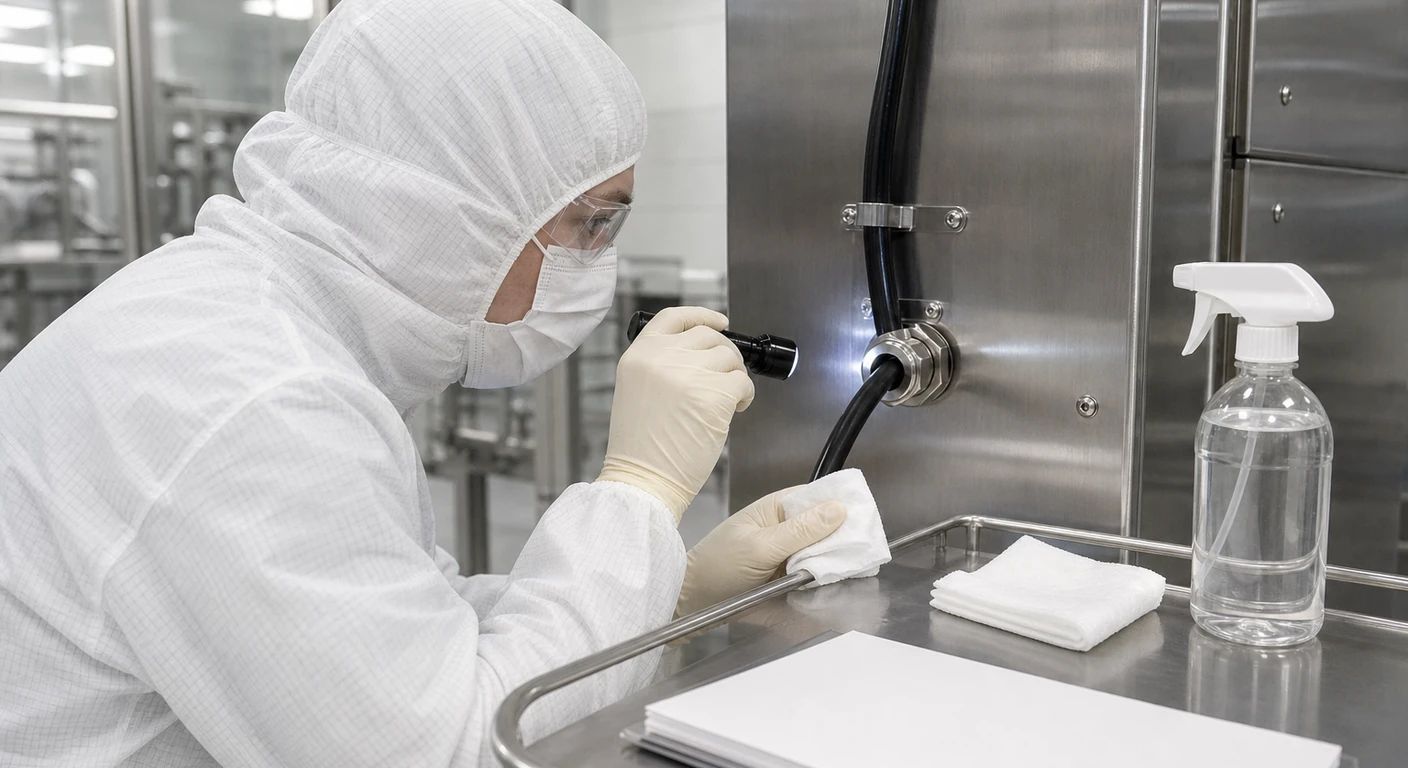
<img alt="穿著防護衣的工作人員在瓶子、擦拭布及文件旁檢查電纜引入口。" src="/images/blog/how-do-pharmaceutical-labs-maintain-cleanroom-standards-with-cable-glands-a-complete-guide-to-contamination-free-electrical-connections/cleanroom-cable-entry-review.webp" width="1408" height="768" loading="lazy" decoding="async">
<p><em>外殼引入口、檢查燈、瓶子、擦拭布及文件呈現了檢查表面的可及性。該圖不會證明清潔方式已核准或結果已驗收</em>。</p>
<h2 id="map-the-penetration-as-five-controlled-boundaries">將穿透處劃分為五個受控邊界</h2>
<p><strong>潔淨室邊界圖</strong> 區分房間或製程、暴露表面、電纜介面、外殼介面及作業後檢查。我會清楚標示這五個邊界，避免證書或測試被用來涵蓋從未評估過的要求。</p>
<figure class="blog-chart" style="container-type: inline-size;">
<svg xmlns="http&#58;//www.w3.org/2000/svg" viewBox="0 0 480 1134" role="img" aria-labelledby="clean-boundary-title clean-boundary-desc" style="font-family:var(--font-body); width: 100% !important; max-width: 100% !important; height: auto !important;" id="cg-typography-3fbf1b9f48ceef3d">
<style>
#cg-typography-3fbf1b9f48ceef3d { --svg-body-screen: 17px; }
@media (max-width: 760px) { #cg-typography-3fbf1b9f48ceef3d { --svg-body-screen: 16px; } }
</style>
<title id="clean-boundary-title">潔淨室電纜引入口的五個管控邊界</title>
<desc id="clean-boundary-desc">垂直流程從房間與製程要求，連接至暴露表面、電纜介面、外殼介面、清潔暴露及作業後驗證。</desc>
<defs><marker id="clean-arrow" markerWidth="9" markerHeight="9" refX="8" refY="4.5" orient="auto"><path d="M0 0L9 4.5L0 9Z" fill="var(--color-primary)"/></marker></defs>
<g fill="var(--surface-card)" stroke="var(--color-cloud)" stroke-width="2.5">
<rect x="28" y="28" width="424" height="150" rx="14" stroke="var(--color-primary)" stroke-width="3"/>
<rect x="28" y="218" width="424" height="150" rx="14"/>
<rect x="28" y="408" width="424" height="150" rx="14"/>
<rect x="28" y="598" width="424" height="150" rx="14"/>
<rect x="28" y="788" width="424" height="150" rx="14"/>
<rect x="28" y="978" width="424" height="128" rx="14" stroke="var(--color-primary)" stroke-width="3"/>
</g>
<g fill="var(--color-carbon)">
<text x="54" y="70" font-size="21" font-weight="700" style="font-size: calc(18px * 480px / 100cqw) !important;">1. 房間與製程要求</text>
<text x="54" y="108" font-size="18" style="font-size: calc(var(--svg-body-screen) * 480px / 100cqw) !important;"><tspan x="54" dy="0" style="font-size: calc(var(--svg-body-screen) * 480px / 100cqw) !important;">位置、污染路徑、</tspan><tspan x="54" dy="27" style="font-size: calc(var(--svg-body-screen) * 480px / 100cqw) !important;">清潔要求及驗收檢查。</tspan></text>
<text x="54" y="260" font-size="21" font-weight="700" style="font-size: calc(18px * 480px / 100cqw) !important;">2. 暴露表面</text>
<text x="54" y="298" font-size="18" style="font-size: calc(var(--svg-body-screen) * 480px / 100cqw) !important;"><tspan x="54" dy="0" style="font-size: calc(var(--svg-body-screen) * 480px / 100cqw) !important;">表面處理、接合處、標籤及幾何形狀</tspan><tspan x="54" dy="27" style="font-size: calc(var(--svg-body-screen) * 480px / 100cqw) !important;">依清潔、沖洗、乾燥、檢查流程管控。</tspan></text>
<text x="54" y="450" font-size="21" font-weight="700" style="font-size: calc(18px * 480px / 100cqw) !important;">3. 電纜介面</text>
<text x="54" y="488" font-size="18" style="font-size: calc(var(--svg-body-screen) * 480px / 100cqw) !important;"><tspan x="54" dy="0" style="font-size: calc(var(--svg-body-screen) * 480px / 100cqw) !important;">護套、直徑區間及密封件</tspan><tspan x="54" dy="27" style="font-size: calc(var(--svg-body-screen) * 480px / 100cqw) !important;">符合移動與清潔暴露條件。</tspan></text>
<text x="54" y="640" font-size="21" font-weight="700" style="font-size: calc(18px * 480px / 100cqw) !important;">4. 外殼介面</text>
<text x="54" y="678" font-size="18" style="font-size: calc(var(--svg-body-screen) * 480px / 100cqw) !important;"><tspan x="54" dy="0" style="font-size: calc(var(--svg-body-screen) * 480px / 100cqw) !important;">壁面、引入口、墊圈及鎖緊螺帽</tspan><tspan x="54" dy="27" style="font-size: calc(var(--svg-body-screen) * 480px / 100cqw) !important;">構成面板側的密封路徑。</tspan></text>
<text x="54" y="830" font-size="21" font-weight="700" style="font-size: calc(18px * 480px / 100cqw) !important;">5. 清潔暴露</text>
<text x="54" y="868" font-size="18" style="font-size: calc(var(--svg-body-screen) * 480px / 100cqw) !important;"><tspan x="54" dy="0" style="font-size: calc(var(--svg-body-screen) * 480px / 100cqw) !important;">清潔劑、濃度、接觸及熱</tspan><tspan x="54" dy="27" style="font-size: calc(var(--svg-body-screen) * 480px / 100cqw) !important;">決定沖洗、乾燥與檢查要求。</tspan></text>
<text x="240" y="1020" text-anchor="middle" font-size="21" font-weight="700" style="font-size: calc(18px * 480px / 100cqw) !important;">作業後管控</text>
<text x="240" y="1054" text-anchor="middle" font-size="18" style="font-size: calc(var(--svg-body-screen) * 480px / 100cqw) !important;">安裝・檢查・清潔・重新合格驗證</text>
<text x="240" y="1082" text-anchor="middle" font-size="18" style="font-size: calc(var(--svg-body-screen) * 480px / 100cqw) !important;">變更後重新啟動受影響的檢查。</text>
</g>
<g fill="none" stroke="var(--color-primary)" stroke-width="4" marker-end="url(#clean-arrow)">
<path d="M240 178V207"/>
<path d="M240 368V397"/>
<path d="M240 558V587"/>
<path d="M240 748V777"/>
<path d="M240 938V967"/>
</g>
</svg>
<figcaption>依五階段圖示，從房間要求一路追蹤到作業後管控，並在每個階段記錄指定表面、介面、暴露及檢查。</figcaption>
</figure>
<p>我會使用目前有效的製造商圖面及現場文件，確認安裝幾何形狀與驗收要求。標示潔淨室側及維修側、壁面、電纜路徑與暴露於清潔的接合處。辨識每項元件的材料或表面處理，再檢查可視性、清潔空間，以及能否從外側更換。記錄可能影響房間的維修作業。</p>
<p>我也會區分房間壓力與外殼密封。暖通空調（HVAC）、房間圍護結構、門、穿透處、運轉狀態及監測設備共同控制房間壓力狀態。電纜引入口可能是其中一處滲漏邊界；接頭或 IP 代碼無法證明房間壓差。</p>
<h2 id="specify-the-exact-cable-gland-and-enclosure-entry-assembly">指定確切電纜、接頭與外殼引入口組件</h2>
<p>我會指定完整安裝組件。記錄電纜結構與直徑區間、接頭料號與尺寸，以及密封件或嵌件規格。再列出配件、開孔、壁面或承座面、表面處理、零件順序及現行說明。「不鏽鋼潔淨室接頭」沒有界定實際配置。</p>
<p><a href="https://webstore.iec.ch/en/publication/7034">IEC 62444:2010</a> 規定責任製造商或供應商供應的完整接頭所須符合的要求與測試。我會依此界定產品範圍；它不會認證藥品製程、清潔程序、房間分類或最終面板安裝。</p>
<p>選擇組件前，我會先比較以下零件細節。</p>
<table>
<thead>
<tr>
<th>組件項目。</th>
<th>應驗證的內容。</th>
<th>以下情況不得繼續。</th>
</tr>
</thead>
<tbody>
<tr>
<td>接頭本體與表面處理</td>
<td>材料、表面處理程序、幾何形狀、圖面及追溯資料</td>
<td>僅以「不鏽鋼」或照片描述。</td>
</tr>
<tr>
<td>密封件或嵌件</td>
<td>確切混合料、電纜範圍、暴露限值及相關老化佐證</td>
<td>僅因其屬於某種彈性體系列，就推定相容。</td>
</tr>
<tr>
<td>電纜護套</td>
<td>混合料、直徑區間、表面、移動及清潔劑暴露</td>
<td>以電纜標稱尺寸取代護套佐證。</td>
</tr>
<tr>
<td>鎖緊螺帽、墊圈、轉接頭及接地配件</td>
<td>零件、材料、尺寸、接觸面及有文件佐證的順序</td>
<td>未界定配件的安裝細節。</td>
</tr>
<tr>
<td>外殼引入口</td>
<td>開孔或螺紋、壁面或承座面、表面處理、塗層、平面度、方向及工具操作空間</td>
<td>將電纜配合情況當成引入口密封的證明。</td>
</tr>
</tbody>
</table>
<figure style="container-type: inline-size;">
<svg xmlns="http://www.w3.org/2000/svg" id="cleanroom-entry-components-svg" viewBox="0 0 760 1988" role="img" aria-labelledby="cleanroom-entry-components-svg-title cleanroom-entry-components-svg-desc" style="display:block;width:100%;height:auto; width: 100% !important; max-width: 100% !important; height: auto !important;">
<style>
#cleanroom-entry-components-svg { --svg-body-screen: 17px; }
@media (max-width: 760px) { #cleanroom-entry-components-svg { --svg-body-screen: 16px; } }
</style>
<title id="cleanroom-entry-components-svg-title">潔淨室電纜引入口中的受控零件與介面</title><desc id="cleanroom-entry-components-svg-desc">通用電纜引入口剖面圖，包含電纜護套、密封件或嵌件、本體表面處理、壁面及引入口。電纜密封與保持介面不同於外殼引入口密封。記錄確切零件、順序、材料、表面處理、暴露條件及現行說明。</desc><style>#cleanroom-entry-components-svg{--bg:#f7faf8;--ink:#15231e;--muted:#52635c;--green:#009530;--green-ink:#007d29;--green-soft:#e9f4ed;--card:#fff;--line:#b8cbc1;--metal:#d8e3dd;--metal-line:#52635c;--cable:#1d2d27;--seal:#80948a;--wall:#b8cbc1;--accessory:#eef1ef;--banner:#153e2b;--inverse:#fff;--inverse-soft:#d8eadf}:root[data-theme="dark"] #cleanroom-entry-components-svg{--bg:#111b17;--ink:#edf5ee;--muted:#c4d5c9;--green:#72dc89;--green-ink:#92e6a3;--green-soft:#284934;--card:#1e2e25;--line:#657e6b;--metal:#708879;--metal-line:#c0d4c4;--cable:#0b1710;--seal:#93ab9a;--wall:#96afa0;--accessory:#2c4133;--banner:#17452d;--inverse:#fff;--inverse-soft:#d8eadf}</style><rect x="0" y="0" width="760" height="1988" rx="0" fill="var(--bg)" stroke="none" stroke-width="0"/><text x="32" y="64" fill="var(--ink)" font-family="Arial, sans-serif" font-size="38" font-weight="700" style="font-size: calc(22px * 760px / 100cqw) !important;">描繪完整電纜引入口</text><text x="32" y="117.426" fill="var(--ink)" font-family="Arial, sans-serif" font-size="38" font-weight="700" style="font-size: calc(22px * 760px / 100cqw) !important;">組件</text><text x="32" y="161.601" fill="var(--muted)" font-family="Arial, sans-serif" font-size="28" style="font-size: calc(var(--svg-body-screen) * 760px / 100cqw) !important;">檢查電纜側與壁面側。</text><rect x="42" y="187" width="676" height="105" rx="17" fill="var(--green-soft)" stroke="var(--green)" stroke-width="3"/><text x="72" y="231" fill="var(--green-ink)" font-family="Arial, sans-serif" font-size="30" font-weight="700" style="font-size: calc(18px * 760px / 100cqw) !important;">電纜介面</text><text x="72" y="270" fill="var(--muted)" font-family="Arial, sans-serif" font-size="28" style="font-size: calc(var(--svg-body-screen) * 760px / 100cqw) !important;">電纜密封＋保持</text><rect x="42" y="314" width="676" height="105" rx="17" fill="var(--card)" stroke="var(--line)" stroke-width="3"/><text x="72" y="358" fill="var(--ink)" font-family="Arial, sans-serif" font-size="30" font-weight="700" style="font-size: calc(18px * 760px / 100cqw) !important;">外殼介面</text><text x="72" y="397" fill="var(--muted)" font-family="Arial, sans-serif" font-size="28" style="font-size: calc(var(--svg-body-screen) * 760px / 100cqw) !important;">引入口密封＋安裝五金件</text><rect x="42" y="450" width="676" height="351" rx="16" fill="var(--card)" stroke="var(--line)" stroke-width="2"/><text x="72" y="495" fill="var(--green-ink)" font-family="Arial, sans-serif" font-size="30" font-weight="700" style="font-size: calc(18px * 760px / 100cqw) !important;">通用剖面</text><path d="M78 620H663" fill="none" stroke="var(--metal-line)" stroke-width="56" stroke-linecap="round"/><path d="M78 620H663" fill="none" stroke="var(--cable)" stroke-width="50" stroke-linecap="round"/><rect x="220" y="566" width="90" height="108" rx="15" fill="var(--metal)" stroke="var(--metal-line)" stroke-width="4"/><rect x="306" y="551" width="72" height="136" rx="12" fill="var(--green-soft)" stroke="var(--green)" stroke-width="5"/><ellipse cx="342" cy="620" rx="23" ry="54" fill="var(--seal)"/><rect x="378" y="558" width="129" height="124" rx="10" fill="var(--metal)" stroke="var(--metal-line)" stroke-width="5"/><rect x="518" y="538" width="37" height="164" rx="3" fill="var(--wall)" stroke="var(--metal-line)" stroke-width="4"/><rect x="564" y="566" width="44" height="108" rx="8" fill="var(--green)" stroke="none" stroke-width="0"/><rect x="614" y="579" width="59" height="82" rx="10" fill="var(--accessory)" stroke="var(--seal)" stroke-width="3"/><circle cx="137" cy="731" r="24" fill="var(--green)"/><text x="137" y="741" fill="var(--inverse)" font-family="Arial, sans-serif" font-size="28" font-weight="700" text-anchor="middle" style="font-size: calc(16px * 760px / 100cqw) !important;">1</text><circle cx="342" cy="731" r="24" fill="var(--green)"/><text x="342" y="741" fill="var(--inverse)" font-family="Arial, sans-serif" font-size="28" font-weight="700" text-anchor="middle" style="font-size: calc(16px * 760px / 100cqw) !important;">2</text><circle cx="453" cy="731" r="24" fill="var(--green)"/><text x="453" y="741" fill="var(--inverse)" font-family="Arial, sans-serif" font-size="28" font-weight="700" text-anchor="middle" style="font-size: calc(16px * 760px / 100cqw) !important;">3</text><circle cx="537" cy="731" r="24" fill="var(--green)"/><text x="537" y="741" fill="var(--inverse)" font-family="Arial, sans-serif" font-size="28" font-weight="700" text-anchor="middle" style="font-size: calc(16px * 760px / 100cqw) !important;">4</text><text x="72" y="783.234" fill="var(--muted)" font-family="Arial, sans-serif" font-size="28" style="font-size: calc(var(--svg-body-screen) * 760px / 100cqw) !important;">確認實際零件形狀及順序。</text><rect x="42" y="817" width="676" height="156" rx="16" fill="var(--card)" stroke="var(--line)" stroke-width="2"/><text x="72" y="862" fill="var(--ink)" font-family="Arial, sans-serif" font-size="30" font-weight="700" style="font-size: calc(18px * 760px / 100cqw) !important;">1・電纜護套</text><text x="72" y="908" fill="var(--muted)" font-family="Arial, sans-serif" font-size="28" style="font-size: calc(var(--svg-body-screen) * 760px / 100cqw) !important;">混合料・成品外徑</text><text x="72" y="947" fill="var(--muted)" font-family="Arial, sans-serif" font-size="28" style="font-size: calc(var(--svg-body-screen) * 760px / 100cqw) !important;">表面狀況・移動</text><rect x="42" y="998" width="676" height="156" rx="16" fill="var(--card)" stroke="var(--line)" stroke-width="2"/><text x="72" y="1043" fill="var(--ink)" font-family="Arial, sans-serif" font-size="30" font-weight="700" style="font-size: calc(18px * 760px / 100cqw) !important;">2・確切密封件／嵌件</text><text x="72" y="1089" fill="var(--muted)" font-family="Arial, sans-serif" font-size="28" style="font-size: calc(var(--svg-body-screen) * 760px / 100cqw) !important;">型別／變型・範圍・暴露限值</text><text x="72" y="1128" fill="var(--muted)" font-family="Arial, sans-serif" font-size="28" style="font-size: calc(var(--svg-body-screen) * 760px / 100cqw) !important;">電纜處的密封＋保持</text><rect x="42" y="1179" width="676" height="156" rx="16" fill="var(--card)" stroke="var(--line)" stroke-width="2"/><text x="72" y="1224" fill="var(--ink)" font-family="Arial, sans-serif" font-size="30" font-weight="700" style="font-size: calc(18px * 760px / 100cqw) !important;">3・本體＋表面處理</text><text x="72" y="1270" fill="var(--muted)" font-family="Arial, sans-serif" font-size="28" style="font-size: calc(var(--svg-body-screen) * 760px / 100cqw) !important;">材料・表面處理・程序</text><text x="72" y="1309" fill="var(--muted)" font-family="Arial, sans-serif" font-size="28" style="font-size: calc(var(--svg-body-screen) * 760px / 100cqw) !important;">符合確切圖面</text><rect x="42" y="1360" width="676" height="156" rx="16" fill="var(--card)" stroke="var(--line)" stroke-width="2"/><text x="72" y="1405" fill="var(--ink)" font-family="Arial, sans-serif" font-size="30" font-weight="700" style="font-size: calc(18px * 760px / 100cqw) !important;">4・壁面／承座面／引入口</text><text x="72" y="1451" fill="var(--muted)" font-family="Arial, sans-serif" font-size="28" style="font-size: calc(var(--svg-body-screen) * 760px / 100cqw) !important;">開孔或螺紋・壁面・表面處理</text><text x="72" y="1490" fill="var(--muted)" font-family="Arial, sans-serif" font-size="28" style="font-size: calc(var(--svg-body-screen) * 760px / 100cqw) !important;">工具操作空間・安裝五金件</text><rect x="42" y="1565" width="676" height="152" rx="17" fill="var(--green-soft)" stroke="var(--green)" stroke-width="3"/><text x="72" y="1613" fill="var(--green-ink)" font-family="Arial, sans-serif" font-size="30" font-weight="700" style="font-size: calc(18px * 760px / 100cqw) !important;">電纜密封＋保持</text><text x="72" y="1655" fill="var(--ink)" font-family="Arial, sans-serif" font-size="28" style="font-size: calc(var(--svg-body-screen) * 760px / 100cqw) !important;">使電纜結構與外徑符合</text><text x="72" y="1697.21" fill="var(--ink)" font-family="Arial, sans-serif" font-size="28" style="font-size: calc(var(--svg-body-screen) * 760px / 100cqw) !important;">確切密封件或嵌件。</text><rect x="42" y="1730" width="676" height="153" rx="17" fill="var(--card)" stroke="var(--line)" stroke-width="3"/><text x="72" y="1778" fill="var(--ink)" font-family="Arial, sans-serif" font-size="30" font-weight="700" style="font-size: calc(18px * 760px / 100cqw) !important;">外殼引入口密封</text><text x="72" y="1820" fill="var(--muted)" font-family="Arial, sans-serif" font-size="28" style="font-size: calc(var(--svg-body-screen) * 760px / 100cqw) !important;">確認壁面、五金件及</text><text x="72" y="1862.21" fill="var(--muted)" font-family="Arial, sans-serif" font-size="28" style="font-size: calc(var(--svg-body-screen) * 760px / 100cqw) !important;">有文件佐證的零件順序。</text><rect x="42" y="1909" width="676" height="62" rx="16" fill="var(--banner)" stroke="none" stroke-width="0"/><text x="380" y="1949" fill="var(--inverse)" font-family="Arial, sans-serif" font-size="29" font-weight="700" text-anchor="middle" style="font-size: calc(18px * 760px / 100cqw) !important;">確切配置紀錄</text></svg>
<figcaption>確認確切的電纜、密封件、接頭本體與表面處理、墊圈、鎖緊螺帽、轉接頭及外殼表面，再驗證清潔暴露或安裝後密封。</figcaption>
</figure>
<p>我會依清潔暴露逐一選擇材料。本體、表面處理或鈍化、密封件、墊圈、鎖緊螺帽、壁面及電纜護套，可能對同一清潔循環產生不同反應。鈍化是與腐蝕行為相關的表面處理。 <a href="/zh-hant/blog/cable-gland-materials-how-to-choose-the-right-material-for-your-specific-application/">零件層級材料指南</a> 有助排除不合適的組合，但不會宣稱某一材料普遍最佳。</p>
<p>我會分別驗證電纜保持、電纜密封及外殼密封。電纜配合合適仍可能無法解決面板接合處的問題。螺紋相符，也可能搭配無法覆蓋電纜製造直徑區間的嵌件。安裝前必須分別確認兩處介面。</p>
<h2 id="qualify-cleaning-and-disinfection-exposure">合格驗證清潔與消毒暴露</h2>
<p><strong>清潔合格驗證</strong> 證明在所述零件與位置範圍內，明確方法及驗收判準能控制相關風險。我會記錄化學品名稱及配方或牌號、濃度、施用方式、接觸時間、溫度及頻率，並納入沖洗品質、乾燥及預期累積物；若製程化學品、蒸氣或熱循環會接觸引入口，也須納入。</p>
<p>僅有聚合物系列、彈性體商品名、不鏽鋼牌號或鈍化標籤，不能證明具備無限相容性。應依確切牌號或混合料及測試條件比對供應商資料。專案檢查可能涵蓋膨潤、龜裂、軟化、脆化、表面處理變化及腐蝕，也要評估殘留物滯留、尺寸變化、粒子，以及該位置的密封或保持能力損失。</p>
<p>在無菌藥品製造中，歐盟 GMP 附錄 1 將清潔與消毒納入污染控制策略，並視為不同步驟；但它無法證明接頭可清潔。若引入口位於清潔管控邊界內，我會要求提供殘留物與零件狀況佐證，而非接受「適用於潔淨室」的宣稱。</p>
<p>只有在材料、表面處理、製造途徑及暴露條件都能代表已安裝零件時，我才會採用見證試片（材料測試樣品）的結果。試片無法呈現墊圈後方的液體、電纜磨耗、工具損傷或無法檢查的接合處。材料暴露結果應與安裝幾何形狀檢查及檢查方法結合。</p>
<p>清潔相容性只適用於指定零件與暴露條件。即使電纜密封接頭本體材料不變，若清潔劑、濃度或施用方法不同，結果也可能改變。</p>
<h2 id="control-installation-cleaning-and-post-work-requalification">管控安裝、清潔及作業後重新合格驗證</h2>
<p>安裝時必須保護受控區域，並驗證兩處最終密封。我會遵循接頭及外殼程序，處理開孔與電纜、零件順序、允許的潤滑劑或密封膠、鎖緊及最終檢查。潔淨室作業程序則規範人員進出、工具、碎屑收集、清潔及恢復使用檢查。不存在通用扭矩或清潔說明。</p>
<p>作業前，我會依目前有效的物料清單（BOM，即組裝零件表）與圖面比對零件編號，並檢查護套、接頭零件、壁面、引入口及包裝。規定金屬屑、剝除的絕緣層、纖維、指紋、潤滑劑、密封膠及清潔劑殘留物的控制或清除方式。如果作業無法避免影響受控製程，應停止並遵循停機與變更管制程序。</p>
<p>我會記錄該型號與尺寸的製造商閉合或扭矩要求。不可沿用其他接頭、螺紋或材料的數值。工具不得損傷可清潔表面。應分別驗證電纜密封與面板密封，再檢查損傷、間隙、殘留物、鬆動及無法清潔的表面。</p>
<p><a href="https://webstore.iec.ch/en/publication/2452">IEC 60529</a> 將外殼侵入防護分級。只有組件與條件相符時，我才會採用 IP 測試結果。它不能證明微生物管控、可清潔性、材料相容性、房間壓力、清潔驗證或可無限期浸水。 <a href="/zh-hant/blog/ip-protection-ratings-explained-how-to-choose-the-right-cable-gland-based-on-iec-60529-standards/">IP 測試報告選型指南</a> 有助排除不相符的報告；安裝後的介面仍須分別評估。</p>
<p>我會遵循現場專屬且以風險為基礎的恢復使用檢查，可能包括目視檢查、清潔驗證、外殼或邊界測試及房間壓力。氣流、恢復能力、粒子或微生物檢查也可能適用。檢查項目應由品質系統與污染控制策略決定，而非接頭供應商。</p>
<p>在適用歐盟 GMP 附錄 1 時，合格驗證、監測、維護及污染控制仍屬設施責任。我會依穿透處作業經評估的影響決定重新合格驗證範圍。即使採用同等規格替換，仍可能改變壁面、引入口、密封件、電纜表面、清潔暴露或房間邊界。</p>
<p>該 <a href="/zh-hant/blog/how-do-you-achieve-perfect-ip68-waterproof-cable-gland-installation-every-time/">雙介面安裝指南</a> 分別檢查電纜至接頭，以及接頭至外殼的密封，確認侵入防護已恢復。兩處密封驗證後，我仍會保留額外的潔淨室合格驗證與污染管控檢查。</p>
<h2 id="changes-can-affect-the-cleanroom-boundary">變更可能影響潔淨室邊界</h2>
<p>潔淨室進線只在明確界定的配置與運作條件內適用。零件、清潔劑或安裝細節不同，可能改變暴露表面及密封件表現。條件變更時，請重新評估受影響的清潔要求與邊界要求，不要假設先前結果仍適用。</p>
<table>
<thead>
<tr>
<th>變更觸發條件</th>
<th>至少須重新檢查以下問題</th>
</tr>
</thead>
<tbody>
<tr>
<td>電纜製造商、護套混合料、結構或直徑區間</td>
<td>電纜配合、密封相容性、粒子行為、清潔暴露及保持能力。</td>
</tr>
<tr>
<td>接頭尺寸、嵌件、密封件、表面處理或配件</td>
<td>組裝圖面、材料暴露、可清潔性、安裝及測試範圍。</td>
</tr>
<tr>
<td>外殼、壁面、塗層、開孔、螺紋、墊圈或方向</td>
<td>引入口密封、暴露幾何形狀、排液、工具操作空間及邊界測試。</td>
</tr>
<tr>
<td>清潔或消毒循環</td>
<td>所有暴露材料、接合處、殘留物、沖洗、乾燥及檢查判準。</td>
</tr>
<tr>
<td>房間用途、製程、分類、監測或壓力狀態</td>
<td>污染機制、驗收判準及重新合格驗證範圍。</td>
</tr>
<tr>
<td>損傷、滲漏、殘留物、腐蝕或原因不明的粒子發現</td>
<td>隔離該位置、找出原因、界定修復方式、更換受損零件，並在恢復使用前重新合格驗證。</td>
</tr>
</tbody>
</table>
<p>我會依風險、歷程、作業頻率、清潔暴露及現場程序設定檢查時程，不存在通用更換壽命。即使尚未看見損傷，電纜批次、清潔程序或引入口零件變更後仍須重新檢查。</p>
<p>清潔、檢查與必要的邊界試驗，必須涵蓋每個暴露表面及兩個密封介面。只清潔可見本體，可能使進線其他部位仍有殘留物，或密封件狀態已改變。</p>
<h2 id="conclusion-keep-the-cable-entry-inside-the-cleanroom-control-boundary">結論：將電纜引入口納入潔淨室管控邊界</h2>
<p>我會將製藥潔淨室電纜引入口視為特定穿透處。房間要求界定污染風險與清潔暴露；電纜、接頭、配件、開孔及安裝方式則界定須維持管控的組件。</p>
<p>恢復區域使用前，我會從安裝、清潔到必要的重新合格驗證，逐一追蹤暴露表面及兩處密封，並將紀錄保存在該位置。電纜、引入口零件、清潔循環、房間用途或狀況變更後，應重新執行受影響的檢查。</p>
<h2 id="faq-pharmaceutical-cleanroom-cable-glands">常見問題：製藥潔淨室用電纜密封接頭</h2>
<h3 id="does-an-ip-rating-prove-that-a-cleanroom-cable-entry-is-acceptable">IP 等級能證明潔淨室電纜引入口符合要求嗎？</h3>
<p>不能。IP 代碼僅涵蓋受測配置及條件下的外殼侵入防護。潔淨室電纜引入口可能還需要檢查可清潔表面、殘留物滯留、材料反應、兩處密封介面及房間管控。應先驗證電纜至接頭及接頭至外殼兩處密封，再於使用前完成現場的潔淨室檢查。</p>
<h3 id="does-stainless-steel-make-a-cable-gland-suitable-for-pharmaceutical-cleanrooms">不鏽鋼能讓電纜密封接頭自動適用於製藥潔淨室嗎？</h3>
<p>不能。「不鏽鋼」並未說明牌號、表面處理、鈍化、密封膠料、電纜護套、配件組或安裝後形狀。應依實際清潔循環及房間要求比對每項零件與接合處。只有當材料、表面可及性、電纜配合、安裝及可清潔性符合預定位置時，該引入口才適用。</p>
<h3 id="when-should-a-cleanroom-be-requalified-after-cable-entry-work">電纜引入口作業後，何時應重新合格驗證潔淨室？</h3>
<p>由現場變更評估決定重新合格驗證範圍。檢查作業是否影響房間壁面、氣流或壓力邊界、分類區域、暴露表面、清潔狀態、監測點、外殼、電纜或引入口設置。零件編號相同並不會免除這些檢查。恢復使用前，記錄影響、測試結果、偏差及決策。</p>
<h3 id="sources-and-technical-references">來源與技術參考資料</h3>
<ul>
<li><a href="https://health.ec.europa.eu/system/files/2022-08/20220825_gmp-an1_en_0.pdf">歐洲委員會，歐盟 GMP 附錄 1：無菌藥品製造</a>，查閱日期：2026-09-07。</li>
<li><a href="https://www.accessdata.fda.gov/scripts/cdrh/cfdocs/cfcfr/cfrsearch.cfm?fr=211.42">FDA，21 CFR 211.42：設計與建造特徵</a>，查閱日期：2026-09-07。</li>
<li><a href="https://www.accessdata.fda.gov/scripts/cdrh/cfdocs/cfcfr/cfrsearch.cfm?fr=211.113">FDA，21 CFR 211.113：微生物污染管控</a>，查閱日期：2026-09-07。</li>
<li><a href="https://webstore.iec.ch/en/publication/7034">IEC 62444:2010，電氣裝置用電纜密封接頭</a>，查閱日期：2026-09-07。</li>
<li><a href="https://webstore.iec.ch/en/publication/2452">IEC 60529，外殼提供的防護等級</a>，查閱日期：2026-09-07。</li>
</ul>