# 可靠的電纜密封接頭如何避免每小時 100,000 美元的停機損失？

> Source: https://chinacableglands.com/zh-hant/blog/how-can-reliable-cable-glands-prevent-100000-per-hour-downtime-losses/
> Language: zh-Hant
> Publisher: 倍拓電纜接頭
> Author: Edward Wang
> Published: 2026-02-09
> Updated: 2026-08-21

透過清楚區分密封接頭失效模式、屏障、影響擴大、偵測、復原及現場專屬生產成本，建立電纜引入口停機風險模型。

<p><strong>可靠的電纜密封接頭無法保證設施一定不會遭受每小時 100,000 美元的停機損失。</strong> 這項金額屬於設施所界定的生產情境，既不是電纜密封接頭的產品特性，也不是產業通用常數。只有在產品、電纜、外殼、安裝、環境及維護條件均符合佐證資料時，我才會將密封接頭對其能協助預防的特定引入口失效所產生的效益列入計算。</p>
<p>計算節省金額前，我會先問四個問題：哪一種引入口失效可能造成中斷？什麼因素能阻止影響擴大？如何偵測？哪些現場資料界定其後果？以下方法會追溯這些關聯，不會替電纜密封接頭指定通用失效率、避免損失或財務報酬。</p>
<blockquote>
<p><strong>重點整理</strong></p>
<ul>
<li>將每小時 100,000 美元視為經現場核准的情境輸入，絕不可當成電纜密封接頭的性能宣稱。</li>
<li>區分危害、起始事件、局部失效效應、系統效應及生產後果。</li>
<li>只有在確切產品及已安裝配置中經證實的功能，才將其效益歸於密封接頭。</li>
<li>分別建立預防、診斷、遏制及復原屏障模型，並納入可能同時削弱多道屏障的共因。</li>
<li>計算預期損失或比較替代方案前，先使用觀察到的失效及停機資料。</li>
</ul>
</blockquote>
<h2 id="the-title-is-a-scenario-input-not-a-promised-saving">標題中的金額是情境輸入，不是承諾可節省的金額</h2>
<p><strong>每小時 100,000 美元的數值應納入設施的後果模型。</strong> 這可能代表損失的貢獻毛利、產能下降、合約責任或其他經核准的衡量值。在將其乘以時間前，我會先確認定義、時間基準、受影響的生產範圍及排除項目。每小時金額很高，並不能證明電纜密封接頭失效會造成該項損失。</p>
<p><strong>電纜密封接頭的停機風險</strong> 會以條件式方式，將引入口失效連結至明確界定的生產效應。 <strong>危害</strong> 是可能造成傷害或損失的狀態。 <strong>起始事件</strong> 是首次發生的指定功能喪失。 <strong>診斷涵蓋率</strong> 是診斷方法在其指定範圍及回應時間內可揭露的相關失效比例。</p>
<p>為使各項風險術語保持明確，我採用以下區分：</p>
<table>
<thead>
<tr>
<th>術語</th>
<th>本電纜引入分析中的意義</th>
<th>它不代表什麼</th>
</tr>
</thead>
<tbody>
<tr>
<td>危害</td>
<td>可能造成傷害或損失的能量、物質、環境或製程狀態</td>
<td>電纜密封接頭本身的缺陷</td>
</tr>
<tr>
<td>起始事件</td>
<td>首次發生的指定引入口功能喪失，例如密封、固定保持或指定導通功能失效</td>
<td>自動證明已觸發停機</td>
</tr>
<tr>
<td>屏障</td>
<td>可在指定條件下中斷情境的預防或減緩措施</td>
<td>籠統宣稱零件可靠</td>
</tr>
<tr>
<td>診斷涵蓋率</td>
<td>在指定測試及時間邊界內，診斷方法可揭露的相關失效狀況比例</td>
<td>僅僅裝有警報或感測器</td>
</tr>
<tr>
<td>共因</td>
<td>可能同時損害多個名義上彼此分開的屏障或通道的單一條件</td>
<td>分別計算的兩個無關失效</td>
</tr>
<tr>
<td>修復時間</td>
<td>使故障項目恢復或完成替換所需的時間</td>
<td>必然等同於製程復原時間</td>
</tr>
<tr>
<td>生產後果</td>
<td>失效沿系統傳播後，對現場營運及財務造成的影響</td>
<td>附加於電纜密封接頭的通用成本</td>
</tr>
</tbody>
</table>
<p><a href="https://webstore.iec.ch/en/publication/59809">IEC 31010:2019</a> 說明風險評估技術是用於不確定情況下決策的工具。我會用模型找出缺少的證據，而不是把假設包裝成看似精確的節省金額。</p>
<h2 id="build-the-cable-entry-failure-model-before-assigning-money">先建立電纜引入口失效模型，再估算金額</h2>
<p><strong>從引入口功能及可信的功能喪失情況開始。</strong> 接著追溯在生產受到影響前必須發生哪些事件。 <a href="https://webstore.iec.ch/en/publication/26359">IEC 60812:2018</a> 說明失效模式與效應分析（FMEA）是一種系統性方法，可識別失效模式、局部及較大範圍的效應，以及可能原因。我會運用這些區分，將未明確界定的「密封接頭失效」事件改成可調查及處理的具體失效。</p>
<p>在模型中，我會區分五個階段：</p>
<ol>
<li><strong>應力或暴露。</strong> 水、粉塵、化學品、高溫、低溫、振動、拉力、衝擊、電纜移動或電磁干擾作用於已安裝的引入口。</li>
<li><strong>起始事件。</strong> 一項指定的引入口功能超出其可接受狀態。例如密封路徑開啟、電纜固定保持能力喪失、引入口接合處鬆動，或指定的導通功能中斷。</li>
<li><strong>局部效應。</strong> 液體進入隔間、電纜移動、導體或屏蔽受到應力，或電氣介面發生變化。</li>
<li><strong>系統效應。</strong> 電路跳脫、訊號無法使用、控制通道遭隔離，或由備援承接功能。此步驟取決於設備架構。</li>
<li><strong>生產後果。</strong> 產能降低或停擺、材料損失、開始復原作業，或未對生產造成影響。</li>
</ol>
<p>電纜密封接頭只影響此流程的一部分。 <a href="https://webstore.iec.ch/en/publication/7034">IEC 62444:2010</a> 涵蓋供應商所供應完整電纜密封接頭的要求及測試。該標準未規定周邊外殼、電路架構、診斷、復原策略或每小時生產損失。我會確認安裝方式保留每項已有證據支持的接頭功能，再將其效益納入模型。</p>
<figure class="blog-chart" style="container-type: inline-size;">
<svg xmlns="http://www.w3.org/2000/svg" viewBox="0 0 480 2641" role="img" aria-labelledby="cg-downtime-title cg-downtime-desc" style="font-family:var(--font-body); width: 100% !important; max-width: 100% !important; height: auto !important;" id="cg-typography-d75f8d2c4cde4409">
<style>
#cg-typography-d75f8d2c4cde4409 { --svg-body-screen: 17px; }
@media (max-width: 760px) { #cg-typography-d75f8d2c4cde4409 { --svg-body-screen: 16px; } }
</style>
<title id="cg-downtime-title">有條件的電纜引入口故障升級路徑</title>
<desc id="cg-downtime-desc">垂直的蝴蝶結分析式路徑呈現引入口應力、起始事件、預防屏障、兩個分支判斷、診斷及減緩屏障、受控後果、可能的中斷，以及分開計算的現場後果。</desc>
<defs>
<marker id="cg-downtime-arrow" markerWidth="9" markerHeight="9" refX="8" refY="4.5" orient="auto">
<path d="M0 0L9 4.5L0 9Z" fill="var(--color-primary)" />
</marker>
<marker id="cg-downtime-neutral-arrow" markerWidth="9" markerHeight="9" refX="8" refY="4.5" orient="auto">
<path d="M0 0L9 4.5L0 9Z" fill="var(--color-carbon)" />
</marker>
</defs>
<text x="240" y="45.95" text-anchor="middle" fill="var(--color-carbon)" font-size="26" font-weight="700" style="font-size: calc(22px * 480px / 100cqw) !important;"><tspan x="240" style="font-size:inherit !important;">電纜引入口通往生產</tspan><tspan x="240" style="font-size:inherit !important;" dy="37">後果的路徑</tspan></text>
<text x="240" y="115.01" text-anchor="middle" fill="var(--color-graphite)" font-size="18" style="font-size: calc(var(--svg-body-screen) * 480px / 100cqw) !important;"><tspan x="240" style="font-size:inherit !important;">在指定後果</tspan><tspan x="240" style="font-size:inherit !important;" dy="27">之前，先追溯每條條件分支。</tspan></text>
<rect x="24" y="180.44" width="432" height="124.34" rx="16" fill="var(--surface-card)" stroke="var(--color-cloud)" stroke-width="3" /><text x="44" y="218.4" fill="var(--color-carbon)" font-size="20" font-weight="700" style="font-size: calc(18px * 480px / 100cqw) !important;">危害或施加應力</text>
<text x="44" y="249.35" fill="var(--color-graphite)" font-size="18" style="font-size: calc(var(--svg-body-screen) * 480px / 100cqw) !important;"><tspan x="44" style="font-size:inherit !important;">水、粉塵、化學品、溫度、</tspan><tspan x="44" style="font-size:inherit !important;" dy="27">振動、拉力或電磁干擾</tspan></text>
<path d="M240 308.788V344.788" fill="none" stroke="var(--color-primary)" stroke-width="3" marker-end="url(#cg-downtime-arrow)" /><rect x="24" y="360.79" width="432" height="154.74" rx="16" fill="var(--color-ash)" stroke="var(--color-carbon)" stroke-width="3" /><text x="44" y="398.75" fill="var(--color-carbon)" font-size="20" font-weight="700" style="font-size: calc(18px * 480px / 100cqw) !important;">起始事件</text>
<text x="44" y="429.7" fill="var(--color-graphite)" font-size="18" style="font-size: calc(var(--svg-body-screen) * 480px / 100cqw) !important;"><tspan x="44" style="font-size:inherit !important;">明確界定的密封、固定保持、引入口接合或</tspan><tspan x="44" style="font-size:inherit !important;" dy="27">導通功能</tspan></text>
<text x="44" y="487.09" fill="var(--color-graphite)" font-size="18" style="font-size: calc(var(--svg-body-screen) * 480px / 100cqw) !important;">超出可接受配置而失效。</text>
<path d="M240 519.529V555.529" fill="none" stroke="var(--color-primary)" stroke-width="3" marker-end="url(#cg-downtime-arrow)" /><rect x="24" y="571.53" width="432" height="181.74" rx="16" fill="var(--surface-card)" stroke="var(--color-primary)" stroke-width="3" /><text x="240" y="609.49" text-anchor="middle" fill="var(--color-carbon)" font-size="20" font-weight="700" style="font-size: calc(18px * 480px / 100cqw) !important;">預防屏障</text>
<text x="240" y="640.44" text-anchor="middle" fill="var(--color-graphite)" font-size="18" style="font-size: calc(var(--svg-body-screen) * 480px / 100cqw) !important;"><tspan x="240" style="font-size:inherit !important;">正確選型、受控安裝、</tspan><tspan x="240" style="font-size:inherit !important;" dy="27">相容介面、</tspan></text>
<text x="240" y="697.84" text-anchor="middle" fill="var(--color-graphite)" font-size="18" style="font-size: calc(var(--svg-body-screen) * 480px / 100cqw) !important;"><tspan x="240" style="font-size:inherit !important;">環境防護、支撐及</tspan><tspan x="240" style="font-size:inherit !important;" dy="27">狀態檢查</tspan></text>
<path d="M240 757.27V793.27" fill="none" stroke="var(--color-primary)" stroke-width="3" marker-end="url(#cg-downtime-arrow)" /><path d="M240 809.27L456 939.27L240 1069.27L24 939.27Z" fill="var(--color-ash)" stroke="var(--color-carbon)" stroke-width="3" /><text x="240" y="935.23" text-anchor="middle" fill="var(--color-carbon)" font-size="20" font-weight="700" style="font-size: calc(18px * 480px / 100cqw) !important;">失效是否越過</text>
<text x="240" y="971.23" text-anchor="middle" fill="var(--color-carbon)" font-size="20" font-weight="700" style="font-size: calc(18px * 480px / 100cqw) !important;">引入口邊界？</text>
<text x="44" y="1105.23" fill="var(--color-primary)" font-size="20" font-weight="700" style="font-size: calc(16px * 480px / 100cqw) !important;">否</text>
<text x="390" y="1105.23" fill="var(--color-carbon)" font-size="20" font-weight="700" style="font-size: calc(16px * 480px / 100cqw) !important;">是</text>
<rect x="24" y="1147.27" width="432" height="127.74" rx="16" fill="var(--surface-card)" stroke="var(--color-primary)" stroke-width="3" /><text x="240" y="1185.23" text-anchor="middle" fill="var(--color-carbon)" font-size="20" font-weight="700" style="font-size: calc(18px * 480px / 100cqw) !important;">僅局部缺陷</text>
<text x="240" y="1216.18" text-anchor="middle" fill="var(--color-graphite)" font-size="18" style="font-size: calc(var(--svg-body-screen) * 480px / 100cqw) !important;">屏障仍有效，或在暴露</text>
<text x="240" y="1246.58" text-anchor="middle" fill="var(--color-graphite)" font-size="18" style="font-size: calc(var(--svg-body-screen) * 480px / 100cqw) !important;">前已修正狀況。</text>
<rect x="24" y="1347.01" width="432" height="127.74" rx="16" fill="var(--color-ash)" stroke="var(--color-carbon)" stroke-width="3" /><text x="240" y="1384.97" text-anchor="middle" fill="var(--color-carbon)" font-size="20" font-weight="700" style="font-size: calc(18px * 480px / 100cqw) !important;">暴露效應擴大</text>
<text x="240" y="1415.92" text-anchor="middle" fill="var(--color-graphite)" font-size="18" style="font-size: calc(var(--svg-body-screen) * 480px / 100cqw) !important;">液體、移動或</text>
<text x="240" y="1446.32" text-anchor="middle" fill="var(--color-graphite)" font-size="18" style="font-size: calc(var(--svg-body-screen) * 480px / 100cqw) !important;">電氣效應到達設備。</text>
<path d="M140.3076923077 1009.27H12V1123.27H120V1142.27" fill="none" stroke="var(--color-primary)" stroke-width="3" marker-end="url(#cg-downtime-arrow)" /><path d="M339.6923076923 1009.27H468V1323.01H360V1342.01" fill="none" stroke="var(--color-carbon)" stroke-width="3" marker-end="url(#cg-downtime-neutral-arrow)" /><path d="M240 1478.75V1514.75" fill="none" stroke="var(--color-carbon)" stroke-width="3" marker-end="url(#cg-downtime-neutral-arrow)" /><rect x="24" y="1530.75" width="432" height="211.74" rx="16" fill="var(--surface-card)" stroke="var(--color-primary)" stroke-width="3" /><text x="240" y="1568.71" text-anchor="middle" fill="var(--color-carbon)" font-size="20" font-weight="700" style="font-size: calc(18px * 480px / 100cqw) !important;"><tspan x="240" style="font-size:inherit !important;">診斷及減緩</tspan><tspan x="240" style="font-size:inherit !important;" dy="30">屏障</tspan></text>
<text x="240" y="1629.66" text-anchor="middle" fill="var(--color-graphite)" font-size="18" style="font-size: calc(var(--svg-body-screen) * 480px / 100cqw) !important;"><tspan x="240" style="font-size:inherit !important;">偵測、隔離、備援、</tspan><tspan x="240" style="font-size:inherit !important;" dy="27">隔間分隔、</tspan></text>
<text x="240" y="1687.06" text-anchor="middle" fill="var(--color-graphite)" font-size="18" style="font-size: calc(var(--svg-body-screen) * 480px / 100cqw) !important;"><tspan x="240" style="font-size:inherit !important;">安全應變、維修通道及復原</tspan><tspan x="240" style="font-size:inherit !important;" dy="27">能力</tspan></text>
<path d="M240 1746.49V1782.49" fill="none" stroke="var(--color-primary)" stroke-width="3" marker-end="url(#cg-downtime-arrow)" /><path d="M240 1798.49L456 1928.49L240 2058.49L24 1928.49Z" fill="var(--color-ash)" stroke="var(--color-carbon)" stroke-width="3" /><text x="240" y="1924.45" text-anchor="middle" fill="var(--color-carbon)" font-size="20" font-weight="700" style="font-size: calc(18px * 480px / 100cqw) !important;">受影響功能是否</text>
<text x="240" y="1960.45" text-anchor="middle" fill="var(--color-carbon)" font-size="20" font-weight="700" style="font-size: calc(18px * 480px / 100cqw) !important;">維持或受到遏制？</text>
<text x="44" y="2094.46" fill="var(--color-primary)" font-size="20" font-weight="700" style="font-size: calc(16px * 480px / 100cqw) !important;">是</text>
<text x="390" y="2094.46" fill="var(--color-carbon)" font-size="20" font-weight="700" style="font-size: calc(16px * 480px / 100cqw) !important;">否</text>
<rect x="24" y="2136.49" width="432" height="127.74" rx="16" fill="var(--surface-card)" stroke="var(--color-primary)" stroke-width="3" /><text x="240" y="2174.45" text-anchor="middle" fill="var(--color-carbon)" font-size="20" font-weight="700" style="font-size: calc(18px * 480px / 100cqw) !important;">受控後果</text>
<text x="240" y="2205.4" text-anchor="middle" fill="var(--color-graphite)" font-size="18" style="font-size: calc(var(--svg-body-screen) * 480px / 100cqw) !important;">警報、隔離或備援</text>
<text x="240" y="2235.8" text-anchor="middle" fill="var(--color-graphite)" font-size="18" style="font-size: calc(var(--svg-body-screen) * 480px / 100cqw) !important;">可避免生產中斷。</text>
<rect x="24" y="2336.24" width="432" height="127.74" rx="16" fill="var(--color-ash)" stroke="var(--color-carbon)" stroke-width="3" /><text x="240" y="2374.19" text-anchor="middle" fill="var(--color-carbon)" font-size="20" font-weight="700" style="font-size: calc(18px * 480px / 100cqw) !important;">可能中斷</text>
<text x="240" y="2405.15" text-anchor="middle" fill="var(--color-graphite)" font-size="18" style="font-size: calc(var(--svg-body-screen) * 480px / 100cqw) !important;">中斷時間及受影響的生產量</text>
<text x="240" y="2435.54" text-anchor="middle" fill="var(--color-graphite)" font-size="18" style="font-size: calc(var(--svg-body-screen) * 480px / 100cqw) !important;">仍取決於現場應變。</text>
<path d="M140.3076923077 1998.49H12V2112.49H120V2131.49" fill="none" stroke="var(--color-primary)" stroke-width="3" marker-end="url(#cg-downtime-arrow)" /><path d="M339.6923076923 1998.49H468V2312.24H360V2331.24" fill="none" stroke="var(--color-carbon)" stroke-width="3" marker-end="url(#cg-downtime-neutral-arrow)" /><path d="M240 2467.98V2503.98" fill="none" stroke="var(--color-carbon)" stroke-width="3" marker-end="url(#cg-downtime-neutral-arrow)" /><rect x="24" y="2519.98" width="432" height="96.95" rx="16" fill="var(--surface-card)" stroke="var(--color-carbon)" stroke-width="3" /><text x="240" y="2557.94" text-anchor="middle" fill="var(--color-carbon)" font-size="20" font-weight="700" style="font-size: calc(18px * 480px / 100cqw) !important;"><tspan x="240" style="font-size:inherit !important;">現場專屬後果</tspan><tspan x="240" style="font-size:inherit !important;" dy="30">計算</tspan></text>
</svg>
<figcaption>條件式風險圖：連結施加應力、引入口功能喪失、預防屏障、影響擴大、診斷、遏制、中斷及現場專屬後果計算。</figcaption>
</figure>
<p>指定機率或金額前，我會先界定實際安裝配置的屏障、相依性及診斷方法。記錄每條條件分支及其後果。</p>
<p>英國健康與安全執行署（HSE）的<a href="https://www.hse.gov.uk/regulating-major-hazards/assets/docs/major-hazards-regulatory-model.pdf">《重大危害監管模型》</a> 將預防及減緩屏障配置在失控事件周圍。適用時，我會採用其邏輯架構，但不會把每個引入口都視為重大危害情境。分析仍須有明確路徑，且控制措施必須符合實際情境。</p>
<h2 id="map-gland-functions-to-failure-modes-and-detection-evidence">將密封接頭功能對應至失效模式及偵測證據</h2>
<p><strong>「可靠」一詞必須指明功能、已安裝配置及證據。</strong> 密封接頭可能提供多種功能，而專案只使用其中部分功能。我會描述某項指定功能如何喪失。材料標籤、價格等級或「劣質產品」標籤都無法界定這種失效。</p>
<p>例如，外殼壁面密封失效後，電纜仍可能維持固定保持功能；屏蔽接觸劣化時，密封也可能仍然完好。這些起始事件需要不同證據，也會造成不同效應。液體警報可以偵測到濕氣，卻無法指出液體從何處進入。選定處置方法前，先記錄功能、物理邊界、症狀及偵測方法。</p>
<table>
<thead>
<tr>
<th>指定的電纜引入功能</th>
<th>可信的起始事件</th>
<th>局部證據或診斷問題</th>
<th>宣稱的適用邊界</th>
</tr>
</thead>
<tbody>
<tr>
<td>電纜與密封接頭間的密封</td>
<td>密封件無法維持電纜護套介面密封</td>
<td>在明確界定的暴露條件下，實際密封路徑是否有液體或粉塵？</td>
<td>電纜結構、直徑、表面、密封材料、組裝及測試條件都會影響結果</td>
</tr>
<tr>
<td>密封接頭與外殼間的密封</td>
<td>引入口接合處形成滲入路徑</td>
<td>證據能否區分壁面接合處、電纜密封及其他開口？</td>
<td>壁面、孔或螺紋、墊圈、塗層、轉接件、方向及外殼都會影響結果</td>
</tr>
<tr>
<td>電纜固定保持</td>
<td>電纜移動超出可接受狀態</td>
<td>功能喪失前，能否偵測位移、導體受力或支撐喪失？</td>
<td>電纜、夾持幾何、閉合方式、佈線負荷及支撐都會影響結果</td>
</tr>
<tr>
<td>指定的等電位連接或屏蔽接觸</td>
<td>預定的導電介面失效</td>
<td>明確界定的導通或訊號診斷能否偵測相關功能喪失？</td>
<td>頻率、電流路徑、表面、配件及量測方法都很重要</td>
</tr>
<tr>
<td>環境相容性</td>
<td>材料或密封狀態劣化，導致指定功能受損</td>
<td>檢查或測試能否將觀察到的變化與功能喪失連結？</td>
<td>化學品、濃度、溫度、時間、應力及完整構造都很重要</td>
</tr>
</tbody>
</table>
<p>IP 防護等級說明在指定條件下測試的外殼配置，並不能預測停機情況。若在內部發現水，我會採用<a href="/zh-hant/blog/application-failure-analysis-why-did-this-cable-gland-leak-and-how-could-it-have-been-prevented/">電纜密封接頭滲漏調查方法</a>，以區分電纜密封、壁面接合處及其他開口。也要檢查水是否沿電纜移動，以及是否有凝露。<a href="/zh-hant/blog/what-is-iec-62444-standard-and-why-does-it-matter-for-cable-gland-selection/">IEC 62444 適用範圍指南</a> 說明完整電纜密封接頭的獨立證據要求。</p>
<figure>
<img alt="已斷電外殼的電纜引入口，使用相機、檢查燈、量測工具及空白證據標籤進行記錄" src="/images/blog/how-can-reliable-cable-glands-prevent-100000-per-hour-downtime-losses/cable-entry-failure-evidence.webp" width="1200" height="800" loading="lazy" decoding="async">
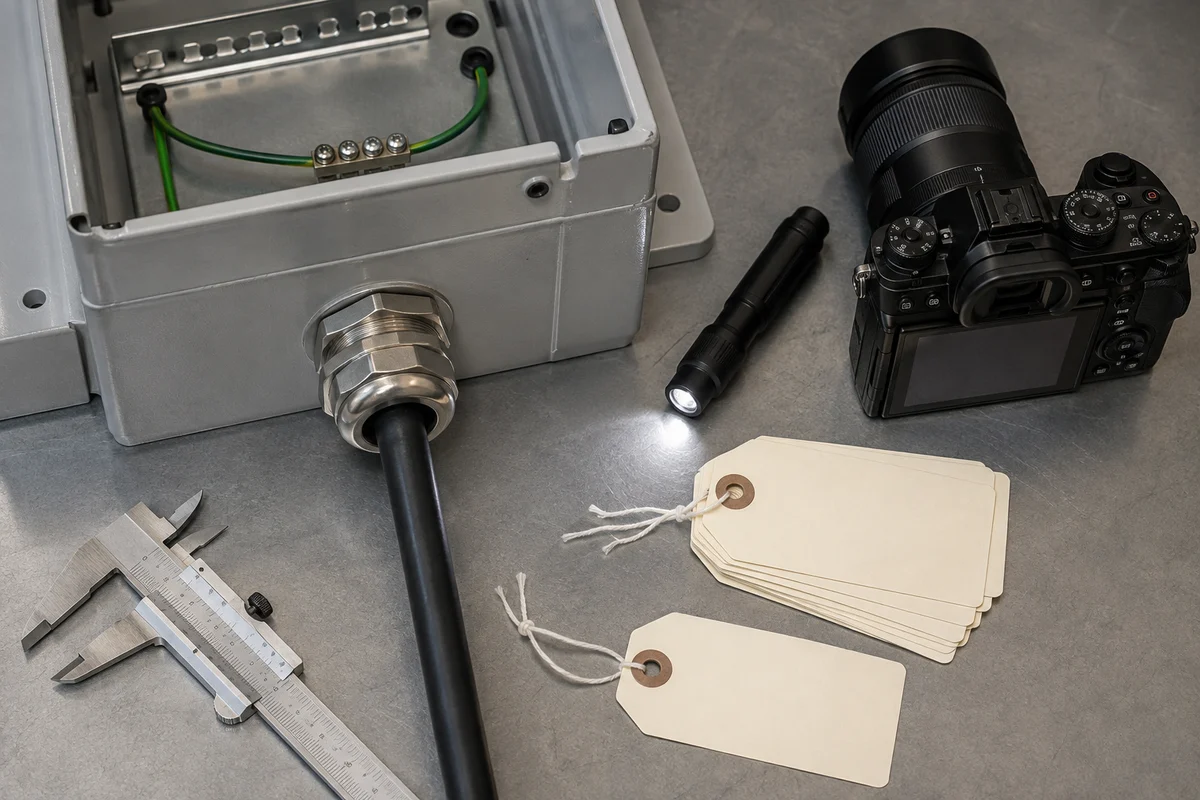
<figcaption>用於記錄的證據蒐集配置：相機、檢查燈、卡尺、標籤，以及已斷電並安排妥當的電纜引入口。</figcaption>
</figure>
<p>遵循現場核准的隔離及調查程序。接著，我會記錄硬體、條件、量測值及觀察時間。</p>
<h2 id="separate-preventive-diagnostic-and-restoration-barriers">分開建立預防、診斷及復原屏障</h2>
<p><strong>控制措施不會自動具備獨立性，也不會永遠可用。</strong> 預防屏障旨在阻止起始事件發生，或防止其越過引入口。診斷措施會在指定涵蓋範圍及回應時間內揭露狀況。減緩措施限制較大範圍的效應。復原則使設備與製程回到可接受的運轉狀態。我會將這些作用分開建模。</p>
<h3 id="preventive-barriers">預防屏障</h3>
<p>在明確限值內，選型及安裝可發揮預防作用。電纜範圍、護套、開孔、配件、暴露條件、鎖緊方法及支撐都必須符合證據。佈線或遮蔽可降低直接暴露。獨立的外殼特徵也可能使液體遠離引入口。我只會將實體防護計算一次；多份文件描述同一道密封，並不會形成多道屏障。</p>
<p>該<a href="/zh-hant/blog/outdoor-enclosure-liquid-tight-cable-glands-how-to-choose-the-perfect-waterproof-solution/">戶外防液型電纜密封接頭選型指南</a> 分別說明電纜密封、壁面連接、水路、暴露及外殼。鎖緊時，我會採用該<a href="/zh-hant/blog/whats-the-perfect-torque-value-for-cable-glands-and-how-tight-is-too-tight/">扭矩文章</a> 所涵蓋的產品、電纜、尺寸及組裝方法。這些配置沒有通用扭矩值。</p>
<h3 id="diagnostics-and-mitigation">診斷與減緩</h3>
<p>濕度開關、絕緣監測器、控制診斷或連續性測試可能偵測某些失效。我會確定其門檻、位置、測試間隔及回應時間，再界定能揭露哪些失效。診斷涵蓋率關乎能否及時偵測失效。裝有感測器並不代表涵蓋率達百分之百。</p>
<p>起始失效擴大後，減緩措施才會發揮作用。隔離可能限制電路受影響範圍；備援可能維持其功能。隔間可限制影響擴散，受控的安全應變則可能避免進一步損害。我會檢查支撐各項結果的架構及程序。這些措施都在電纜密封接頭之外。<a href="/zh-hant/blog/functional-safety-sil-and-mechanical-components-how-do-cable-glands-impact-safety-integrity-levels-and-prevent-catastrophic-failures/">功能安全電纜引入指南</a> 說明被動式密封接頭不會因此取得系統的安全完整性等級。</p>
<h3 id="common-causes-and-restoration">共因與復原</h3>
<p>單一共因可能同時使表面上分開的屏障失效。沖洗作業可能同時暴露相鄰引入口及共用接縫。錯誤的電纜紀錄可能使多個密封接頭重複發生相同尺寸錯誤。共用板件可能讓液體流向備援通道。我也會檢查同一維護方法是否可能同時干擾主要引入口及備援佈線。</p>
<p>修復工作在故障項目矯正或替換時結束；復原則在設備、公用設施、製程條件及材料恢復到現場所界定的狀態時才算完成。品質檢查及運轉許可也可能是該狀態的一部分。我會分別記錄這兩段時間，兩者可能有相當大的差異。</p>
<p>美國政府的<a href="https://www.ready.gov/business/emergency-plans">Ready.gov 緊急應變規劃指南</a> 區分緊急應變、營運持續及資訊科技復原，但未指定電纜密封接頭的復原時間。該時間須由設施自行界定並驗證。</p>
<h2 id="calculate-the-site-specific-production-consequence">計算現場專屬的生產後果</h2>
<p><strong>只有在情境實際影響生產時，才計算生產後果。</strong> 我會使每項輸入都連結至設施核准的定義。將生產流量損失與報廢品、復原資源、合約影響及其他納入的成本分開。採用生產實際受影響的中斷時間，該時間可能不同於項目修復時間。</p>
<p>對於明確界定的情境，將核准的生產損失率乘以生產邊界實際受影響的時間。只有在另有證據支持且納入現場方法時，才加計報廢品、復原或合約影響。加總前，我會先檢查是否重複計入。</p>
<p>以下是算術示例，不是現場案例。假設某設施已核准以每小時 100,000 美元作為一個生產邊界的損失率。某明確事件造成生產中斷 18 分鐘，但項目修復及後續檢查花費更久。直接生產流量損失為 100,000 美元乘以 18/60，等於 30,000 美元。</p>
<p>這項計算並未顯示密封接頭造成、避免或節省了 30,000 美元；它只是將核准的每小時輸入值套用於情境中的生產中斷。沒有證據支持前，報廢品、復原及合約項目都維持為零。我也會考量備援是否在修復期間維持生產。如此一來，即使仍在維護，該生產邊界的中斷時間也可能為零。</p>
<p>預期年度後果需要更多證據。對每個情境，將有佐證的起始事件頻率乘以條件式影響擴大機率及事件後果，再加總結果。影響擴大機率必須考量納入的屏障及其相依性。若沒有可信的頻率及影響擴大輸入，我會維持定性排序。證據不足時，不要發布預期年度損失、避免損失總額或產品財務報酬。</p>
<h2 id="use-observed-data-without-inventing-failure-probability">使用觀察資料，但不要捏造失效機率</h2>
<p><strong>沒有觀察到失效，不代表失效率一定極低。</strong> 產品名稱本身也不會提供營運資料。NIST 說明，可靠度估計的精確度高度仰賴觀察到的失效，而高可靠度項目的失效數可能少到不足以評估。加速測試外推同樣需要測試條件與實際使用條件之間有效的關聯。我會參考 NIST 對<a href="https://www.itl.nist.gov/div898/handbook/apr/section1/apr132.htm">極少或沒有失效時的可靠度資料</a> 的討論，並考量這些限制。</p>
<p>估算可靠度時，現場資料與測試資料都應來自同一個明確界定的情境。<a href="https://www.itl.nist.gov/div898/handbook/apr/section3/apr3.htm">可靠度資料蒐集指南</a>會區分運轉觀察與計畫測試，並將條件及應力納入評估。一致的觀察資料有助比較各事件，但無法補足缺失的失效率、事件擴大機率或財務輸入資料。</p>
<p>若要了解引入口相關事件實際造成的成本，請分別記錄以下因素：</p>
<ul>
<li><strong>組裝配置與工況：</strong>確切的接頭、電纜、配件及引入口，以及受影響的功能與運轉狀態。</li>
<li><strong>偵測與損失：</strong>症狀、偵測方法、警報時間及最先喪失的功能。</li>
<li><strong>失效途徑：</strong>有佐證的原因、局部影響及其對系統造成的後果。</li>
<li><strong>其他控制措施：</strong>防護措施是否可用、遭到旁路、失效或成功發揮作用。</li>
<li><strong>共通原因：</strong>可能影響其他引入口或通道的暴露條件或維護作業。</li>
<li><strong>復原：</strong>修復耗時、生產中斷時間、分階段重新啟動，以及恢復全面運轉所需時間。</li>
<li><strong>財務後果：</strong>分別列出有佐證的生產、報廢、復原及合約成本。</li>
</ul>
<p>使用一致的事件定義。將每個潮濕外殼都稱為「密封接頭失效」，可能會抬高該類失效數，卻掩蓋門板、堵頭、凝露、電纜路徑或維護造成的原因。若紀錄在修復完成時就結束，可能遺漏復原作業。我也會將計畫性維護與非計畫停機分開，避免從另一方向扭曲後果。</p>
<h2 id="compare-reliable-cable-glands-without-marketing-grades">不採用行銷等級比較可靠的電纜密封接頭</h2>
<p><strong>依據替代方案能改變情境中的哪個部分進行比較。</strong> 若不同密封接頭的已證明功能及限值更符合應用，其確實可能降低某一特定起始事件的機率。但它不會自動改變每小時後果、診斷涵蓋率、備援、維修通道或復原計畫。</p>
<p>例如，與指定電纜及開孔相符的密封與固定保持證據，可能強化預防效果。但這不能證明其他開口仍然密封、監測設備能偵測滲入、備援能承載負荷，或重啟能達到目標時間。我會將每項宣稱的改善連結至其影響的實體或營運步驟。</p>
<p>我會用以下明確問題比較各方案：</p>
<table>
<thead>
<tr>
<th>決策問題</th>
<th>所需證據</th>
<th>不成立的簡化判斷</th>
</tr>
</thead>
<tbody>
<tr>
<td>此方案是否降低明確界定的起始事件？</td>
<td>確切功能、產品型式、電纜、引入口、組裝、環境，以及適用的測試或評估</td>
<td>材料名稱、價格、外觀或籠統的品質標籤</td>
</tr>
<tr>
<td>此方案是否增加一道獨立屏障？</td>
<td>不同的實體機制，並檢查共因</td>
<td>將同一密封的兩項宣稱算作兩道屏障</td>
</tr>
<tr>
<td>能否更早偵測該狀況？</td>
<td>明確的可偵測失效集合、門檻、位置、間隔、回應及證明</td>
<td>只說「有監測」，卻沒有涵蓋範圍或時間特性</td>
</tr>
<tr>
<td>能否維持生產？</td>
<td>系統架構、隔離、備援、容量及運轉應變</td>
<td>假設局部缺陷必然導致全面停機</td>
</tr>
<tr>
<td>能否加快復原？</td>
<td>維修通道、安全隔離、備品、修復方法、重啟順序及經驗證的復原步驟</td>
<td>以零件更換時間代替整座廠的復原時間</td>
</tr>
<tr>
<td>是否值得採用此風險處置方案？</td>
<td>現場核准的後果模型，以及有理據支持的頻率或定性風險準則</td>
<td>籠統的財務報酬或避免損失百分比</td>
</tr>
</tbody>
</table>
<p>此分析可能支持選用更適合的密封接頭、調整佈線、增加遮蔽外殼、診斷、隔離電路或備品策略。可能需要多項措施共同作用。我會針對主要不確定性或失效路徑處理。若更換密封接頭，卻保留錯誤電纜、受損引入口、共用暴露或無效偵測，問題大致仍在。</p>
<h2 id="conclusion-keep-the-gland-inside-the-risk-model">結論：將密封接頭納入風險模型</h2>
<p>當電纜密封接頭已證明的功能符合電纜、開孔、外殼、暴露及安裝條件時，適用的產品可降低特定引入口失效機會，但不能保證避免固定的每小時損失。我會將其效益限定在它能影響的階段。</p>
<p>從暴露開始，追溯一個可信情境，經過起始失效、屏障狀態、系統效應及復原。只將核准的每小時費率套用於實際受影響的生產時段。若頻率或影響擴大機率不確定，我會先定性比較各方案並補強證據，再計算預期損失。</p>
<h2 id="cable-gland-downtime-risk-faqs">電纜密封接頭停機風險常見問題</h2>
<h3 id="can-a-cable-gland-alone-prevent-a-usd-100000-per-hour-loss">單靠電纜密封接頭能避免每小時 100,000 美元的損失嗎？</h3>
<p>不能。密封接頭只能在有證據支持的配置範圍內降低已界定的引入口失效。局部失效是否造成每小時 100,000 美元的生產後果，取決於外殼、電路架構、診斷、隔離、備援、應變、修復及復原。每小時金額必須來自現場核准的情境模型。</p>
<h3 id="is-an-ip-rating-a-downtime-reduction-claim">IP 等級是否代表可降低停機損失？</h3>
<p>不能。IP 分類說明在界定的測試條件下外殼的防護性能；它不是失效率、避免損失百分比、復原承諾，也不保證每個已安裝的引入口都符合要求。電纜、密封接頭、外殼介面、配件、組裝、暴露及完整測試配置，仍決定證據的適用方式。</p>
<h3 id="how-is-a-hazard-different-from-an-initiating-event">危害與起始事件有何不同？</h3>
<p>危害是可能造成傷害或損失的狀態，例如水暴露、化學侵蝕或機械能量。起始事件是情境中首次發生的明確損失，例如引入口密封件不再維持其介面密封。即使失效未發生，危害仍可能存在。</p>
<h3 id="how-should-common-cause-affect-barrier-credit">共因應如何影響屏障效益的計算？</h3>
<p>若同一暴露、設計選擇、安裝錯誤、公用設施、位置或維護作業可能削弱多道屏障，就應視屏障之間存在相依性。在檢查共用原因前，不要將各屏障視為獨立成功並相乘計算。即使各電路具備備援，共用密封接頭板或沖洗路徑仍可能造成影響。</p>
<h3 id="should-a-consequence-model-use-repair-time-or-restoration-time">後果模型應採用修復時間還是復原時間？</h3>
<p>各後果項目應採用相符的時間。零件修復時間可能不同於生產中斷時間，也可能不同於整個製程完全復原時間。若備援使生產持續，生產中斷時間可能為零；若修復後仍須重啟、清潔或品質檢查，復原可能更晚才完成。這些時間區間應分開記錄。</p>
<h3 id="sources-and-technical-references">來源與技術參考資料</h3>
<ul>
<li><a href="https://webstore.iec.ch/en/publication/59809">IEC 31010:2019，《風險管理－風險評估技術》</a>，查閱日期：2026-09-07。</li>
<li><a href="https://webstore.iec.ch/en/publication/26359">IEC 60812:2018，《失效模式與效應分析》</a>，查閱日期：2026-09-07。</li>
<li><a href="https://webstore.iec.ch/en/publication/7034">IEC 62444:2010，《電氣裝置用電纜密封接頭》</a>，查閱日期：2026-09-07。</li>
<li><a href="https://www.hse.gov.uk/regulating-major-hazards/assets/docs/major-hazards-regulatory-model.pdf">英國健康與安全執行署（HSE），《重大危害監管模型》</a>，查閱日期：2026-09-07。</li>
<li><a href="https://www.ready.gov/business/emergency-plans">Ready.gov，《企業緊急應變計畫》</a>，查閱日期：2026-09-07。</li>
<li><a href="https://www.itl.nist.gov/div898/handbook/apr/section1/apr132.htm">NIST 工程統計手冊，《無失效資料》</a>，查閱日期：2026-09-07。</li>
<li><a href="https://www.itl.nist.gov/div898/handbook/apr/section3/apr3.htm">NIST 工程統計手冊，《可靠度資料蒐集》</a>，查閱日期：2026-09-07。</li>
</ul>
