# 客戶問答：鎧裝電纜密封接頭最令工程師掛心的五個棘手問題有哪些？

> Source: https://chinacableglands.com/zh-hant/blog/customer-qa-what-are-the-5-toughest-questions-about-armored-cable-glands-that-keep-engineers-awake/
> Language: zh-Hant
> Publisher: 倍拓電纜接頭
> Author: Henry Xu
> Published: 2026-01-25
> Updated: 2026-07-31

用明確的停止條件釐清鎧裝電纜密封接頭的五項疑問：等電位連接、尺寸、扭矩、護套損傷及危險區域證據。

<p><strong>這五項鎧裝電纜密封接頭問題涵蓋等電位連接、尺寸配合、鎖緊、護套狀態及危險區域符合性。</strong> 我會分別檢查每一項。電纜、確切接頭、外殼引入口、說明及證據都必須相符，組件才可接受。回答其中一項，不能證明其他功能。</p>
<p>鎧裝端接可能與密封或等電位連接共用零件，但每項工況仍須各自檢查。 <a href="https://webstore.iec.ch/en/publication/7034">IEC 62444:2010</a> 涵蓋由負責製造商或供應商提供的完整接頭。我依據該產品範圍判斷，不會只從外形、引入口尺寸或金屬本體推定適用性。</p>
<blockquote>
<p><strong>重點摘要</strong></p>
<ul>
<li>先確定系統的等電位連接路徑，再判定鎧裝夾是否構成接地連接。</li>
<li>核對每項適用中的電纜與引入口範圍，不只看電纜總外徑或標稱螺紋。</li>
<li>閉合位置與扭矩值只能依確切接頭型號的現行說明。</li>
<li>護套受損會改變受評估的電纜密封介面；IP 宣稱不能移用到受損配置。</li>
<li>危險區域用途須核對確切配置的證書、附表、標示、電纜、配件及安裝規則。</li>
</ul>
</blockquote>
<h2 id="the-five-lane-evidence-map">五條證據線示意圖</h2>
<p>鎧裝電纜可能具有不同層面：外護套、鎧裝、內墊層或內護套，以及屏蔽層。並非每條電纜都具有所有層。此圖將適用的層連結至各自的檢查項目。實際接頭內部構造須依確切產品圖面判定。</p>
<figure class="blog-chart" style="container-type: inline-size;">
<svg xmlns="http://www.w3.org/2000/svg" viewBox="0 0 480 1375" role="img" aria-labelledby="arm-five-title arm-five-desc" style="font-family:var(--font-body); width: 100% !important; max-width: 100% !important; height: auto !important;" id="cg-typography-6ddd45222113b237">
<style>
#cg-typography-6ddd45222113b237 { --svg-body-screen: 17px; }
@media (max-width: 760px) { #cg-typography-6ddd45222113b237 { --svg-body-screen: 16px; } }
</style>
<title id="arm-five-title">鎧裝電纜各層對應五條證據線。</title>
<desc id="arm-five-desc">示意圖將存在的電纜各層對應至等電位連接、尺寸配合、閉合、密封及危險區域證據。實際接頭構造以製造商圖面為準。</desc>
<defs><marker id="arm-five-arrow" markerWidth="8" markerHeight="8" refX="7" refY="4" orient="auto"><path d="M0 0L8 4L0 8Z" fill="var(--color-primary)" /></marker></defs>
<rect x="24" y="24" width="432" height="211.74" rx="16" fill="var(--surface-card)" stroke="var(--color-graphite)" stroke-width="2" /><text x="380" text-anchor="middle" fill="var(--color-carbon)" style="font-size: calc(var(--svg-body-screen) * 480px / 100cqw) !important;"><tspan x="240" y="61.96" font-size="18" font-weight="700" style="font-size: calc(18px * 480px / 100cqw) !important;">界定確切的電纜</tspan><tspan x="240" y="91.96" font-size="18" font-weight="700" style="font-size: calc(18px * 480px / 100cqw) !important;">結構。</tspan><tspan x="240" y="122.91" font-size="14" style="font-size: calc(var(--svg-body-screen) * 480px / 100cqw) !important;">外護套 · 鎧裝（如有） ·</tspan><tspan x="240" y="149.91" font-size="14" style="font-size: calc(var(--svg-body-screen) * 480px / 100cqw) !important;">內墊層（如有）。</tspan><tspan x="240" y="180.31" font-size="14" style="font-size: calc(var(--svg-body-screen) * 480px / 100cqw) !important;">屏蔽層（如有） · 電纜製造商 · 版次</tspan><tspan x="240" y="207.31" font-size="14" style="font-size: calc(var(--svg-body-screen) * 480px / 100cqw) !important;">· 尺寸區間。</tspan></text><path d="M240 239.741V271.741" fill="none" stroke="var(--color-primary)" stroke-width="3" marker-end="url(#arm-five-arrow)" /><rect x="24" y="287.74" width="432" height="154.74" rx="16" fill="var(--surface-card)" stroke="var(--color-graphite)" stroke-width="2" /><path d="M240 446.483V478.483" fill="none" stroke="var(--color-primary)" stroke-width="3" marker-end="url(#arm-five-arrow)" /><rect x="24" y="494.48" width="432" height="181.74" rx="16" fill="var(--surface-card)" stroke="var(--color-graphite)" stroke-width="2" /><path d="M240 680.224V712.224" fill="none" stroke="var(--color-primary)" stroke-width="3" marker-end="url(#arm-five-arrow)" /><rect x="24" y="728.22" width="432" height="181.74" rx="16" fill="var(--surface-card)" stroke="var(--color-graphite)" stroke-width="2" /><path d="M240 913.965V945.965" fill="none" stroke="var(--color-primary)" stroke-width="3" marker-end="url(#arm-five-arrow)" /><rect x="24" y="961.97" width="432" height="181.74" rx="16" fill="var(--surface-card)" stroke="var(--color-graphite)" stroke-width="2" /><path d="M240 1147.71V1179.71" fill="none" stroke="var(--color-primary)" stroke-width="3" marker-end="url(#arm-five-arrow)" /><rect x="24" y="1195.71" width="432" height="154.74" rx="16" fill="var(--surface-card)" stroke="var(--color-graphite)" stroke-width="2" /><text fill="var(--color-carbon)" font-size="14" style="font-size: calc(var(--svg-body-screen) * 480px / 100cqw) !important;"><tspan x="44" y="325.7" font-size="17" font-weight="700" style="font-size: calc(18px * 480px / 100cqw) !important;">1. 等電位連接路徑。</tspan><tspan x="44" y="356.65" style="font-size: calc(var(--svg-body-screen) * 480px / 100cqw) !important;">僅在明確聲明時採用鎧裝介面。</tspan><tspan x="44" y="387.05" style="font-size: calc(var(--svg-body-screen) * 480px / 100cqw) !important;">保護與功能性等電位連接由系統</tspan><tspan x="44" y="414.05" style="font-size: calc(var(--svg-body-screen) * 480px / 100cqw) !important;">設計決定。</tspan><tspan x="44" y="532.44" font-size="17" font-weight="700" style="font-size: calc(18px * 480px / 100cqw) !important;">2. 尺寸配合。</tspan><tspan x="44" y="563.39" style="font-size: calc(var(--svg-body-screen) * 480px / 100cqw) !important;">每個作用中電纜層的範圍均須</tspan><tspan x="44" y="590.39" style="font-size: calc(var(--svg-body-screen) * 480px / 100cqw) !important;">分別檢查。</tspan><tspan x="44" y="620.79" style="font-size: calc(var(--svg-body-screen) * 480px / 100cqw) !important;">引入口螺紋、壁面、就位面、可用螺紋長度及</tspan><tspan x="44" y="647.79" style="font-size: calc(var(--svg-body-screen) * 480px / 100cqw) !important;">配件也須分開核對。</tspan><tspan x="44" y="766.18" font-size="17" font-weight="700" style="font-size: calc(18px * 480px / 100cqw) !important;">3. 閉合控制。</tspan><tspan x="44" y="797.13" style="font-size: calc(var(--svg-body-screen) * 480px / 100cqw) !important;">準備方式與扭矩依確切型號</tspan><tspan x="44" y="824.13" style="font-size: calc(var(--svg-body-screen) * 480px / 100cqw) !important;">說明執行。</tspan><tspan x="44" y="854.53" style="font-size: calc(var(--svg-body-screen) * 480px / 100cqw) !important;">檢查紀錄須記載指定的最終狀態，</tspan><tspan x="44" y="881.53" style="font-size: calc(var(--svg-body-screen) * 480px / 100cqw) !important;">不得自行編造數值。</tspan><tspan x="44" y="999.92" font-size="17" font-weight="700" style="font-size: calc(18px * 480px / 100cqw) !important;">4. 密封界面。</tspan><tspan x="44" y="1030.88" style="font-size: calc(var(--svg-body-screen) * 480px / 100cqw) !important;">外護套與外殼引入口是</tspan><tspan x="44" y="1057.88" style="font-size: calc(var(--svg-body-screen) * 480px / 100cqw) !important;">不同的介面。</tspan><tspan x="44" y="1088.27" style="font-size: calc(var(--svg-body-screen) * 480px / 100cqw) !important;">損傷或配置變更會重新啟動</tspan><tspan x="44" y="1115.27" style="font-size: calc(var(--svg-body-screen) * 480px / 100cqw) !important;">證據審查。</tspan><tspan x="44" y="1233.67" font-size="17" font-weight="700" style="font-size: calc(18px * 480px / 100cqw) !important;">5. 危險區域配置。</tspan><tspan x="44" y="1264.62" style="font-size: calc(var(--svg-body-screen) * 480px / 100cqw) !important;">證書＋附表＋說明。</tspan><tspan x="44" y="1295.01" style="font-size: calc(var(--svg-body-screen) * 480px / 100cqw) !important;">防護概念、標示、電纜、</tspan><tspan x="44" y="1322.01" style="font-size: calc(var(--svg-body-screen) * 480px / 100cqw) !important;">配件及安裝方式必須一致。</tspan></text></svg>
<figcaption>五條證據線示意圖將適用的電纜各層連結至等電位連接、尺寸配合、閉合、密封及危險區域證據。</figcaption>
</figure>
<p>每個問題都涉及不同介面。鎧裝夾持合適，並不能證明護套已密封；引入口已密封，也不能證明預期的電氣路徑已建立。</p>
<h2 id="1-how-should-cable-armour-be-bonded-without-assuming-a-universal-both-end-rule">1. 如何連接電纜鎧裝，而不預設所有情況都須接於兩端？</h2>
<p><strong>選定連接方式前，先在系統層級界定等電位連接與接地。</strong> 我會依據電纜系統的保護措施、故障電流路徑、電磁功能、設備配置及適用規則。這些條件決定鎧裝應接於一端或兩端。</p>
<p><strong>鎧裝等電位連接路徑</strong> 是指從電纜鎧裝出發，經過每個聲明的接頭及外殼介面，直到電氣設計指定系統連接點的完整預定導電路徑。明確記錄此路徑，可避免把夾具或導通指示誤當成整條保護或功能性路徑的證明。</p>
<p><a href="https://webstore.iec.ch/en/publication/1882">IEC 60364-5-54:2011</a> 涵蓋電氣裝置的接地配置、保護導體及保護等電位連接導體。其範圍比單一接頭更廣。接頭可以提供聲明的鎧裝介面，但是否以及如何將此介面納入保護等電位連接、功能性等電位連接、屏蔽端接或其他路徑，須由系統設計者決定。</p>
<p>我會記錄鎧裝材料與構造、接頭的鎧裝範圍，以及外殼材質與表面狀況，再識別接地片、墊圈、鎖緊螺帽、轉接頭及等電位連接導體。逐一檢查各接觸處的漆面、絕緣層、塗層及異種金屬。系統設計須指定所需路徑及檢查或測試方法。</p>
<p><strong>停止條件：</strong> 金屬本體、導通蜂鳴聲或接觸中的夾具，都不足以證明等電位連接。它們均不能證明故障電流承載能力、長期接觸狀態、電磁相容性（EMC）或必要的安全路徑。若配件未定義，或假設電流會經由塗層流通，應先釐清。</p>
<p><strong>後續行動：</strong> 在標註的連接圖上畫出預定路徑，為每個接合點指定驗收準則，並取得確切接頭及配件文件。 <a href="/zh-hant/blog/how-proper-electrical-bonding-and-grounding-with-cable-glands-saves-lives/">等電位連接與接地證據指南</a> 說明保護、功能及 EMC 路徑為何需要各自的驗收證據。</p>
<p>電纜系統中可能採用單端或雙端連接。我會檢查它們對完整電路的影響。在某些設計中，第二個連接點可能形成並聯路徑；在其他設計中，則可能是保護或屏蔽所必需。單靠接頭無法判定。</p>
<p>例如，系統圖可能指定以鎧裝執行保護等電位連接，並以獨立路徑連接屏蔽層。其他設計可能以不同方式使用鎧裝。接頭無法決定採用哪一種做法；其聲明介面須符合所選系統路徑。</p>
<table>
<thead>
<tr>
<th>等電位連接紀錄</th>
<th>必要證據</th>
<th>以下情況應拒收或保持待釐清</th>
</tr>
</thead>
<tbody>
<tr>
<td>鎧裝功能</td>
<td>系統圖與設計依據</td>
<td>整份說明只有「鎧裝就是接地」。</td>
</tr>
<tr>
<td>接頭介面</td>
<td>確切型號圖面及其聲明的鎧裝範圍</td>
<td>未涵蓋電纜鎧裝或配件。</td>
</tr>
<tr>
<td>外殼接合處</td>
<td>表面、塗裝、五金件及組裝方法</td>
<td>將漆面或塗層視為已證明具導電接觸。</td>
</tr>
<tr>
<td>保護路徑</td>
<td>適用設計及驗證準則</td>
<td>把低電流的單點檢查當成完整證明。</td>
</tr>
<tr>
<td>功能性或 EMC 路徑</td>
<td>與頻率及安裝方式相符的證據</td>
<td>把直流導通視為屏蔽效能證據。</td>
</tr>
</tbody>
</table>
<h2 id="2-which-gland-size-fits-the-exact-armoured-cable-construction-and-every-active-range">2. 哪種接頭尺寸適用於確切的鎧裝電纜結構及所有作用中的尺寸範圍？</h2>
<p><strong>正確尺寸的接頭必須涵蓋所有會接觸的電纜層，並符合外殼堆疊配置。</strong> 若設計有使用，我會分別記錄外護套外徑（OD）、鎧裝、內墊層或內護套，以及屏蔽接觸尺寸。標稱螺紋尺寸則是另一個介面。</p>
<p><strong>作用中的電纜密封接頭介面</strong> 是指所選設計實際夾持、密封、接觸或安裝於其上的電纜層或外殼特徵。只需檢查該結構中存在的介面，但不能把任何介面隱藏在單一標稱電纜尺寸或螺紋尺寸之中。</p>
<p>我會先取得電纜製造商的結構圖及製造限值，並記錄型式、鎧裝形式與材料、護套與內墊層、屏蔽、形狀及版次。SWA 代表鋼絲鎧裝；AWA 代表鋁線鎧裝。這兩個標示都不能單獨界定實際接觸尺寸。閱讀接頭圖面與表格時，請參考 <a href="/zh-hant/blog/how-do-you-decode-cable-gland-size-charts-to-match-your-cable-diameter-perfectly/">製造商專屬尺寸表的使用方法</a>。</p>
<p>針對電纜外部密封，請比較完整的電纜製造尺寸區間 <span class="article-math article-math-inline" data-latex="[D_{c,min}, D_{c,max}]"><span class="katex"><math xmlns="http://www.w3.org/1998/Math/MathML"><semantics><mrow><mo stretchy="false">[</mo><msub><mi>D</mi><mrow><mi>c</mi><mo separator="true">,</mo><mi>m</mi><mi>i</mi><mi>n</mi></mrow></msub><mo separator="true">,</mo><msub><mi>D</mi><mrow><mi>c</mi><mo separator="true">,</mo><mi>m</mi><mi>a</mi><mi>x</mi></mrow></msub><mo stretchy="false">]</mo></mrow><annotation encoding="application/x-tex">[D_{c,min}, D_{c,max}]</annotation></semantics></math></span></span>，與確切接頭型號的密封範圍<span class="article-math article-math-inline" data-latex="[D_{g,min}, D_{g,max}]"><span class="katex"><math xmlns="http://www.w3.org/1998/Math/MathML"><semantics><mrow><mo stretchy="false">[</mo><msub><mi>D</mi><mrow><mi>g</mi><mo separator="true">,</mo><mi>m</mi><mi>i</mi><mi>n</mi></mrow></msub><mo separator="true">,</mo><msub><mi>D</mi><mrow><mi>g</mi><mo separator="true">,</mo><mi>m</mi><mi>a</mi><mi>x</mi></mrow></msub><mo stretchy="false">]</mo></mrow><annotation encoding="application/x-tex">[D_{g,min}, D_{g,max}]</annotation></semantics></math></span></span>，單位須一致。以下為兩個有正負號的篩查邊際值：</p>
<div class="article-math article-math-display" data-latex="m_{low}=D_{c,min}-D_{g,min}"><span class="katex"><math xmlns="http://www.w3.org/1998/Math/MathML" display="block"><semantics><mrow><msub><mi>m</mi><mrow><mi>l</mi><mi>o</mi><mi>w</mi></mrow></msub><mo>=</mo><msub><mi>D</mi><mrow><mi>c</mi><mo separator="true">,</mo><mi>m</mi><mi>i</mi><mi>n</mi></mrow></msub><mo>−</mo><msub><mi>D</mi><mrow><mi>g</mi><mo separator="true">,</mo><mi>m</mi><mi>i</mi><mi>n</mi></mrow></msub></mrow><annotation encoding="application/x-tex">m_{low}=D_{c,min}-D_{g,min}</annotation></semantics></math></span></div>
<div class="article-math article-math-display" data-latex="m_{high}=D_{g,max}-D_{c,max}"><span class="katex"><math xmlns="http://www.w3.org/1998/Math/MathML" display="block"><semantics><mrow><msub><mi>m</mi><mrow><mi>h</mi><mi>i</mi><mi>g</mi><mi>h</mi></mrow></msub><mo>=</mo><msub><mi>D</mi><mrow><mi>g</mi><mo separator="true">,</mo><mi>m</mi><mi>a</mi><mi>x</mi></mrow></msub><mo>−</mo><msub><mi>D</mi><mrow><mi>c</mi><mo separator="true">,</mo><mi>m</mi><mi>a</mi><mi>x</mi></mrow></msub></mrow><annotation encoding="application/x-tex">m_{high}=D_{g,max}-D_{c,max}</annotation></semantics></math></span></div>
<p>其中， <span class="article-math article-math-inline" data-latex="D_c"><span class="katex"><math xmlns="http://www.w3.org/1998/Math/MathML"><semantics><mrow><msub><mi>D</mi><mi>c</mi></msub></mrow><annotation encoding="application/x-tex">D_c</annotation></semantics></math></span></span> 代表電纜總外徑， <span class="article-math article-math-inline" data-latex="D_g"><span class="katex"><math xmlns="http://www.w3.org/1998/Math/MathML"><semantics><mrow><msub><mi>D</mi><mi>g</mi></msub></mrow><annotation encoding="application/x-tex">D_g</annotation></semantics></math></span></span> 代表聲明的外部密封範圍。若區間完整包含，兩個邊際值都必須大於或等於零。邊際值為零代表落在端點，不代表額外公差。結果僅供尺寸初步篩查；不能核准電纜形狀、密封相容性、鎧裝或內墊層配合、引入口幾何、IP 等級、危險區域用途、扭矩或安裝方式。</p>
<p><a class="article-tool-card article-tool-card-link" href="/zh-hant/resource-center/tools/cable-od-range-margin-calculator/" aria-label="電纜外徑範圍餘裕計算器"><span class="article-tool-card-index">工具</span><span class="article-tool-card-kicker">電纜尺寸</span><strong class="article-tool-card-title">電纜外徑範圍餘裕計算器</strong><span class="article-tool-card-copy">請以相同單位輸入電纜總外徑的最小值與最大值，以及確切接頭型號的完整密封範圍。任一邊際值為負都應視為不合格；接著分別檢查鎧裝、內墊層、屏蔽、引入口、配件、IP、Ex 及安裝條件。</span><span class="article-tool-card-formula">M = min(Dc,min − Dg,min, Dg,max − Dc,max)</span><span class="article-tool-card-inputs" aria-label="計算器輸入項目"><em>電纜最小外徑</em><em>電纜最大外徑</em><em>接頭密封範圍下限</em><em>接頭密封範圍上限</em></span><span class="article-tool-card-action">開啟計算器 <span aria-hidden="true">-&gt;</span></span></a></p><p><strong>檢查項目：</strong> 將電纜完整外徑區間與密封範圍比較，再檢查已處理鎧裝、內墊層及屏蔽接觸範圍。在外殼端，核實螺紋或開孔、壁面與就位區、安裝配件後的可用螺紋咬合、鎖緊螺帽、墊圈、方向及工具操作空間。若電纜為橢圓或帶肋外形，應依製造商的量測方法操作。</p>
<p><strong>停止條件：</strong> 任何會接觸的電纜尺寸區間超出其聲明範圍，都應拒收。若缺少單位、範圍、基準點、電纜結構、版次或配件堆疊資料，就應暫緩選型。一般性的間隙、移除鎧裝線、在護套外纏膠帶或採用較大的螺紋，都不能證明相容性。</p>
<p><strong>後續行動：</strong>將每一電纜層與接頭實際接觸該層的介面逐一比對。外護套配合良好，無法補償不適用的鎧裝或內墊層範圍。<a href="/zh-hant/blog/armored-vs-unarmored-cable-glands-which-one-do-you-really-need/">鎧裝與非鎧裝接頭的選型指南</a>有助確認此用途是否確實需要鎧裝介面。</p>
<p>例如，標稱引入口螺紋可能與外殼相符，但電纜最大外徑超出密封範圍。反過來也可能發生：外部密封範圍適用，但加上指定的墊圈及鎖緊螺帽後，可用螺紋長度不足。兩種情況都應拒收，直到有文件佐證的配置符合所有作用中的尺寸項目。</p>
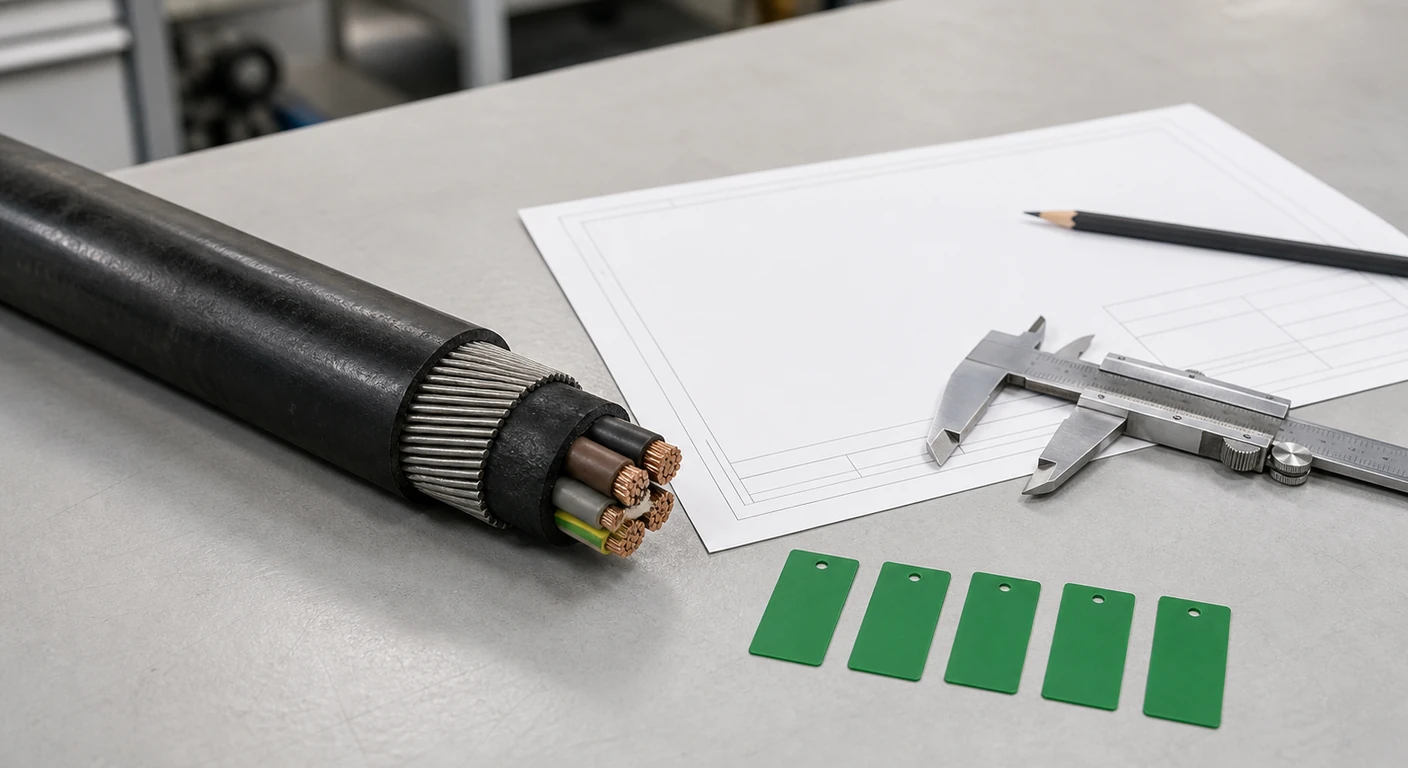
<img alt="無品牌標示的鎧裝電纜樣品，旁有空白的受控圖面與檢查工具" src="/images/blog/customer-qa-what-are-the-5-toughest-questions-about-armored-cable-glands-that-keep-engineers-awake/armoured-cable-evidence-review.webp" width="1408" height="768" loading="lazy" decoding="async">
<p><em>鎧裝電纜試樣、卡尺、圖面及五個標記，用來比對外護套、內墊層與鎧裝各層的尺寸。</em></p>
<p>使用此配置記錄電纜製造商提供的尺寸區間及來源版次。完成五項適用審查後，依確切接頭文件核准相容性。</p>
<h2 id="how-the-five-checks-fit-together">五項檢查如何相互配合</h2>
<p>五項檢查分別處理不同的失效風險。尺寸吻合不能證明等電位連接已完成；閉合程序完成，也不能證明受損護套能夠密封。電纜、接頭、配件、外殼或準備方式一旦改變，可能影響其中多項功能。</p>
<table>
<thead>
<tr>
<th>功能</th>
<th>影響該功能的細節</th>
<th>可採用的檢查</th>
</tr>
</thead>
<tbody>
<tr>
<td>等電位連接</td>
<td>系統路徑、鎧裝功能、接合處及配件</td>
<td>明確定義的圖面，以及適用的檢查或測試紀錄。</td>
</tr>
<tr>
<td>尺寸</td>
<td>電纜尺寸區間、作用中的接頭範圍、引入口及堆疊配置</td>
<td>尺寸比較及確切圖面。</td>
</tr>
<tr>
<td>閉合</td>
<td>電纜準備、零件順序、型號說明</td>
<td>製造商規定的最終閉合狀態及檢查方式。</td>
</tr>
<tr>
<td>密封</td>
<td>電纜介面、引入口介面及損傷狀態</td>
<td>依配置執行的檢查及狀態紀錄。</td>
</tr>
<tr>
<td>危險區域</td>
<td>區域分類、防護概念、標示及證書條件</td>
<td>確切證書、附表、說明及已安裝配置的一致性。</td>
</tr>
</tbody>
</table>
<p>這些獨立檢查可避免某個介面的良好結果掩蓋另一處失效。外徑計算通過並不代表鎧裝配合合適；完成扭矩紀錄不代表受損護套就可接受；證書編號也無法證明已安裝的電纜、配件或環境條件落在證書範圍內。</p>
<h2 id="conclusion">結論</h2>
<p>我會分別釐清五項問題：鎧裝等電位連接、電纜與引入口尺寸、依說明鎖緊、護套狀態及危險區域配置。每一項都需要相應證據，並應在安裝期間維持這些區別。</p>
<p>針對實際電纜與外殼，我會依現行說明及紀錄配對接頭零件與尺寸。五項適用檢查都相符後，才接受該組件。若資料缺漏，應針對該介面補齊，不要擴大套用其他產品的 IP、材料或證書宣稱。</p>
<h2 id="armored-cable-glands-faq">鎧裝電纜密封接頭常見問題</h2>
<h3 id="3-what-closure-and-torque-prevent-armour-or-cable-damage">3. 何種閉合方式與扭矩可避免損傷鎧裝或電纜？</h3>
<p>僅依確切型號的現行說明進行準備，並遵循零件順序、最終位置及鎖緊順序；說明也會在有規定時管制潤滑劑、密封膠與扭矩。作業前，我會核對料號、尺寸、電纜、配件、工具及說明版次。</p>
<p><strong>檢查項目：</strong> 檢查鎧裝準備、線材分佈、護套及指定的最終位置。</p>
<p><strong>停止條件：</strong> 不得將其他型號或僅依螺紋／材料的表格數值套用於本型號。若遇到意外頂到底、電纜轉動、鎧裝移位、護套切傷、錯牙，或無法達到說明指定狀態，應停止。</p>
<p><strong>後續行動：</strong> 隔離並檢查受影響的零件與各層。僅依製造商有文件記載的返修方式處理。 <a href="/zh-hant/blog/how-do-cable-glands-balance-strain-relief-and-sealing-for-maximum-protection/">固定能力與密封驗證指南</a> 會分開檢查機械固定能力與密封。</p>
<h3 id="4-can-an-ip-claim-survive-damage-to-the-cable-sheath">4. 護套受損後，IP 宣稱仍適用嗎？</h3>
<p>IP 宣稱不能自動涵蓋受損護套。 <a href="https://webstore.iec.ch/en/publication/2452">IEC 60529</a> 將受評估外殼及電纜引入口的防護程度分類。</p>
<p><strong>檢查項目：</strong> 識別損傷位置、層面、原因、電纜製造商的處置意見、密封位置及引入口證據。將電纜密封件與外殼接合處分開檢查。</p>
<p><strong>停止條件：</strong> 若切口、磨損、變形、污染、修補或表面變化可能影響密封，且沒有核准的處置方式，應暫停安裝。</p>
<p><strong>後續行動：</strong> 依電纜及接頭製造商的修理或更換方法處理。重建引入口後，我會重新檢查選型、準備、組裝及測試。 <a href="/zh-hant/blog/how-do-you-achieve-perfect-ip68-waterproof-cable-gland-installation-every-time/">雙介面 IP 安裝指南</a> 涵蓋此流程。在證據與檢查適用前，應將修復後的介面視為新配置。</p>
<h3 id="5-which-hazardous-area-certificate-and-configuration-must-be-checked">5. 應核對哪一份危險區域證書及配置？</h3>
<p>核對證書、附表或附件、完整標示、說明及線上狀態。附表或附件界定涵蓋的構造與條件。 <a href="https://webstore.iec.ch/en/publication/66049">IEC 60079-14:2024</a> 涵蓋電氣 Ex 裝置的設計、選型、安裝、文件管理及初始檢查。Ex 代表防爆。</p>
<p><strong>檢查項目：</strong> 先識別區域分類與防護方式，再確認設備組別、氣體或粉塵組別、溫度等級及環境溫度範圍。核對電纜、接頭、配件、引入口規則、特殊條件及證書版次。 <a href="https://www.iecex.com/certified-equipment-scheme/faqs-certified-equipment-scheme/">IECEx 設備方案常見問題</a> 指出其線上證書是受控的主要版本。</p>
<p><strong>停止條件：</strong> 標誌、系列宣稱、ATEX／IECEx 字樣或其他型號的證書，都不足以完成配置核對。</p>
<p><strong>後續行動：</strong> 核實紀錄與安裝文件。若為歐盟專案，應適用 <a href="https://single-market-economy.ec.europa.eu/sectors/mechanical-engineering/equipment-potentially-explosive-atmospheres-atex_en">歐盟委員會 ATEX 設備途徑</a> ，並限於其法律適用範圍。我會參考 <a href="/zh-hant/blog/how-do-you-choose-the-perfect-cable-gland-for-hazardous-area-applications/">危險區域接頭選型指南</a> 處理尚未解決的要求。</p>
<h3 id="sources-and-technical-references">來源與技術參考資料</h3>
<ul>
<li><a href="https://webstore.iec.ch/en/publication/7034">IEC 62444:2010，《電氣裝置用電纜密封接頭》</a>, 查閱日期：2026-09-06。</li>
<li><a href="https://webstore.iec.ch/en/publication/1882">IEC 60364-5-54:2011，接地配置與保護導體</a>, 查閱日期：2026-09-06。</li>
<li><a href="https://webstore.iec.ch/en/publication/2452">IEC 60529，外殼提供的防護等級</a>, 查閱日期：2026-09-06。</li>
<li><a href="https://webstore.iec.ch/en/publication/66049">IEC 60079-14:2024，爆炸性環境：裝置設計、選型、安裝與初始檢查</a>, 查閱日期：2026-09-06。</li>
<li><a href="https://www.iecex.com/certified-equipment-scheme/faqs-certified-equipment-scheme/">IECEx 認證設備方案常見問題</a>, 查閱日期：2026-09-06。</li>
<li><a href="https://single-market-economy.ec.europa.eu/sectors/mechanical-engineering/equipment-potentially-explosive-atmospheres-atex_en">歐盟委員會，可能具有爆炸性環境用設備</a>, 查閱日期：2026-09-06。</li>
</ul>