

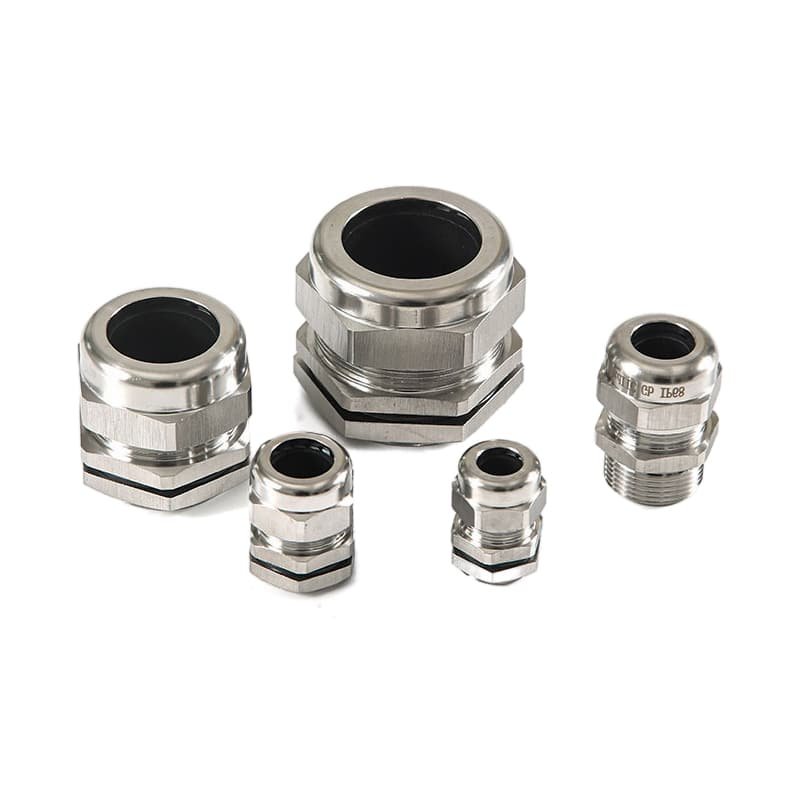
กลไกการกัดกร่อนในปลอกสายเคเบิล.
การเข้าใจเคมีของการกัดกร่อนเผยให้เห็นว่าการเลือกวัสดุต้องพิจารณาความเข้ากันได้ทางกัลวานิก, สภาพการสัมผัสกับสิ่งแวดล้อม, และความแตกต่างของศักย์ไฟฟ้าเคมี, โดยการเลือกโลหะผสมที่เหมาะสมและการบำบัดผิวที่เหมาะสมสามารถยืดอายุการใช้งานในสภาพแวดล้อมที่มีการกัดกร่อนได้ยาวนานขึ้นถึง 10-50 เท่า. Comprehensive corrosion analysis ensures optimal material choice for maximum longevity.
After analyzing corrosion failures from over 5,000 cable gland installations across marine, chemical processing, and offshore applications, I’ve identified the critical electrochemical factors that determine material performance and longevity. Let me share the comprehensive corrosion science that will guide your material selection and ensure exceptional durability in the most aggressive environments.
สารบัญ
- Understanding the Fundamental Chemistry of Corrosion in Cable Glands
- How Different Materials Respond to Corrosive Environments
- Galvanic Corrosion: The Hidden Threat in Multi-Material Systems
- Advanced Surface Treatments and Protective Coatings
- FAQs About Corrosion Prevention in Cable Gland Applications
Understanding the Fundamental Chemistry of Corrosion in Cable Glands
Corrosion is fundamentally an electrochemical process1 where metals lose electrons and revert to their natural oxidized state, with the rate and mechanism dependent on material properties and environmental conditions.
Corrosion occurs when metals act as anodes in electrochemical cells, losing electrons to form metal ions while oxygen or other oxidizers accept electrons at cathode sites, with the process accelerated by electrolytes, temperature, and pH conditions commonly found in industrial environments. Understanding these mechanisms enables effective prevention strategies.

พื้นฐานทางเคมีไฟฟ้า
Basic Corrosion Reactions:
- Anodic reaction: M → M^n+ + ne^- (metal oxidation)
- Cathodic reaction: O₂ + 4H^+ + 4e^- → 2H₂O (oxygen reduction, acidic)
- Cathodic reaction: O₂ + 2H₂O + 4e^- → 4OH^- (oxygen reduction, alkaline)
- Overall process: Metal dissolution coupled with electron consumption
Thermodynamic Driving Forces:
- Standard electrode potentials: Determine corrosion tendency
- ซีรีส์กัลวานิก2: Practical nobility ranking in seawater
- Pourbaix diagrams3: pH and potential stability relationships
- Free energy changes: Thermodynamic favorability of corrosion reactions
Environmental Factors Affecting Corrosion
Electrolyte Composition:
- Chloride concentration: Aggressive anion that breaks down passive films
- pH levels: Affects metal stability and corrosion product formation
- ออกซิเจนละลาย Primary cathodic reactant in neutral/alkaline conditions
- อุณหภูมิ: Accelerates reaction kinetics (2x rate per 10°C increase)
- Conductivity: Higher ionic strength increases corrosion current
Physical Environmental Factors:
- Moisture levels: Required for electrochemical reactions
- การเปลี่ยนอุณหภูมิ: Thermal stress affects protective films
- การสัมผัสกับรังสียูวี: Degrades organic coatings and polymers
- ความเค้นเชิงกล: Accelerates corrosion through stress concentration
- Crevice conditions: Differential aeration creates aggressive local environments
Working with David, a maintenance engineer at a major petrochemical facility in Texas, we investigated cable gland failures in their sulfur processing units. Hydrogen sulfide exposure was causing rapid corrosion of standard stainless steel glands. Our corrosion analysis revealed that upgrading to super duplex stainless steel (UNS S32750) eliminated failures and extended service life from 2 years to 15+ years.
Corrosion Mechanisms in Cable Glands
PREN ≈ 35 สูงกว่าเกรดออสเทนนิติกอย่างมีนัยสำคัญ
- กลไก: Even metal loss across exposed surfaces
- Rate factors: Material composition, environment aggressiveness
- Predictability: Relatively predictable based on corrosion rate data
- การป้องกัน: Proper material selection, protective coatings
Localized Corrosion:
- การกัดกร่อนแบบเป็นหลุม: Concentrated attack creating deep penetrations
- Crevice corrosion: Aggressive conditions in confined spaces
- การแตกร้าวจากความเค้นกัดกร่อน4: Combined stress and corrosive environment
- Intergranular corrosion: Attack along grain boundaries in sensitized alloys
Material-Specific Corrosion Behavior
| วัสดุ | Primary Corrosion Modes | Critical Environments | Protective Mechanisms |
|---|---|---|---|
| เหล็กกล้าคาร์บอน | Uniform, pitting | Marine, acidic | Coatings, cathodic protection |
| สแตนเลส 316 | Pitting, crevice | สารละลายคลอไรด์ | Passive film, proper grade selection |
| Aluminum Alloys | Pitting, galvanic | Marine, alkaline | Anodizing, alloy selection |
| ทองเหลือง | Dezincification, SCC | Ammonia, stress | Inhibited alloys, stress relief |
| อินโคเนล 625 | Minimal corrosion | Extreme environments | Chromium oxide film |
How Different Materials Respond to Corrosive Environments
Material selection must consider specific corrosion mechanisms and environmental conditions to ensure optimal performance and longevity.
Different materials exhibit vastly different corrosion resistance based on their chemical composition, microstructure, and ability to form protective surface films, with stainless steels relying on chromium oxide passivity, aluminum forming protective oxide layers, and specialty alloys using multiple alloying elements for enhanced protection. Understanding material-environment interactions guides optimal selection.
Stainless Steel Performance Analysis
Austenitic Stainless Steels (300 Series):
- 316L composition: 17-20% Cr, 10-14% Ni, 2-3% Mo, <0.03% C
- ความต้านทานการกัดกร่อน: Excellent in most environments, limited in high-chloride
- การต้านทานการกัดกร่อนแบบเป็นจุด: PREN = %Cr + 3.3(%Mo) + 16(%N) ≈ 25-27
- Critical applications: Marine, food processing, chemical handling
- ข้อจำกัด: Chloride-induced pitting above 60°C, stress corrosion cracking
Duplex Stainless Steels:
- 2205 composition: 22% Cr, 5% Ni, 3% Mo, balanced ferrite/austenite
- ความต้านทานการกัดกร่อน: Superior to 316L, excellent chloride resistance
- การต้านทานการกัดกร่อนแบบเป็นจุด: PREN ≈ 35, significantly higher than austenitic grades
- คุณสมบัติทางกล: การแปรรูปทางเคมี, การควบคุมมลพิษ, การบำบัดของเสีย
- การใช้งาน: Offshore, chemical processing, high-chloride environments
Super Duplex Stainless Steels:
- 2507 composition: 25% Cr, 7% Ni, 4% Mo, nitrogen addition
- ความต้านทานการกัดกร่อน: Exceptional performance in aggressive environments
- การต้านทานการกัดกร่อนแบบเป็นจุด: PREN ≈ 42, suitable for severe service
- Cost considerations: 3-5x cost of 316L, justified for critical applications
- การใช้งาน: Seawater systems, chemical processing, offshore platforms
Working with Hassan, who manages corrosion control for a major desalination plant in Saudi Arabia, we evaluated cable gland performance in high-temperature seawater environments. Standard 316L stainless steel showed pitting failures within 6 months. Our super duplex 2507 cable glands have operated for 5+ years without any corrosion issues, despite the aggressive 80°C seawater exposure.
Aluminum Alloy Corrosion Characteristics
6061-T6 Aluminum:
- องค์ประกอบ: 1% Mg, 0.6% Si, balanced aluminum
- Corrosion mechanism: Protective aluminum oxide film (Al₂O₃)
- Environmental sensitivity: Susceptible to pitting in chloride solutions
- Galvanic concerns: Anodic to most metals, requires isolation
- การใช้งาน: Aerospace, automotive, general industrial (non-marine)
5083 Marine Grade Aluminum:
- องค์ประกอบ: 4.5% Mg, enhanced corrosion resistance
- ความต้านทานการกัดกร่อน: Superior performance in marine environments
- Stress corrosion: Resistant to SCC in marine applications
- Welding considerations: Maintains corrosion resistance after welding
- การใช้งาน: Marine structures, offshore equipment, shipbuilding
Anodized Aluminum Performance:
- Type II anodizing: 10-25 μm oxide layer, enhanced corrosion protection
- Type III anodizing: 25-100 μm hard coat, superior durability
- Sealing treatments: Improve corrosion resistance in aggressive environments
- การปรับปรุงประสิทธิภาพ: 5-10x longer life vs. bare aluminum
- ข้อจำกัด: Coating damage exposes substrate to accelerated corrosion
Specialty Alloy Performance
Inconel 625 (UNS N06625):
- องค์ประกอบ: 58% Ni, 20-23% Cr, 8-10% Mo, 3.6% Nb
- ความต้านทานการกัดกร่อน: Exceptional performance in extreme environments
- Temperature capability: Maintains properties to 650°C
- ความต้านทานต่อสารเคมี: Resistant to acids, alkalis, oxidizing conditions
- ปัจจัยด้านต้นทุน: 10-15x cost of stainless steel, justified for critical service
ฮาสเตลโลย์ ซี-276:
- องค์ประกอบ: 57% Ni, 16% Cr, 16% Mo, 4% W
- ความต้านทานการกัดกร่อน: Superior performance in reducing acids
- Versatility: Excellent in both oxidizing and reducing environments
- การใช้งาน: Chemical processing, pollution control, waste treatment
- ระบบการเคลือบ: Virtually immune to stress corrosion cracking
Galvanic Corrosion: The Hidden Threat in Multi-Material Systems
Galvanic corrosion occurs when dissimilar metals are electrically connected in the presence of an electrolyte, creating accelerated corrosion of the more active metal.
Galvanic corrosion can increase corrosion rates by 10-100 times normal levels when incompatible metals are coupled, with the severity depending on the potential difference between materials, area ratios, and electrolyte conductivity, making material compatibility analysis critical for cable gland system design. Proper material selection prevents catastrophic galvanic failures.
ลำดับศักย์ไฟฟ้าและการเข้ากันได้
Galvanic Series in Seawater (most to least noble):
- Platinum, Gold – Highly cathodic (protected)
- Inconel 625, Hastelloy C – Excellent nobility
- 316 Stainless Steel (passive) – Good nobility when passive
- Copper, Bronze – Moderate nobility
- ทองเหลือง – Moderate activity
- เหล็กกล้าคาร์บอน – Active (corrodes readily)
- Aluminum Alloys – Highly active
- สังกะสี – Most active (sacrificial)
แนวทางการใช้งานร่วมกัน:
- Safe combinations: Materials within 0.25V potential difference
- Caution zone: 0.25-0.50V difference, requires evaluation
- Dangerous combinations: >0.50V difference, avoid direct contact
- Area effects: Large cathode/small anode ratios accelerate corrosion
- Distance effects: Galvanic current decreases with separation distance
Real-World Galvanic Corrosion Examples
Case Study 1: Aluminum Cable Glands with Steel Enclosures
- Problem: Aluminum glands corroding rapidly when mounted to steel panels
- กลไก: Aluminum anodic to steel, accelerated dissolution
- วิธีแก้ไข: Stainless steel isolation washers, dielectric coatings
- ผลลัพธ์: Extended service life from 6 months to 5+ years
Case Study 2: Brass Glands with Aluminum Cables
- Problem: Aluminum cable lugs corroding at brass gland interface
- กลไก: Aluminum anodic to brass, concentrated attack at connection
- วิธีแก้ไข: Tin-plated aluminum lugs, anti-corrosion compounds
- ผลลัพธ์: Eliminated galvanic corrosion, maintained electrical integrity
Working with Maria, a corrosion engineer at a major offshore wind farm operator, we addressed galvanic corrosion between aluminum cable glands and steel tower structures. The original design showed severe aluminum corrosion within 18 months. Our solution using 316L stainless steel glands with proper isolation eliminated galvanic effects and achieved 25-year design life.
Galvanic Corrosion Prevention Strategies
Material Selection Approaches:
- Compatible materials: Use metals close in galvanic series
- Sacrificial protection: Deliberately use more active materials as anodes
- Noble material systems: Use corrosion-resistant alloys throughout
- Coating systems: ข้อจำกัด RoHS ผลักดันวิธีการทางเลือก
Design Solutions:
- การแยกทางไฟฟ้า: Non-conductive gaskets, bushings, coatings
- Area ratio optimization: Minimize anode area relative to cathode
- การออกแบบระบบระบายน้ำ: Prevent electrolyte accumulation in crevices
- การเข้าถึง: Design for inspection and maintenance access
Environmental Factors Affecting Galvanic Corrosion
| สิ่งแวดล้อม | Electrolyte Conductivity | Galvanic Risk | Prevention Priority |
|---|---|---|---|
| Marine/Seawater | สูงมาก | Extreme | Critical – use compatible materials |
| อุตสาหกรรม/เคมี | สูง | Severe | Important – isolation required |
| Urban/Polluted | ปานกลาง | ปานกลาง | Recommended – protective measures |
| Rural/Dry | ต่ำ | น้อยที่สุด | Basic – standard practices adequate |
Advanced Surface Treatments and Protective Coatings
Surface treatments and coatings provide additional corrosion protection beyond base material selection, often extending service life by 5-20 times.
Advanced surface treatments including electroplating, conversion coatings, and organic systems create barrier protection and modify surface electrochemistry to prevent corrosion initiation, with proper selection and application providing decades of protection in aggressive environments. Understanding coating mechanisms ensures optimal protection strategies.
Electroplating Systems
การชุบสังกะสี:
- กลไก: Sacrificial protection of steel substrates
- ความหนา: 5-25 μm typical, thicker for severe service
- ระบบการเคลือบ: 1-5 years protection depending on environment
- การใช้งาน: อุตสาหกรรมทั่วไป สภาพแวดล้อมที่มีการกัดกร่อนปานกลาง
- ข้อจำกัด: Limited temperature capability (<100°C)
การชุบด้วยนิกเกิล:
- กลไก: Barrier protection with excellent corrosion resistance
- ความหนา: 10-50 μm for corrosion protection
- ระบบการเคลือบ: 10-20 years in moderate environments
- การใช้งาน: Marine, chemical processing, decorative
- ข้อดี: Hard surface, wear resistance, temperature capability
Chromium Plating:
- กลไก: Extremely hard, corrosion-resistant surface
- Types: Decorative (thin) vs. hard chrome (thick)
- ระบบการเคลือบ: Exceptional durability in aggressive environments
- การใช้งาน: Hydraulic systems, chemical processing, wear resistance
- Environmental concerns: Hexavalent chromium regulations
Conversion Coatings
Chromate Conversion (Aluminum):
- กลไก: Chemical conversion of aluminum surface to chromate film
- ระบบการเคลือบ: Excellent corrosion protection and paint adhesion
- ความหนา: 1-5 μm, transparent to golden color
- การใช้งาน: Aerospace, military, high-performance requirements
- Regulations: RoHS restrictions driving alternative treatments
การประกันคุณภาพการเคลือบ
- กลไก: Iron/zinc/manganese phosphate crystal formation
- ระบบการเคลือบ: Excellent base for paint systems, moderate standalone protection
- การใช้งาน: Automotive, appliance, general manufacturing
- ประโยชน์: Improved paint adhesion, break-in lubrication
- Process: Acid cleaning, phosphating, neutralizing, drying
Anodizing (Aluminum):
- Type II: 10-25 μm, decorative and moderate protection
- Type III: 25-100 μm, hard coat for severe service
- Sealing: Improves corrosion resistance significantly
- ระบบการเคลือบ: 10-25 years in marine environments when properly sealed
- การใช้งาน: Architectural, marine, aerospace, electronics
Organic Coating Systems
Powder Coatings:
- Chemistry: Epoxy, polyester, polyurethane, hybrid systems
- การใช้งาน: Electrostatic spray, thermal cure
- ระบบการเคลือบ: Excellent durability, chemical resistance
- ความหนา: 50-150 μm typical
- ข้อดี: Environmental compliance, excellent finish quality
Liquid Paint Systems:
- Primers: Zinc-rich, epoxy, polyurethane for corrosion protection
- Topcoats: Polyurethane, fluoropolymer for weather resistance
- System design: Multiple coats for maximum protection
- ระบบการเคลือบ: 15-25 years with proper system design
- การใช้งาน: Marine, chemical, architectural, industrial
Working with our coating specialists at Bepto Connector, we developed a multi-layer protection system for cable glands in offshore applications: zinc-rich epoxy primer, intermediate epoxy coat, and fluoropolymer topcoat. This system provides 25+ year protection in marine environments, significantly outperforming single-layer coatings.
Coating Selection Criteria
การพิจารณาด้านสิ่งแวดล้อม:
- การสัมผัสสารเคมี: Acid, alkali, solvent resistance requirements
- ช่วงอุณหภูมิ: Operating and peak temperature limits
- การสัมผัสกับรังสียูวี: Outdoor applications require UV-stable systems
- Mechanical demands: Abrasion, impact, flexibility requirements
- คุณสมบัติทางไฟฟ้า: Conductivity vs. insulation requirements
ข้อกำหนดด้านประสิทธิภาพ:
- อายุการใช้งาน: 5-25 years depending on application criticality
- Maintenance access: Recoating feasibility and frequency
- Initial cost: Coating system cost vs. performance benefits
- Lifecycle cost: Total cost including maintenance and replacement
- การปฏิบัติตามกฎระเบียบ: Environmental and safety regulations
Coating Quality Assurance
อินโฟกราฟิกทางเทคนิคที่แสดงกระบวนการทางเคมีไฟฟ้าของการกัดกร่อนแผนภาพแสดงชิ้นโลหะที่จมอยู่ในสารละลายอิเล็กโทรไลต์บางส่วน บริเวณหนึ่งของโลหะมีป้ายกำกับว่า 'แอโนด' แสดงให้เห็นไอออนของโลหะ (Mn+) ละลายเข้าสู่สารละลายอิเล็กโทรไลต์ และอิเล็กตรอน (e-) ไหลออกไปทางโลหะ ปฏิกิริยานี้มีป้ายกำกับว่า 'ปฏิกิริยาแอโนดิก: M → Mm+ + ne-' ซึ่งมีการพิมพ์ผิด ควรเป็น 'M → M^n+ + ne-'อีกพื้นที่หนึ่งมีป้ายกำกับว่า 'แคโทด' แสดงออกซิเจน (O2) และน้ำ (H2O) ที่ทำปฏิกิริยาที่พื้นผิว โดยใช้ไฟฟ้าลบ (e-) ปฏิกิริยานี้มีป้ายกำกับว่า 'ปฏิกิริยาแคโทด: O2 + 2H2O + 4e- → 4OH-' ลูกศรที่ชัดเจนภายในโลหะแสดง 'การไหลของไฟฟ้าลบ' จากแอโนดไปยังแคโทด
- SSPC/NACE standards[^5]: Surface cleanliness requirements
- Profile requirements: Surface roughness for adhesion
- Contamination control: Oil, salt, moisture removal
- สภาพแวดล้อม: Temperature, humidity during application
- การควบคุมคุณภาพ: Inspection and testing protocols
การทดสอบประสิทธิภาพ:
- การทดสอบพ่นเกลือ: ASTM B117, accelerated corrosion evaluation
- การทดสอบแบบวนรอบ: ASTM D5894, realistic environmental simulation
- Adhesion testing: Cross-cut, pull-off testing for coating integrity
- การวัดความหนา: Coating uniformity and specification compliance
- Field monitoring: Long-term performance validation
At Bepto Connector, we understand that corrosion prevention requires comprehensive understanding of electrochemical processes, material compatibility, and environmental factors. Our advanced material selection, surface treatments, and quality assurance programs ensure exceptional corrosion resistance and extended service life in the most aggressive environments.
สรุป
Corrosion chemistry fundamentally determines cable gland longevity through electrochemical processes that can be controlled through proper material selection, galvanic compatibility analysis, and advanced surface treatments. Understanding these mechanisms enables engineers to specify cable glands that deliver 10-50 times longer service life in corrosive environments.
Success requires comprehensive analysis of environmental conditions, material compatibility, and protection strategies rather than relying solely on generic specifications. At Bepto Connector, our deep understanding of corrosion science and extensive field experience ensures you receive cable glands optimized for exceptional durability in your specific corrosive environment.
FAQs About Corrosion Prevention in Cable Gland Applications
ถาม: ฉันจะกำหนดได้อย่างไรว่าวัสดุของเกลียวสายเคเบิลชนิดใดเหมาะสมที่สุดสำหรับสภาพแวดล้อมที่มีการกัดกร่อนของฉัน?
A: วิเคราะห์สภาพแวดล้อมเฉพาะของคุณ รวมถึงอุณหภูมิ, ค่า pH, การสัมผัสสารเคมี, และระดับคลอไรด์ จากนั้นให้ตรวจสอบข้อมูลลำดับการกัดกร่อนของโลหะ (galvanic series) และตารางความเข้ากันได้ของวัสดุ สำหรับสภาพแวดล้อมทางทะเล, เหล็กกล้าไร้สนิมซูเปอร์ดูเพล็กซ์ หรืออินโคเนล (Inconel) ให้ประสิทธิภาพที่ดีที่สุด ในขณะที่การประมวลผลทางเคมีอาจต้องการฮาสเตลลอย (Hastelloy) หรือโลหะผสมพิเศษอื่น ๆ.
ถาม: การกัดกร่อนแบบกัลวานิกคืออะไร และฉันจะป้องกันมันในการติดตั้งปลอกสายได้อย่างไร?
A: การกัดกร่อนแบบกัลวานิกเกิดขึ้นเมื่อโลหะที่ต่างชนิดกันเชื่อมต่อกันทางไฟฟ้าในสารละลายไฟฟ้า ทำให้โลหะที่มีความเป็นโลหะมากกว่าเกิดการกัดกร่อนอย่างรวดเร็ว ป้องกันได้โดยใช้วัสดุที่เข้ากันได้ (มีความต่างศักย์ไม่เกิน 0.25 โวลต์) แยกทางไฟฟ้าด้วยปะเก็นที่ไม่เป็นตัวนำไฟฟ้า หรือเคลือบผิวป้องกันเพื่อตัดวงจรกัลวานิก.
ถาม: การเลือกวัสดุที่เหมาะสมจะช่วยยืดอายุการใช้งานของก้านเกลียวสายเคเบิลได้อีกนานเท่าไร?
A: การเลือกใช้วัสดุที่เหมาะสมสามารถยืดอายุการใช้งานได้ถึง 10-50 เท่า ขึ้นอยู่กับสภาพแวดล้อม ตัวอย่างเช่น การเปลี่ยนจากเหล็กกล้าคาร์บอนเป็นสแตนเลสซูเปอร์ดูเพล็กซ์ในน้ำทะเลสามารถเพิ่มอายุการใช้งานจาก 1-2 ปี เป็น 25 ปีขึ้นไป ในขณะที่การเคลือบผิวขั้นสูงสามารถเพิ่มประสิทธิภาพได้อีก 5-20 เท่า.
ถาม: การเคลือบผิวและการเคลือบผิวเพิ่มเติมคุ้มค่ากับค่าใช้จ่ายเพิ่มเติมสำหรับการป้องกันการกัดกร่อนหรือไม่?
A: ใช่ การเคลือบผิวมักมีค่าใช้จ่ายเริ่มต้นสูงกว่า 10-30% แต่สามารถยืดอายุการใช้งานได้ถึง 5-20 เท่า ซึ่งให้ผลตอบแทนจากการลงทุนที่ยอดเยี่ยม ตัวอย่างเช่น อะลูมิเนียมชุบอโนไดซ์มีราคาสูงกว่าอะลูมิเนียมเปลือย 20% แต่มีอายุการใช้งานยาวนานกว่า 10 เท่าในสภาพแวดล้อมทางทะเล ส่งผลให้ประหยัดค่าใช้จ่ายตลอดอายุการใช้งานได้อย่างมีนัยสำคัญ.
ถาม: ฉันจะตรวจสอบได้อย่างไรว่าสายเคเบิลของฉันจะทนต่อการกัดกร่อนในแอปพลิเคชันเฉพาะของฉัน?
A: ขอข้อมูลการทดสอบการกัดกร่อนที่เฉพาะเจาะจงกับสภาพแวดล้อมของคุณ ดำเนินการติดตั้งนำร่องเพื่อตรวจสอบในภาคสนาม ระบุวัสดุที่มีประวัติการใช้งานที่พิสูจน์แล้วในแอปพลิเคชันที่คล้ายคลึงกัน และพิจารณาการทดสอบการกัดกร่อนแบบเร่ง (การพ่นเกลือ การทดสอบแบบวงจร) เพื่อยืนยันประสิทธิภาพก่อนการใช้งานเต็มรูปแบบ.
Learn the fundamentals of electrochemistry, the study of chemical reactions that cause electrons to move. ↩
Learn about the key industry standards from AMPP (formerly NACE/SSPC) for the proper preparation of surfaces before coating. ↩
Discover how these potential/pH diagrams are used to predict the thermodynamic stability and corrosion behavior of metals in aqueous solutions. ↩
Explore this failure mechanism, where a combination of tensile stress and a corrosive environment leads to cracking in susceptible materials. ↩
