


Confused about cable glands? You’re not alone. Many engineers struggle with selecting the right cable entry solution for their projects.
A cable gland is a mechanical device that securely attaches and seals electrical cables where they enter equipment enclosures1, providing strain relief, environmental protection, and maintaining IP ratings.
I’ve been working with cable glands for over a decade, and I can tell you – choosing the wrong one can cost you thousands in equipment damage. Let me share what I’ve learned.
Table of Contents
- What exactly does a cable gland do?
- What are the main types of cable glands?
- How do I choose the right cable gland for my application?
- What certifications should I look for in cable glands?
What exactly does a cable gland do?
Ever wondered why your electrical panel doesn’t short out in the rain? That’s your cable gland working hard behind the scenes.
Cable glands provide three critical functions: strain relief to prevent cable damage, environmental sealing against dust and moisture, and secure cable retention in equipment enclosures.
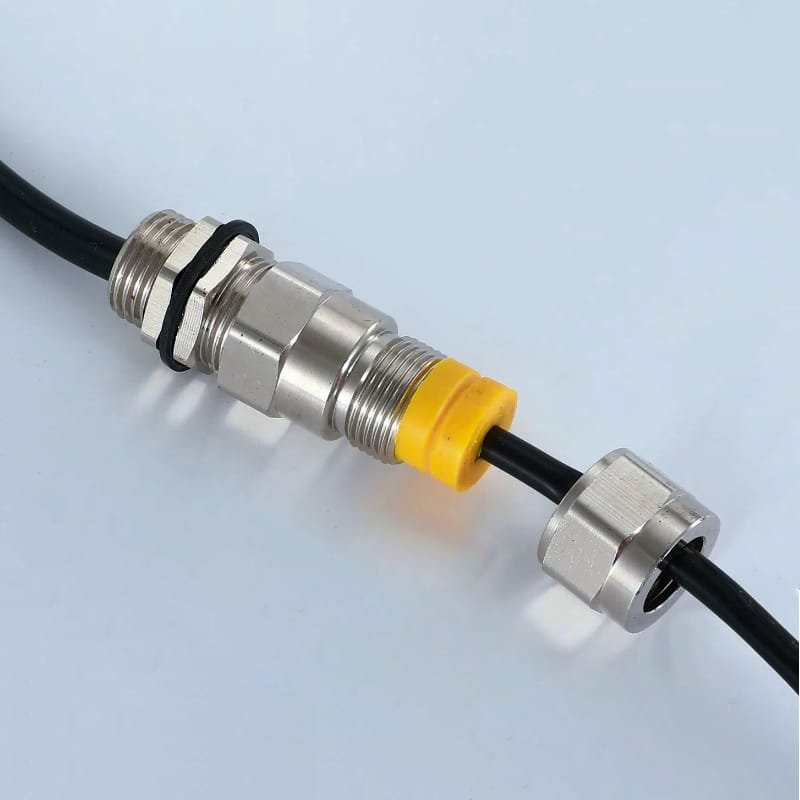
The Three Core Functions Explained
1. Strain Relief Protection
When cables move or vibrate, the connection point takes all the stress. Without proper strain relief, you’ll see:
- Wire breakage at connection points
- Loose connections causing arcing
- Premature equipment failure
I remember David, our pragmatic purchasing manager from Germany, learned this the hard way. His team skipped cable glands on a production line to save €200. Three months later, vibration caused multiple cable failures, shutting down production for two days. The repair cost? €15,000. 😉
2. Environmental Sealing
Cable glands maintain IP ratings by sealing the entry point. Here’s what different IP ratings protect against:
| IP Rating | Dust Protection | Water Protection | Typical Application |
|---|---|---|---|
| IP54 | Limited dust | Splash resistant | Indoor panels |
| IP65 | Dust tight | Water jets | Outdoor equipment |
| IP68 | Dust tight | Continuous immersion | Marine applications |
3. Secure Cable Retention
The gland mechanically grips the cable, preventing it from being pulled out accidentally. This is especially critical in:
- Mobile equipment
- High-vibration environments
- Areas with frequent maintenance access
What are the main types of cable glands?
Choosing materials is like choosing tools – each has its perfect application, and using the wrong one creates problems.
Cable glands come in three main materials: nylon for general indoor use, brass for durability and EMC shielding, and stainless steel for harsh chemical environments.

Material Comparison Guide
Nylon Cable Glands
- Best for: General indoor applications, cost-sensitive projects
- Temperature range: -40°C to +100°C
- Advantages: Lightweight, corrosion-resistant, economical
- Limitations: Not suitable for high-temperature or chemical exposure
Brass Cable Glands
- Best for: EMC shielding, outdoor installations, industrial equipment
- Temperature range: -40°C to +120°C
- Advantages: Excellent conductivity, robust construction, good value
- Limitations: Can corrode in marine environments
Stainless Steel Cable Glands
- Best for: Chemical plants, marine applications, food processing
- Temperature range: -60°C to +200°C
- Advantages: Superior corrosion resistance, hygienic, long-lasting
- Limitations: Higher initial cost
Specialized Types
Explosion-Proof Cable Glands (ATEX)
Hassan, who runs a refinery in the Middle East, always insists on ATEX-certified glands. “In our business,” he told me, “the extra cost is nothing compared to preventing an explosion.” These glands are designed to contain any internal explosion and prevent ignition of surrounding gases2.
Armored Cable Glands
For cables with steel wire armor, these glands provide earthing and mechanical termination of the armor3 while sealing the cable.
How do I choose the right cable gland for my application?
Selection mistakes are expensive. I’ve seen engineers replace entire installations because they chose the wrong gland initially.
Choose cable glands based on four key factors: cable diameter and type, environmental conditions, required IP rating, and any special certifications needed for your industry.
Step-by-Step Selection Process
Step 1: Measure Your Cable
- Outer diameter (including any sheathing)
- Cable type (armored, unarmored, flexible)
- Number of cores
Step 2: Assess Environmental Conditions
- Indoor vs outdoor installation
- Temperature extremes
- Chemical exposure
- Vibration levels
- Moisture/water exposure
Step 3: Determine Required Protection Level
| Environment | Recommended IP Rating | Suggested Material |
|---|---|---|
| Indoor panels | IP54 | Nylon |
| Outdoor equipment | IP65 | Brass/Stainless Steel |
| Marine/underwater | IP68 | Stainless Steel |
| Chemical plants | IP68 | Stainless Steel |
Step 4: Check Certification Requirements
- CE marking for European markets
- ATEX for explosive atmospheres
- UL listing for North American installations
- Marine certifications for ship applications
Common Selection Mistakes to Avoid
❌ Choosing based on price alone – A €5 gland that fails can cause €5,000 in damage
❌ Ignoring cable movement – Static installations need different glands than moving cables
❌ Oversizing the gland – Too large means poor sealing and strain relief
❌ Forgetting future maintenance – Consider how easy it is to remove and reinstall
What certifications should I look for in cable glands?
Certifications aren’t just paperwork – they’re your insurance policy against failures, legal issues, and safety hazards.
Essential certifications include CE marking for European compliance, IP ratings for environmental protection, ATEX for explosive atmospheres, and UL listing for North American markets.


Critical Certifications Explained
CE Marking
- Required for European market
- Confirms compliance with EU safety standards4
- Our Bepto glands carry full CE certification with detailed documentation
IP Ratings (Ingress Protection)
- IP65: Dust-tight and protected against water jets
- IP68: Dust-tight and protected against continuous immersion
- Third-party tested and verified
ATEX Certification
For explosive atmospheres, ATEX certification is non-negotiable. Hassan always asks for:
- Zone classification compatibility
- Temperature class ratings
- Explosion protection type
- Notified body certification number
Quality System Certifications
At Bepto, we maintain:
- ISO 9001:2015 for quality management5
- IATF 16949 for automotive applications
- Regular third-party audits
How to Verify Certifications
Red Flags to Watch For:
- Certificates without notified body numbers
- Expired certification dates
- Certificates that don’t match the exact product model
- Reluctance to provide original certificates
What We Provide:
- Original certificates with every shipment
- Detailed technical drawings
- Material certificates and test reports
- Traceability documentation
Conclusion
Cable glands are the unsung heroes of electrical installations – small components that prevent big problems when chosen correctly.
FAQs About Cable Glands
Q: What’s the difference between IP65 and IP68 cable glands?
A: IP65 protects against water jets and is suitable for most outdoor applications, while IP68 provides protection against continuous water immersion and is required for underwater or frequently washed equipment.
Q: Can I use nylon cable glands outdoors?
A: Yes, but only in moderate climates. Nylon glands work well outdoors in temperatures from -40°C to +100°C, but brass or stainless steel are better for extreme conditions or UV exposure.
Q: How do I know what size cable gland I need?
A: Measure your cable’s outer diameter including any sheathing. The gland should grip the cable firmly – typically the cable diameter should be within the gland’s specified clamping range, not just fit through the hole.
Q: Are expensive cable glands worth the extra cost?
A: Quality glands prevent costly failures. A premium gland might cost 3x more but can prevent thousands in equipment damage and downtime. For critical applications, it’s always worth investing in certified, quality products.
Q: What’s the most common cable gland installation mistake?
A: Under-tightening the compression nut. This reduces both strain relief and sealing effectiveness. Always follow the manufacturer’s torque specifications and use proper installation tools.
-
“Cable gland”,
https://en.wikipedia.org/wiki/Cable_gland. Details the core mechanical and environmental functions of gland devices in electrical systems. Evidence role: mechanism; Source type: research. Supports: Confirms that glands securely attach and seal cables entering equipment enclosures. ↩ -
“Equipment and protective systems intended for use in explosive atmospheres (ATEX)”,
https://www.hse.gov.uk/fireandexplosion/equipment-use-in-explosive-atmospheres.htm. Outlines the regulatory requirements for equipment designed to prevent gas ignition. Evidence role: general_support; Source type: government. Supports: Validates that ATEX-certified glands contain internal explosions and prevent ambient gas ignition. ↩ -
“Armoured cable”,
https://en.wikipedia.org/wiki/Armoured_cable. Explains the requirement for proper mechanical termination and earthing of the wire armor layer. Evidence role: mechanism; Source type: research. Supports: Explains how glands provide earthing and mechanical termination for armored cables. ↩ -
“CE marking”,
https://single-market-economy.ec.europa.eu/single-market/ce-marking_en. Provides official guidelines on the mandatory conformity marking for products in the EEA. Evidence role: general_support; Source type: government. Supports: Confirms that the mark indicates compliance with European Union safety standards. ↩ -
“ISO 9001 Quality management”,
https://www.iso.org/iso-9001-quality-management.html. Defines the international standard for quality management systems and continuous improvement. Evidence role: general_support; Source type: standard. Supports: Verifies that ISO 9001:2015 is the standard for quality management systems. ↩
