

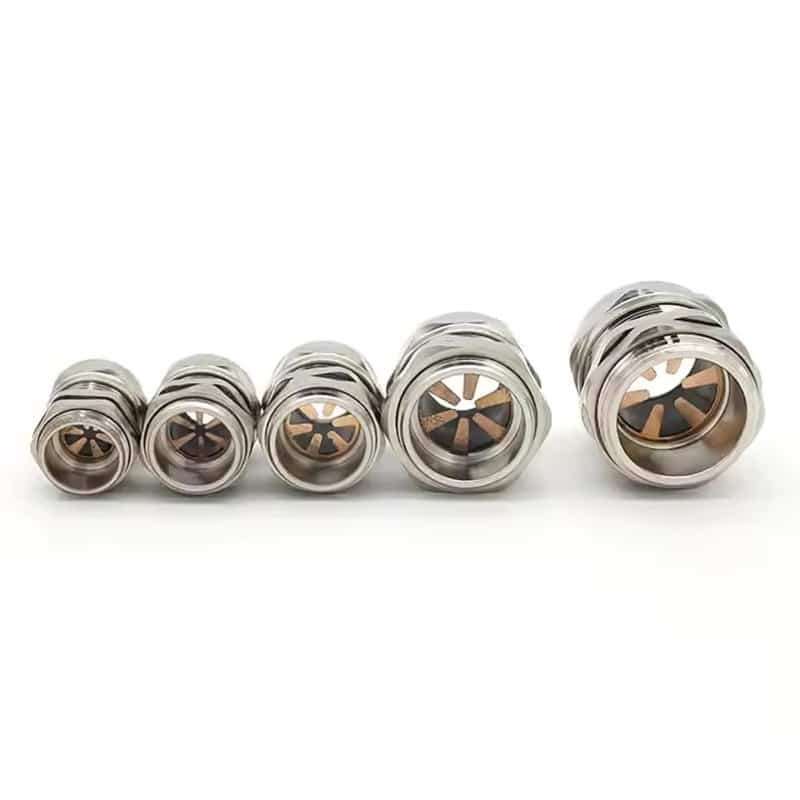
Choosing the wrong cable gland for your data center or communication network can result in signal degradation, moisture ingress, and costly downtime that affects thousands of users. With increasing demands for higher bandwidth and 24/7 connectivity, even minor cable entry failures can cascade into major system outages. Selecting glands for data and communication cables requires careful consideration of cable types, environmental conditions, EMC shielding requirements, and installation specifications to ensure optimal signal integrity, environmental protection, and long-term reliability in mission-critical communication infrastructure. Just last month, Marcus, the network operations manager at a major telecommunications hub in Frankfurt, Germany, faced a critical situation when moisture ingress through inadequate cable glands caused fiber optic signal loss affecting over 50,000 customers. After upgrading to our specialized EMC cable glands with IP68 ratings, his facility has maintained 99.99% uptime while meeting strict electromagnetic compatibility standards.
Table of Contents
- What Makes Data Cable Glands Different from Standard Power Cable Glands?
- How Do You Match Cable Gland Specifications to Communication Cable Types?
- What Environmental and EMC Requirements Must You Consider?
- Which Installation Factors Affect Long-Term Performance?
- How Does Bepto Support Data and Communication Applications?
- FAQs About Data Cable Glands
What Makes Data Cable Glands Different from Standard Power Cable Glands?
Understanding the unique requirements of data and communication applications helps ensure proper cable gland selection for optimal network performance.
Data cable glands differ from standard power cable glands by incorporating specialized features for signal integrity protection, including EMC shielding, precise cable diameter accommodation, low-profile designs for high-density installations, and materials that minimize electromagnetic interference while providing environmental sealing for sensitive communication equipment.

Signal Integrity Protection
Electromagnetic Compatibility (EMC) Shielding:
Data cables carry sensitive signals that can be disrupted by electromagnetic interference. Specialized cable glands incorporate conductive materials and 360-degree shielding to maintain signal quality and prevent crosstalk between adjacent cables1.
Impedance Matching:
Unlike power applications where electrical resistance is the primary concern, data applications require careful impedance matching to prevent signal reflections and maintain data transmission quality.
Cable-Specific Design Features
Precision Diameter Accommodation:
Data cables often have specific outer diameter requirements with minimal tolerance for compression. Cable glands must provide secure sealing without deforming delicate cable jackets or affecting internal conductor positioning.
Multiple Cable Entry:
Many data installations require multiple cables to enter through single penetrations. Specialized multi-cable glands accommodate this need while maintaining individual cable sealing and EMC performance.
Installation Density Considerations
Compact Form Factors:
Data centers and communication rooms require high cable density installations. Cable glands must provide full functionality while minimizing space requirements and allowing for proper cable management.
Heat Dissipation:
High-density installations generate significant heat. Cable gland materials and designs must not contribute to thermal buildup while maintaining sealing performance across temperature variations.
Material Compatibility
Chemical Resistance:
Data center environments often involve cleaning chemicals and fire suppression systems that require specific material compatibility to prevent degradation over time.
Static Dissipation:
Some applications require anti-static properties to prevent electrostatic discharge that could damage sensitive electronic components2.
How Do You Match Cable Gland Specifications to Communication Cable Types?
Different communication cable types have specific requirements that must be addressed through proper cable gland selection and configuration.
Matching cable gland specifications to communication cable types involves analyzing cable construction, outer diameter ranges, shielding requirements, bend radius limitations, and termination methods to select appropriate gland sizes, sealing systems, strain relief mechanisms, and EMC performance characteristics for each specific cable application.
Fiber Optic Cable Requirements
Bend Radius Protection:
Fiber optic cables have strict minimum bend radius requirements to prevent signal loss. Cable glands must provide smooth entry transitions and adequate strain relief without creating sharp bends that could damage optical fibers.
Moisture Protection:
Optical fibers are extremely sensitive to moisture, which can cause signal attenuation and long-term degradation3. Cable glands must provide superior environmental sealing with IP67 or IP68 ratings.
Coaxial Cable Considerations
Shield Continuity:
Coaxial cables rely on their outer shield for signal integrity. Cable glands must maintain electrical continuity of the shield while providing environmental protection.
Impedance Preservation:
The characteristic impedance of coaxial cables (typically 50Ω or 75Ω) must be maintained through the cable entry point to prevent signal reflections4.
Ethernet and Data Cable Specifications
Category Performance:
Cat5e, Cat6, Cat6A, and Cat8 cables have different performance requirements. Cable glands must not degrade the cable’s category rating through improper compression or EMC interference.
Pair Twist Preservation:
Twisted pair cables maintain their performance through precise conductor geometry. Cable glands must not disturb the internal cable structure during installation.
Case Study: Seoul Data Center Upgrade
David, the infrastructure manager at a major cloud services provider in Seoul, South Korea, needed to upgrade their data center’s cable entry systems to support new 400G fiber optic connections. The existing standard cable glands were causing micro-bending in the fiber cables, resulting in signal loss and reduced network performance. After consulting with our technical team, we provided specialized fiber-optic cable glands with enlarged bend radius protection and enhanced sealing systems. The upgrade eliminated signal degradation issues and improved overall network reliability by 15%, while meeting strict Korean telecommunications standards for data center infrastructure.
Cable Diameter and Size Matching
Measurement Accuracy:
Precise cable diameter measurement is critical for proper gland selection. Consider cable jacket variations and temperature effects on outer diameter.
Size Range Accommodation:
Select cable glands with appropriate size ranges that provide secure sealing without over-compression that could damage internal conductors.
Termination Method Compatibility
Pre-Terminated vs. Field-Terminated:
Pre-terminated cables with connectors require different gland designs compared to field-terminated installations. Consider connector size and protection requirements.
Future Expansion:
Plan for potential cable additions or replacements by selecting glands with appropriate size ranges and accessibility for future modifications.
What Environmental and EMC Requirements Must You Consider?
Environmental conditions and electromagnetic compatibility requirements significantly impact cable gland selection for data and communication applications.
Environmental and EMC requirements for data cable glands include IP rating specifications for moisture and dust protection, temperature range compatibility, chemical resistance for cleaning agents and fire suppression systems, EMC shielding effectiveness ratings, and compliance with telecommunications standards such as ANSI/TIA, ISO/IEC, and regional regulatory requirements for communication infrastructure.

Environmental Protection Standards
IP Rating Requirements:
- IP54: Basic protection for indoor controlled environments
- IP65: Dust-tight and water jet protection for most indoor applications
- IP67: Temporary immersion protection for outdoor installations
- IP68: Continuous submersion protection for harsh environments
Temperature Performance:
Data centers typically operate between 18-27°C (64-80°F), but cable glands must handle wider temperature ranges during maintenance, power outages, or HVAC failures.
Chemical and Fire Resistance
Cleaning Agent Compatibility:
Data centers use various cleaning chemicals that can degrade certain materials. Cable glands must resist common solvents and cleaning agents without compromising sealing performance.
Fire Suppression System Compatibility:
Clean agent fire suppression systems (FM-200, Novec 1230) require cable glands that won’t be damaged by suppression agent exposure.
EMC Performance Requirements
Shielding Effectiveness:
Measured in decibels (dB), shielding effectiveness indicates how well a cable gland blocks electromagnetic interference. Requirements vary by application:
- Basic applications: 40-60 dB
- Sensitive equipment: 60-80 dB
- Critical systems: 80+ dB
Frequency Range Coverage:
Modern communication systems operate across wide frequency ranges. Cable glands must provide consistent EMC performance from low frequencies (kHz) through microwave frequencies (GHz).
Regulatory Compliance
Telecommunications Standards:
- ANSI/TIA-568: Commercial building telecommunications cabling
- ISO/IEC 11801: Generic cabling for customer premises5
- IEC 61156: Multicore and symmetrical pair cables
Safety Certifications:
UL, CE, and other safety certifications ensure cable glands meet regional safety requirements for electrical installations.
Grounding and Bonding
Earth Continuity:
Proper grounding of cable shields and equipment enclosures requires cable glands that maintain electrical continuity while providing environmental protection.
Bonding Requirements:
Some installations require specific bonding methods to ensure proper electromagnetic compatibility and safety grounding.
Which Installation Factors Affect Long-Term Performance?
Proper installation practices and consideration of long-term factors ensure optimal cable gland performance throughout the system lifecycle.
Installation factors affecting long-term performance include proper cable preparation and insertion techniques, appropriate torque specifications for sealing components, adequate strain relief configuration, accessibility for future maintenance, cable routing considerations, and documentation of installation parameters for future reference and troubleshooting.
Cable Preparation and Installation
Cable Jacket Preparation:
Proper cable jacket stripping and preparation prevents damage during installation while ensuring optimal sealing performance. Follow manufacturer specifications for jacket removal length and technique.
Installation Torque:
Over-tightening can damage cable jackets or internal conductors, while under-tightening compromises environmental sealing. Use calibrated torque tools and follow specified values.
Strain Relief Configuration
Cable Weight Support:
Long cable runs and heavy cables require adequate strain relief to prevent stress on the cable gland connection. Consider cable weight and routing when selecting strain relief options.
Vibration Resistance:
Equipment vibration or building movement can affect cable connections over time. Proper strain relief configuration prevents fatigue failures.
Maintenance Accessibility
Service Access:
Plan cable gland locations to allow for future maintenance, cable additions, or replacements without disrupting adjacent systems.
Documentation Requirements:
Maintain records of cable gland specifications, installation parameters, and maintenance history for troubleshooting and future planning.
Future Expansion Considerations
Spare Capacity:
Install additional cable glands or select larger multi-cable glands to accommodate future system expansions without major modifications.
Technology Evolution:
Consider potential cable type changes or upgrades when selecting cable gland systems to minimize future replacement costs.
How Does Bepto Support Data and Communication Applications?
At Bepto, we understand the critical importance of reliable cable entry solutions for data and communication infrastructure, which is why we’ve developed specialized products and services tailored to these demanding applications.
Bepto supports data and communication applications through our DataSeal™ product line featuring EMC-compliant cable glands, precision-engineered multi-cable solutions, IP68-rated environmental protection, and comprehensive technical support including application engineering, installation training, and long-term maintenance programs specifically designed for mission-critical communication infrastructure.
DataSeal™ Product Portfolio
DS-100 Series: Standard Data Applications
Our entry-level data cable glands provide EMC shielding and environmental protection for typical office and light commercial installations. Features include IP65 rating, basic EMC performance, and compatibility with standard Ethernet cables.
DS-200 Series: Enhanced Performance
Mid-range solutions for data centers and telecommunications facilities featuring IP67 protection, enhanced EMC shielding (60+ dB), and multi-cable configurations for high-density installations.
DS-300 Series: Mission-Critical Systems
Our premium line for the most demanding applications, including IP68 rating, military-grade EMC performance (80+ dB), fiber-optic compatibility, and specialized materials for harsh environments.
Specialized Design Features
FlexSeal™ Technology:
Our proprietary sealing system accommodates cable diameter variations while maintaining consistent environmental protection, eliminating the need for multiple gland sizes in many applications.
EMC-Shield™ System:
Advanced electromagnetic shielding technology provides superior interference protection while maintaining easy installation and maintenance access.
MultiPort™ Configurations:
Engineered solutions for multiple cable entries through single penetrations, reducing installation time and improving cable management in high-density applications.
Technical Support and Services
Application Engineering:
Our experienced engineers work with customers to analyze specific requirements and recommend optimal cable gland solutions for each unique application.
Installation Training:
Comprehensive training programs ensure proper installation techniques and long-term performance of our cable gland systems.
Performance Testing:
We provide detailed test reports and certifications for EMC performance, environmental protection, and regulatory compliance to support customer documentation requirements.
Quality Assurance
Manufacturing Standards:
All DataSeal™ products are manufactured in our ISO9001-certified facilities using advanced CNC equipment and injection molding systems to ensure consistent quality and performance.
Testing Protocols:
Rigorous testing includes EMC performance verification, environmental exposure testing, and long-term reliability validation to ensure products meet or exceed specifications.
Continuous Improvement:
We regularly update our designs based on field experience and evolving technology requirements to maintain industry-leading performance. 😉
Conclusion
Selecting the right cable glands for data and communication applications requires careful consideration of signal integrity, environmental protection, and long-term reliability requirements. The investment in proper cable entry solutions pays dividends through improved system performance, reduced maintenance costs, and enhanced operational reliability. Success depends on understanding the unique requirements of different cable types, environmental conditions, and installation factors that affect long-term performance. At Bepto, our DataSeal™ product line provides comprehensive solutions backed by technical expertise and proven performance in mission-critical applications. As communication technology continues to evolve, partnering with experienced suppliers ensures your infrastructure remains reliable and adaptable to future requirements.
FAQs About Data Cable Glands
Q: What’s the difference between EMC cable glands and regular cable glands for data applications?
A: EMC cable glands provide electromagnetic interference shielding to protect sensitive data signals, while regular cable glands only offer environmental sealing. EMC versions include conductive materials and 360-degree shielding essential for maintaining signal integrity in communication systems.
Q: How do I choose the right IP rating for my data center cable glands?
A: Most indoor data centers require IP65 rating for dust and water jet protection, while outdoor or harsh environment installations need IP67 or IP68 ratings. Consider cleaning procedures, potential water exposure, and environmental conditions when selecting IP ratings.
Q: Can I use the same cable gland for both fiber optic and copper data cables?
A: While some multi-purpose glands work for both, fiber optic cables have stricter bend radius requirements and moisture sensitivity that often require specialized glands. It’s best to use fiber-specific glands for optimal performance and reliability.
Q: What size cable gland do I need for Cat6A Ethernet cables?
A: Cat6A cables typically have 7-8mm outer diameter, requiring M16 or M20 cable glands depending on the specific cable manufacturer and jacket type. Always measure the actual cable diameter and consult gland sizing charts for proper selection.
Q: How often should data cable glands be inspected or replaced?
A: Inspect cable glands annually for visible damage, seal integrity, and EMC performance. Replace every 5-10 years or immediately if environmental sealing is compromised. High-vibration or harsh environments may require more frequent inspection and replacement.
-
“Electromagnetic compatibility”,
https://en.wikipedia.org/wiki/Electromagnetic_compatibility. Wikipedia article on electromagnetic compatibility (EMC), covering the principles of shielding, grounding, and filtering techniques used to prevent electromagnetic interference from disrupting sensitive signals in adjacent conductors and communication equipment. Evidence role: mechanism; Source type: Wikipedia. Supports: 360-degree shielding requirement to maintain signal quality and prevent crosstalk between adjacent data cables. ↩ -
“ANSI ESD S20.20 – Standard for the Development of an Electrostatic Discharge Control Program”,
https://www.esda.org/standards/ansi-esd-s20-20/. ESD Association standard establishing program requirements for electrostatic discharge control to protect sensitive electronic devices during handling, assembly, and installation in susceptible environments. Evidence role: general_support; Source type: industry. Supports: anti-static material requirements to prevent electrostatic discharge damage to sensitive electronic components in data applications. ↩ -
“ITU-T G.652 – Characteristics of a single-mode optical fibre and cable”,
https://www.itu.int/rec/T-REC-G.652/en. ITU-T Recommendation defining the geometrical, mechanical, and transmission attributes of standard single-mode optical fibres, including attenuation coefficients and the sensitivity parameters governing moisture ingress and long-term signal degradation mechanisms. Evidence role: mechanism; Source type: government. Supports: optical fiber sensitivity to moisture causing signal attenuation and long-term degradation requiring IP67 or IP68 cable gland sealing. ↩ -
“Coaxial cable”,
https://en.wikipedia.org/wiki/Coaxial_cable. Wikipedia technical article on coaxial cable construction and electrical properties, including the standard characteristic impedance values of 50Ω (RF/data) and 75Ω (broadcast video) and the requirement for impedance continuity throughout the transmission path to minimise signal reflections at discontinuities. Evidence role: mechanism; Source type: Wikipedia. Supports: characteristic impedance preservation (50Ω or 75Ω) through the cable entry point to prevent signal reflections. ↩ -
“ISO/IEC 11801-1:2017 – Information technology – Generic cabling for customer premises – Part 1: General requirements”,
https://webstore.iec.ch/publication/69749. International standard defining generic structured cabling requirements for customer premises, establishing balanced cabling performance classes from Class D through Class FA and specifying component, channel, and permanent link parameters applicable to data center and telecommunications infrastructure. Evidence role: general_support; Source type: standard. Supports: ISO/IEC 11801 as a governing standard for generic cabling in data center and communication facility design. ↩
