

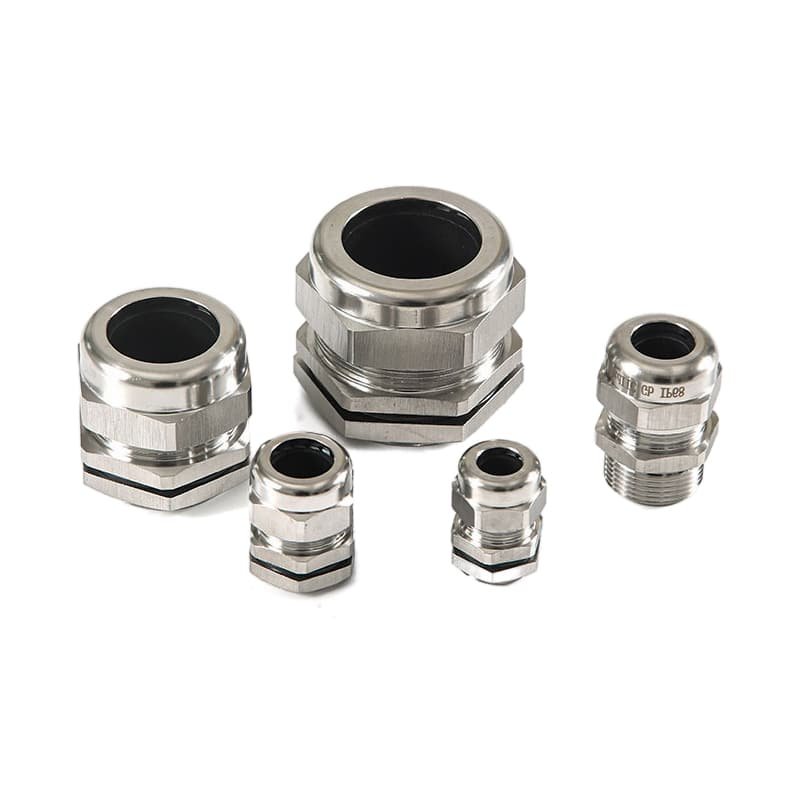
Chemical exposure can destroy cable glands within months, leading to catastrophic seal failures, electrical hazards, and expensive equipment damage. Many facilities underestimate the aggressive nature of industrial chemicals, resulting in premature gland deterioration, compromised IP ratings, and potential safety incidents that could have been prevented with proper material selection and protection strategies.
Protecting cable glands from aggressive chemicals requires selecting appropriate materials (stainless steel, specialized polymers), implementing proper sealing systems with chemical-resistant elastomers, applying protective coatings, and establishing regular maintenance protocols to ensure long-term reliability in harsh chemical environments. The right protection strategy prevents costly failures and maintains safety standards.
Last year, Marcus, operations manager at a pharmaceutical manufacturing facility in Basel, Switzerland, contacted us after experiencing repeated cable gland failures in their solvent recovery area. Their standard brass glands were corroding within 6 months due to exposure to methylene chloride and acetone vapors, causing multiple production shutdowns and safety concerns that cost them over €50,000 in lost production time.
Table of Contents
- What Makes Chemicals Aggressive to Cable Glands?
- Which Materials Offer the Best Chemical Resistance?
- How Do You Select Proper Sealing Materials for Chemical Environments?
- What Protective Coatings and Treatments Are Available?
- How Do You Implement Effective Maintenance and Monitoring Programs?
- FAQs About Chemical Protection for Cable Glands
What Makes Chemicals Aggressive to Cable Glands?
Understanding chemical aggression mechanisms helps identify potential threats and select appropriate protection strategies for cable gland installations in harsh chemical environments.
Chemicals attack cable glands through corrosion, stress cracking, swelling, and degradation processes that compromise material integrity, sealing performance, and mechanical strength, with factors like concentration, temperature, pH levels, and exposure duration determining the severity of chemical attack on different gland materials. Recognizing these mechanisms enables proper protection planning.

Corrosion Mechanisms
Electrochemical Corrosion:
The most common form of chemical attack on metallic cable glands:
Galvanic Corrosion:
- Dissimilar Metals: Different metals in contact create galvanic cells1
- Electrolyte Presence: Chemical solutions accelerate corrosion rates
- pH Effects: Acidic environments increase corrosion severity
- Temperature Impact: Higher temperatures accelerate corrosion processes
Uniform Corrosion:
- Surface Attack: Even material loss across exposed surfaces
- Predictable Rates: Can be calculated for material selection
- Protective Films: Some materials form protective oxide layers
- Environmental Factors: Humidity and oxygen availability affect rates
Localized Corrosion:
- Pitting Corrosion: Deep, localized attacks causing rapid failure
- Crevice Corrosion: Occurs in confined spaces with limited oxygen
- Stress Corrosion: Combined mechanical and chemical attack
- Intergranular Attack: Follows grain boundaries in metal structures
Chemical Degradation Processes
Polymer Degradation:
Chemical attack on plastic and elastomeric components:
Solvent Swelling:
- Volume Increase: Solvents penetrate polymer matrix causing expansion
- Mechanical Property Loss: Reduced strength and flexibility
- Seal Failure: Swollen seals lose compression and sealing ability
- Recovery Limitations: Some swelling damage is irreversible
Chain Scission:
- Molecular Breakdown: Chemical bonds break reducing molecular weight
- Brittleness: Material becomes fragile and crack-prone
- Surface Degradation: Outer layers deteriorate first
- Progressive Failure: Damage propagates through material thickness
Cross-Link Degradation:
- Network Breakdown: Three-dimensional polymer networks deteriorate
- Softening: Material loses structural integrity
- Creep Resistance Loss: Permanent deformation under load
- Sealing Performance Decline: Reduced ability to maintain compression
Environmental Aggravating Factors
Temperature Effects:
Heat accelerates chemical attack mechanisms:
Reaction Rate Acceleration:
- Arrhenius Relationship: Reaction rates double every 10°C increase
- Diffusion Enhancement: Higher temperatures increase chemical penetration
- Thermal Stress: Expansion/contraction cycles create stress points
- Vapor Pressure Increase: More aggressive vapor phase exposure
Concentration Dependencies:
Chemical concentration dramatically affects attack severity:
Threshold Effects:
- Critical Concentrations: Below certain levels, attack may be negligible
- Exponential Relationships: Small concentration increases cause large effects
- Synergistic Effects: Multiple chemicals can amplify individual effects
- Dilution Benefits: Water dilution often reduces chemical aggression
Hassan, chief engineer at a petrochemical complex in Jubail, Saudi Arabia, learned this lesson when his facility’s cable glands failed rapidly in areas with high-temperature chemical vapors. The combination of 80°C temperatures and aromatic hydrocarbon exposure accelerated degradation rates by over 500% compared to room temperature conditions, requiring complete material specification changes.
Which Materials Offer the Best Chemical Resistance?
Different cable gland materials provide varying levels of chemical resistance, making proper material selection critical for long-term performance in aggressive chemical environments.
Stainless steel grades (316L, 904L, duplex) offer superior corrosion resistance for most chemicals, specialized polymers like PTFE and PEEK provide excellent chemical inertness, while Hastelloy and Inconel alloys handle the most aggressive environments, with material selection depending on specific chemical exposure, temperature, and mechanical requirements. Understanding material capabilities ensures optimal protection.
Stainless Steel Options
316L Stainless Steel:
The most common choice for chemical applications:
Chemical Resistance Properties:
- Chloride Resistance: Good performance in moderate chloride environments
- Acid Resistance: Handles most organic acids and dilute mineral acids
- Temperature Range: Effective from -200°C to +400°C
- Cost Effectiveness: Balanced performance and economic considerations
Limitations:
- Chloride Stress Corrosion: Susceptible in high-chloride, high-stress conditions
- Hydrochloric Acid: Limited resistance to concentrated HCl
- Reducing Acids: Poor performance in sulfuric and phosphoric acids
- Crevice Corrosion: Vulnerable in stagnant chemical conditions
904L Super Austenitic:
Enhanced corrosion resistance for demanding applications:
Superior Properties:
- Molybdenum Content: 4.5% Mo provides excellent pitting resistance
- Copper Addition: Enhanced resistance to reducing acids
- Chloride Performance: Superior resistance to chloride stress corrosion
- Pharmaceutical Grade: Meets stringent purity requirements
Applications:
- Chemical Processing: Handles most industrial chemicals
- Pharmaceutical: Meets FDA and cGMP requirements
- Pulp and Paper: Resists bleaching chemicals
- Pollution Control: Handles flue gas desulfurization environments
Duplex and Super Duplex Alloys
2205 Duplex Stainless:
Balanced strength and corrosion resistance:
Advantages:
- High Strength: Double the yield strength of 316L
- Chloride Resistance: Excellent performance in seawater and brines
- Stress Corrosion Resistance: Superior to austenitic grades
- Cost Effectiveness: Lower nickel content reduces cost
Super Duplex (2507):
Maximum corrosion resistance for extreme environments:
Exceptional Performance:
- PREN Value: >40 provides outstanding pitting resistance2
- Temperature Capability: Maintains properties to 300°C
- Chemical Versatility: Handles acids, bases, and solvents
- Mechanical Properties: High strength with excellent toughness
High-Performance Polymer Options
PTFE (Polytetrafluoroethylene):
Ultimate chemical inertness for cable gland components:
Chemical Resistance:
- Universal Compatibility: Resistant to virtually all chemicals3
- Temperature Range: Continuous use from -200°C to +260°C
- Non-Stick Properties: Prevents chemical buildup and contamination
- FDA Approved: Safe for food and pharmaceutical applications
Application Considerations:
- Mechanical Limitations: Lower strength than metals
- Permeability: Some gases can permeate through PTFE
- Cost Factors: Higher material and processing costs
- Design Constraints: Requires special design considerations
PEEK (Polyetheretherketone):
High-performance engineering plastic:
Properties:
- Chemical Resistance: Excellent resistance to most chemicals
- Temperature Performance: Continuous use to 250°C
- Mechanical Strength: High strength and stiffness
- Radiation Resistance: Maintains properties under radiation exposure
Exotic Alloy Solutions
Hastelloy C-276:
Superior resistance to oxidizing and reducing environments:
Capabilities:
- Mixed Acid Resistance: Handles combinations of acids
- Chlorine Resistance: Excellent performance in chlorine environments
- High Temperature: Maintains resistance to 650°C
- Versatile Performance: Handles both oxidizing and reducing conditions
Inconel 625:
Nickel-based superalloy for extreme conditions:
Applications:
- High Temperature Chemicals: Maintains strength at elevated temperatures
- Seawater Resistance: Excellent marine corrosion resistance
- Stress Corrosion Immunity: Resistant to chloride stress cracking
- Nuclear Applications: Handles radioactive chemical environments
| Material | Chemical Resistance | Temperature Range | Relative Cost | Best Applications |
|---|---|---|---|---|
| 316L SS | Good | -200°C to +400°C | Low | General chemicals, pharmaceuticals |
| 904L SS | Excellent | -200°C to +400°C | Medium | Acids, chlorides, pulp & paper |
| Duplex 2205 | Very Good | -50°C to +300°C | Medium | Seawater, chlorides, oil & gas |
| PTFE | Outstanding | -200°C to +260°C | High | Universal chemical resistance |
| Hastelloy C-276 | Outstanding | -200°C to +650°C | Very High | Mixed acids, chlorine, extreme conditions |
Marcus’s Basel pharmaceutical facility required this comprehensive material analysis. We specified 904L stainless steel glands with PTFE sealing elements for their solvent recovery area, providing complete resistance to their methylene chloride and acetone exposure while meeting pharmaceutical industry cleanliness standards.
How Do You Select Proper Sealing Materials for Chemical Environments?
Sealing materials represent the most vulnerable component in chemical-resistant cable gland systems, requiring careful selection based on chemical compatibility, temperature requirements, and mechanical properties.
Select sealing materials by matching elastomer chemical resistance charts to specific chemicals, considering temperature effects on material properties, evaluating mechanical requirements like compression set and durometer, and implementing proper seal design with adequate compression ratios to ensure long-term sealing performance in aggressive chemical environments. Proper seal selection prevents the most common failure mode.

Elastomer Chemical Compatibility
Viton (FKM) Fluoroelastomers:
Premium choice for harsh chemical environments:
Chemical Resistance:
- Hydrocarbon Resistance: Excellent performance with oils, fuels, and solvents4
- Acid Resistance: Handles most acids except hydrofluoric acid
- Temperature Range: Continuous use from -20°C to +200°C
- Ozone Resistance: Superior weathering and ozone resistance
Applications:
- Petroleum Industry: Refining and petrochemical processing
- Chemical Processing: Acid and solvent handling systems
- Automotive: Fuel system applications
- Aerospace: High-performance sealing requirements
Limitations:
- Cost: Higher cost than general-purpose elastomers
- Low Temperature: Limited flexibility below -20°C
- Amine Resistance: Poor resistance to amines and ammonia
- Steam Resistance: Not suitable for high-temperature steam
EPDM (Ethylene Propylene Diene Monomer):
Excellent for polar chemicals and high temperatures:
Advantages:
- Polar Chemical Resistance: Excellent with alcohols, glycols, and water
- Temperature Performance: Continuous use from -40°C to +150°C
- Ozone Resistance: Outstanding weathering properties
- Cost Effectiveness: Lower cost than specialty elastomers
Chemical Compatibility:
- Acids and Bases: Good resistance to dilute acids and bases
- Polar Solvents: Excellent with methanol, ethanol, and glycols
- Steam Resistance: Handles high-temperature steam applications
- Brake Fluids: Compatible with glycol-based brake fluids
Specialized Sealing Solutions
PTFE Encapsulated Seals:
Combining PTFE chemical resistance with elastomer resilience:
Design Benefits:
- Chemical Inertness: PTFE surface provides universal chemical resistance
- Mechanical Properties: Elastomer core maintains sealing force
- Temperature Range: Combines benefits of both materials
- Contamination Prevention: Smooth PTFE surface resists buildup
Applications:
- Pharmaceutical: Meets stringent purity requirements
- Food Processing: FDA-approved materials and surfaces
- Chemical Processing: Handles aggressive chemical mixtures
- Semiconductor: Ultra-clean manufacturing environments
Kalrez (Perfluoroelastomer):
Ultimate performance for extreme chemical environments:
Properties:
- Universal Resistance: Resistant to over 1,800 chemicals
- Temperature Range: Continuous use from -15°C to +327°C
- Plasma Resistance: Handles semiconductor plasma processes
- Long-Term Stability: Maintains properties over extended periods
Cost Considerations:
- Premium Pricing: 10-50x cost of standard elastomers
- Lifecycle Value: Extended service life often justifies cost
- Critical Applications: Reserved for most demanding environments
- Custom Compounds: Available for specific chemical combinations
Seal Design Considerations
Compression Requirements:
Proper compression ensures effective sealing:
Compression Ratios:
- Standard Elastomers: 15-25% compression for optimal performance
- High-Temperature Applications: Reduced compression to prevent stress relaxation
- Chemical Swelling: Account for potential seal swelling in service
- Aging Effects: Consider compression set over time
Groove Design:
- Seal Retention: Proper groove prevents seal extrusion
- Chemical Drainage: Design allows chemical drainage and cleaning
- Accessibility: Maintenance access for seal inspection and replacement
- Material Compatibility: Groove materials must resist same chemicals
Testing and Validation
Chemical Immersion Testing:
Validate seal performance before installation:
Test Protocols:
- ASTM D471: Standard test for rubber deterioration in liquids5
- Temperature Cycling: Evaluate performance across temperature range
- Compression Set Testing: Measure permanent deformation after exposure
- Tensile Property Retention: Evaluate strength after chemical exposure
Field Testing:
- Pilot Installations: Test in actual service conditions
- Accelerated Aging: Elevated temperature testing for long-term prediction
- Multiple Chemical Exposure: Test with actual chemical mixtures
- Failure Analysis: Document failure modes for design improvement
Hassan’s Jubail petrochemical facility implemented comprehensive seal testing after experiencing failures with standard NBR seals in their aromatic hydrocarbon environment. We conducted extensive compatibility testing and specified Viton seals with specialized groove designs, achieving over 3 years of reliable service compared to the previous 6-month failure cycle.
What Protective Coatings and Treatments Are Available?
Protective coatings and surface treatments provide additional chemical resistance layers, extending cable gland service life and enabling use of standard materials in moderately aggressive environments.
Protective coatings include electroless nickel plating for uniform corrosion protection, PTFE coatings for chemical inertness, ceramic coatings for extreme environments, and specialized polymer coatings for specific chemical resistance, with proper surface preparation and application techniques critical for coating adhesion and long-term performance. Coatings offer cost-effective protection enhancement.
Electroless Nickel Plating
Coating Properties:
Superior corrosion protection through uniform coverage:
Advantages:
- Uniform Thickness: Even coating on complex geometries
- Corrosion Resistance: Excellent barrier protection
- Hardness: Higher surface hardness than base metals
- Solderability: Maintains electrical connections
Chemical Resistance:
- Alkaline Solutions: Excellent resistance to caustic environments
- Salt Solutions: Superior performance in marine environments
- Organic Acids: Good resistance to most organic acids
- Temperature Stability: Maintains properties to 400°C
Application Process:
- Surface Preparation: Critical for adhesion and performance
- Thickness Control: Typically 12-25 microns for optimal protection
- Heat Treatment: Optional heat treatment for enhanced properties
- Quality Control: Thickness and adhesion testing required
PTFE and Fluoropolymer Coatings
Non-Stick Chemical Resistance:
Industrial-grade fluoropolymer coatings:
Coating Types:
- PTFE Dispersions: Aqueous and solvent-based systems
- FEP Coatings: Enhanced adhesion and durability
- PFA Coatings: Higher temperature performance
- ETFE Coatings: Improved mechanical properties
Performance Benefits:
- Chemical Inertness: Resistant to virtually all chemicals
- Non-Stick Properties: Prevents chemical buildup and contamination
- Easy Cleaning: Smooth surface facilitates maintenance
- Temperature Range: Continuous use from -200°C to +260°C
Application Considerations:
- Surface Preparation: Etching required for adhesion
- Thickness Limitations: Typically 25-50 microns maximum
- Mechanical Durability: Lower abrasion resistance than metals
- Repair Procedures: Localized repair techniques available
Ceramic and Hard Coatings
Plasma Spray Ceramics:
Ultra-high performance for extreme environments:
Coating Materials:
- Aluminum Oxide: Excellent wear and corrosion resistance
- Chromium Oxide: Superior high-temperature performance
- Zirconia: Thermal barrier and corrosion protection
- Tungsten Carbide: Maximum wear resistance
Properties:
- Chemical Inertness: Resistant to most aggressive chemicals
- Temperature Resistance: Maintains properties above 1000°C
- Wear Resistance: Superior abrasion and erosion resistance
- Electrical Insulation: Provides electrical isolation when required
Application Requirements:
- Specialized Equipment: Requires plasma spray facilities
- Surface Preparation: Grit blasting for mechanical bonding
- Thickness Control: Typically 100-500 microns
- Post-Treatment: Sealing may be required for porosity
Specialized Polymer Coatings
Parylene Coatings:
Conformal chemical vapor deposited coatings:
Unique Properties:
- Conformal Coverage: Uniform coating on all surfaces
- Pinhole-Free: Excellent barrier properties
- Chemical Resistance: Good resistance to most solvents
- Biocompatibility: USP Class VI approved
Types Available:
- Parylene N: Basic chemical resistance
- Parylene C: Enhanced barrier properties
- Parylene D: High-temperature performance
- Parylene HT: Extended temperature range
Coating Selection Criteria
Environmental Assessment:
Match coating properties to service conditions:
Chemical Exposure:
- Primary Chemicals: Direct contact chemicals requiring resistance
- Secondary Exposure: Cleaning solvents and maintenance chemicals
- Concentration Effects: Higher concentrations may require premium coatings
- Temperature Effects: Elevated temperatures reduce coating effectiveness
Mechanical Requirements:
- Abrasion Resistance: Consider maintenance and handling requirements
- Flexibility: Thermal cycling and vibration considerations
- Adhesion: Critical for long-term performance
- Repairability: Field repair capabilities and procedures
| Coating Type | Chemical Resistance | Temperature Range | Thickness | Relative Cost |
|---|---|---|---|---|
| Electroless Nickel | Good | -200°C to +400°C | 12-25 μm | Low |
| PTFE | Excellent | -200°C to +260°C | 25-50 μm | Medium |
| Ceramic | Outstanding | -200°C to +1000°C | 100-500 μm | High |
| Parylene | Very Good | -200°C to +200°C | 5-50 μm | High |
Marcus’s Basel pharmaceutical facility benefited from our coating expertise when we specified electroless nickel-plated brass glands with PTFE topcoats for their less aggressive solvent areas. This combination provided excellent chemical resistance at 60% of the cost of full stainless steel construction while meeting their cleanliness requirements.
How Do You Implement Effective Maintenance and Monitoring Programs?
Proactive maintenance and monitoring programs are essential for maximizing cable gland service life in chemical environments, enabling early problem detection and preventing catastrophic failures.
Implement effective maintenance through regular visual inspections for corrosion and degradation signs, scheduled seal replacement based on chemical exposure history, environmental monitoring of temperature and chemical concentrations, and documentation systems that track performance trends and optimize replacement intervals for cost-effective chemical protection. Systematic maintenance prevents unexpected failures.
Inspection Protocols
Visual Inspection Procedures:
Systematic examination for early problem detection:
Inspection Checklist:
- Corrosion Signs: Surface discoloration, pitting, or material loss
- Seal Condition: Cracking, swelling, or hardening of elastomeric seals
- Thread Integrity: Damage or corrosion affecting thread engagement
- Coating Condition: Coating adhesion, blistering, or wear patterns
Inspection Frequency:
- High-Risk Areas: Monthly inspections in aggressive environments
- Standard Environments: Quarterly inspections for routine applications
- New Installations: Weekly inspections for first month
- Post-Incident: Immediate inspection after chemical spills or upsets
Documentation Requirements:
- Photographic Records: Document condition changes over time
- Condition Ratings: Standardized rating system for consistent evaluation
- Trend Analysis: Track degradation rates for predictive maintenance
- Failure Analysis: Document failure modes for design improvements
Predictive Maintenance Techniques
Environmental Monitoring:
Track conditions affecting gland performance:
Chemical Monitoring:
- Concentration Measurement: Track chemical strength variations
- pH Monitoring: Detect acidic or basic condition changes
- Temperature Logging: Record temperature excursions and cycles
- Vapor Detection: Monitor chemical vapor concentrations
Performance Indicators:
- Seal Leakage: Early detection through pressure testing
- Electrical Continuity: Monitor for corrosion-induced resistance changes
- Mechanical Integrity: Torque testing for thread condition
- IP Rating Verification: Periodic ingress protection testing
Preventive Replacement Strategies
Service Life Prediction:
Establish replacement intervals based on experience:
Factors Affecting Service Life:
- Chemical Concentration: Higher concentrations reduce service life exponentially
- Temperature Effects: Each 10°C increase typically halves service life
- Mechanical Stress: Vibration and thermal cycling accelerate degradation
- Material Quality: Premium materials provide extended service life
Replacement Scheduling:
- Calendar-Based: Fixed intervals regardless of condition
- Condition-Based: Replace when inspection reveals degradation
- Hybrid Approach: Combine calendar and condition triggers
- Risk-Based: Prioritize critical applications for frequent replacement
Emergency Response Procedures
Chemical Spill Response:
Immediate actions to minimize gland damage:
Immediate Actions:
- Containment: Prevent chemical spread to other equipment
- Neutralization: Apply appropriate neutralizing agents if safe
- Dilution: Flush with water if compatible with chemical
- Isolation: Isolate affected glands from electrical systems
Post-Incident Assessment:
- Damage Evaluation: Assess extent of chemical exposure
- Material Testing: Test samples for degradation if available
- Replacement Decision: Determine if immediate replacement required
- Process Review: Evaluate procedures to prevent recurrence
Maintenance Cost Optimization
Lifecycle Cost Analysis:
Balance maintenance costs with reliability requirements:
Cost Components:
- Material Costs: Glands, seals, and protective coatings
- Labor Costs: Inspection, maintenance, and replacement time
- Downtime Costs: Production losses during maintenance
- Failure Costs: Emergency repairs and consequential damage
Optimization Strategies:
- Bulk Purchasing: Reduce material costs through volume discounts
- Standardization: Minimize inventory through standard sizes
- Training Programs: Improve maintenance efficiency and quality
- Predictive Maintenance: Optimize replacement timing
Documentation and Record Keeping
Maintenance Records:
Comprehensive documentation for continuous improvement:
Required Records:
- Installation Data: Original specifications and installation dates
- Inspection Reports: Regular condition assessments and findings
- Maintenance Actions: All maintenance and replacement activities
- Failure Analysis: Root cause analysis for all failures
Performance Tracking:
- Service Life Data: Actual vs. predicted service life
- Cost Analysis: Track maintenance costs per gland
- Reliability Metrics: Mean time between failures (MTBF)
- Trend Analysis: Identify patterns for process improvement
Hassan’s Jubail facility implemented our comprehensive maintenance program after their initial gland failures. The systematic approach reduced unplanned maintenance by 75% and extended average gland service life from 18 months to over 4 years, while providing valuable data for optimizing their chemical protection strategies across the entire facility.
Conclusion
Protecting cable glands from aggressive chemicals requires a comprehensive approach combining proper material selection, appropriate sealing systems, protective coatings, and proactive maintenance programs. From Marcus’s pharmaceutical facility in Basel learning that solvent-resistant materials prevent costly production shutdowns, to Hassan’s petrochemical complex in Jubail discovering that systematic maintenance extends service life by 300%, success depends on understanding chemical attack mechanisms and implementing appropriate protection strategies. Remember that the initial investment in chemical-resistant materials and coatings pays dividends through reduced maintenance costs and improved reliability. At Bepto, we provide complete chemical resistance solutions backed by our extensive material testing and field experience to ensure your cable glands perform reliably in the harshest chemical environments! 😉
FAQs About Chemical Protection for Cable Glands
Q: How do I know which chemicals will attack my cable glands?
A: Consult chemical compatibility charts for your specific gland materials and sealing elements, considering chemical concentration, temperature, and exposure duration. We provide comprehensive compatibility databases and can perform specific chemical testing for your applications.
Q: Can I use standard brass glands with protective coatings instead of stainless steel?
A: Yes, for moderate chemical exposure, coated brass glands can provide adequate protection at lower cost. However, coating integrity must be maintained, and stainless steel is recommended for severe chemical environments or critical applications.
Q: How often should I replace seals in chemical environments?
A: Replacement frequency depends on chemical aggression, temperature, and seal material. Typical intervals range from 6 months in severe environments to 3+ years in mild chemical exposure, with condition-based replacement being most cost-effective.
Q: What’s the best material for pharmaceutical and food processing applications?
A: 316L stainless steel with FDA-approved EPDM or Viton seals typically provides optimal performance. For ultra-clean applications, consider 904L stainless steel with PTFE-encapsulated seals to meet stringent purity requirements.
Q: How do I handle multiple chemical exposures in the same area?
A: Select materials resistant to the most aggressive chemical in the mixture, as chemical combinations often create more severe conditions than individual chemicals. Consider specialized alloys like Hastelloy for complex multi-chemical environments.
-
“Galvanic Corrosion”,
https://en.wikipedia.org/wiki/Galvanic_corrosion. Explains the electrochemical process where dissimilar metals corrode in the presence of an electrolyte. Evidence role: mechanism; Source type: research. Supports: different metals in contact create galvanic cells. ↩ -
“Pitting Resistance Equivalent Number”,
https://en.wikipedia.org/wiki/Pitting_resistance_equivalent_number. Describes the measurement of localized pitting corrosion resistance in stainless steel alloys. Evidence role: statistic; Source type: research. Supports: >40 provides outstanding pitting resistance. ↩ -
“Polytetrafluoroethylene Properties”,
https://www.fluoropolymers.org/fluoropolymers/ptfe/. Details the exceptional chemical inertness and temperature limits of PTFE materials. Evidence role: general_support; Source type: industry. Supports: resistant to virtually all chemicals. ↩ -
“ASTM D1418 – Standard Practice for Rubber and Rubber Latices”,
https://www.astm.org/d1418-17.html. Outlines nomenclature and performance characteristics of FKM fluoroelastomers. Evidence role: statistic; Source type: standard. Supports: continuous use from -20°C to +200°C. ↩ -
“ASTM D471 – Standard Test Method for Rubber Property”,
https://www.astm.org/d0471-16a.html. Defines the testing procedures to evaluate the deterioration of rubber in liquid chemical environments. Evidence role: general_support; Source type: standard. Supports: standard test for rubber deterioration in liquids. ↩
