


Picture this: You’ve just completed a major outdoor installation project, feeling confident about your cable management system. Fast forward 18 months, and you’re staring at cracked, brittle cable glands that are failing one by one. Sound familiar? 😰
UV exposure significantly degrades cable gland materials through photochemical reactions, causing brittleness, cracking, and seal failure in outdoor applications. The key is selecting UV-resistant materials like modified nylon with carbon black additives, stainless steel, or brass with proper protective coatings to ensure long-term reliability in harsh outdoor environments.
I’ve seen this scenario play out countless times in my 10+ years at Bepto Connector. Just last month, David from a renewable energy company in Arizona called us in panic mode – his entire solar farm’s cable gland system was failing after just two years of desert sun exposure. The financial impact? Over $50,000 in replacement costs and downtime.
Table of Contents
- What Happens When UV Rays Hit Cable Gland Materials?
- Which Materials Are Most Vulnerable to UV Damage?
- How Can You Protect Cable Glands from UV Degradation?
- What Are the Best UV-Resistant Cable Gland Options?
- How Do You Assess UV Damage and Plan Replacements?
- FAQ
What Happens When UV Rays Hit Cable Gland Materials?
Ever wondered why that black plastic garden hose becomes gray and brittle after a summer in the sun? The same photochemical warfare happens to your cable glands, just with potentially catastrophic consequences for your electrical systems.
UV radiation breaks down polymer chains in plastic materials through photodegradation1, causing molecular structure changes that lead to brittleness, color fading, and mechanical failure. This process is irreversible and accelerates with higher UV intensity and temperature.

The Science Behind UV Degradation
When UV photons hit polymer materials, they provide enough energy to break chemical bonds. Here’s what happens step by step:
- Initial Absorption: UV rays penetrate the material surface
- Bond Breaking: High-energy photons break polymer chains
- Free Radical Formation2: Broken chains create reactive molecules
- Chain Reactions: Free radicals attack neighboring polymer chains
- Material Degradation: Progressive loss of mechanical properties
The process is particularly aggressive in outdoor environments where UV exposure combines with:
- Temperature cycling (expansion/contraction stress)
- Oxygen exposure (accelerated oxidation)
- Moisture fluctuations (hydrolysis reactions)
I remember Hassan, who runs a chemical processing facility in Saudi Arabia, describing his cable gland failures as “plastic turning to chalk.” That’s exactly what advanced UV degradation looks like – the material literally crumbles under mechanical stress.
Visible Signs of UV Damage
| Early Stage | Advanced Stage | Critical Failure |
|---|---|---|
| Slight color fading | Significant discoloration | Surface chalking |
| Minor surface roughness | Visible cracking | Deep crack propagation |
| Reduced flexibility | Brittleness | Complete seal failure |
Which Materials Are Most Vulnerable to UV Damage?
Not all cable gland materials face UV radiation equally. Understanding the vulnerability hierarchy helps you make informed decisions for outdoor installations.
Standard nylon (PA6/PA66) without UV stabilizers is most vulnerable to UV damage, while metals like stainless steel and brass offer superior UV resistance. Modified polymers with UV stabilizers provide a middle-ground solution for cost-sensitive applications.

Material Vulnerability Ranking (Most to Least Vulnerable)
High Vulnerability
- Standard Nylon (PA6/PA66): Rapid degradation in 6-12 months
- Polyethylene (PE): Becomes brittle and cracks easily
- Standard PVC: Color fading and plasticizer loss
Moderate Vulnerability
- UV-Stabilized Nylon: 3-5 years outdoor life with proper additives
- Polypropylene with UV protection: Good short-term resistance
- TPE/TPU compounds: Variable performance based on formulation
Low Vulnerability
- Stainless Steel 316L3: Virtually immune to UV effects
- Brass with protective coating: Excellent long-term performance
- Aluminum with anodizing: Good UV resistance with proper surface treatment
The Economics of Material Choice
Here’s a real-world example: David’s Arizona solar project initially chose standard nylon cable glands to save $15,000 on material costs. The UV-induced failures cost them $50,000 in replacements plus $25,000 in lost production. That “savings” became a $60,000 loss.
At Bepto, we always recommend this cost analysis approach:
- Initial cost difference: UV-resistant vs. standard materials
- Expected lifespan: Factor in local UV intensity
- Replacement costs: Labor, downtime, and material expenses
- Risk assessment: Consequences of unexpected failures
How Can You Protect Cable Glands from UV Degradation?
Prevention beats replacement every time. Smart protection strategies can extend cable gland life from 2 years to 15+ years in harsh outdoor environments.
Effective UV protection combines material selection, physical shielding, and protective coatings to create multiple layers of defense against photodegradation. The best approach depends on your specific application requirements and budget constraints.
Physical Protection Methods
Enclosure and Shading
- Junction boxes with UV-resistant covers
- Cable trays with protective covers
- Strategic equipment placement (natural shade utilization)
- Protective conduit systems
Coating Applications
- UV-resistant paint systems: Polyurethane or acrylic-based
- Protective wraps: Heat-shrink tubing with UV inhibitors
- Spray-on coatings: Temporary protection for existing installations
Chemical Protection Strategies
UV Stabilizer Additives
Modern cable glands incorporate various UV protection chemicals:
- UV Absorbers: Benzotriazoles and benzophenones
- Hindered Amine Light Stabilizers (HALS)4: Long-term protection
- Carbon Black: Excellent UV screening (black materials only)
- Titanium Dioxide: UV reflection for light-colored materials
Surface Treatments
- Corona treatment: Improves coating adhesion
- Plasma treatment: Enhanced surface properties
- Chemical etching: Better protective coating bonding
Maintenance-Based Protection
Regular inspection and maintenance significantly extend cable gland life:
- Quarterly visual inspections: Check for early degradation signs
- Annual seal testing: Verify IP rating maintenance
- Protective coating renewal: Reapply coatings as needed
- Proactive replacement: Replace before critical failure
What Are the Best UV-Resistant Cable Gland Options?
After a decade of field experience and countless customer feedback, I can confidently recommend the top performers for UV-intensive outdoor applications.
Stainless steel 316L cable glands offer the best long-term UV resistance, while UV-stabilized nylon with carbon black provides excellent cost-performance balance for most outdoor applications. The choice depends on your specific environmental conditions and budget requirements.
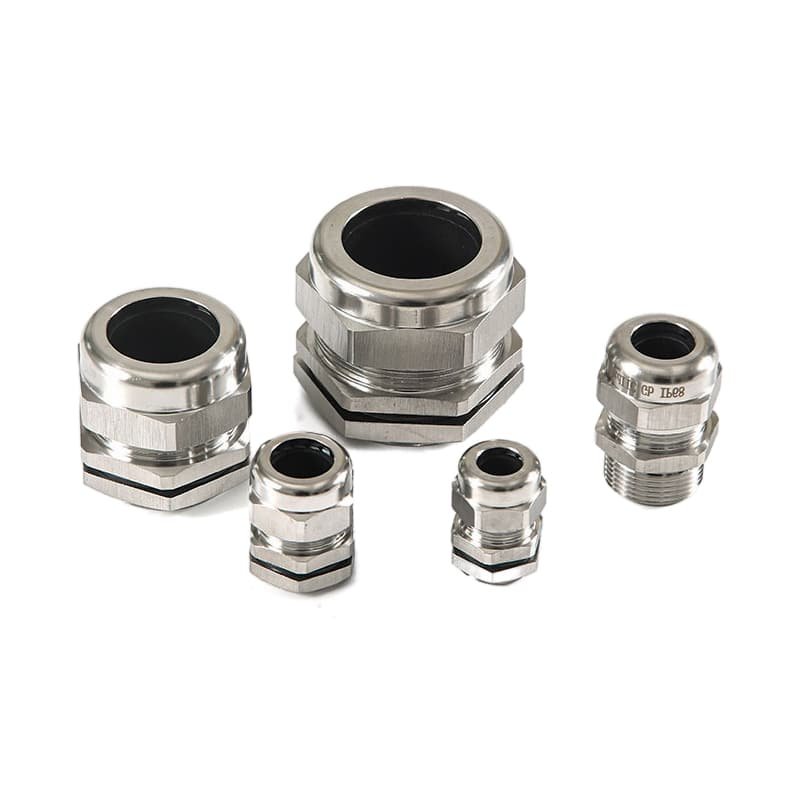
Premium UV-Resistant Solutions
Stainless Steel 316L Cable Glands
- UV Resistance: Virtually immune to photodegradation
- Lifespan: 20+ years in harsh environments
- Applications: Marine, chemical processing, extreme climates
- Investment: Higher initial cost, lowest total cost of ownership
Bepto’s SS316L Advantage: Our marine-grade stainless steel cable glands feature precision CNC machining and multiple seal options for maximum reliability.
Brass Cable Glands with Protective Coating
- UV Resistance: Excellent with proper coating maintenance
- Lifespan: 15+ years with periodic coating renewal
- Applications: Industrial outdoor, telecommunications
- Cost-Benefit: Good balance of performance and price
Cost-Effective UV Solutions
UV-Stabilized Nylon with Carbon Black
This is our most popular outdoor solution, and here’s why:
- Performance: 5-8 years outdoor life in moderate climates
- Cost: 60% less than stainless steel
- Versatility: Wide size range and configuration options
- Certifications: Maintains IP68, ATEX ratings
Real-World Success: Hassan’s Saudi facility switched to our UV-stabilized nylon glands three years ago. Zero failures so far, compared to quarterly replacements with standard materials.
Modified PA66 with HALS
- Advanced Protection: Hindered Amine Light Stabilizers
- Extended Life: 3-5 years in high-UV environments
- Flexibility: Maintains mechanical properties longer
- Applications: Solar installations, outdoor telecommunications
Application-Specific Recommendations
| Environment | Recommended Material | Expected Life | Key Considerations |
|---|---|---|---|
| Desert/High UV | SS316L or Brass | 15-20 years | Extreme temperature cycling |
| Coastal Marine | SS316L only | 20+ years | Salt spray + UV combination |
| Moderate Climate | UV-Stabilized Nylon | 5-8 years | Cost-effective solution |
| Industrial Outdoor | Brass or Modified PA66 | 8-15 years | Chemical resistance needs |
How Do You Assess UV Damage and Plan Replacements?
Smart maintenance starts with systematic damage assessment. Early detection saves money and prevents catastrophic failures.
Effective UV damage assessment combines visual inspection, mechanical testing, and performance monitoring to identify replacement needs before critical failure occurs. A structured approach prevents unexpected downtime and optimizes replacement timing.
Visual Inspection Protocol
Monthly Quick Checks
- Color changes: Fading, yellowing, or darkening
- Surface texture: Roughness, chalking, or glossiness loss
- Visible cracking: Surface or deep cracks
- Seal condition: Gasket degradation or hardening
Quarterly Detailed Assessment
- Flexibility testing: Gentle manipulation to check brittleness
- Thread condition: Wear or deformation assessment
- Mounting integrity: Secure attachment verification
- Environmental factors: Shade changes, new UV exposure sources
Performance Testing Methods
Non-Destructive Testing
- IP rating verification5: Water ingress testing
- Electrical continuity: EMC shielding effectiveness
- Thermal imaging: Hot spot detection
- Ultrasonic testing: Internal crack detection
Mechanical Property Assessment
- Torque testing: Installation/removal force requirements
- Compression testing: Seal effectiveness under load
- Vibration resistance: Mechanical stability verification
Replacement Planning Strategy
Risk-Based Prioritization
- Critical systems: Safety-related or high-downtime-cost applications
- High-exposure areas: Maximum UV intensity locations
- Age-based scheduling: Proactive replacement before expected failure
- Budget optimization: Bulk replacement for cost efficiency
Lifecycle Management
- Documentation: Track installation dates and inspection results
- Predictive modeling: Use degradation patterns for planning
- Inventory management: Stock appropriate replacement materials
- Vendor partnerships: Establish reliable supply chains
At Bepto, we provide detailed lifecycle documentation with every shipment, helping customers track and plan their maintenance schedules effectively.
Conclusion
UV exposure represents one of the most significant threats to outdoor cable gland reliability, but it’s entirely manageable with the right approach. The key is understanding that material selection isn’t just about initial cost – it’s about total lifecycle value.
Whether you choose our premium stainless steel solutions for maximum longevity or our UV-stabilized nylon options for cost-effective protection, the important thing is making an informed decision based on your specific environmental conditions and performance requirements. Remember David’s expensive lesson in Arizona – sometimes paying more upfront saves significantly in the long run.
At Bepto Connector, we’re committed to helping you navigate these choices with confidence. Our decade of outdoor application experience, combined with rigorous testing and quality certifications, ensures you get the right solution for your specific UV exposure challenges. 😉
FAQ
Q: How long do standard nylon cable glands last in direct sunlight?
A: Standard nylon cable glands typically fail within 6-18 months in direct sunlight exposure. The exact timeframe depends on UV intensity, temperature cycling, and material quality, but visible degradation usually begins within 3-6 months.
Q: Can I use spray coatings to protect existing cable glands from UV damage?
A: Yes, UV-resistant polyurethane or acrylic coatings can extend the life of existing installations by 2-3 years. However, proper surface preparation is critical, and the coating needs periodic renewal for continued effectiveness.
Q: What’s the difference between UV-stabilized and standard nylon cable glands?
A: UV-stabilized nylon contains chemical additives like carbon black or HALS that absorb or neutralize UV radiation. This extends outdoor life from 6-18 months (standard) to 5-8 years (UV-stabilized) in typical conditions.
Q: Are stainless steel cable glands worth the extra cost for outdoor applications?
A: For long-term installations (10+ years) or harsh environments, stainless steel offers the lowest total cost of ownership despite higher initial costs. The break-even point is typically 3-5 years compared to replacing UV-degraded alternatives.
Q: How can I tell if my cable glands are suffering UV damage before they fail?
A: Early warning signs include color fading, surface roughening, reduced flexibility, and minor surface cracking. If you can scratch the surface easily with a fingernail or notice chalky residue, replacement should be planned immediately.
-
“Photodegradation”,
https://en.wikipedia.org/wiki/Photodegradation. Encyclopedia reference detailing how polymer chains are broken down by ultraviolet radiation. Evidence role: mechanism; Source type: research. Supports: Photodegradation process in plastics. ↩ -
“Radical (chemistry)”,
https://en.wikipedia.org/wiki/Radical_(chemistry). Technical overview of free radical formation during chemical bond cleavage. Evidence role: mechanism; Source type: research. Supports: Free radical formation from broken polymer chains. ↩ -
“SAE 316L stainless steel”,
https://en.wikipedia.org/wiki/SAE_316L_stainless_steel. Metallurgical properties of marine-grade stainless steel explaining its resistance to environmental degradation. Evidence role: general_support; Source type: research. Supports: Stainless Steel 316L immunity to UV effects. ↩ -
“Hindered amine light stabilizers”,
https://en.wikipedia.org/wiki/Hindered_amine_light_stabilizers. Scientific description of chemical additives used to protect polymers from photo-oxidation. Evidence role: mechanism; Source type: research. Supports: HALS as advanced UV protection. ↩ -
“IP Ratings”,
https://www.iec.ch/ip-ratings. International Electrotechnical Commission standard defining ingress protection levels against water and dust. Evidence role: standard; Source type: standard. Supports: IP rating verification. ↩
