

Introduction
IP69K-rated1 cable glands face the ultimate test when exposed to 80°C steam at 80-100 bar pressure during high-pressure cleaning cycles, with inferior materials experiencing thermal shock2, seal degradation, and catastrophic failure that compromises equipment protection and creates safety hazards in food processing, pharmaceutical, and chemical industries where steam cleaning is mandatory for hygiene compliance.
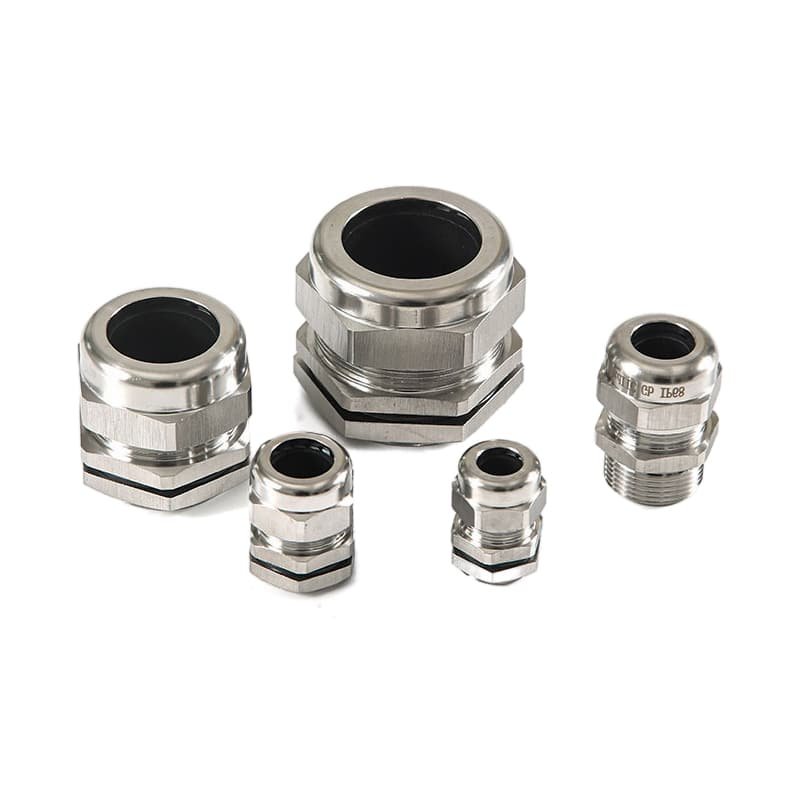
IP69K cable glands require specialized materials including EPDM seals3 rated for 150°C continuous operation, stainless steel 316L4 housings with superior corrosion resistance, and engineered polymer bodies with glass reinforcement to withstand thermal shock and pressure cycling, while maintaining seal integrity and electrical performance under the most demanding steam cleaning conditions encountered in industrial hygiene applications.
After witnessing hundreds of cable gland failures during steam cleaning operations across food processing facilities, pharmaceutical plants, and chemical manufacturing sites over the past decade, I’ve learned that material selection is the critical factor determining whether your equipment survives routine cleaning or requires costly replacement and production downtime.
Table of Contents
- What Makes IP69K Different from Standard IP Ratings?
- Which Materials Can Withstand High-Pressure Steam Cleaning?
- How Do Seal Materials Perform Under Steam Cleaning Conditions?
- What Design Features Enable IP69K Performance?
- How Do You Select the Right IP69K Cable Gland for Your Application?
- FAQs About IP69K Cable Glands
What Makes IP69K Different from Standard IP Ratings?
Understanding IP69K requirements reveals the extreme conditions that separate this rating from conventional ingress protection standards.
IP69K testing subjects cable glands to 80°C steam at 80-100 bar pressure from multiple angles at close range, creating thermal shock, mechanical stress, and chemical exposure far exceeding IP68 water immersion tests, requiring specialized materials, advanced seal designs, and robust construction to maintain protection against steam penetration and equipment contamination in critical hygiene applications.

IP69K Test Conditions
Extreme Parameters:
- Steam temperature: 80°C ± 2°C
- Water pressure: 80-100 bar (1160-1450 psi)
- Flow rate: 14-16 L/min
- Nozzle distance: 100-150mm
- Test duration: 30 seconds per position
Multi-Angle Exposure:
- Four 90-degree positions tested
- Complete circumferential coverage
- Critical seal interface targeting
- Worst-case scenario simulation
Performance Criteria:
- Zero water ingress permitted
- Electrical continuity maintained
- Mechanical integrity preserved
- Seal compression retained
Comparison with Lower IP Ratings
IP68 vs IP69K Differences:
| Test Parameter | IP68 | IP69K |
|---|---|---|
| Temperature | Ambient | 80°C |
| Pressure | 1-10 bar | 80-100 bar |
| Test Method | Immersion | High-pressure spray |
| Duration | Continuous | 30 sec/position |
| Seal Stress | Static | Dynamic + thermal |
| Failure Mode | Gradual seepage | Catastrophic breach |
Industrial Applications
Food Processing:
- Daily steam cleaning requirements
- HACCP compliance5 mandates
- Temperature cycling exposure
- Chemical sanitizer compatibility
Pharmaceutical Manufacturing:
- Sterile environment maintenance
- FDA validation requirements
- Frequent cleaning cycles
- Aggressive cleaning agents
Chemical Processing:
- Hazardous area installations
- Corrosive environment exposure
- Safety system protection
- Regulatory compliance needs
I worked with Marcus, a plant engineer at a meat processing facility in Hamburg, Germany, where their daily steam cleaning operations at 85°C destroyed standard IP68 cable glands within weeks, requiring emergency shutdowns and costly equipment replacement until we implemented proper IP69K solutions.
Marcus’s facility documented that standard cable glands failed after just 15-20 steam cleaning cycles, while our IP69K-rated units with specialized materials achieved over 2000 cycles without performance degradation, eliminating production interruptions and maintenance costs.
Regulatory Requirements
Industry Standards:
- IEC 60529 IP69K specification
- DIN 40050-9 German standard
- ISO 20653 automotive applications
- FDA food contact requirements
Certification Process:
- Independent laboratory testing
- Witnessed performance verification
- Documentation requirements
- Ongoing surveillance audits
Compliance Benefits:
- Regulatory approval assurance
- Insurance requirement satisfaction
- Customer specification compliance
- Liability risk reduction
Which Materials Can Withstand High-Pressure Steam Cleaning?
Material selection determines IP69K cable gland survival under extreme steam cleaning conditions.
Stainless steel 316L provides superior corrosion resistance and thermal stability for housings, PEEK and PPS engineering plastics offer excellent chemical resistance and dimensional stability for bodies, while EPDM and FKM elastomers maintain seal integrity at elevated temperatures, with material combinations requiring careful thermal expansion matching to prevent seal failure during temperature cycling.
Metal Housing Materials
Stainless Steel 316L Performance:
- Corrosion resistance: Excellent
- Temperature capability: -200°C to +400°C
- Thermal expansion: 17 × 10⁻⁶/°C
- Steam cleaning compatibility: Superior
Key Advantages:
- Chloride corrosion resistance
- Thermal shock tolerance
- Dimensional stability
- Long-term durability
Brass Limitations:
- Dezincification risk in steam
- Lower temperature capability
- Galvanic corrosion potential
- Limited chemical resistance
Aluminum Considerations:
- Oxide layer protection
- Lightweight advantage
- Temperature limitations
- Anodizing requirements
Engineering Plastic Bodies
PEEK (Polyetheretherketone):
- Temperature range: -50°C to +250°C
- Chemical resistance: Exceptional
- Steam exposure: Excellent
- Cost factor: Premium
Performance Characteristics:
- Low moisture absorption
- Dimensional stability
- Fatigue resistance
- Radiation tolerance
PPS (Polyphenylene Sulfide):
- Temperature capability: -40°C to +200°C
- Chemical inertness: Superior
- Steam resistance: Excellent
- Cost-effectiveness: Good
Glass Reinforcement Benefits:
- Reduced thermal expansion
- Increased strength and stiffness
- Improved dimensional stability
- Enhanced creep resistance
Polymer Material Comparison
Material Performance Matrix:
| Material | Max Temp (°C) | Steam Resistance | Chemical Resistance | Cost Factor | Applications |
|---|---|---|---|---|---|
| PEEK | 250 | Excellent | Excellent | 8x | Critical applications |
| PPS | 200 | Excellent | Very Good | 4x | General industrial |
| PA66 GF30 | 120 | Good | Moderate | 2x | Standard applications |
| PC | 130 | Fair | Poor | 3x | Limited use |
| POM | 100 | Poor | Fair | 2x | Not recommended |
Surface Treatment Considerations
Electropolishing Benefits:
- Smooth surface finish
- Enhanced corrosion resistance
- Reduced contamination retention
- Improved cleanability
Passivation Requirements:
- Oxide layer optimization
- Corrosion protection enhancement
- Surface chemistry stabilization
- Long-term performance assurance
Coating Options:
- PTFE for lubricity
- Ceramic for wear resistance
- Polymer for chemical protection
- Specialized treatments for specific environments
I remember working with Fatima, a maintenance manager at a pharmaceutical plant in Dubai, UAE, where extreme heat and aggressive cleaning chemicals required cable glands with exceptional material performance to maintain sterile manufacturing conditions.
Fatima’s facility tested various materials under their 90°C steam cleaning protocol with caustic sanitizers, finding that only PEEK bodies with 316L stainless steel hardware and FKM seals survived their demanding validation requirements without degradation.
Material Compatibility Matrix
Thermal Expansion Matching:
- Similar coefficients prevent stress
- Gradual transitions accommodate differences
- Flexible interfaces manage mismatches
- Design features compensate for variations
Chemical Compatibility:
- Cleaning agent resistance
- Sanitizer compatibility
- pH tolerance ranges
- Long-term exposure effects
Galvanic Considerations:
- Dissimilar metal effects
- Electrolyte presence impact
- Protective measures required
- Isolation techniques
How Do Seal Materials Perform Under Steam Cleaning Conditions?
Elastomeric seal materials face the most demanding conditions in IP69K applications, requiring specialized compounds to maintain integrity.
EPDM seals rated for 150°C continuous operation provide excellent steam resistance and ozone stability, FKM (Viton) offers superior chemical resistance and temperature capability up to 200°C, while silicone seals excel in temperature extremes but have limited chemical resistance, requiring careful selection based on specific cleaning chemicals and temperature profiles encountered in steam cleaning operations.

EPDM Seal Performance
Ethylene Propylene Diene Monomer:
- Temperature range: -50°C to +150°C
- Steam resistance: Excellent
- Ozone resistance: Superior
- Cost-effectiveness: Good
Chemical Resistance:
- Acids: Good to excellent
- Alkalis: Excellent
- Alcohols: Good
- Ketones: Poor to fair
Physical Properties:
- Compression set resistance
- Tear strength retention
- Flexibility at low temperatures
- UV and ozone stability
FKM (Fluoroelastomer) Advantages
Viton Performance:
- Temperature capability: -20°C to +200°C
- Chemical resistance: Exceptional
- Steam exposure: Excellent
- Permeability: Very low
Application Benefits:
- Aggressive chemical compatibility
- High-temperature stability
- Low compression set
- Extended service life
Cost Considerations:
- Premium material pricing
- Specialized compounding
- Processing requirements
- Long-term value proposition
Silicone Seal Characteristics
Temperature Extremes:
- Operating range: -60°C to +200°C
- Thermal stability: Excellent
- Flexibility retention: Superior
- Aging resistance: Good
Limitations:
- Chemical resistance: Limited
- Tear strength: Moderate
- Compression set: Higher than FKM
- Permeability: Relatively high
Seal Design Considerations
Groove Geometry:
- Proper compression ratios
- Adequate fill percentages
- Thermal expansion accommodation
- Installation clearances
Multiple Seal Systems:
- Primary and secondary seals
- Staged protection levels
- Failure mode isolation
- Redundant security
Dynamic vs Static Applications:
- Movement accommodation
- Wear resistance requirements
- Lubrication considerations
- Maintenance accessibility
At Bepto, we specify EPDM seals for standard IP69K applications and FKM seals for extreme chemical exposure, with custom compound formulations available for specialized requirements including FDA compliance and extreme temperature operation.
Performance Testing
Seal Validation Methods:
- Compression set testing
- Chemical immersion studies
- Temperature cycling evaluation
- Steam exposure simulation
Quality Control:
- Incoming material inspection
- Batch consistency verification
- Performance certification
- Traceability documentation
Field Performance Monitoring:
- Installation condition assessment
- Service life tracking
- Failure mode analysis
- Continuous improvement feedback
What Design Features Enable IP69K Performance?
Specialized design features distinguish IP69K cable glands from standard ingress protection products.
Multi-stage sealing systems create redundant protection barriers, precision-machined seal grooves ensure optimal compression ratios, thermal expansion accommodation prevents seal distortion, and robust thread designs resist steam pressure forces, while drain features prevent water accumulation and specialized materials maintain performance under extreme temperature and pressure cycling conditions.
Multi-Stage Sealing Architecture
Primary Seal Functions:
- Cable entry sealing
- Environmental protection
- Pressure resistance
- Temperature stability
Secondary Seal Benefits:
- Backup protection
- Failure mode isolation
- Enhanced reliability
- Extended service life
Tertiary Protection:
- Thread sealing
- Housing interfaces
- Critical component protection
- System-level integrity
Precision Seal Groove Design
Critical Dimensions:
- Groove width tolerance: ±0.05mm
- Depth precision: ±0.02mm
- Surface finish: Ra 0.8 maximum
- Corner radius optimization
Compression Ratios:
- O-ring: 15-25% compression
- Gasket: 20-30% compression
- Custom seals: Application-specific
- Temperature compensation
Fill Percentages:
- Groove fill: 70-85% optimal
- Thermal expansion allowance
- Installation clearance
- Service accessibility
Thermal Management Features
Expansion Accommodation:
- Floating seal arrangements
- Spring-loaded systems
- Bellows interfaces
- Flexible connections
Heat Dissipation:
- Thermal conduction paths
- Surface area optimization
- Material selection
- Ventilation features
Temperature Gradients:
- Uniform heat distribution
- Thermal shock minimization
- Stress concentration reduction
- Performance stability
Pressure Resistance Design
Structural Reinforcement:
- Wall thickness optimization
- Stress distribution analysis
- Material strength utilization
- Safety factor application
Thread Engagement:
- Full thread contact
- Load distribution
- Pressure seal integration
- Installation torque specification
Housing Geometry:
- Pressure vessel principles
- Stress concentration avoidance
- Material efficiency
- Manufacturing feasibility
I worked with Jean-Pierre, a process engineer at a dairy processing plant in Lyon, France, where their CIP (Clean-in-Place) systems required cable glands that could withstand 95°C caustic cleaning solutions at 120 bar pressure without any performance degradation.
Jean-Pierre’s team validated our multi-stage sealing design through 5000 cleaning cycles, demonstrating zero failures and maintaining IP69K protection throughout the test period, compared to competitive products that failed within 500 cycles under the same conditions.
Quality Assurance Integration
Design Validation:
- Prototype testing programs
- Performance verification
- Regulatory compliance
- Customer approval processes
Manufacturing Control:
- Precision machining requirements
- Assembly procedures
- Quality checkpoints
- Documentation systems
Field Performance:
- Installation support
- Performance monitoring
- Maintenance guidance
- Continuous improvement
How Do You Select the Right IP69K Cable Gland for Your Application?
Proper IP69K cable gland selection requires careful analysis of operating conditions, material compatibility, and performance requirements.
Application analysis must consider maximum steam temperature, cleaning chemical compatibility, pressure requirements, and cycling frequency, while material selection balances performance requirements with cost considerations, and sizing ensures proper cable fit with adequate seal compression, requiring detailed specification review and supplier consultation to achieve optimal performance and reliability.
Application Analysis Framework
Operating Conditions Assessment:
- Maximum steam temperature exposure
- Pressure levels during cleaning
- Chemical cleaning agents used
- Frequency of cleaning cycles
Environmental Factors:
- Ambient temperature ranges
- Humidity levels
- Corrosive atmosphere presence
- UV exposure potential
Performance Requirements:
- IP rating maintenance
- Electrical continuity needs
- Mechanical integrity demands
- Service life expectations
Material Selection Matrix
Housing Material Decision:
| Application Type | Recommended Material | Key Benefits | Cost Factor |
|---|---|---|---|
| Food Processing | 316L Stainless Steel | FDA compliance, cleanability | 3x |
| Pharmaceutical | PEEK or 316L | Chemical resistance, validation | 5x |
| Chemical Processing | 316L or Hastelloy | Corrosion resistance | 4x |
| General Industrial | PPS or 316L | Cost-effectiveness | 2x |
Seal Material Optimization
EPDM Applications:
- Standard steam cleaning
- Moderate chemical exposure
- Cost-sensitive applications
- General industrial use
FKM Requirements:
- Aggressive chemical cleaning
- High-temperature operation
- Extended service life needs
- Critical applications
Custom Compounds:
- Specialized chemical resistance
- Extreme temperature ranges
- FDA/USP compliance
- Unique performance requirements
Sizing and Configuration
Cable Diameter Matching:
- Accurate measurement requirements
- Tolerance considerations
- Multiple cable accommodation
- Future expansion planning
Thread Specification:
- Metric vs NPT selection
- Equipment compatibility
- Installation accessibility
- Maintenance requirements
Entry Configuration:
- Single vs multiple cable
- Armored cable compatibility
- Strain relief requirements
- Bend radius considerations
Supplier Evaluation Criteria
Technical Capabilities:
- Design expertise
- Material knowledge
- Testing capabilities
- Certification compliance
Quality Assurance:
- Manufacturing standards
- Quality control systems
- Traceability documentation
- Performance guarantees
Support Services:
- Technical consultation
- Application engineering
- Installation training
- After-sales support
At Bepto, we provide comprehensive application analysis and material selection guidance, helping customers choose the optimal IP69K cable gland configuration for their specific steam cleaning requirements while ensuring cost-effective solutions that meet all performance and regulatory requirements.
Implementation Best Practices
Installation Guidelines:
- Proper torque specifications
- Seal inspection procedures
- Environmental preparation
- Documentation requirements
Maintenance Protocols:
- Regular inspection schedules
- Performance monitoring
- Preventive replacement
- Failure analysis procedures
Performance Validation:
- Initial testing programs
- Ongoing verification
- Compliance documentation
- Continuous improvement
Conclusion
IP69K cable glands require specialized materials and design features to survive high-pressure steam cleaning conditions, with stainless steel 316L housings, PEEK or PPS bodies, and EPDM or FKM seals providing the necessary performance characteristics. Multi-stage sealing systems, precision-machined grooves, and thermal expansion accommodation features enable reliable operation under extreme temperature and pressure cycling. Material selection must consider steam temperature, chemical compatibility, and cleaning frequency, while proper sizing ensures optimal seal performance. Design features including robust construction, pressure resistance, and thermal management distinguish IP69K products from standard cable glands. Application analysis and supplier consultation are critical for selecting the right solution for specific operating conditions. At Bepto, we provide comprehensive IP69K cable gland solutions with specialized materials, advanced designs, and expert technical support to ensure reliable performance in the most demanding steam cleaning applications. Remember, investing in proper IP69K cable glands prevents costly equipment failures and production downtime in critical hygiene applications! 😉
FAQs About IP69K Cable Glands
Q: What’s the difference between IP68 and IP69K cable glands?
A: IP69K cable glands withstand high-pressure steam cleaning at 80°C and 80-100 bar pressure, while IP68 only protects against water immersion. IP69K requires specialized materials like EPDM seals and stainless steel housings to survive thermal shock and pressure cycling that would destroy standard IP68 units.
Q: Which industries need IP69K rated cable glands?
A: Food processing, pharmaceutical manufacturing, dairy operations, beverage production, and chemical processing industries require IP69K cable glands where high-pressure steam cleaning is mandatory for hygiene compliance and regulatory requirements.
Q: How long do IP69K cable glands last under steam cleaning?
A: Properly selected IP69K cable glands with quality materials can survive 2000+ steam cleaning cycles when correctly installed and maintained. Service life depends on steam temperature, pressure levels, cleaning chemicals, and cycling frequency in your specific application.
Q: Can I upgrade existing cable glands to IP69K rating?
A: Existing cable glands cannot be upgraded to IP69K rating as this requires specialized materials, seal designs, and construction features built into the original product. Replacement with proper IP69K units is necessary for steam cleaning applications.
Q: What materials are best for IP69K cable gland seals?
A: EPDM seals work well for standard steam cleaning applications up to 150°C, while FKM (Viton) seals provide superior performance for aggressive chemicals and higher temperatures up to 200°C. Material selection depends on your specific cleaning agents and temperature requirements.
Learn about the rigorous testing parameters defined by the IP69K standard for high-pressure, high-temperature wash-downs. ↩
Understand the material science principles behind thermal shock and why it causes material failure. ↩
Review the detailed material properties of EPDM rubber, including its temperature and chemical resistance. ↩
Explore the chemical composition and corrosion resistance characteristics of 316L grade stainless steel. ↩
Discover the core principles of the Hazard Analysis Critical Control Point (HACCP) system for ensuring food safety. ↩
