

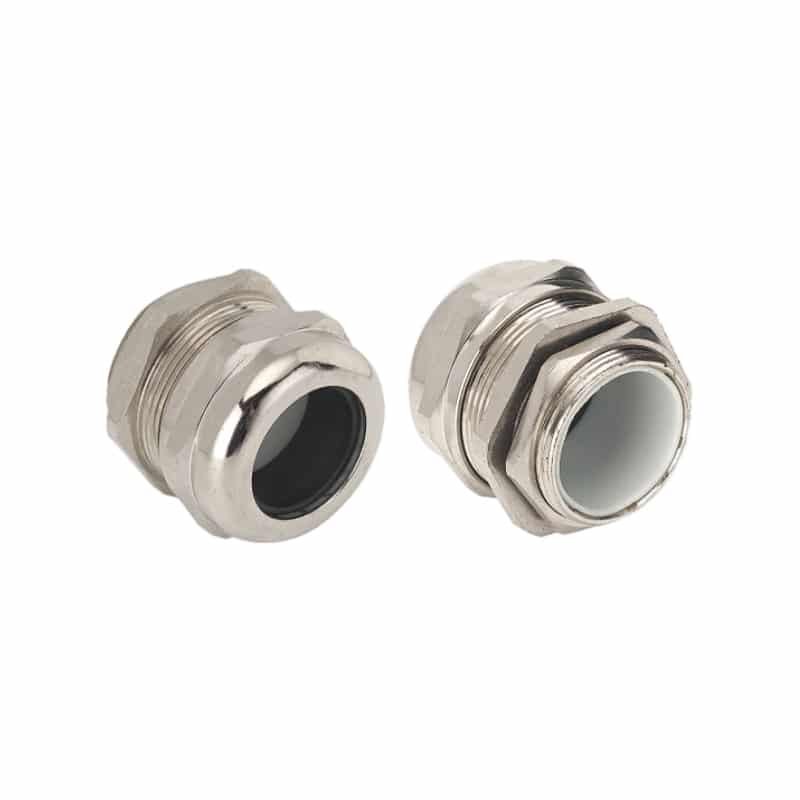
Struggling with MI cable terminations that fail prematurely or lose their fire resistance properties? The challenge lies in properly sealing the hygroscopic magnesium oxide insulation while maintaining the cable’s unique fire-resistant characteristics. Pin glands for mineral insulated cables provide specialized termination solutions that seal the hygroscopic MgO insulation, maintain fire resistance ratings, and ensure reliable electrical connections in high-temperature applications up to 1000°C. After a decade in the cable gland industry, I’ve witnessed countless MI cable failures due to improper termination techniques. Understanding pin gland technology is crucial for anyone working with fire-resistant systems in petrochemical plants, nuclear facilities, or critical safety applications where cable integrity can mean the difference between containment and catastrophe.
Table of Contents
- What Are Pin Glands for MI Cables?
- Why Do MI Cables Require Specialized Termination?
- How Do Pin Glands Work?
- What Are the Different Types of MI Cable Pin Glands?
- How Do You Install Pin Glands Correctly?
- FAQs About Pin Glands for MI Cables
What Are Pin Glands for MI Cables?
Pin glands are specialized cable termination devices designed specifically for mineral insulated cables, featuring sealing compounds and compression mechanisms that prevent moisture ingress into the hygroscopic magnesium oxide insulation while maintaining fire resistance properties.

Understanding MI Cable Construction
Mineral insulated cables consist of copper conductors embedded in compressed magnesium oxide (MgO) powder, all contained within a seamless copper or stainless steel sheath1. This unique construction provides exceptional fire resistance but creates specific termination challenges.
Key MI Cable Characteristics:
- Fire resistance: Maintains circuit integrity up to 1000°C for extended periods
- Hygroscopic insulation: MgO readily absorbs moisture from air
- Metallic sheath: Provides mechanical protection and electrical screening
- Compact construction: Solid insulation allows smaller cable diameters
- High temperature rating: Suitable for extreme thermal environments
The critical challenge in MI cable termination lies in preventing moisture contamination of the MgO insulation. Once exposed to humidity, magnesium oxide forms magnesium hydroxide2, which significantly reduces insulation resistance and can cause circuit failures.
Pin Gland Design Principles
Pin glands address MI cable termination challenges through specialized design features:
Sealing System:
- Primary seal prevents moisture ingress at cable entry point
- Secondary seal protects exposed MgO insulation
- Compression fitting maintains seal integrity under thermal cycling
- Chemical-resistant materials withstand harsh environments
Conductor Termination:
- Individual pins provide secure electrical connections
- Insulated pin assemblies prevent short circuits
- Strain relief protects conductor connections
- Terminal blocks accommodate various connection methods
I remember working with Andreas, a safety engineer at a chemical processing facility in Hamburg, Germany. His plant experienced repeated MI cable failures in their emergency shutdown systems due to moisture contamination. The existing terminations weren’t properly sealing the MgO insulation, causing insulation resistance to drop below acceptable levels. After implementing our specialized pin glands with enhanced sealing compounds, their system reliability improved dramatically, with zero moisture-related failures over the following two years.
Material Selection for Extreme Environments
Brass Pin Glands:
- Standard applications up to 200°C
- Excellent electrical conductivity
- Cost-effective for most installations
- Suitable for indoor environments
Stainless Steel Pin Glands:
- High-temperature applications up to 600°C
- Superior corrosion resistance
- Chemical processing environments
- Marine and offshore installations
Nickel-Plated Options:
- Enhanced corrosion protection
- Improved thermal conductivity
- Nuclear and aerospace applications
- Extended service life in harsh conditions
Why Do MI Cables Require Specialized Termination?
MI cables require specialized termination because the hygroscopic magnesium oxide insulation must be completely sealed from atmospheric moisture while maintaining the cable’s fire resistance properties and ensuring reliable electrical connections.
The Moisture Challenge
Magnesium oxide insulation presents unique challenges that standard cable glands cannot address:
Hygroscopic Properties:
- Rapidly absorbs moisture from air (within minutes of exposure)
- Forms magnesium hydroxide when combined with water
- Insulation resistance drops from GΩ to MΩ range
- Can cause complete circuit failure in extreme cases
Chemical Reaction Process:
MgO + H₂O → Mg(OH)₂
This reaction is irreversible under normal conditions and permanently degrades the insulation properties. Once contaminated, the only solution is cable replacement, making proper initial termination critical.
Fire Resistance Maintenance
MI cables are primarily used for their exceptional fire resistance3, which must be maintained through proper termination:
Fire Performance Requirements:
- Circuit integrity maintained at 1000°C for 3+ hours
- No flame propagation along cable length
- Minimal smoke and toxic gas emission
- Continued operation during fire exposure
Standard cable glands with polymer seals fail at relatively low temperatures (150-200°C), compromising the entire fire-resistant system. Pin glands use high-temperature sealing materials that maintain integrity throughout the cable’s fire rating.
Hassan, who manages electrical systems for a petrochemical complex in Abu Dhabi, shared a critical incident where improper MI cable termination nearly caused a major safety failure. During a fire test of their emergency systems, standard cable glands failed at 180°C, causing loss of critical shutdown signals. The potential consequences were severe – loss of process control during an emergency situation. After retrofitting with our fire-rated pin glands, their systems now maintain full functionality throughout the required fire exposure period, ensuring personnel safety and environmental protection.
Electrical Performance Considerations
Insulation Resistance Requirements:
- Minimum 100 MΩ at 500V DC for power circuits
- Higher requirements for instrumentation circuits
- Must maintain values throughout service life
- Temperature and humidity variations affect performance
Conductor Protection:
- Individual conductor sealing prevents cross-contamination
- Strain relief prevents mechanical damage
- Proper pin sizing ensures reliable connections
- Thermal expansion accommodation prevents stress failures
How Do Pin Glands Work?
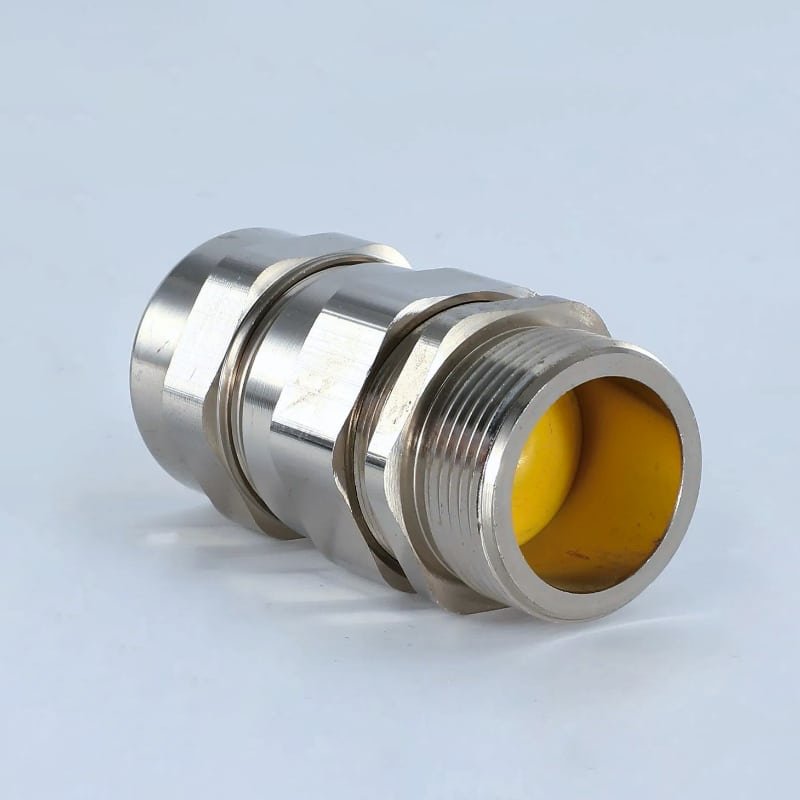
Pin glands work through a multi-stage sealing system that first seals the cable sheath entry point, then individually seals each conductor with specialized compounds, and finally provides secure electrical termination through insulated pin assemblies.
Primary Sealing Mechanism
The first line of defense against moisture ingress occurs at the cable sheath entry point:
Compression Seal Design:
- Elastomeric seal compressed against cable sheath
- Creates gas-tight barrier preventing atmospheric contamination
- Maintains seal integrity under thermal cycling
- Compatible with copper and stainless steel sheaths
Seal Material Selection:
- EPDM for general applications (-40°C to +150°C)
- Fluorocarbon for chemical resistance (-20°C to +200°C)
- Silicone for high-temperature applications (-60°C to +250°C)
- PTFE for extreme chemical and temperature conditions
Secondary Sealing System
After cable preparation, individual conductors require protection from moisture exposure:
Sealing Compound Application:
- Specialized compounds fill voids around conductors
- Chemical barriers prevent moisture migration
- Maintain flexibility under thermal stress
- Compatible with MgO insulation chemistry
Compound Types:
- Epoxy-based: Permanent seal, high temperature resistance
- Silicone-based: Flexible seal, easy rework capability
- Polyurethane-based: Chemical resistance, moderate temperature
- Ceramic-filled: Fire resistance, extreme temperature capability
Pin Assembly and Termination
The final stage provides secure electrical connections while maintaining environmental protection:
Pin Design Features:
- Individual insulated pins for each conductor
- Secure mechanical connection to cable conductors
- Insulation prevents short circuits between conductors
- Standardized spacing for terminal block compatibility
Connection Methods:
- Screw terminals for field wiring flexibility
- Crimp connections for high-reliability applications
- Solder connections for permanent installations
- Spring terminals for maintenance-free operation
Thermal Performance Management
Pin glands must accommodate significant thermal expansion differences between components:
Expansion Considerations:
- Copper sheath expansion: 17 × 10⁻⁶ /°C
- Steel gland body expansion: 12 × 10⁻⁶ /°C
- Sealing compound expansion: varies by material type
- Pin assembly thermal movement accommodation
Design Solutions:
- Flexible seal materials accommodate differential expansion
- Spring-loaded components maintain contact pressure
- Thermal barriers prevent heat transfer to sensitive components
- Expansion joints in long cable runs
What Are the Different Types of MI Cable Pin Glands?
MI cable pin glands are available in indoor/outdoor variants, single/multi-conductor configurations, and specialized designs for hazardous areas4, high-temperature applications, and nuclear installations, each optimized for specific environmental and performance requirements.
Standard Indoor Pin Glands
Basic Configuration:
- Brass or aluminum construction
- EPDM sealing materials
- Temperature range: -20°C to +120°C
- IP65/IP66 environmental protection
- Standard metric and NPT threads
Applications:
- Building fire alarm systems
- Emergency lighting circuits
- HVAC control systems
- Industrial process monitoring
- General instrumentation applications
Outdoor and Marine Pin Glands
Enhanced Protection Features:
- 316L stainless steel construction
- Fluorocarbon sealing materials
- UV-resistant components
- Salt spray corrosion resistance
- IP67/IP68 environmental ratings
Specialized Coatings:
- Electroless nickel plating for corrosion resistance
- PTFE coating for chemical compatibility
- Epoxy powder coating for UV protection
- Anodized finishes for aluminum components
Hazardous Area Pin Glands
Explosion-Proof Design:
- ATEX and IECEx certification
- Flameproof enclosure construction
- Certified temperature classifications
- Gas group compatibility ratings
- Ingress protection to IP66/IP67
Certification Standards:
- ATEX Directive 2014/34/EU for European markets
- IECEx for international applications
- UL/CSA for North American installations
- PESO for Indian market requirements
| Certification | Gas Groups | Temperature Classes | Typical Applications |
|---|---|---|---|
| ATEX | IIA, IIB, IIC | T1-T6 | Chemical processing, oil & gas |
| IECEx | I, IIA, IIB, IIC | T1-T6 | International hazardous areas |
| UL/CSA | Class I Div 1&2 | T1-T6 | North American installations |
High-Temperature Pin Glands
Extreme Temperature Applications:
- Operating range: -40°C to +600°C
- Ceramic-filled sealing compounds
- High-temperature alloy construction
- Refractory insulation materials
- Fire resistance up to 1000°C
Specialized Applications:
- Furnace monitoring systems
- Steel mill instrumentation
- Glass manufacturing equipment
- Aerospace ground support systems
- Nuclear reactor monitoring
Multi-Conductor Pin Glands
High-Density Configurations:
- 2-37 conductor terminations in single gland
- Compact design for space-constrained applications
- Individual conductor identification
- Modular pin assembly systems
- Custom configurations available
Benefits:
- Reduced installation time and cost
- Improved system reliability
- Space-efficient installations
- Simplified maintenance procedures
- Enhanced environmental protection
How Do You Install Pin Glands Correctly?
Correct pin gland installation requires precise cable preparation, proper sealing compound application, controlled compression sequences, and thorough testing to ensure moisture-tight seals and reliable electrical connections.
Cable Preparation Procedures
Step 1: Cable Stripping
- Remove outer sheath to expose MgO insulation
- Use specialized MI cable stripping tools
- Maintain clean, square cuts without damage
- Typical strip length: 25-40mm depending on gland size
Step 2: Conductor Preparation
- Carefully expose individual conductors
- Remove MgO insulation using appropriate solvents
- Clean conductors with isopropyl alcohol
- Minimize exposure time to prevent moisture absorption
Critical Safety Note: Work in dry environment with relative humidity <50% when possible. Have sealing materials ready before exposing MgO insulation.
Sealing Compound Application
Compound Selection:
- Match compound to operating temperature range
- Consider chemical compatibility requirements
- Verify fire resistance ratings if required
- Check manufacturer’s shelf life and storage requirements
Application Technique:
- Work compound into all voids around conductors
- Eliminate air pockets that could trap moisture
- Maintain consistent compound thickness
- Allow proper curing time before final assembly
Quality Control:
- Visual inspection for complete coverage
- Check for proper compound consistency
- Verify absence of air bubbles or voids
- Document compound batch numbers for traceability
Assembly Sequence
Step 1: Primary Seal Installation
- Thread cable through gland body
- Position primary seal against cable sheath
- Apply specified compression torque
- Verify seal integrity with pressure test if required
Step 2: Pin Assembly
- Insert individual pins into prepared conductors
- Ensure secure mechanical connection
- Verify proper pin alignment and spacing
- Apply any required conductor sealing compounds
Step 3: Final Assembly
- Install pin assembly into gland body
- Apply final compression to secondary seals
- Torque all connections to specification
- Install environmental protection covers
Installation Torque Specifications
| Gland Size | Primary Seal Torque | Pin Assembly Torque | Final Assembly Torque |
|---|---|---|---|
| M16 | 8-12 Nm | 2-3 Nm | 10-15 Nm |
| M20 | 12-18 Nm | 2-3 Nm | 15-20 Nm |
| M25 | 18-25 Nm | 3-4 Nm | 20-30 Nm |
| M32 | 25-35 Nm | 3-4 Nm | 30-40 Nm |
Testing and Verification
Insulation Resistance Testing:
- Test at 500V DC for power circuits
- Test at 250V DC for control circuits
- Minimum acceptable values: >100 MΩ
- Record initial values for future comparison
Environmental Seal Testing:
- Pressure test to specified IP rating
- Use appropriate test pressures and durations
- Check for any visible leakage
- Document test results and any corrective actions
Electrical Continuity Testing:
- Verify all conductor connections
- Check for proper pin-to-terminal continuity
- Test sheath grounding if required
- Confirm absence of short circuits between conductors
At Bepto, we provide comprehensive installation training and support materials with all our MI cable pin glands. Our technical team has developed step-by-step procedures that have helped thousands of installers achieve consistent, reliable results. We’ve seen installation success rates improve from 75% to over 95% when proper procedures are followed, significantly reducing callbacks and warranty claims.
Conclusion
Pin glands represent the critical interface between mineral insulated cables and electrical systems, requiring specialized design and installation techniques to maintain the unique properties of MI cables. Proper selection considers environmental conditions, temperature requirements, and hazardous area classifications, while correct installation procedures ensure long-term reliability and safety. The investment in quality pin glands and proper installation techniques pays dividends through improved system reliability, reduced maintenance costs, and enhanced safety performance. Understanding these principles enables optimal MI cable system design and implementation for critical applications where failure is not an option.
FAQs About Pin Glands for MI Cables
Q: Can I use regular cable glands for MI cables?
A: No, regular cable glands cannot properly seal the hygroscopic MgO insulation in MI cables. Standard glands lack the specialized sealing compounds and design features needed to prevent moisture contamination, which will cause insulation failure and potential safety hazards.
Q: How long do pin gland seals last in high-temperature applications?
A: High-quality pin gland seals can last 10-20 years in continuous high-temperature service when properly installed. Seal life depends on operating temperature, thermal cycling, and environmental conditions, with regular inspection recommended every 2-3 years.
Q: What happens if moisture gets into MI cable insulation?
A: Moisture contamination of MgO insulation causes irreversible chemical changes that permanently reduce insulation resistance. This can lead to circuit failures, false alarms in fire systems, and potential safety hazards requiring complete cable replacement.
Q: Do pin glands maintain fire resistance ratings?
A: Yes, properly designed pin glands maintain the fire resistance properties of MI cables up to their rated temperature and duration. The gland materials and sealing compounds are specifically selected to withstand fire exposure without compromising circuit integrity.
Q: How do I choose between brass and stainless steel pin glands?
A: Choose brass for standard indoor applications up to 200°C and stainless steel for high-temperature, corrosive, or marine environments. Stainless steel offers superior corrosion resistance and higher temperature capability but at increased cost compared to brass alternatives.
-
“Mineral-insulated copper-clad cable”,
https://en.wikipedia.org/wiki/Mineral-insulated_copper-clad_cable. This technical reference describes MI cable construction using conductors, compacted magnesium oxide insulation, and a metallic sheath. Evidence role: general_support; Source type: research. Supports: copper conductors embedded in compressed magnesium oxide (MgO) powder, all contained within a seamless copper or stainless steel sheath. ↩ -
“Magnesium oxide”,
https://en.wikipedia.org/wiki/Magnesium_oxide. This chemistry reference gives the hydration reaction in which magnesium oxide forms magnesium hydroxide in the presence of water. Evidence role: mechanism; Source type: research. Supports: magnesium oxide forms magnesium hydroxide. ↩ -
“UL 2196 | UL Standards & Engagement | UL Standard”,
https://www.shopulstandards.com/ProductDetail.aspx?UniqueKey=35204. The UL 2196 scope explains that the standard evaluates power, control, instrumentation, and data cables for maintaining circuit integrity under standard fire test exposure. Evidence role: general_support; Source type: standard. Supports: exceptional fire resistance. ↩ -
“Equipment for potentially explosive atmospheres (ATEX)”,
https://single-market-economy.ec.europa.eu/sectors/mechanical-engineering/equipment-potentially-explosive-atmospheres-atex_en. The European Commission explains that ATEX covers equipment and protective systems intended for use where potentially explosive atmospheres may occur. Evidence role: general_support; Source type: government. Supports: hazardous areas. ↩
